
Translated material
Work on errors
For which they gave the Nobel Prize in Chemistry: N + 1
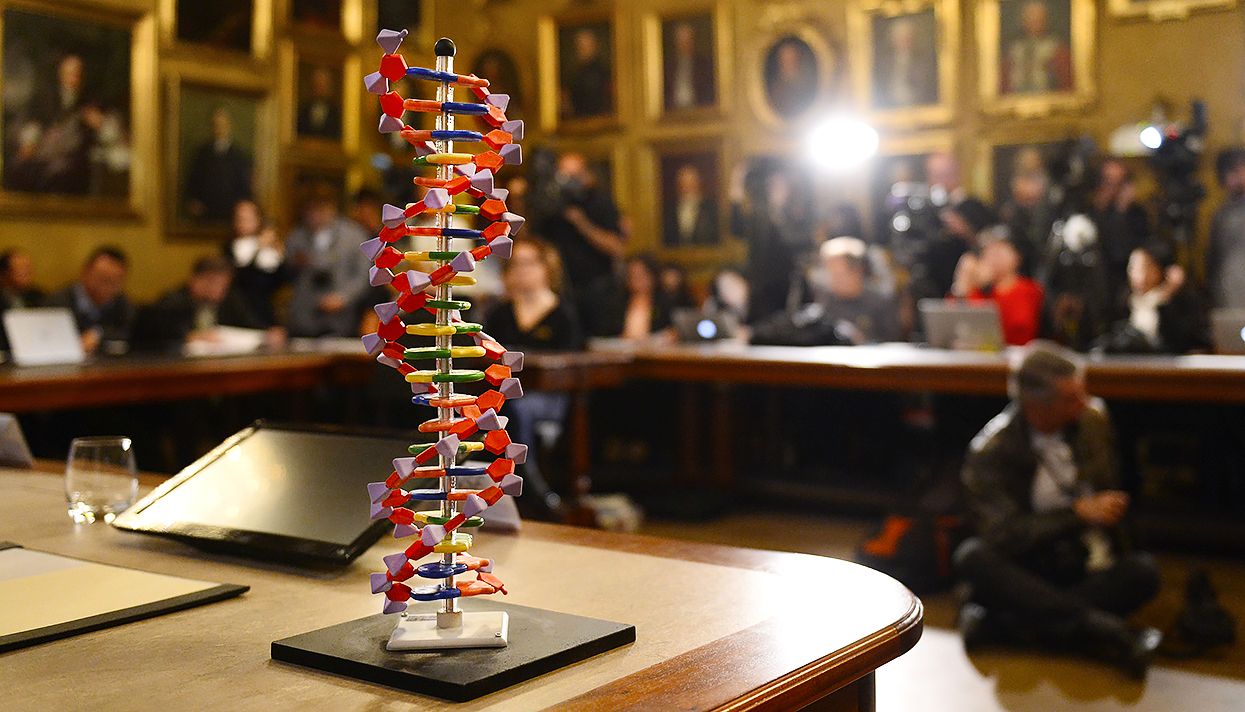
The 2015 Nobel Prize in Chemistry of 2015 became Thomas Lindall from Great Britain, as well as Paul Modric and Aziz Sankar from the USA. The Nobel Committee noted them for researching the mechanism of DNA reparation. The N +1 publication explains in detail what scientists have made to be honored with one of the most prestigious awards in the world, and its editor -in -chief Andrei Konyaev tells for the readers of Medusa about the value of their discoveries in an accessible language.
Andrei Konyaev, editor-in-chief N + 1 : The revolution in data transfer was not only due to new technologies. A huge role was played by algorithms correcting mistakes. The idea was simple: if the telephone channel, through which the data is transmitted, does not make noise very much, then the errors contributed to them can be corrected. And, therefore, the modem will work even somewhere in Tambov in 1998. Let it be slow.
DNA is the same data transmission tool. There are also mistakes. It turns out that there are natural mechanisms for correcting such errors. Thanks to them, we can, for example, lightly painlessly sunbathe on the beach, although ultraviolet and breaks DNA.
Well, one more thing: from the technology for correcting errors to the technology of editing the genome one step. The practical benefit of such editing, I think, is not necessary to explain.
During the replication of DNA, along with the maternal molecule, its exact copy appears. For every half a million DNA bases in nature, one error occurs. [...] In the human genome there are approximately 3.1 billion bases, he will correspond to 6.2 thousand errors. In order to protect us from mutations, in our cells there is a way to correct such errors. This mechanism was opened by Paul Modric.