
Translated material
Heavy barrel
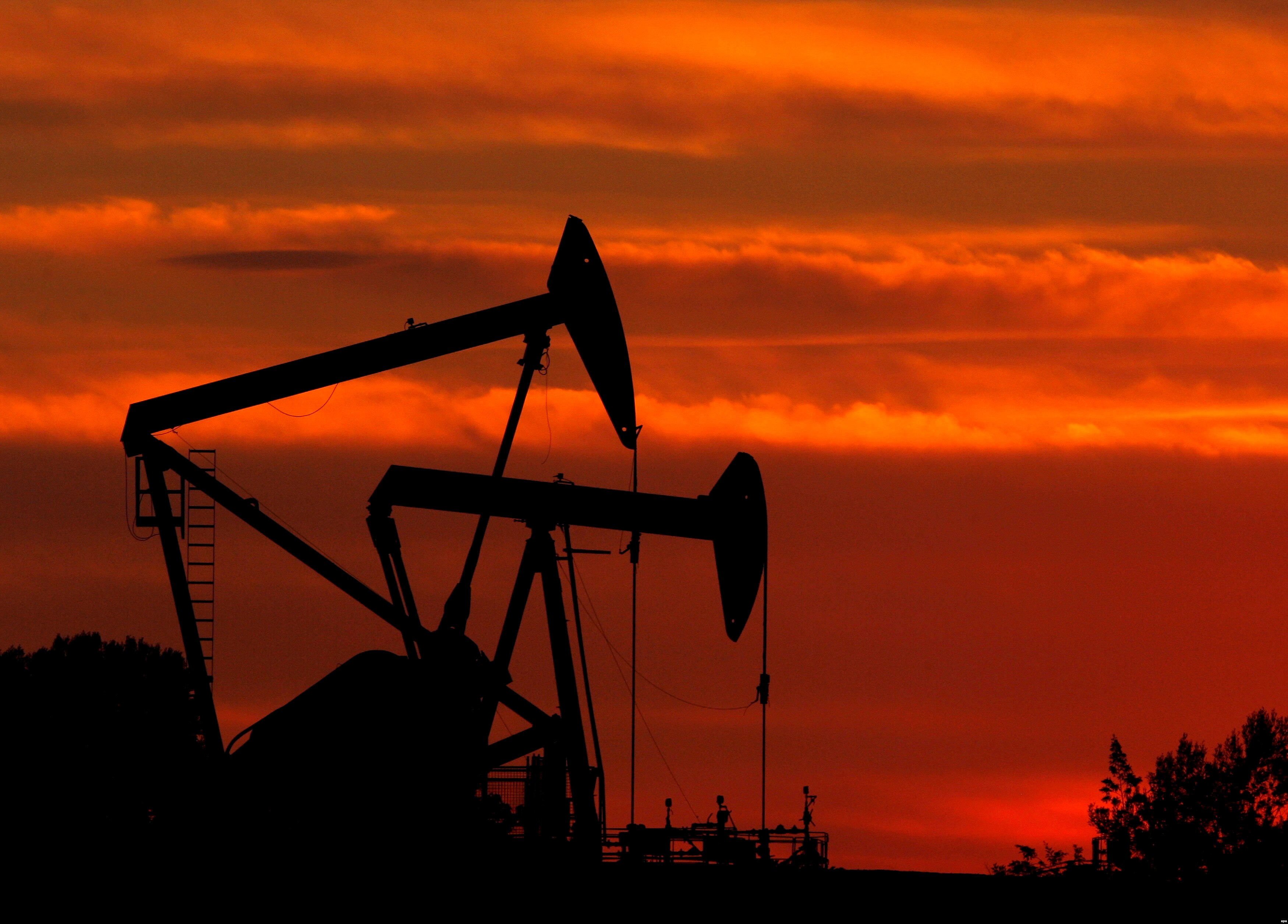
Today's OPEC mining to the world will soon be enough
Oil prices rose again. In three weeks, she went up by 15%, and only in the last week - by 11%. The Russian ruble also rushed along - its exchange rate to the dollar since mid -September increased by 10%.
Oil prices returned, on the one hand, to the levels of the end of January of this year, when their new rise began , and on the other hand, to the levels of the end of July, when, on the contrary, their next decline began. In what direction can prices follow now? In other words, the current situation, according to some signs, is more reminiscent of the one that developed at the end of January or, conversely, at the end of July? Our interlocutors are oil market analysts from Germany and Russia.
Evgeny Weinberg , Head of the Raw Material Department of the Analytical Administration of the German Commerzbank , Frankfurt:
- The situation changes literally every day, but still, rather, comparable to what was in January. Not in its effect on prices, but by premises. That is, on the one hand, the obvious overproduction of oil in the world remains. On the other hand, apparently, this factor is already completely laid down in prices. In addition, it seems that the mood in the market is changing: from a huge skepticism, more recently, to at least neutral estimates. And, as it seems to us, soon the mood can become more positive, as it will become obvious that the balance of supply and demand will improve. That the existing overproduction of oil in the world - at least over the next year - may completely disappear. And we expect that prices will continue to rise in the near future, and that by the end of 2015 they can again reach $ 60 per barrel of Brent oil.
Today's OPEC mining to the world will soon be enough
Alexey Kokin , analyst of the investment company Uralsib Capital, Moscow:
- The current situation, in my opinion, is not like either January or July. And this is due to the fact that now, it seems to me, there are no tendencies to significant changes either in the offer or in demand in the oil market. In a sense, he can be said to be stabilized. And someone can say that “stagnates”. With the exception of two trends. The first is the weakening of the dollar, which always leads to a rise in the cost of raw materials . The second is tension in the Middle East, whether in Syria or in Iraq. It, of course, is a certain geopolitical risk, which involves an increase in oil prices.
The growth of reserve oil reserves - in the USA, in Europe or in China - apparently not so significant as to talk about the “huge” reduction of the market.
As it can be assumed, among noticeable factors that determine the dynamics of oil prices in recent months, is also such as a reduction in oil production in the United States . Moreover, very noticeable. According to the US Department of Energy, from many years of peak, marked in June of this year, the amount of average daily oil production in the country decreased by almost half a million barrels or by about 5%. The USA today accounts for 9.5% of the current oil production in the world. For comparison, the share of Russia, where the volumes of production have reached a new maximum in September over the past quarter centuries, are more than 11% of current global production. It is the factor of a noticeable reduction in oil production in the United States in less than four months how significant it turned out, in your opinion, for the current pricing in the oil market?
Evgeny Weinberg:
- Here it is necessary to take into account a number of factors at once: the prospect of returning to the Iranian oil market after the abolition of sanctions , and statistics on the USA, and the predictions of growth in oil demand ... It all began, in our opinion, with a recent revaluation of the international energy agency of the situation next year: the agency experts are now expecting that the global demand will grow into 1.7 million barrels in the barrels in 2016. day. This is almost twice as much as they predicted at the beginning of the year of the current one. That is a lot. On the other hand, the decline in production in the United States is accelerating. And, say, in August the US Department of Energy noted that companies producing shale oil in the country have to spend more than 80% of current free funds to pay the debts they had previously. Now, I think, more than 90%. In other words, they have practically no money to open new wells. The number of existing wells in the country was reduced to a new 5-year minimum. From my point of view, this suggests that soon the reduction in oil production in the United States will even accelerate. What is the most important factor in expectations for increasing oil prices.
It turns out that world demand, according to this forecast, has the potential to absorb Iranian oil, which should appear on the market next year!
Alexey Kokin:
- In my opinion, the fall - and I would say “correction” - oil production in the United States has not yet been so rapid. In such a free economy as American, one could expect much more correction, a greater fall. Therefore, it is rather surprising that the production is reduced, but that it is not so decreasing. And on the scale of the global oil market, in my opinion, this is not such a significant factor, inferior in importance, say, fluctuations in those volumes of oil that come from Saudi Arabia or neighboring countries.
The International Energy Agency (IEA) - the structure of the organization of economic cooperation and development, which unites 34 of the most industrialized countries of the world - presented a forecast last week, according to which, the total investment of oil companies in exploration and oil production in 2015 - due to sharply fallen income against low prices - will be reduced to a record 20%. Moreover, judging by the periodic estimates of the IEA and the US Department of Energy, the recent volume of oil overproduction in the world, that is, the exceeding its proposal over real demand, has been reduced more than doubled over the past few months, although it continues to remain significant. Nevertheless, such a noticeable weakening of the main factor of the two -time fall of world oil prices for the period from last year was, in theory, to affect the dynamics of current prices much larger than this happened in practice. Is this so, according to your estimates?
We expect that by the end of 2015 prices can again reach $ 60 per barrel of Brent oil.
Evgeny Weinberg:
- The fact is that the reduction in the volume of overproduction by the end of the year was expected. This is just a seasonal factor: in the 3-4th quarters, oil demand is traditionally higher than in the first half of the year. Therefore, if there is overproduction on the market, its volumes will be reduced. It is much more important here that expectations are improving next year.
For example, in his last review, the IEA predicts for the first time that in 2016, demand in the world for oil countries will be higher than its current proposal. That is, it turns out that in demand, according to this forecast, there is a potential to absorb Iranian oil, which should appear on the market next year! You cannot underestimate the geopolitical component. The current aggravation of the situation in Syria contributes to the fact that the market focuses on the risks of oil production. And in general, we, for our part, assume a gradual improvement on it. And we do not exclude that, say, after 3-4 years we will again talk about more or less constant prices of 70, and maybe $ 80 per barrel. After all, OPEC will once revise his current strategy ...
Alexey Kokin:
- It seems to me that it is not entirely true that there has been a stable predominance of demand over demand for a rather long time for a rather long time. Firstly, markets tend to balance, precisely due to a change in price. Secondly, the growth of reserve reserves of oil and petroleum products - in the USA, in Europe or in China - apparently, is not so significant as to talk about the “huge” reduction of the market. And thirdly, even if the growth of these reserves occurs, it may well be caused by the usual desire to use the situation of low prices. Let's say China is building up its strategic reserves and for a long time for a long time. Another thing is to consider this demand “fictitious” for the market or real? In my opinion, this is a completely real demand.