Date
Author
Андрей Шароградский; Александр Гостев
Source

Preserved copy
Translated material
Bulldozer at ancient walls
The construction company received the right to work at the excavation site of the largest ancient Greek colony in modern Russia.
The October Court of Krasnodar granted the lawsuit of the director of the UTK company Alexander Todua , who demanded the abolition of the ban on the use of lands around the archeology monument of the ancient era of Fanagoria in the Temryuk district of the Krasnodar Territory. The director of the UTK noted that on the facts of construction on the territory of excavations, three administrative cases were instituted against him, for which he was faced with a fine totaling 26 million rubles. However, according to Todua, the court found that there are no documents confirming the special status of the land used. We are talking about the decision of the court of first instance, it will be appealed.
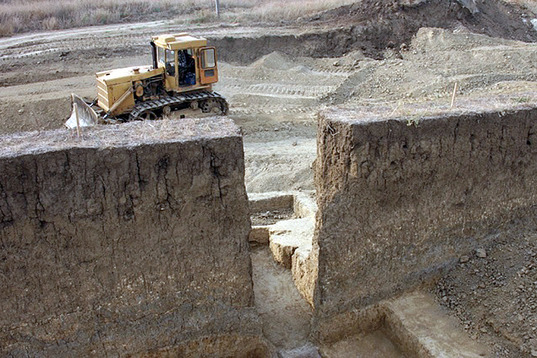
Earlier, the state protection department of cultural heritage of the Krasnodar Territory issued the UTK order to terminate the work. " The construction takes place directly on the territory of the cultural heritage object . In accordance with the Federal Law, this territory belongs to the lands of historical and cultural purposes, the non-purposes of which are prohibited. The builders did not contact us before the production of land work, as the law requires," the head of the monuments of the archeology of the state protection of the cultural heritage of the Krasnodar Territory Georgy Davydenko . Lands were awarded on a public cadastral map on the Rosreestr website.
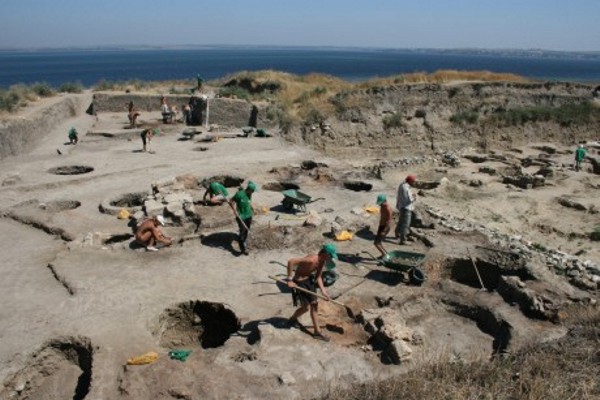
In an interview with the Novaya Gazeta of the Kuban, Davydenko noted that the court decision of October 6 cannot be called final, since it has not yet entered into legal force. In the meantime, on the territory of Fanagoria, according to Davydenko, the work is nevertheless frozen, although before that builders practically destroyed 6 square meters of necropolis.
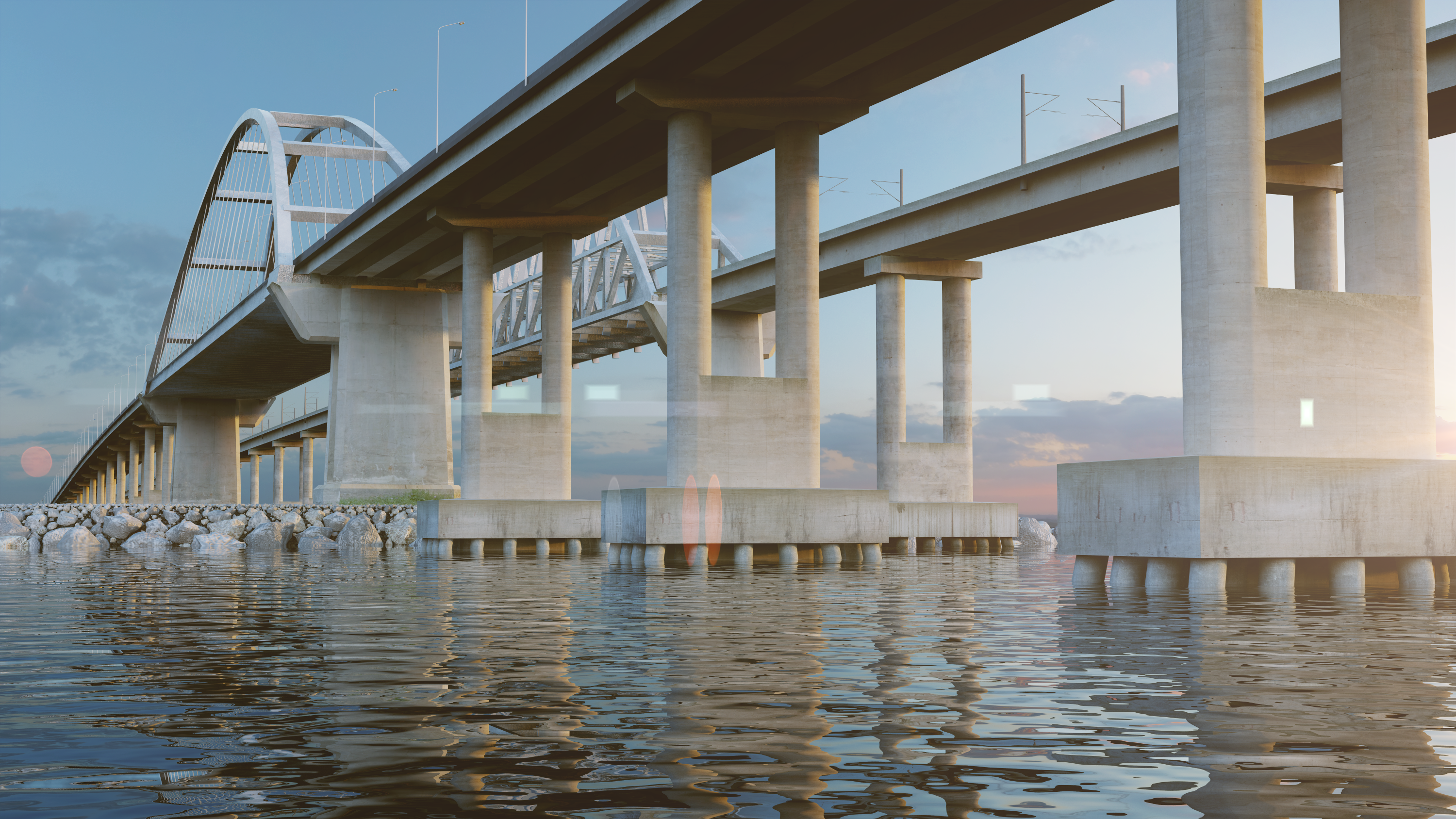
The Kuban-24 Coisters Foundation and the Kuban-24 website previously reported that the company UTK, whose head office is located in Sochi, acts as an investor of an auxiliary facility during the construction of a road and railway bridge over the Kerch Strait on the Taman Peninsula-a cargo yard to receive and process inert materials. However, shortly after the appearance of this article on the Radio Freedom website, the information that the facility is related to the construction of the bridge was deleted, and a letter was received from the Krymsky bridge press center, which says that "the history described in the article was not related to the construction of the bridge through the Kerch Strait."
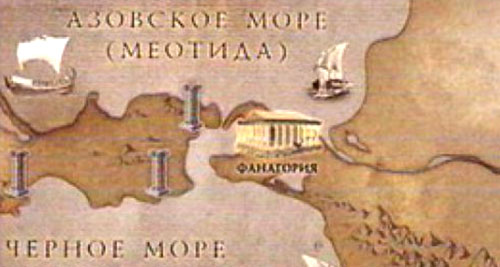
Fanagoria is the largest ancient Greek colony on the territory of modern Russia. It was located on the shore of the Kerch Strait, on the Taman Peninsula, not far from the modern village of Sennaya in the Krasnodar Territory. Fanagoria was one of the capitals of the Bosporus kingdom. It was part of the Byzantine Empire, then the Khazar Kaganate. The area occupied by the hillfort fanagory is up to 60 hectares. The location of the fanagory was established in the XVIII, when the pedestals of the marble statues of Aphrodite were found. In 1822, the soldiers excavated large Kurgan on the territory of Fanagoria.
During the study of the huge necropolis surrounding the territory of the ancient city on three sides, several thousand burials were discovered - marble and cypress sarcophagi, emphasizing the wealth of fanagoria during the heyday. One of the most unexpected finds of the latest period was a sign from the synagogue of the time of Emperor Claudius. The hillfort of fanagory is surrounded by the largest in Russia with an ancient necropolis with a total area of more than 300 hectares. Eliminated from his mounds (more than 600 of them here), finds are decorated today by the Hermitage, the Plaus. Pushkin, Louvre, Museums of Great Britain, Germany and other countries.

Excavations have been carried out annually since 1936, the only break was taken during the war. Now the studies of the ancient city are engaged in the fanagory complex archaeological expedition of the Institute of Archeology of the Russian Academy of Sciences under the leadership of the head. Department of classical archeology of IA RAS, Doctor of Historical Sciences Vladimir Kuznetsov . As noted in the article in Wikipedia, dedicated to fanagoria, great damage to the ancient buildings of fanagoria is caused by residents of the village of Sennaya, who disassemble them on a stone for the foundations of their dwellings. However, Professor Kuznetsov in an interview with Radio Liberty emphasized that in recent years serious measures have been taken against the so -called “black diggers”, the excavation site has been well guarded, and nature is caused by the main damage to the ancient city - a significant part of it was under water:
- This is one of the largest ancient Greek cities in the Black Sea region . For comparison, I can tell you that the largest city in the Western Mediterranean, Massaly, occupied an area of 50 hectares. And fanagory - more than 65 hectares. Such a large city is ancient Greek - very rare in today's Russia, ancient civilization here is represented by a rather limited number of monuments. The advantage of fanagory also lies in the fact that the city lasted 1.5 thousand years, was founded 2.5 thousand years ago, and it absolutely, unlike the vast majority of ancient monuments, was not built up with modern buildings and buildings. It is absolutely free and accessible for any research work, for organizing tourism and so on. The city itself is surrounded by a huge necropolis, and the total area of the monument along with the necropolis is more than 900 hectares. He has a powerful cultural layer - up to 7 meters thick. The well -known example is Chersonesos, a city that was founded by the Greeks, but we know primarily its medieval layers. Because the layers of ancient times are completely destroyed during construction work of a later time.
Fanagoria has retained the cultural layering of all periods of life, scientific research has been underway for many decades, in the past 15 years these studies have been very intensified. Our academic expedition, which is working, is very well equipped, a large number of specialists of various profiles, not only historians, but also archaeologists work here. And along the way, and in general, it is also not the last task - it is a popularization of knowledge about these places, generally about the history of the south of Russia, the creation of a tourist cluster. That is, the task is multifunctional. Last year, the government of the government created a museum-reserve, and state, not regional, the first of this kind in our country, a museum-reserve. And we assume that during the coming years the issue of the construction of a large again specialized and first state archaeological museum in our country will be resolved. We hope that this will be a large museum, and then it will, in general, will be such a cultural point on the map of the south of Russia, where a large number of people will go. Fanagoria is located on the Taman Peninsula, this is the Krasnodar Territory, and there are a lot of resorts nearby, and Anapa, and not very far in Sochi. Therefore, fanagoria can become a very important point not only on the scientific map of the country, but also from the point of view of the tourist, ”Professor Vladimir Kuznetsov hopes.
Fanagoria is also famous for the fact that in August 2011 Vladimir Putin (at that moment in the rank of prime minister) plunged with scuba gulfs to see the flooded part of the fanagoria, and raised the well-preserved fragments of two Greek amphones to the surface. This episode caused a whole shaft of ironic and sarcastic comments about the "accident" of the find, although Professor Kuznetsov insisted then that such finds were a common and "premiere, if he swam longer, he would have found 22 amphoras."
-

Andrey Sharogradsky
International Radio Offer Freedom. Author and host of the information and analytical digest, podcast "Time of Freedom"
-

Alexander GOSTEV
The editor of the RS information service, international observer, author and editor of the heading and podcast "Atlas of the World"
Gosteva@rferl.org