
Translated material
Healthier, slimmer and happier
How the working conditions will change in the near future
Large corporations have long been experimenting with workplaces and conditions for their employees - high tables, additional education, sleep capsules, time for their own projects. Recently, Sweden discussed the introduction of a six -hour working day - this caused a new wave of discussions of working conditions throughout Europe. How should a working day, workplace and work itself be arranged? What professions will die and which will remain? At the request of Medusa, scientific journalist Karen Shainyan studied the main views on the future of labor and employment.
We will receive less
Briton John Meinard Keynes, the founder of his own direction in economic theory, wrote the essay "Economic opportunities for our grandchildren." In it, he predicted prosperity to the descendants of his contemporaries, but he warned that technological unemployment would inevitably appear due to the temporary gap between the automation of some types of labor and the appearance of others that could take up frequent hands.
Some economists do not agree with the classic: in their opinion, labor automation entails an increase in productivity and earnings, and this, in turn, entails an increase in the consumption of goods and services, giving impetus to further economic growth.
On large segments, the experience really shows that automation increases, and does not reduce prosperity. In the UK, the average earnings increased three times in the period from the XVI to the XIX century, and then once tripled over only one century-from 1875 to 1975. The more intense industrialization, the richer the people, and the disappearance of old professions and jobs with more than compensated by new, more interesting and profitable. At least, it was with the transition from the industrial era to the post -industrial. Alas, this growth cannot be endless, and therefore even in such prosperous countries as Germany, Great Britain and Sweden for the last 10 years of salary do not change for inflation. This also happens because automation of processes allows the employer to save on frames. And the further, the more qualified personnel remain overboard.
In his study on the future employment, Oxford scientists Karl Frey and Michael Osborne simulated the future for 700 professions and calculated the probability with which computerization will leave different specialists without the work of the next 20 years. It turned out that about half (47 percent) of professions are under a blow. And, of course, the probability of computerization of the profession is inversely proportional to its complexity and profitability (we are talking about Western countries). Thus, psychoanalysts and generally doctors, scientists and engineers, editors and coaches can sleep calmly, but telemarketologists, auditors, real estate trading agents and even drivers should think about retraining courses. It seems that Keynes was right, he simply looked in his forecasts not a step forward, but immediately ten.
The elites will become richer, we are poorer
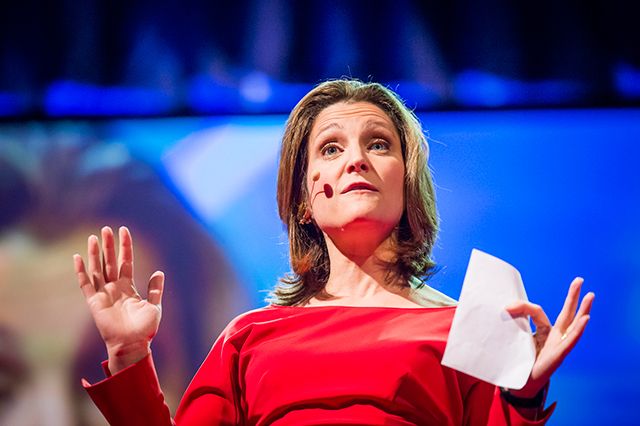
Another conclusion follows from the same prerequisite: if new technologies allow the business owner to automate what a person did before, therefore, he can save on workers. So the businessman becomes richer, but ordinary employees find themselves on the street. Technical progress as an engine of social inequality is a spectacular trend that many economists and intellectuals explore, and the fight against it has become an obligatory part of the leftist agenda in the past twenty years. Christy Friland, Canadian journalist and public figure, author of bestsellers about plutocracy, claims that in the history of mankind the gap between the rich and the poor has not yet been as significant as in recent years. Thus, technologies bring not only benefits. On the one hand, they allow you to feed the hungry in the most poor countries, on the other hand, the growth of inequality in developed countries leads to social tension, an increase in discontent, and most importantly - to the emergence of a new aristocracy. The best universities and workplaces are becoming less and less accessible to the middle class, and the elite is pushed out, and this greatly heats the atmosphere in many countries.
We will engage in nonsense
However, the middle class is not yet too concerned about the growth of the well -being of super -rich, it has more drooping problems. Losing their previous work due to its machinery, more and more people are forced to engage in not the most necessary work, which simply allows them not to slide into poverty. Devid Gribber, an anthropologist from the London School of Economics, calls this “shitty work” (Bullshit Jobs) without abysses. It is such work that is the essence of the employment of the whole class, which is contemptuously called the office plankton. The main task of such a work is not to produce something, but only to stop social stress: so that everyone who leaves the new machinery is overboard, is on business, at the computer and on vacation in Gelendzhik in the summer, and did not hang around the strikes of the unemployed. This model is especially relevant for Russia, unless it is based on robotization and technological progress, but by hydrocarbons. When the country's life provides almost exclusively natural resources, ineffectiveness of labor does not seem so disaster. In this situation, work is valuable not as a way of production of goods and services, but as a social antipyretic. Apparently, office plankton in developed countries and resource in the foreseeable future will not decrease.
We will work less
The same Keynes predicted that the grandchildren of his contemporaries will work 15 hours a week, that is, a little less than two eight -hour working days. It’s nice to fantasize how the weekend would have changed places with a working week, but we are still far from such a Keynesian paradise.
However, a certain movement in this direction has already been outlined. So, for example, in Sweden many companies and institutions are transferred to a six-hour working day (that is, a 30-hour working week). According to supporters of a lightweight labor week, this is of this continuous benefit. On the one hand, people should have more time for a family, sports, rest, meditation and other classes that will make them happier and healthier. This, in turn, will save on medicine (according to a recently published study conducted at the University College of London, more than 15 hours of overtime per week for a third increases the risk of heart attack and stroke, and these are two main articles of the expenditures of healthcare budgets). On the other hand, in the vacant time, a person begins to consume goods and services, and this is also good for the economy. On the third hand, the initiators of the abbreviated schedule expect to increase labor productivity. It is proved that a shorter working day is more saturated on average. The goal of the experimental reductions that are taking place now is to prove: the effectiveness of each employee at the 6-hour working day increases so much that it covers the costs of hiring additional people. However, so far such a grandiose favorable effect of a short working week is only a theory. One way or another, as follows from the previous paragraph, if the solid part of people works at “unnecessary” work, there will be no harm from the 6-hour working day.
We will experiment more and create more
The new machinery has unconditional advantages. With the advent of new technologies, the cost of entering some markets strives for zero. Now, in order to start your own business, sometimes you don’t even need an investor, your own savings or just ideas and ability to work with a computer - this is enough to start a startup. Accordingly, the price of a business loser also falls. In addition, the money that the super-rich save on the draft office power also needs to be put somewhere. And where else to put them, except to invest in promising ideas and directions? So there is still a chance of talented people with their dreams and ideas, despite the growing inequality, nor the super -rich.
On the other hand, the time freed from work, as we have already noticed, people will inevitably fill out a search for new experience, entertainment, emotions and notorious personal development. In other words, the tennis, yoga or ikeban instructor in the future has more chances for good earnings than the driver of the tram. And trams, and even cars will definitely be automatic, but it will not be possible to rob to rob the sphere of emotional soon.
We will be employers ourselves
The reduction in jobs, inevitably following the technological boom, will not be so painful. The need to belong to the company, go to the service and be listed in the organization will fall - also thanks to the new machinery.
Do you need a doctor? Plumber? Housekeeper? There is a special application. In the era of total smartphone and sherring economy, freelance becomes more popular than ever. A taxi example is very indicative. A couple of years ago, a taxi through the application on the phone was exotic. Appearing approximately at the same time, companies like Uber, Gett and Yandex Taxi began to grow exponentially, by 300-400 percent per year. Technologies allow you to quickly connect the manufacturer of services with its consumer, and exclude on this path of any intermediaries. A thought -out service changes entire markets, as Airbnb did with the tourism market.
However, these companies were far from the first. For example, Appirio specializes that it connects customers with freelance programmers. Elantesk connects 4 million companies with 10 million freelancers. Eden Mvcallum, founded in London back in 2000, connects 500 McCensey level consultants with those who need consulting services. The AXIOM database has more than 650 lawyers who are hired by the largest companies for piecework. Tongal helps to find work 40 thousand specialists from the film industry. What can we say about doctors, tutors, psychologists, non -ethnics, instructors of all stripes and less qualified professionals like a “husband for an hour” - all the more, the more they will be employers themselves.
We will work standing and even on the move
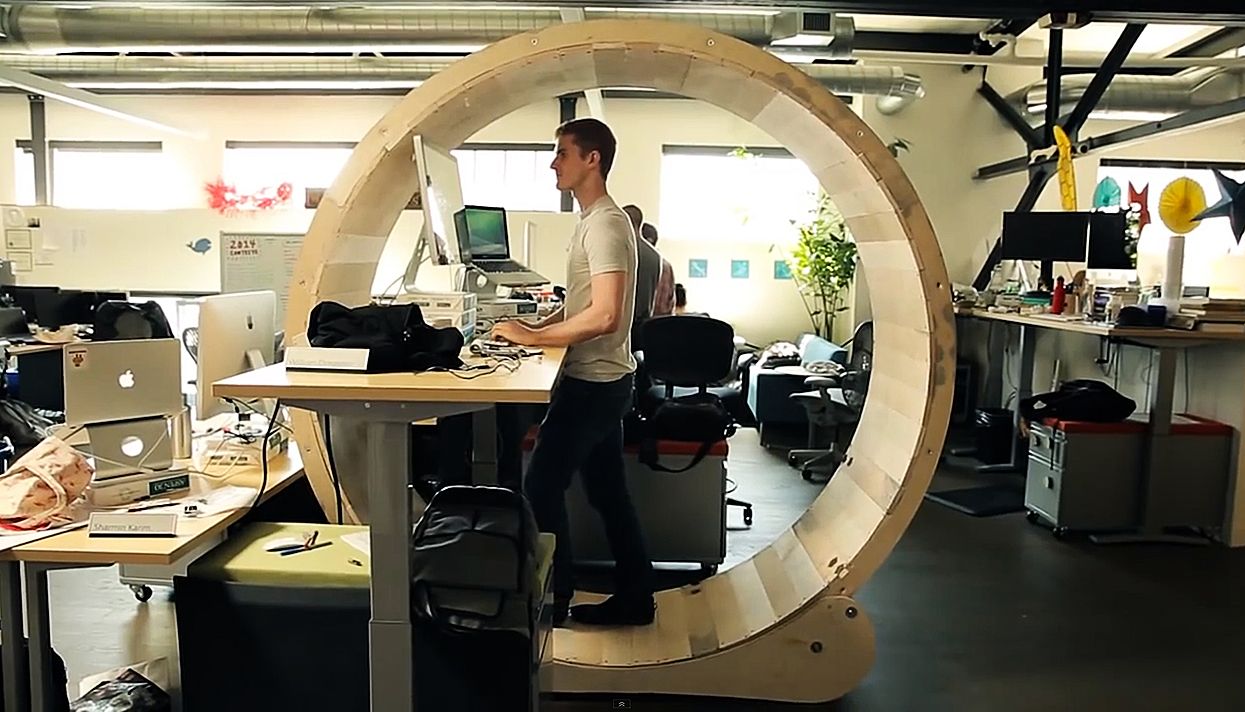
You can list for a long time how the content of the work will change, but its form will actually change. In the simplest sense. We are not talking about couriers (who will be replaced by drones sooner or later), but about office workers. Office work gradually ceases to be sedentary. It is repeatedly proven that a sedentary lifestyle is harmful. Anyone who sits most of the day is subject to obesity, heart disease, even some types of cancer and - ultimately - early death. Therefore, the work of standing around the world is already gaining popularity - at high desktop, which are already in the offices of all progressive companies. Oddly enough, you quickly get used to working, and even get even less tired than in a sitting position.
But this is not the limit. The most advanced leaders equip the jobs not only with high tables, but also with treadmills so that employees can work on the go.
You can treat how it looks different, but I do not want to argue with the fact that such office places are the future. Including thanks to this strange technology, we can be healthier, slimmer and happier than those who stand still.
Karen Shainyan
Moscow