
Translated material
The economy of an individual
What is known to the Nobel Prize Laureate Engus Diton: Vox
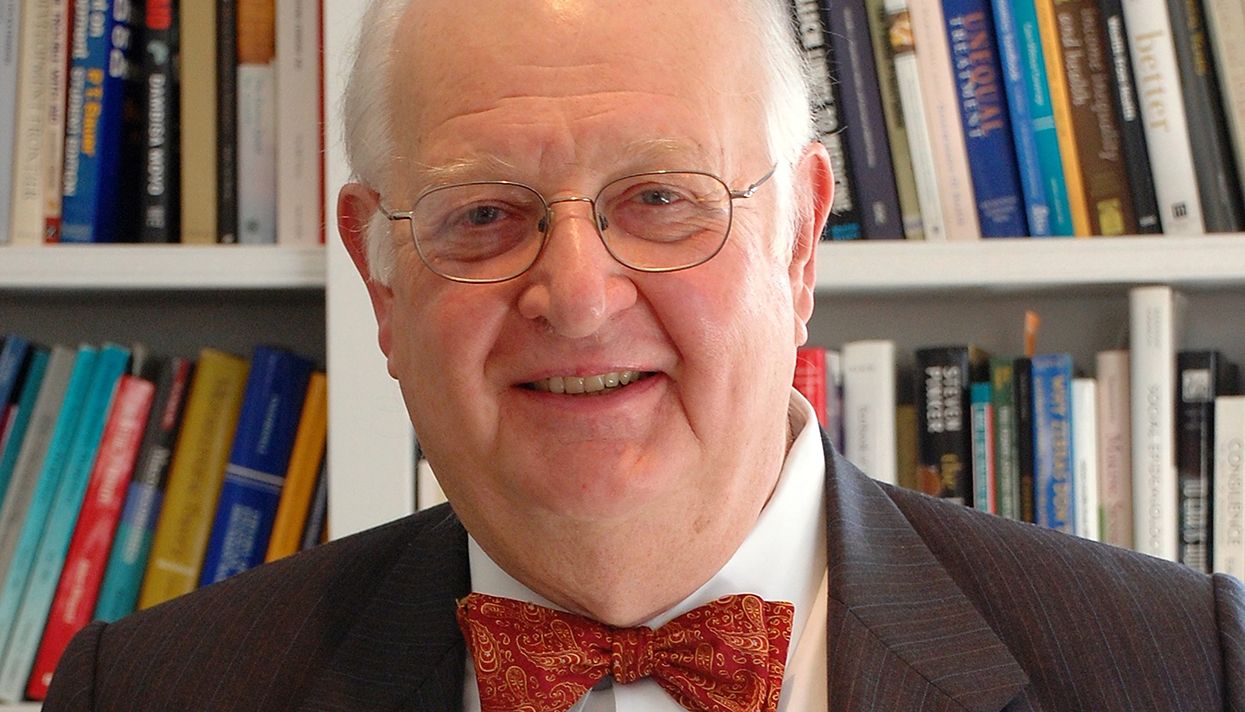
The Nobel Prize for Economics for 2015 was awarded to the Scotsman Engus Diton from Princeton University. He was awarded "for analysis of consumption, poverty and well -being." The Nobel Committee noted the work of Diton in three main directions: the distribution of expenses by consumers, the ratio between expenses and savings, as well as methods for analyzing the level of poverty and prosperity in society. Vox writes about the contribution of Diton to the development of economic thought.
Angus Dyton was born in Scotland, but for a long time works in Princeton. Diton is not so much known for individual breakthrough articles, but as the author of the large building of scientific works. Nevertheless, in his scientific career, several main motives and directions can be distinguished.
The main one is the methodological approach of Diton: in his works, he operates with data on the individual experience and behavior of individuals and households. According to the scientist, analyzing such data can be obtained by the results more relevant and having a greater applied value than the information obtained as a result of the study of standardized macro level models.
Economic realities are different in different countries and for different people. Poor and rich people consume different products and for each place and time period their behavioral features will vary. This is especially important to consider in the study of poverty: in order to combat it, states and non -governmental organizations need to understand exactly how this phenomenon manifests itself in the field. It is not enough to set a poverty line at 1 dollar and 90 cents per day and see what data is obtained around the world. You need to understand what is 1 dollar and 90 cents per day in Nigeria, in Nepal, in Nanjing.
Interest in individual consumption led Diton to study the problem of health and well -being. In many parts of the world, healthcare costs make up a significant part of the expenses. However, if people buy tickets to the cinema because they like films, then they pay for the services of doctors not at all because they love medical rooms.
In addition, Diton is known as the author of popular science works on the economy, as well as a critic of providing economic assistance to other states. The scientist has repeatedly stated that in order to achieve economic well -being, it is necessary to increase the legal capacity of the state, and economic assistance does not contribute to this, and even vice versa.
“Money is a convenient way to evaluate economic well -being. We can say that Jose gets a thousand more than Joe, but two thousand less than Giuseppe. This is understandable and it is easy to check. But in the real world it does not work. If Jose lives in Texas, and Joe is in Toronto, then they receive their thousands in different currency. You can calculate income on the course, but the exchange rates change at the speed of the financial market, but the standard of living does not change. ”