Date
Author
Наталья Джанполадова; Светлана Павлова
Source

Preserved copy
Translated material
According to the Soviet cliche
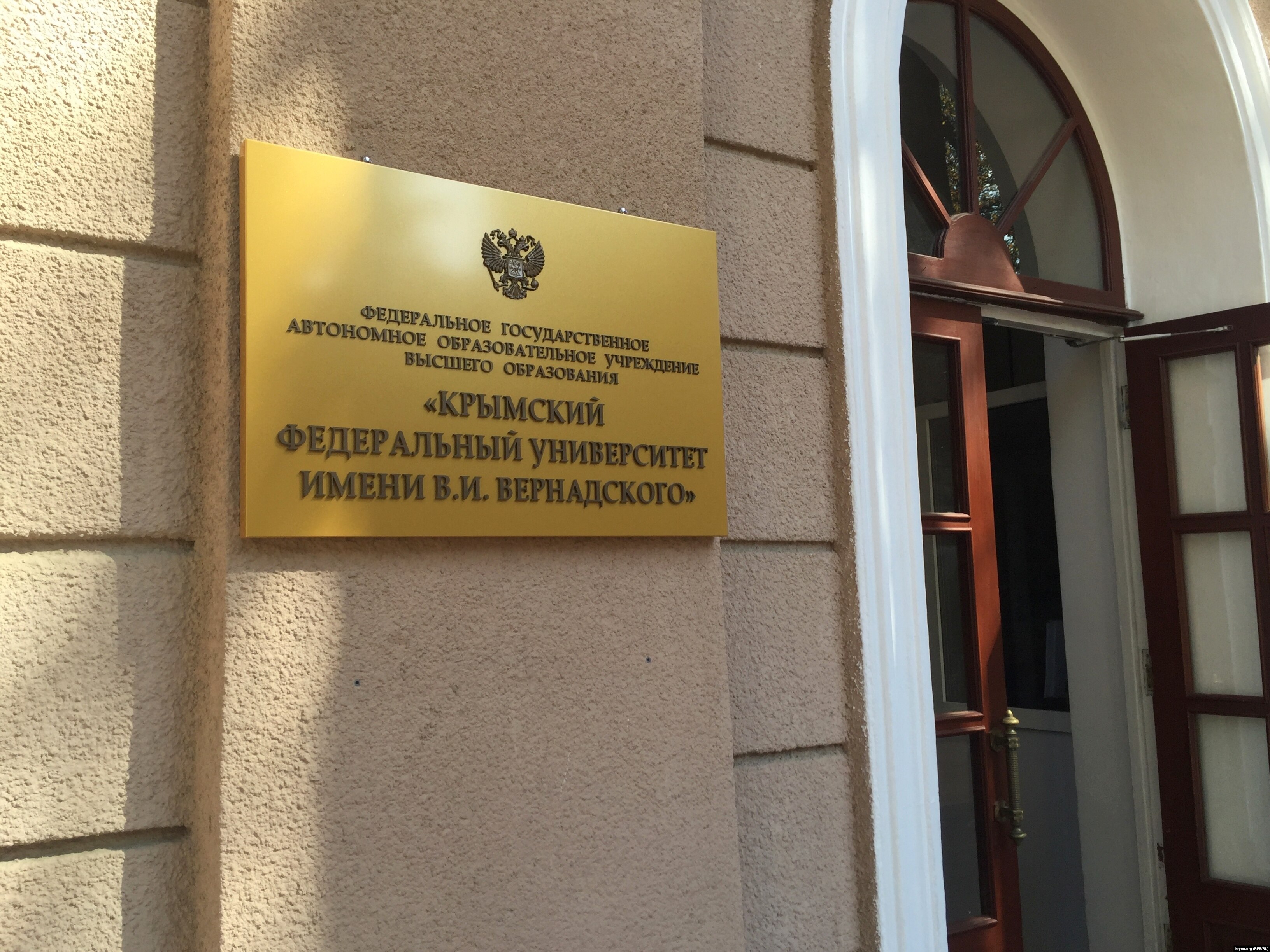
The Crimean professor is dismissed for the opinion that after the annexation of the peninsula, education was rebuilt here "in the Soviet Lad"
Head of the Department of Russian and Foreign Literature of the Tauride Academy of the Crimean Federal University. Vernadsky , professors Vladimir Kazarin is dismissed after in mid -September at the Forum 2000 conference in Prague, he criticized the Crimean education system.
According to the professor, after the attachment of the peninsula to Russia, the “educational field” of the republic turned out to be “completely cleaned”, out of more than a hundred universities in Crimea, about a dozen remained, and the work of teachers was complicated several times due to the bureaucracy that arose as a result of the merger of several educational institutions into one Crimean Federal University. According to Kazarin, after this speech, he was “sent by a messenger” from the university, who said that the professors were most likely not to be re -elected in the elections of the deans of the faculties and heads of the departments.
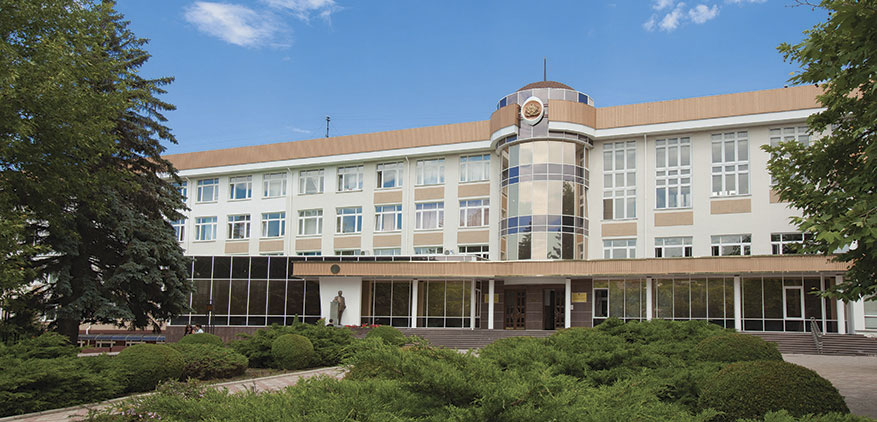
Then statements of the leaders of the KFU, dissatisfied with the statements of the professor, began to appear in the press. First, the chairman of the Committee on Education, Science, Youth Policy and the Sports of the State Council of the Republic of Kazakhstan Vladimir Bobkov said that he “completely disagree” with the criticism of Kazarin, and suggested that now, for the leadership of the KFU, he would not sign a contract with Kazarin and send him beyond the limits of the higher education system, which he doesn’t like it so much, and he didn’t want to work all the apparently. ” A few days later, the director of the Tauride Academy of KFU Igor Voronin joined this opinion, agreeing that he should not extend the contract with the professor, and stated that he was surprised by the statements of Kazarin, who “positioned himself with a Russian man for many years, was known“ Pushkinist ”and“ sowed a reasonable, good, eternal ”in the minds of Crimean youth, teaching Russian literature. “These are the professors of Tulumbas,” concluded Voronin. Rector of KFU Sergey Donich called Kazarin’s statements “boorish” and “cynical” , saying that the professor “distorts reality for the sake of Ukrainian politicians”.
The press service of the KFU Radio Liberty reassured: the vice-rector of the University for International Activities and Information Policy Sergei Yurchenko said that "anxiety about the fate of Vladimir Pavlovich Kazarin is not justified." According to him, he was informed in the personnel department that Kazarin is still an employee of KFU, acts as the head of the department of Russian and foreign literature. “There is neither an order to dismiss, nor a statement from the professor in the frames,” said Sergey Yurchenko.
However, the elections of the deans of the faculties and the heads of the departments at which the scientific council will decide the fate of Vladimir Kazarin will take place only in late October - early November.
The professor himself does not plan to stay at the university, according to him, this is no longer the "university" that he created and in which he worked. In an interview with Radio, Freedom Vladimir Kazarin spoke about what happened at a conference in Prague on September 15 and why this was followed by such a reaction of the leadership:
The Crimean professor is dismissed for the opinion that after the annexation of the peninsula, education was rebuilt here "in the Soviet Lad"
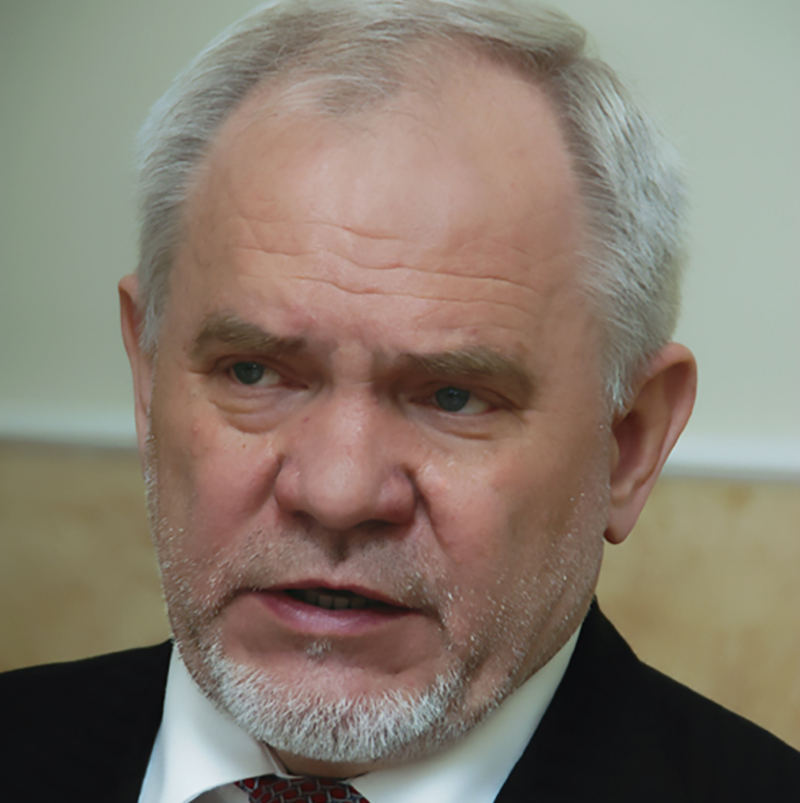
- We certainly remained the Soviet Union. He returned to us, including in grotesque manifestations. What I mean: in Soviet times, we denounced the West, but always with extraordinary attention listened to what they were talking about us there. We needed to drive Solzhenitsyn into America, then to start hearing what he was saying. The said inside the country was not taken into account. Partly surprising me how much everything happens along the Soviet cliche. The main provisions of what I said in Prague, I expressed this whole year: in an interview with Crimean and Ukrainian journalists. But only as you say in Prague, such a violent reaction begins. I said simple things: that over time I was more convinced of my innocence, that the educational field of Crimea was completely cleaned by new Russian times. In the old days, we had 93 universities in the Republic of Crimea, and 34 universities in Sevastopol. First of all, we had all the classic old universities in the Soviet era. This is my Tauride University, and the Agrarian University, and the famous medical university, and construction, and others. Secondly, these were branches and Ukrainian universities, these were branches of a huge number of Russian universities. There were also private commercial universities, in Crimea they were easy to register, they were registered. And this was the most poured field of the university culture, a kind of "Makhnovshchina". She had the drawback that she was something uncontrollable in Makhnovism, but I, as a university worker with 40 years of experience and has repeatedly been abroad, I want to say that this, for example, created competition.
The main provisions of what I said in Prague, I expressed this whole year
A number of small commercial universities showed themselves well, people knew that there you could get a good education. Again, there was its own freedom, and a division was spontaneously established: you want a serious diploma-they give a serious diploma and you have to seriously study, you want the average-come here, here it is simpler, you want it at all-go there, there is completely somehow. Everyone understood that if you have a diploma of the Tauride University, you are one specialist, if some Sharashkin’s office, you are a different specialist. I once liked it, in Kyiv there was an announcement of hiring for work: we are typing specialists there and below-not to offer applicants with diplomas of the University of Culture of Poplavsky Services. We have such a Poplavsky , singing rector. A man is without a voice, but all the time he sang and PR his university. And everyone understood that education was there. As a result, there was competition.
- What happened after Crimea was attached to Russia?
Created a monster between the faculties of which approximately 110 km
- Today, one federal university remained in Crimea, where all other universities were leaked, everything else is closed. Two local universities remained: the Crimean Engineering and Pedagogical University and the former Kulek, created by Professor Yakubov, the school of culture. And there is only one all -Russian: KFU - Crimean Federal University. There is also one in Sevastopol. And all. Someone may like it: clean, good, spacious. But not always giant scientific associations achieve outstanding results. Often in small commercial scientific centers, where people try and seek, achieve results, and people from there receive Nobel prizes. And finally: why was it to pour all a medical university into this, if we say that in the field of medicine in Crimea it is very bad with personnel? So the university could prepare personnel in the new conditions. You are talking about failure in agriculture, why did you poured agricultural university here? As a result, a monster was created, between the faculties of which approximately 110 km. How can this be really controlled, how can you optimize the educational process? We partly repeat the American experience where there are all specializations at universities: both the Faculty of Construction and the medical. But they grew up like a tree from some college. They have a single campus, common laboratories, a single library ... And what unites us here? Only about 8-9 years we will organizationally attach to each other. And as a result, we will lose in all directions.
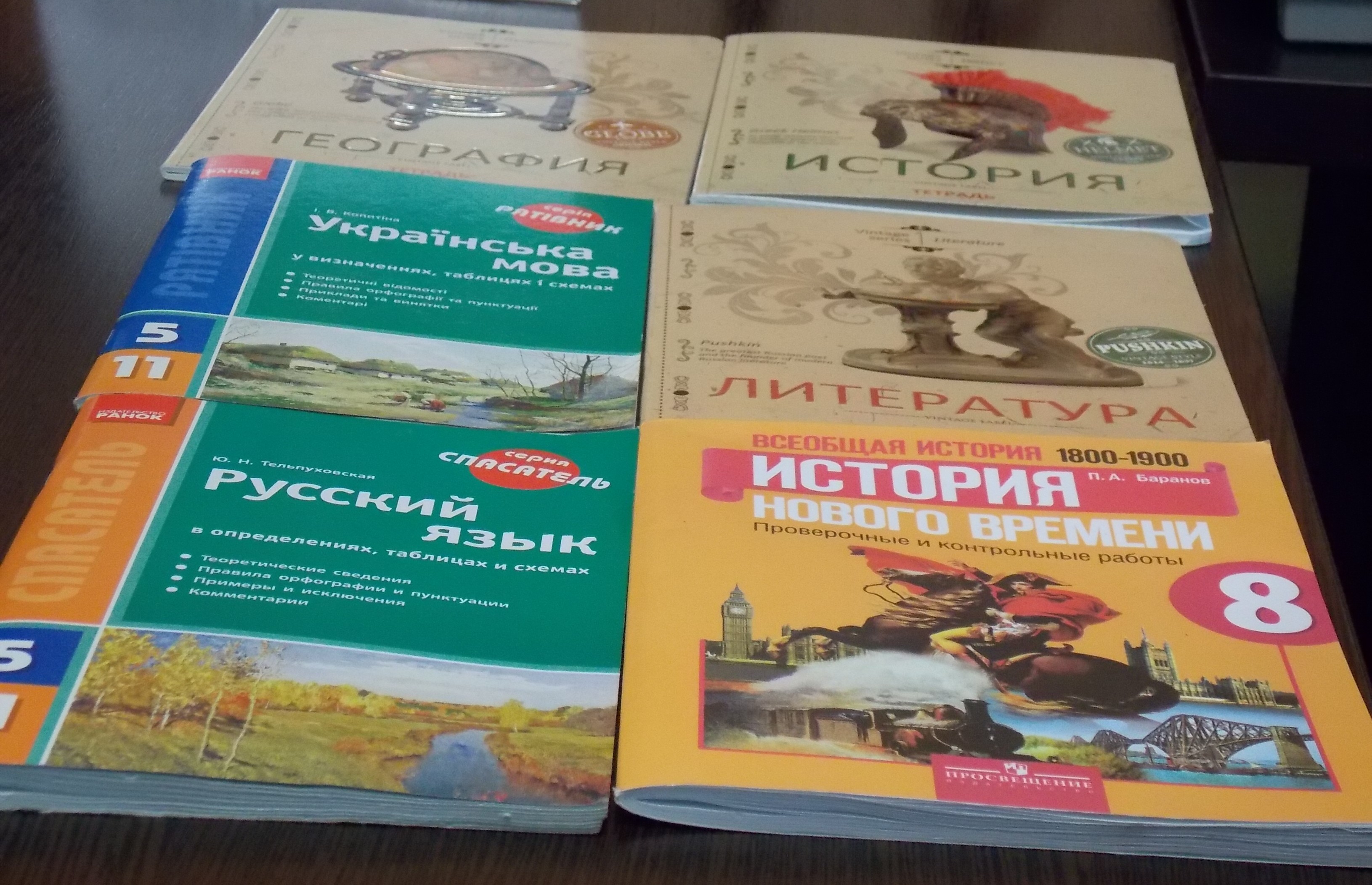
- How does KFU work now?
- The universities included in it became academies, their rectors, directors, vice -rectors have been preserved there. All this united at the Crimean Federal University, where there is its own rector and its vice -rectors. Departments have been created that are completely monstrous in size, it is impossible to break through anything through them. Once they said on the Internet that if the management apparatus has more than 500 people, then it is already impossible to manage the company. They themselves already correspond with each other, respond to letters, etc. These live in the same way. For example, you need to change something, an examination scheme for some course. They answer: "No, it is impossible, in the academic plan it costs." - "So change the curriculum!" “No,” they say, “it’s too difficult, you need to collect signatures, 40 people ...” and so on. As a result, nothing is decided! There are some boys and girls with bachelor's diplomas, not even master's, that according to the old system is an unfinished higher education, and they teach us how to work. They scored vice -rectors in KFU, half of which not only have no title of doctor or candidate of sciences, but even not a single day worked at the university. And they give us recommendations on how we need to teach.
There are completely monstrous innovations: here is the stimulating salary that is calculated by ratings. If you are lectures, you have 75 points, if you are printing - here are another 60 points, and then it suits: I released a wall newspaper with students - 20 points, held a meeting with students - 30 points, sports, a wall newspaper, a combat leaf - and as a result on this nonsense you can collect much more points than at lectures, scientific articles and monographs. This is complete nonsense! This monster does not want to respond to our requests, we start a polemic - immediately a bossy shout: "Everything is at a stand, who allowed you?!" What does it mean: who allowed me? Am I working at the university or in a military unit? The autonomy of the university involves a free exchange of views and the development of collegially any solutions. But now everything is decided from above.
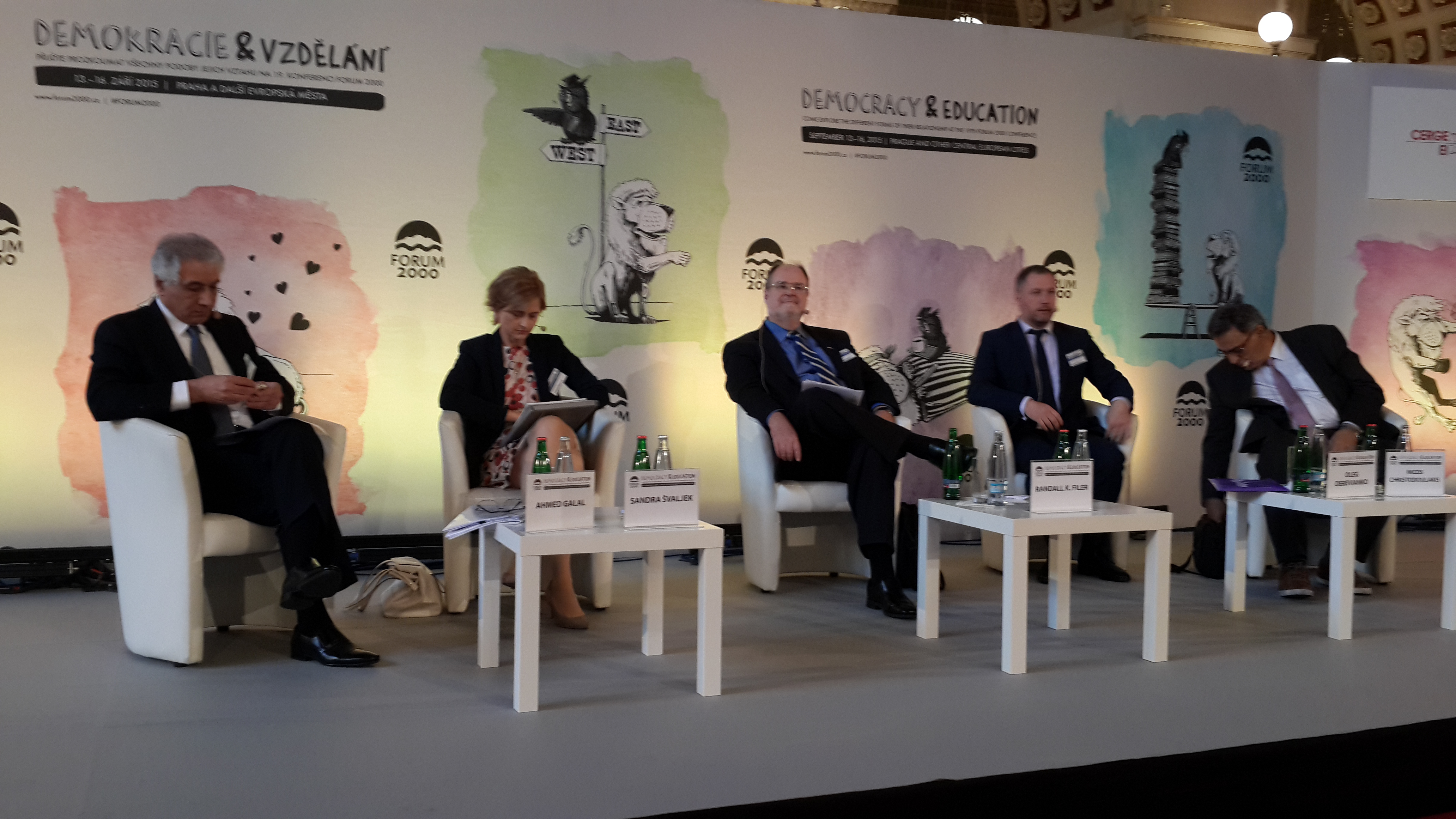
- And you told about all this at a conference in Prague?
- Yes, probably most fully told. It was posted on the Internet and heard. We have as: the university system suggests that teachers are re -elected every five years. After uniting universities, we have not yet been chosen, we are so far, I.O. And finally, they decided to start electing us. First, the deans and heads of the departments go. The department unanimously recommended me when there was a meeting three or four weeks ago. And then there was a large conference in Prague. My colleagues from Transnistria performed there, from the University of Tiraspol, there was a colleague from Chechnya, from Grozny, I performed from Crimea. After the forum, it began, they say, if he acts so and so criticizes the system, then there is no need to choose it. Even before this opinion sounded, they sent me a messenger from the main corps that told me, they say, you know, they probably will not choose you. I said: yes there are no problems, I have long matured to leave, because this is not the university in which I worked and which I created. I opened here in 88 the Crimean Tatar Faculty, opened the Turkish branch, the Greek branch with Athenian University and much more. We held more than 30 conferences per year, issued more than 20 scientific collections. In many ways, humanitarian education at this university was behind me and my colleagues. But this is not the university. The university cannot exist without exchange programs. The students of our university are completely deprived of them: all the contracts that we had with 12 countries were terminated, because we are a sanctions zone. We cannot exchange teachers, but for a university, science, this is death. The most painful problem: the KFU diploma is recognized only in Russia, it is no longer recognized anywhere. Therefore, I have already matured to leave, I just had to close all the questions: so that all my students, candidates, and the doctors defended themselves to approve them, so that they would receive diplomas, so that we would release the scientific collections that planned. I said at the department: there is my student, doctor of sciences, let's choose it, I recommend it. The rector recommended another. They are both of my former doctoral students, both were grown by me, but I believe that this one was more ready for this work. I no longer submitted documents for the competition, because they began to put forward all conditions. The competition will take place somewhere in a couple of weeks.
“But formally they told you that you will not be re-elected because you allowed yourself to criticize the education system?”
I have been galloping for a long time, because it is not the university in which I worked and which I created
- They said! They openly said. The first said the permanent representative of the Commission on Education, Science, Youth and Sports Mr. Bobkov in our Crimean parliament. He said, they say, what is it for such statements that he insists that the rector of KFU tore the contract with the master, they say, he has nothing to do at our university. Then, after 4-5 days, the director of the Tauride Academy of KFU Igor Voronin made a statement about what kind of strange behavior it was and that he shares Bobkov’s point of view, that such a person cannot work at our university. And then Donich, the rector of KFU, connected. In an interview, he said that these are boorish and unacceptable statements and that the scientific council would decide the fate of such managers. But in this situation, my position is what strengthens. We have such a “typical KFU” site, there students posted a hundred -capacity: whose position you support. And when I came in, I saw that Professor Kazarin’s position supports 51%, the KFU leadership - 23% and 21% did not decide. On the other hand, my colleagues are also dissatisfied with this, although there are a lot of reasons that forces them to speak more restrained than me. What I received from a number of universities of the invitation to work also reassures me and strengthens my positions.
“But you are not planning to stay in Crimea?”
-No, no, there is nowhere to stay in the Crimea. I will go to any of the Ukrainian universities, I have friends, colleagues there. This is the Dnepropetrovsk and Kharkov universities, and in Poltava, and in Nikolaev. We will discuss with colleagues, and somewhere I will begin to work, ”Vladimir Kazarin hopes.
In the structure of KFU named after Vernadsky, as stated on the University’s website , now includes 7 academies and 6 colleges. According to the deputy of the State Council of Crimea Vladimir Bobkov, "they all completely retained their specifics, retained the contingent" and "significantly expanded the number of budget places." This, in his opinion, “allows you to satisfy at 80-90% the need for higher education” among Crimean applicants.