
Translated material
Again not Yalta. How Putin's plan failed in Syria
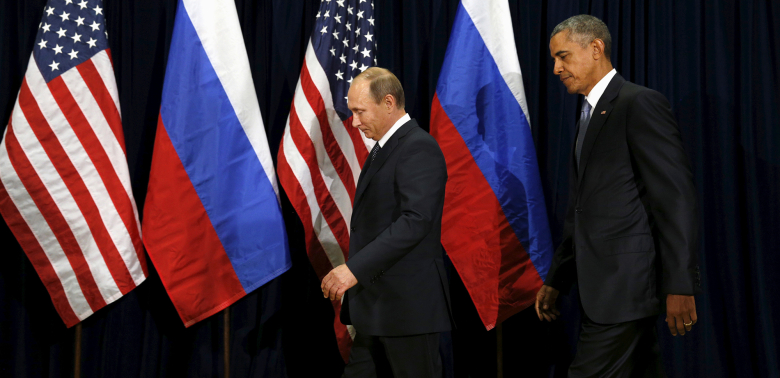
Go to *** - this is if translated into a very understandable Russian. The English-language version of this thesis of the White House spokesman Josh Ernest turned into a detailed sarcastic tirade . No, they will not accept the delegation led by Dmitry Medvedev, since they do not plan to conduct military negotiations with Moscow in Syria at all. And they are not at all surprised that Putin “from some despair” - a direct quote - decided to send a second person in the country to them, but this is hopeless: it is impossible to persuade America to join the Russian campaign. Clearly, by points and with a rough malicious smile: Russia in complete isolation - only the tyrant Assad and Iran collaborate with it; Until the Minsk agreements are met, the sanctions remain in force. Goodbye.
A couple of weeks ago, Vladimir Putin, if he did not win, then at least suddenly transferred the party - already on another board - into a confused Mittelshpil. What did you come up with in Moscow? What is their plan? The West was confused by the new Russian intrigue in Syria. While everyone was understanding where-and for whom-in Syria of the Kurds, Al-Nusra, Hezbollah, etc., the American press had already criticized Obama for weakness and indecision, in the Syrian direction he generally had the same failure, and Putin, on the contrary, gave her due: whoever wants, that bombing, and no one he declines. You can’t really object against the fight against ISIS either.
The West was confused because he fell into a trap of semantic ambivalence hidden in his beloved Putin's "Partner"
The West was confused because he immediately fell into a trap of semantic ambivalence hidden in his beloved Putin's word “partner”. Is Putin's partner a friend or an enemy? Russia wants to help or is it enmity again? What happens in Syria: a war with world terror or a new clash of two powers? This ambiguity caught my eye in New York, when the Kremlin and the White House were publicly versed in who invited whom to the meeting.
Logically and based on experience, it turned out that still a clash, but his modality changed: until recently, the Kremlin had the whole responsibility for the American “partners” for what he called the coup in Kyiv, and now he proposes to build a joint front. In general, it was definitely not possible to answer these questions, and the Syrian crisis is too hopeless, painful and bloody, in order to reject Moscow proposals as hypocritical and useless. The political elite in the States was divided into two camps - here they are, the first signs of a split in the Kremlin.
Moreover, there is no clear answer - the Kremlin's goal -setting turned out to be clamped between two opposite impulses. What to do when the internal mobilization - and, wider, in general, the entire political agenda - are built on the promotion of the Cold War, and if possible, in its hottest, crisis version, and rational arguments come down to the fact that the intensity of the confrontation must be reduced? How to get out of this cognitive dissonance?
Subscribe to read the whole
Make a subscription Redefine.media to read Republic
Subscribe [you can pay for a Russian or foreign card. The subscription is extended automatically. You can unsubscribe at any time.]
Where are the money subscribers going