
Translated material
New, best world
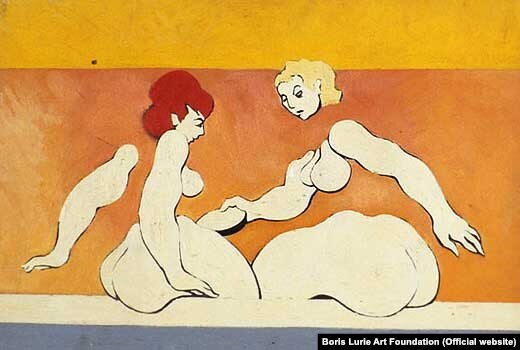
The story of Boris Lurie, the avant -garde and the Stalinist, and his fans of Gertrude Stein
It all started with an amazing story about the artist Boris Lurie, who was retold in New York. Lurie was born in St. Petersburg in 1924, grew up in Riga, and during the war he ended up in a concentration camp. And then miracles begin. “Boris, get up,” the young man hears his father's voice. Maybe this is a hallucination of hunger. Where does the father come from in the concentration camp, and even in a chic suit and in a hat? - "Boris, get up and throw this stupid camp pajamas. I brought you a good suit." It was not a hallucination. When the camp was released in 1945, his father was looking for his son. Then there was America. The son became an American artist. Father is a millionaire. The son continued to live like in a concentration camp. He did not touch his money after the death of his father. He hated capitalism, sexism, venality. He did not want art to decorate the salons. At the very beginning of the sixties, along with a group of New York artists, he proclaimed the birth of "not art"-know art. Here he met the love of his life, beauty Gertruda Styin. No, not a writer, but a collector and legendary art dealer. Everyone knew her in New York. In 1962, they opened the gallery together. With Gertrude Stein, I met in Manhatten, in her apartment, in a huge collection of art of the twentieth century.
- Madam Styne, tell us about yourself and what you are doing.
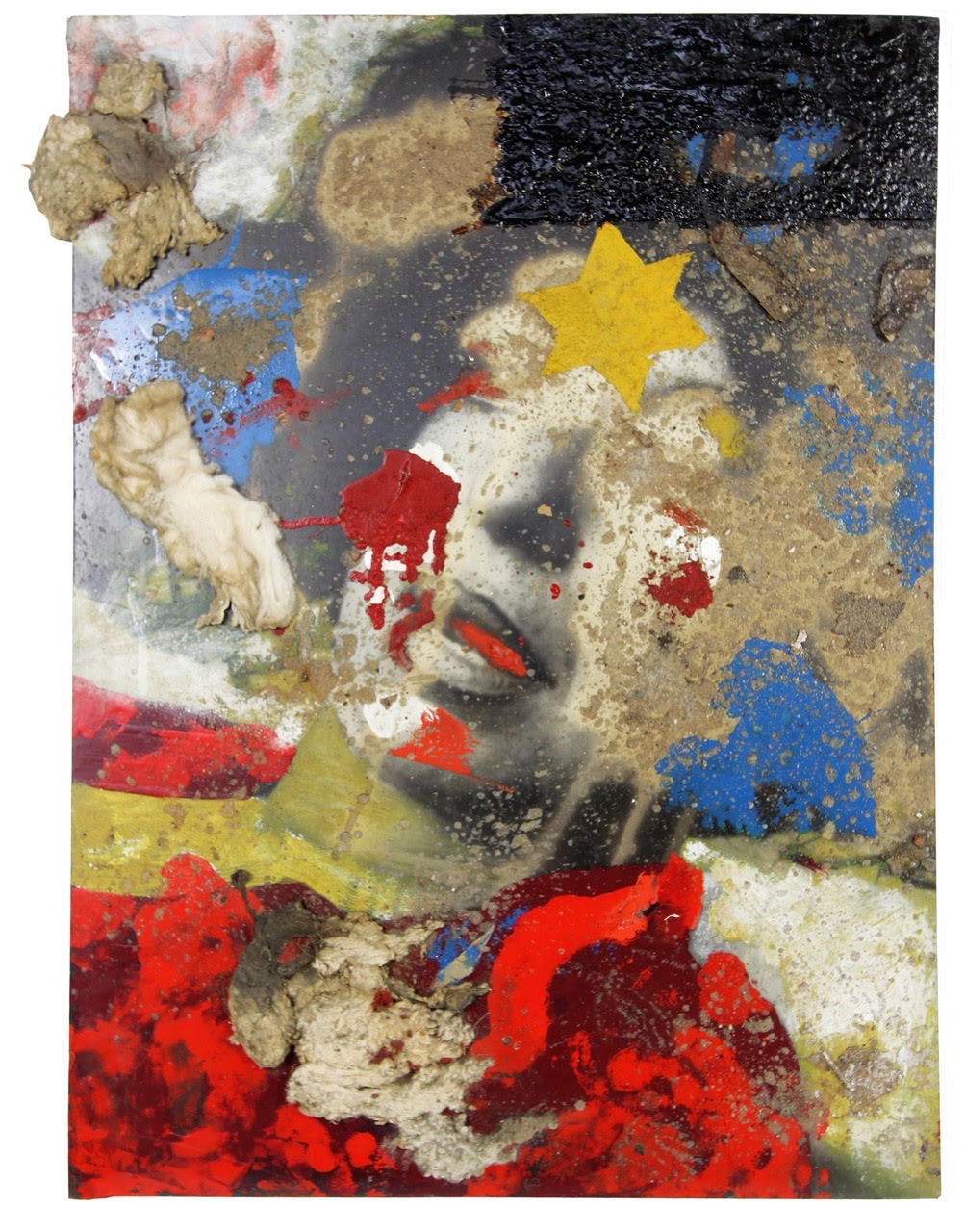
- I am the director and organizer of the artist Boris Lurie. We popularize the No! Art group and look for the opportunity to show the work of little -known artists. I knew Boris for about 45 years and I know this movement very well. I was dedicated to everything he did. I opened the first gallery No! Art. It was a group of "no!-Artists", which included Husama, Jean-Jacques Lebel, Errow, Michelle Stuart and Sam Goodman. We made many exhibitions No! Art. For example, we were the first to make an exhibition with excrement, which at one time produced a large splash in New York.
- Boris Lurie, the leader of the movement no! Art, was born in St. Petersburg ...
-Boris Lurie was born in St. Petersburg in 1924, in a famous house in which Chaliapin lived. His father was a very wealthy person, he knew Lenin. Then the planned industry began. Father produced the saddle and was a very wealthy person. When Stalin came to power, he was forced to move to Latvia, because under Stalin he could be destroyed as a capitalist. Therefore, they left for Latvia, it was in the year of Boris's birth.
-At home, of course, they spoke Russian.
-Mother and father spoke Russian. Boris attended a German school, and his grandmother sometimes spoke Yiddish. And he also learned the Latvian language.
“But he felt like a Russian artist to the end.”
- He loved Russia. He was very Russian, loved Russian music, Russian food, Russian literature, and felt very Russian. And he was a great admirer of Stalin. Yes, he loved Stalin. A portrait of Stalin, which I had to bring him to the hospital, always hung over the table. Stalin hung in his ward. He believed that Stalin saved the world, believed that Stalin saved the Second World War. He believed in it. Of course, the Americans came. And he was grateful to him for the salvation. But he knew how Russian soldiers suffered, how much they gave. He admired them.
-Before you met Boris, did Russia matter in your life?
- We knew the Russian history perfectly before the revolution to this day. We loved Russia of course, we knew about Stalin's purges. But people in Russia were beautiful. We knew everything about anti -Semitism. In addition, there were many Russians among the anarchists.
- How did your great romance with art begin? Are there artists in your family? Who were your parents?
- I'm from the Anarchist family. I was very radical. The first thing I deal with was the Civil War in Spain. We collected silver for the production of weapons. We have never been revolutionaries who throw bombs, but we strove for a better life. It was the concept of Emma Goldman. We were radicals. My mother entered the group of Emma Goldman. They were organized politically: they helped trade unions, helped fight poverty, helped Europeans get to America. Anarchists did positive things. We did not throw bombs and were not nihilists. Another thing is Alexander Bergman, but we were not like that. We had Spanish, Italian groups of anarchists, and we gathered every Saturday in the house on Broadway. Paul Goldman was there too. Everyone came there: poets, all thinking people. All these people were worried about Spain and thought about how to get people out of Nazi Germany.
- And when did art come to your life?
- I studied painting. At the age of 16, she began to collect art. At this time, all European dealers were thrown out of Europe, or because they were Jews, or because they were anti -fascists. They opened in New York small galleries of wonderful European art, which no one in America then loved. They bought something in the forties and in the fifties-social art, the work of those who were engaged in politically correct art. The Americans were not at all interested in what was happening in Europe. For many years, European dealers have been engaged in survival. They brought here many artists: Dyushan, Shagal, Leger, Picasso. All these artists helped America for the first time feel an interest in European art. And then I began to collect. I could afford to buy a leger drawings, generally any drawings for a penny. I then bought Klimt and Egon Shile $ 75 per drawing. I had the opportunity to purchase the works of Picabia, Duchan. No one in America bought from, with the exception of rich Europeans who came here, fleeing Hitler.
- Did you stop painting?
-I had a good education in the history of art, I really understood something in this and began to collect the important works of these artists. She stopped engaged in painting and began to collect. I bought the work of futurists, dadaists, surrealists, I bought everything. It was so beautiful, all that came here from Europe. So I became a collector. I think it was a very high level. I could buy art for pennies, and it was great. I like to live with art. I think this is what artists want. I always felt that museums were a prison of art. I wanted to live among art, and I could do it. Then it was possible. Not now. It was the most wonderful time for collectors. What happened: I began to support my family: children and an unemployed husband, I became a private dealer and began to sell an art that has grown in price. So I could support my family. And then the moment came when I saw Boris's work. And I really understood what he was talking about. Then I decided to open the no! Art gallery. At that time, Boris Lurie had a large exhibition in Milan with Arthur Schwartz. She passed with great success. When I wanted to open a gallery, we were not yet familiar. Our common friend told Boris about me. Boris flew out of Milan, and we decided to open the gallery. I knew how to sell art, but was not going to feed on the art of these artists. I began to sell paintings in the side room and support the gallery. It was a large black basement on the 81st street. I sold Lege, de Kiriko, but I was always interested in the avant -garde. And when I saw Boris's work, I realized how important they are. These were not just beautiful pictures - it was a position. He had a concept, he had a desire to change the world.
- You opened the gallery in 1962. What artists did you start with?
- We had the first exhibition of Kusama. Big white ship. Erro, Georges, Lebel, Michelle Stuart, Sam Goodman, and all these artists. We were part of the underground. Oldenburg came to us, de Coning, Klein. All these guys were friends with us.
“I heard that it was you who opened Baltyus and made his first exhibition.”
- I began to sell Baltyus very early. I bought a lot of work from his widow, that is, from his girlfriend. Then he left her, and she preserved many works. And so I began to buy Baltyus, everything that I could find. It was quite difficult. His dealer at this time did not sell anything. He wanted to keep everything at home.
- Then you started working with Fluxus ...
- This is part of our group. In the beginning, Fluxus was with us.
- What was the concept of no! Art?
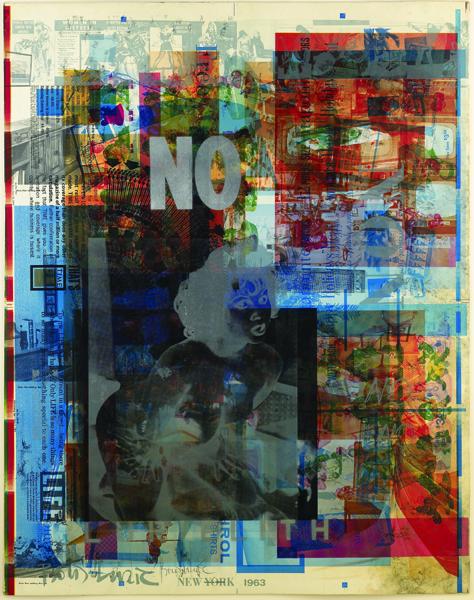
- It was mainly a movement against consumerism. No! Art tried to realize the recent history and horror of the attitude towards a woman in society. Boris's sister and mother were killed by the Nazis. And he always thought about how to protect a woman. This is evident in all his works. He was in a very shock from how the images of women are used in American magazines. Therefore, he began to use them in large collages. But mostly his work was against consumerism, against slave self -awareness, against the use of capital with monstrous goals. He wanted to refresh art, to help the young generation, to help women artists organize exhibitions. We did this. We have never earned at these exhibitions. We have never been a commercial enterprise.
“Have you really sold anything?”
- The work of Boris was not sold.
“And what, it upset him?”
- Not at all. He had no idea to trade in art. He wanted to be heard. It was important. He wanted to declare his position, change the world. It was a real protest movement. It all started in groups of anarchists. We had anarchist newspapers. One of them was called "why?" I knew how to promote such a movement. We did everything in our power, but we were crushed by pop art-so they knew how to advertise ourselves. The first wife of Boris, Frenchwoman, was a photographer. In 1952, she represented Andy Warhol and Boris Lurie, pushed their early work in magazines as illustrations. I have a book where you can see the works of Warhol and Boris working in the same vein. But Warhol was an advertising genius. He prevailed. After all, pop art was a simple phenomenon. Boris always fought with this: you can be wrong, but you devote yourself to what you believe in. At exhibitions, he exposed only what he wanted to put up. When people from the Whitney Museum came to organize an exhibition, he said, you can only take such and such pictures. They left. It was very difficult with him in this sense.
- I often thought that the avant -garde, protest art were a very Jewish phenomenon. It is because of persecution and incredible social pressure. But here is a special case. After the concentration camps, two important figures of the post -war avant -garde associated with the Holocaust appeared, this is the artist Boris Lurie and the wonderful, unfortunately, forgotten writer Tsutnik. In the fifties he was accused of pornography and literally squeezed out of literature, although I did not find any pornography in his texts at all. But Boris Lurie began to use pornographic images in his collages about concentration camps. He mixed photos of naked bodies from the world of death and naked bodies from the world of commerce. He provoked. He screamed!
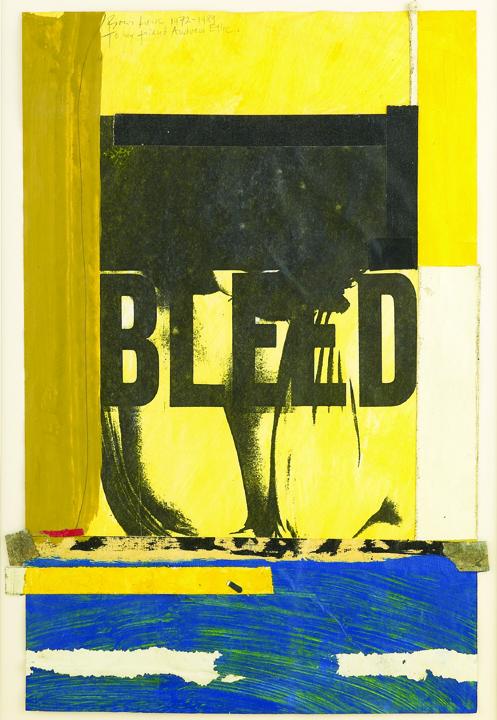
- When Boris Lurie came to America after the war, the Jews did not talk about the Holocaust at all. He was very depressed by this. Boris never showed anyone the yellow star that I had preserved. He was very annoyed that American Jews were indifferent to the survivors who came here after the war. It was a difficult time for him. His father came to America and got rich again. He constantly lost money and earned again. So it was many times.
- How did Boris Lurie become an artist? What was his education?
-When he was small, he had a cousin-painter. Boris went to him, examined sketches. He was very interested in everyone. I arranged an exhibition of his works, made immediately after the Holocaust, to the Sorokoy. There were people who loved his work very much. There were Germans who were very interested in what he was doing. He wanted to leave America, believed that America was not the most beautiful place for life. France, Germany or Italy is much better. But he realized that he had a very American view of things: if you live in France, you write landscapes, but in America you can show real feelings, talk about what you think: about the world of art, about people in art.
- I perfectly understand why Boris Lurie used pornography and why it was important in America - to pay attention to political events, to provoke, since pornography was no less terrible than the pain experienced by people in concentration camps and during the war. Since pornography and talk about the Holocaust were what was replaced from consciousness. It was hidden. It was something that was avoided. It hurt. But pornography was a metaphor for the Holocaust. Metaphor of shame, metaphor of fascism. But most of all I am surprised by the attitude towards this in America.
-You must understand, no one believed that the Germans were able to cause anything to Jews. The Jews were incredibly Germanous, they were part of the system. The Germans themselves could not believe what happened under Hitler. In America there were many prejudices about Jews. Until the fifties there were Jewish quotas in institutes, quotas for the right to be doctors. There were restrictions on everything. You could not become a Jewish architect. You could not enter the architectural school. My brother wanted to become an architect, but he had to become a psychiatrist. You could not go to work in insurance, only Christians could work there. Many professions were simply inaccessible.
- Boris wrote a book called "Anita's House." This is an autobiographical novel, a novel about love, quite indecent. He was published in America. Who published it?
- I published. There were many reprints. I made the first exhibition from my own collection. I had a lot of work, but I wanted to do something more. Then I published the "House of Anita". Now we will reprint this novel. And we are now making a movie on this book. People think this is a pornographic book, but this is not so. This is true, sadomasochism, which can only be understood if you survived the Holocaust, only after you have been in the concentration camp. You can never become after the camp as you were before him. And this book includes all political and feminist aspects, as well as sexual. This is a combination of everything that happened to Boris Lurie since he was a child, until the time he got to the camp. This is a book about Stalinism. This book tells about many different people.
“Would you like to translate it into Russian?” I think that there would be a lot of readers.
- We would like to translate. But now we are going to make a movie. It will be better than the "balcony" of Jean to his wife.
- It seems to me that in Russia this book can expect success. Russia is very open in this sense, unlike America.
- You know, in the forties and in the fifties we could not even buy Henry Miller. I was a teenager and worked in a bookstore. We read Miller's books, we read everything. We sold them from under the counter. But he was very famous. Everyone could buy Hemingway, but Miller and what was then called pornography - was not on free sale. There were many books that could not be bought. It took us a lot of time. The Grow-Press Publishing House began to publish these authors in 1958 and 1959. Barney Rosset opened the publisher for the money that he received for the sold real estate. America was a truly Christian orthodox country. If you look at the Middle West, you will see cowboys and Indians. Something like such a movie. They were very poor. No news from Europe seeped there. There were wars, and misfortunes, and persecution, and slavery. America was a naive baby.
- Returning to the Boris Lurie fund: What are your main tasks?
- My idea is that his work affect the next generation of artists. So that young artists are not sold to the system, so that they boldly express their position and help to build a new best world.