
Translated material
Explosive veterans
What to expect to Russian citizens from the "militias of Novorossiya" who returned from the war
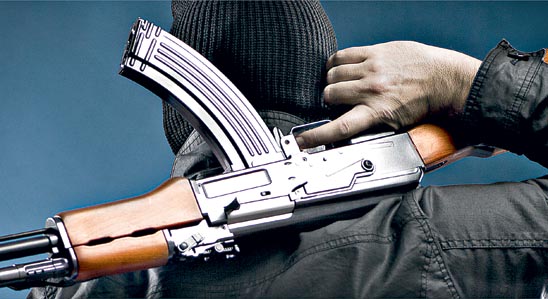
In general, the following one can say the following about the participants in the hostilities that have returned to a peaceful life. First - they have formed a strong group cohesion. In a group that has developed in dangerous conditions, which has a clear goal and gesture group norms, deviants are punished (people whose behavior deviates from the norms accepted in this society. - NT ), obedience and submission arise significantly - responsibility is delegated to commanders whose orders are fulfilled. The second is the learning of aggression both on their own and on someone else's experience, since such actions are awarded in war. People learn new models of behavior, plus social norms are shifted. All this exacerbates another component. There is a theory of messages to the aggression of the American psychologist Leonard Berkovitz - a person will act more aggressive if he has triggers in the field of view that cause an association with aggression. For example, weapons.
In the 1990s, at the State Scientific Center for Social and Judicial Psychiatry named after V.P. Serbian psychologists analyzed about a hundred examinations of people who committed intentional murders, and identified seven types of killers. Just the seventh was very specific. Firstly, he was homogeneous-there were employees of law enforcement agencies and the military. Secondly, these people were prosocially directed (that is, they understood the immorality of the murder), had strong strong-willed control and were emotionally stable. But they had a tendency to accumulate negative emotions and sharply splash them out in a situation that seemed to them life -threatening. Moreover, it was precisely that military experience influenced the interpretation of what was happening.
The third is a post -traumatic stress disorder that occurs in all people who have experienced a very psychologically traumatic event (from rape to a natural disaster). It manifests itself from a month to four after the incident and has a number of signs: flashbacks (constant repetition in the memory of a psycho -traumatic event), psychogenic amnesia (when a person is not able to recall the traumatic event in details) and the desire to avoid what reminds of injury, various psychosomatic diseases, etc. The development of disorder can go in different ways: a person can become apathetic and think about suicide, or become irritable due to the reproduction of negative emotions with flashbacks.
Donbass is a not quite typical situation. Usually, psychologists studied the consequences of psychological injuries in people who came to the war forced - in Vietnamese, in the Afghan campaigns. When the military returned from there, the rejection of these wars has already developed in American and Soviet society. The Russians now have no feeling that the war with Ukraine was erroneous - it is important to consider, speaking about how citizens with Donetsk volunteers will interact.
Asking the question of what consequences will have the return of these people to Russia, it is important to identify one of the most important factors - the reaction of society. This is not only rehabilitation and inclusion in the social environment, but also social support. I have no feeling that volunteers returned from Donbass will be denied.
Will the returning "militias" will radically change the social situation? I do not think, after all, their number is incomparable with the number of people in the country as a whole. The ex-volunteer will not increase the level of crime one and a half times-yes, it will jump a little. But a bunch of criminals will not go out onto the streets - not the number, not the situation.
The danger is different: these people, in my opinion, can become those thanks to whom the country is even more militarized. Relatively speaking, for their surroundings, for the young generation, those who, who fought in the Donbass, can turn out to be heroes, especially if they are successfully adapted in society, take a certain niche if they are in every possible way to hire and read. Well, for the returning volunteers themselves there is a danger - one god knows at what point the destructive skills they acquired.