
Translated material
"BMP went in an unknown direction"
Thanks to the presence of Russians, the military residents of Latakias feel safe, and some even talk about the imminent end of the war. In Aleppo, Homs and Ham, optimism is much less: "This war consists of riddles"

Text: Fadi Ahmad, Syrian journalist-specially for The New Times, Latakia when Idlib handed over the troops of our president in late March, I thought about leaving, over the summer-lost Erich, and the neighbors said that these bandits from the An-Nusra* were now in Latakia, I began to pack their suitcases: everyone understood that they all understood that they were understood that they were understood. Alavites will be cut out like sheep, and no one will help us - neither Iran, nor these guys in windings, Shiites from Bahrain, who are fighting here for $ 10 per day. But on September, the Russians came and saved everyone, ” - Sad, a resident of Latakia, with whom we are talking in a small cafe in the city center, with a pleased look of coffee. This is a cafe, like many others, filled to capacity, which has not been observed for a long time, many smoke hookah. The townspeople relaxed and thank Russia for this. The Russian military flies freely around the city in uniform, the Latakians are approaching them, greeting them, offering to take pictures, but in response they hear: “No Photo”.
City as a gift
In gratitude, the Olympic city was handed over to the Russians, built in Latakia in the 1980s specifically for the Mediterranean Games. Now Russian marine infantrymen, pilots, security and personnel of airbase are engaged in physical and combat training there. Latakia is full of rumors that reinforcements were about to arrive in the city-Iranian volunteers from the Corps of Guardians of the Islamic Revolution. True, they will not stay here for a long time - they will be trusted to protect the territory conquered by the Syrian army.
The author of Latakias to the author of these lines, not without pride, reported: Russian planes are made from the KhMAMIM air base for about 50–70 departures of the day and will soon destroy the entire infrastructure of terrorists. (The official website of the Ministry of Defense of the Russian Federation gives the numbers: from October 2 to 15, 477 sorties were made, 919 goals were destroyed.- NT. ) Around the airbase itself, a triple cordon of security was created, its photo and video shooting without special permission is strictly prohibited for all mass media, including Syrian ones. The city hall also confirmed data on the number of Russian military in Latakia, which was called during our previous meeting last week: yes, there are about 3 thousand, and soon there will be one and a half times more, and in Latakia this is only happy.
“When I see a Russian plane in the sky, I clap him, we are all clapping,” says Samer Suleiman, a student at the Tishrin University Engineering Department.
“Why didn’t Russia come to our aid before? Why only now, when half of Syria escaped due to the war to other countries? ”, Abu Mustafa, the owner of the local market, perplexed.
The only thing that Latachaki is angry is the local airport has been closed for 90 days, and they say that it will not be opened in the near future. This means that flights from Dubai, Abu Dhabi, Kuwait and Cairo, where many Latakians or their relatives live and work, will now make landings at Damascus Airport, and not Latakia, which will significantly increase the costs of returning home. “We were told: it is dangerous to sit in Latakia, because Russia increased the number of sorties for attacks on the battle points of the terrorists,” says Salem, a local resident whose cousin works in Kuwait. “But for some reason, no one says that it is much more dangerous to go to Latakia from Damascus Airport, where in the suburbs is now full of bandits from Daesh (the Arab name of the Islamic state*.- NT ) .”
In addition, many in Latakia do not understand: if the truth is that the city and the agglomeration adjacent to it are now in full security and the government troops are counterattacked with the support of Russian aviation in Aleppo and near Homs, and this is 170-200 km from here, then why keep the civilian airport closed.
The oscillations of the general line
Why did Russia intervene in the civil war in Syria and whom it supports there - from the statements of Russian officials not so simple to understand
“<...> Some believe that your goal is partly to maintain the Assad administration, because now he is losing his position, and for his government the war is not very good. Is the preservation of Bashar al -Assad in power the purpose of Russia's presence in Syria?
That's right, it is. We provide - I already said this twice during our conversation, I can repeat it for the third time - we provide support to the legitimate authorities of Syria. <...> "
(Vladimir Putin - in an interview with American journalist Charles Rose, September 27)
“<...> we are not talking about achieving any foreign policy goals, satisfying any ambitions, which our Western partners regularly accuse us, and we are talking exclusively about the national interests of the Russian Federation. <...> The military purpose of the operation is exclusively air support for the Syrian armed forces in their struggle against ISIS ”*.
(Sergey Ivanov, Head of the Presidential Administration of the Russian Federation, September 30)
“The overthrow of the current president of Syria Bashar al -Assad will become a gross violation of international law, in particular, the UN Security Council resolution, which approved the Geneva Communist Komnunika from 2012.”
(Foreign Minister Sergei Lavrov, October 5)
“Our task is to stabilize legal power and create conditions for finding a political compromise” (Vladimir Putin-in an interview with Russia-1, October 11)
“Regarding the fact that we support Assad, we have long commented, we said that we do not support Assad, it is important for us to maintain Syrian statehood.”
(Maria Zakharova, official representative of the Ministry of Foreign Affairs of the Russian Federation, October 14)
Victory or trap?
On October 16, the Ministry of Defense of the Russian Federation reported on the torture of about 500 IS* objects in Syria, the day before the department announced that the militants of IG* and Jabhat al-Nusra* under the onslaught of Syrian government troops supported by Russia, began to leave the positions around Aleppo, in a hurry, regroups. They began to lack weapons and ammunition. Actually, more than a dozen rebel groups are now being controlled, including the formation of a free Syrian army (SSA).
Many in Latakia believe in military reports from Moscow, because Russian aviation really helped government troops advance in Idlib, Jisr Esh-Shugur, in the suburbs of Damascus and Deraa. There was one tactics everywhere: Russians from the air strike massive blows to the fighters of the militants, after which the motorized units of the Syrian troops begin to clean the terrain. “Look, refugees from Idlib villages are already returning to their home,” says student Samer Suleiman.
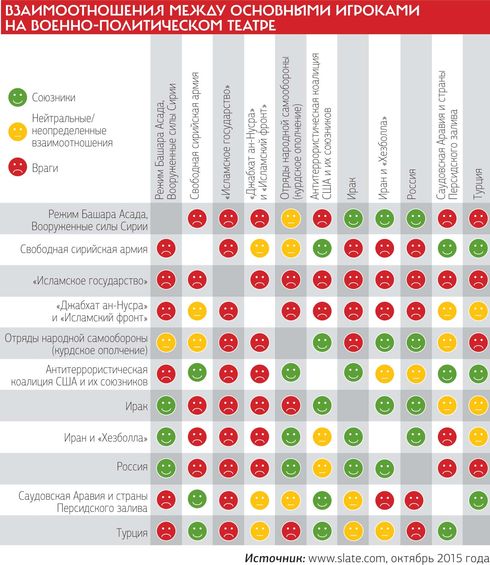
In Hama, too, many believe in the speedy end of the war. Ahmed Ahmed, the owner of the store in Hama, says that he saw with his own eyes how “hundreds of Russian BMPs left in an unknown direction,” and in the city itself they say that the Russians are closely coordinating actions with Syrian troops and will soon begin to win all the territories that are now under the control of rebel formations. True, Ahmed immediately clarified that he did not know who the crews of these BMPs consisted of - from Russians or Syrians, but "most likely Syrians."
At the same time, however, completely different data diverges on Syrian social networks. They write, for example, that the militants of IG*, contrary to the bravura reports of the Syrian General Staff, did not leave any of their positions in Aleppo, but on the contrary, lured the Syrian soldiers to trap - now fierce battles are in the city. And representatives of Jabhat al-Nusra* assure that they managed to reflect, despite the powerful air attacks of the Russians, all the attempts of Bashar al-Assad troops to go on a counterattack under a hame. By the way, just a week ago, “An-Nusra”* called for war against the Russian troops, and now Muhammad Adnani, the “speaker” IG*, calls Muslims of the whole world to jihad against Russians and Americans.
The seeds of hatred may well fall on the fertile ground, since there are reports that civilians are becoming victims of air raids. On October 15, YouTube posted a video from Al-Gkhano, near Homs: the bomb hit the residential sector, people died. “Whether the Russians or someone else bombed us, we don’t know for sure,” says Abdullah al-Sebai, a resident of Homs. “But the fact that 40 civilians died as a result of the attack, is a fact.”
"Do not believe anyone"
Mansur (he asked to call him that way) - a fighter of the Islamist group "Felak Homs", is fighting since 2012. The group is deployed in al-Gkhano, and most likely, it was it who wanted to bomb her, but “the Russian gunners turned out to be no better than the American,” Mansur laughs.
“Do not believe Assad, his officers often deliberately distorted information about the progress of the battles, for which they paid; Do not believe Russia, which does not understand where it has climbed; Do not believe America, which is to no avail here with money - do not believe anyone, ”he persistently recommends. “This war consists of riddles and will not end soon.”
Mansur doubts that Russian aviation is aimed at IG* and “al-Nusre”* and they suffer losses. “If they (IG* and“ An-Nusra ”*.- NT ) would really begin to lose the material and technical base, then others would have come for their good, and everyone would know about this-from Rakka to Deraa, because the main struggle that goes here is for money, weapons and property,” he assures.
Mansur talks about the fate of the moderate opposition movement Harakat Hazzm Movement, which, relying on American supplies of weapons, fought with ISIS* in 2013-2014 near Aleppo: “They then defeated the main forces of Daesh, their militants went to lick the wounds in the villages outside the city. And when there was only one step to the complete victory over Daesh in the Aleppo area, the Americans suddenly stopped supplying Harakat weapons, and then suddenly appeared “al-Nusra”* and fused the two main basics bases. Why did this happen? What do foreign powers want here? But there are many such stories in this war ... "
Ekaterina Kretova took part in the preparation of the material
Ultraradic Salafites and Takfirita **
The Islamic State* is a radical-Islamist who emerged from the subordination of al-Qaeda*
Purpose: to create a caliphate in a Salafi (fundamentalist) understanding with the prospect of its expansion for the whole world
Radical and moderate Salafites **
"Jabhat al-Nusra" *,
Al-Qaeda division*
Purpose: the creation of Islamic Syria as part of the future caliphate - not Salafi and Takfirit (like the IG*), but a softer and sustainable

"Jabhat Ansar al-Din"
A coalition of four jihadist groups, including Jaish al-Mukharijin wa al-Ansar,, which includes immigrants from Chechnya, Dagestan, Tatarstan and Central Asian states. Fight against the troops of Bashar al -Assad, observe neutrality against IG* and the Syrian Free Army (SSA)
Moderate Salafites
"Jabhat al-Islamia"
("Islamic Front")
Purpose: support the slogans "Jabhat al-Nusra"*. At the same time, they are more loyal to representatives of other faiths
"Jaish al-Mujahidin"
("Army of Mujahideen")
They do not have a clear program and ideology, the goal is the overthrow of the government of Bashar al -Assad. They are fighting both him and with the "Islamic state"*.
Spring -oriented Muslims -Sunnis
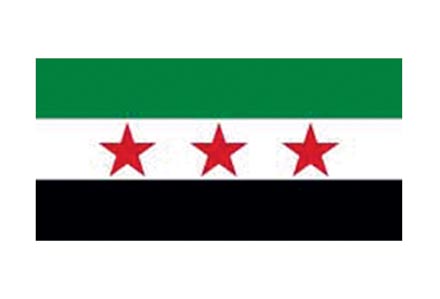
Syrian Free Army (SSA)
It includes organizationally: groups “South Front”, “Syrian Revolutionary Front”, “13th Division”, “Khorasan Brigade”, “Atbaa Ar-Rassul” and other small formations
Purpose: Creating a secular democratic state with elements of Sharia
Secular (socialists) Muslims Shiite (Alavites)
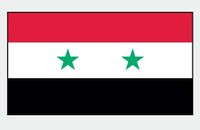
Bashar Assad regime
Syrian armed forces
Purpose: Preservation of the secular regime that existed before 2011, taking into account the reforms of 2012: the adoption of a new constitution, restriction of the BAAS party, restricting the presidential powers by two 7 years of terms
Secular Kurdish nationalists and socialists
Self -defense units
(Kurdish militia)
Purpose: National-cultural autonomy or complete independence from Syria
* “Islamic State” (IGIL, ISIS), “al-Qaeda”, “Jabhat al-Nusra”-terrorist groups prohibited in Russia.
** Salafites - a direction in the Sunni branch of Islam, adherents of which consider the true Islam of only the times of the Prophet Muhammad and deny any interpretation of the Quran. Radical Salafites, unlike moderate ones, call for the armed overthrow of the "illegal" power and the physical destruction of the "infidels", unlike moderate ones. Takfirites - differ from the Salafis in that they give themselves the right to make takfir (accusation of unbelief), although in Islam this is possible only if certain conditions are observed and can only be carried out by ulems (recognized by experts in Islam).
Balkan recipe for Syria
Settlement by the Deyton model will be able to put an end to a bloody war
Text: Louis Floryak, undergraduate of the diplomatic Academy of the Ministry of Foreign Affairs of the Russian Federation
The conflict in Syria is based on ethno -confessional contradictions: the power of the minority of the Alavites over the Sunni majority. Most experts in the Middle East converge in this. There is a successful precedent for solving a similar problem: 20 years ago, the Deyton agreements laid the end of the Bosnian war in the very center of Europe. Recall that three sides participated in the conflict: Orthodox Serbs, Catholics Croats and Muslim Bossians (or Boshnyaki). As a result of the agreements, there was a division of Bosnia and Herzegovina into two autonomous formations on an ethno -confessional basis and a single leadership, a presidium, which consists of three representatives, was formed from each of the three peoples.
The alignment of forces
In Syria, of course, the situation is more complicated: there are four large ethno-confessional groups (Muslims-Sunnis, Alavites, Druze and Kurds) and two less significant: Christians of different faiths and Muslim-Ismailis. The relationship between many of them (first of all, between the Alavites and the Sunnis) has long passed the “boiling point” - as in Bosnia, the 1991 model. As in Bosnia, in Syria, each of the main ethno -confessional groups has its own “ethnic territory”, and there are also controversial territories, where representatives of different groups live mixed, but the area of these territories is insignificant. As in Bosnia before the conflict, the ruling elite of Syria belongs to the group constituting a minority of the population: in Bosnia it was a Muslim elite, and in Syria - Alavite. And there and there, this elite was not going to share power with the majority, claiming that it was "legally chosen."
In Bosnia, the players stood various world forces - Croatia (and a significant part of Europe) behind the Croats, Serbia (and in many respects Russia) behind the Serbs, the Islamic world (and a significant part of the West) behind Boshnyakov. In Syria, it is also clear who is behind anyone - perhaps, only Druzov does not have serious foreign support, but they, in essence, are the most peaceful side in a multilateral conflict. In Bosnia, a variety of “international intermediaries” for several years tried to glue a certain single state until they understood: this can only be obtained by recognition of each of the peoples of the right to possess some historical territory, with inevitable compromises in terms of borders.
Of course, the situation in Syria is more difficult than in Bosnia, at least because of the factor in the Islamic State*. But it is precisely the need to combat IS* dictates the adoption of urgent measures to “be embarrassed” by other parties in the intra -Syrian conflict. The reconstruction of Syria according to the model of Bosnia is the only chance for such a lightning and generally to preserve the state.
To bring this script to life, firstly, you need to start talking about this. It is necessary to abandon generalizations and change the paradigm: now for the West ASAD - “dictator”, for Russia - “legal president”. But in fact, he is the leader of the Alawit community, which became the head of a multi -confessional state. Secondly, this is possible only when changing the approaches of interested powers. Now Russia and Iran are hoping for all Syria with Assad at the head, Türkiye and Saudis, as well as the US supporting them - throughout Syria under the leadership of the Sunnis. When dividing Syria according to the Deuton script, these countries will only affect the relevant territories.
Inevitable difficulties
Surely a conflict of interests will arise when discussing the issue of the territory of the Kurds: Türkiye will be against it. It is not clear who the Druze will focus on - perhaps on Israel.
The problem will be the provision of the access to the Sunnis Sea - the entire coastal strip of Syria refers to the historical territories of the Alavites. So it was in the story of the Bosnia: the Serbs wanted to reach the sea, but did not receive. One of the solutions is the obligation of Alavites and international partners to provide Sunni with the possibility of using ports.
20 years ago, to monitor the implementation of the first, military, applications to the Deyton agreements to Bosnia landed 60 thousand NATO soldiers. In Syria, the situation is aggravated by the presence of IG* and other militants. When solving the Syrian problem of the Bosnian scenario, the fight against militants will have to wage the UN troops or the coalition of countries that agree to send their troops to maintain the interfaith world. Will Russia be ready to send its soldiers? Will the USA and France be ready to do the same?
В любом случае инициатива использования дейтонского сценария должна исходить от мировых держав, задействованных в конфликте. Переговоры лучше всего проводить на максимально нейтральной территории. Задача «старших» держав – убедить представителей сирийских этноконфессиональных общин: не соглашаясь на боснизацию, они рискуют остаться ни с чем. Каждую новообразовавшуюся часть Сирии следует наделить правами, аналогичными первоначальным правам Республики Сербской и Федерации Боснии и Герцеговины.
Активные и срочные переговоры между лидерами этноконфессиональных групп должны положить начало движению к миру. США, Россия, Франция, Саудовская Аравия и Турция должны выступить гарантами таких переговоров. Модель Сирии в виде конфедерации, возглавляемой коллегиальным президиумом государства с представителями суннитов, алавитов, курдов и друзов, может стать самой жизнеспособной и сбалансированной из всех возможных. С той же целью должен быть рассмотрен вопрос наделения особым статусом крупнейших многонациональных городов – Дамаска и Алеппо. Возможным решением проблемы христиан, во многом поддерживающих сейчас алавитский режим Асада, стало бы создание в числе субъектов такой конфедерации алавито-христианского объединенного образования.