
Translated material
They fell, hit, made a reservation
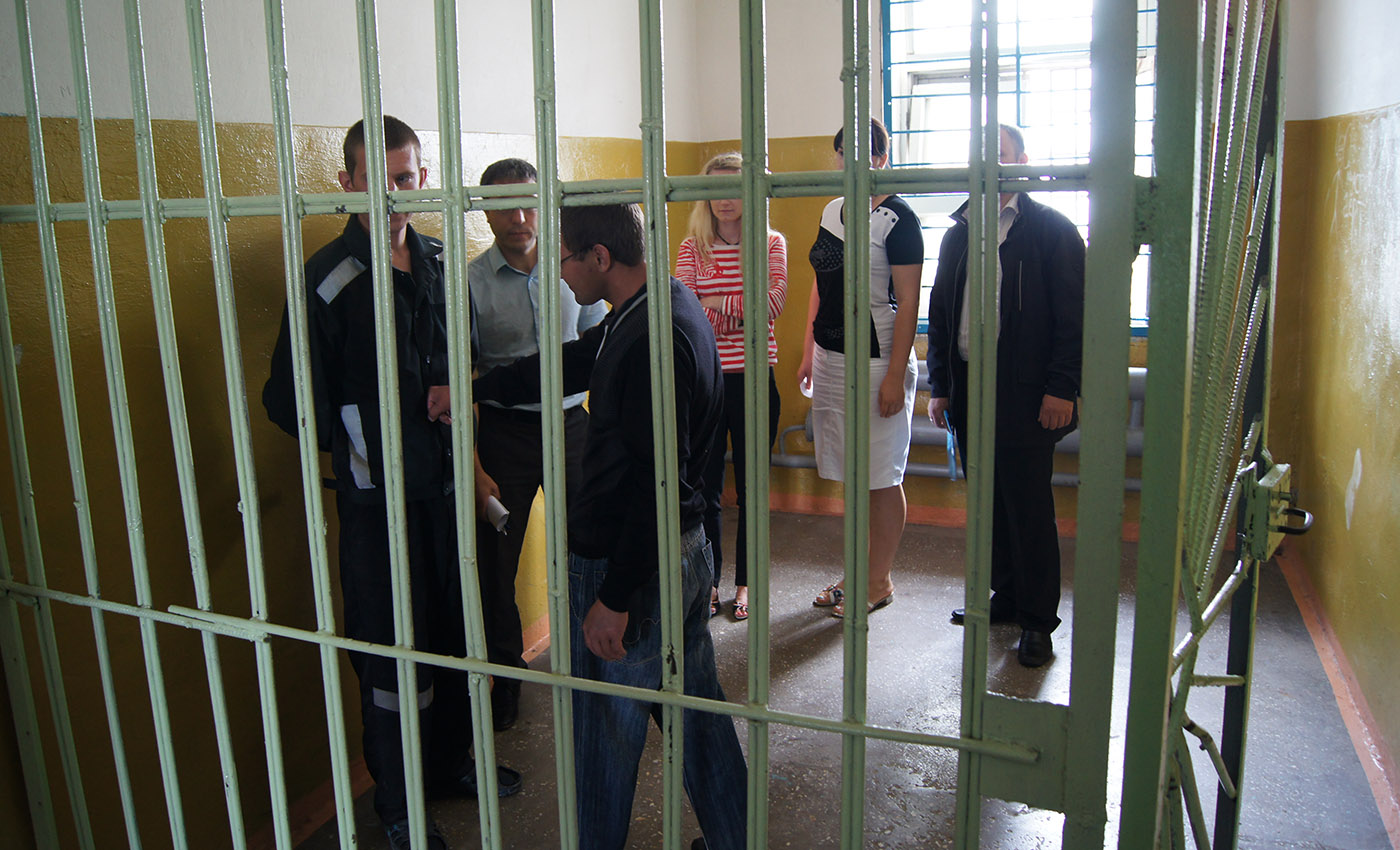
Prisoners who complain of illegal actions of the FSIN employees are increasingly becoming defendants in criminal cases themselves: they are accused under Article 306 of the Criminal Code (knowingly false denunciation). It is not difficult to fabricate such a matter: “A person who writes a complaint has often does not have the opportunity to present evidence of the validity of the complaint,” emphasizes Igor Kalyapin, head of the “Committee for Prevention of Torture”. Mediazona dismantled three typical cases of false denunciations of jailers and talked with human rights activists about this gaining popularity method of pressure from the colonies of the convicts.
Mordovia. "Stick on the wall yourself"
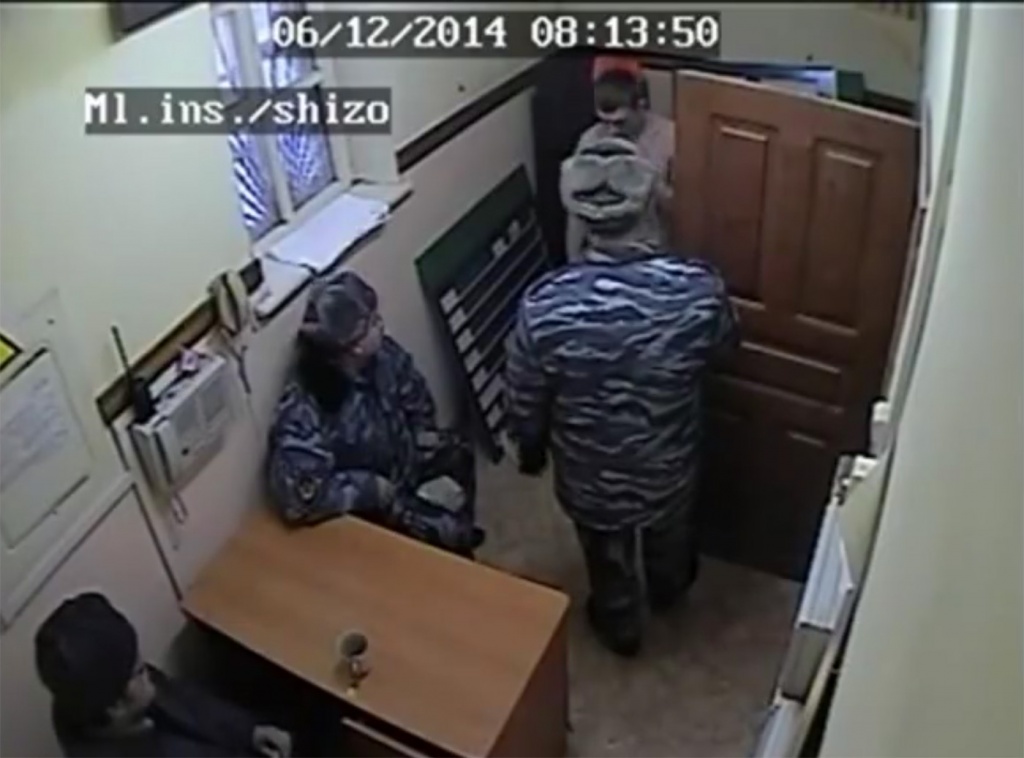
On December 6, 2014, the head of the operational department of the Mordovian correctional colony No. 10 Vitaly Tsymdyankin, the junior inspector of the security department of the security department Valery Shirokov and the senior inspector of the security department Igor Shukshin searched the prisoner Alexander Reshetov. From the 29-year-old convicted, they demanded to completely undress, Tsymdyankin pulled his underpants from him, but the reshetov, adjusting the linen, explained: the video camera was installed in the room, and the operator-the girl, and this confuses him.
According to Reshetov’s testimony, at that moment Tsymdyankin threatened that he would put a rubber baton into his anus. After that, the prisoner began to fight against the wall with his whole body; This is recorded by the surveillance camera, but not taking place in the room later - Reshetov claims that he was beaten. In addition, the video is soundless, and cannot confirm that the head of the operational department of the IK-10 threatened the convicted sexual violence.
“They brought for search events to a room not intended for this. This is the room of the younger inspector where they drink tea. Under the video camera they made me completely undress. They accompanied all this with threats to the use of violence against me: "We will rape you, we will put a stick into the anus. Hit the wall yourself, otherwise we will kill you here at all." They began to strike very much. This is very scary. All the time there I was really afraid there for my life. There were even such moments when they could go into the cell with a knife in their hand: “Remove your pants”, ”Alexander Reshetov says about life in IK-10. According to him, the head of the colony security department has always been biased to him, since the prisoner "constantly writes complaints about the actions of the administration."
According to the testimony of Ibragimov’s technique, the camera turned off due to a short circuit that day: moisture came to the contacts. In the last seconds of the video, indeed, you can see how the frame dug in either white smoke or thick steam. Reshetova’s lawyer Olga Rakhmanova calls this video unacceptable evidence and does not exclude the installation: a fragment with the beating of the prisoner could be cut out.
The prison doctor found Rishetov only to the abrasion on the right forearm and claimed that she had come to him on the day of the incident, December 6th. The prisoner himself says that he was examined only on December 7, and he had bruises on his neck and shoulder.
Two months later, on February 2, Reshetov wrote on Tsymdyankin and his colleagues a statement under paragraphs “A”, “B” of part 3 of Article 286 of the Criminal Code (excess of official powers using violence and special funds). A week later, on February 9, the senior investigator of the Zubovo-Polyansk Interdistrict Investigation Department of the IC in the Republic of Mordovia Andrei Chaldushkin refused to initiate the case against the FSINESS, and a few days later the case was brought up at the Reshetov himself-under part 2 of Article 306 of the Criminal Code (a knowingly false denunciation of a person of committing a serious crime).
Rakhmanova’s lawyer notes that her principal was not informed about the refusal to hold the FSINESS and initiate the case against himself, depriving him of the right to appeal these decisions.
On July 27, 2015, the Zubovo-Polyansky District Court sentenced Reshetov to a year of imprisonment, which, through addition, turned into a 2.5-year colony of special regime.
The verdict is based on the testimony of colony officers and other prisoners. The court believed the victims of Tsymdyankin, Shirokov and Shukshin, who claimed that the Reshetov, outraged by the search, defiantly hit the wall with the right forearm three times. They denied that they insulted the prisoner and threatened him. The convicted Ermakov, who allegedly entered the room, when Reshetov was undressed to panties, testified that he was abusively cursing, and the employees behaved "extremely correctly." The court rejected the defense of defense to call her witnesses.
Now Reshetov is in the SiZO Saransk. On November 3, the Supreme Court of the Republic will consider his complaint about the verdict. In the event of its deviation, he will probably return to IK-10.
Orenburg. "Every time I was beaten with rubber sticks"
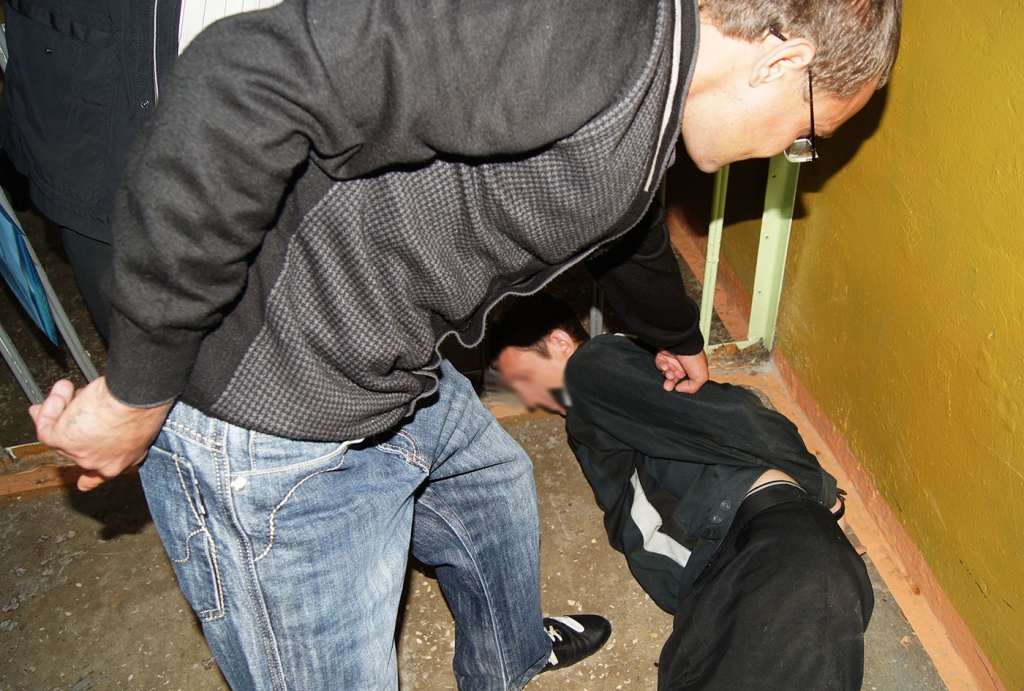
On December 24, 2012, employees of the Orenburg IK-4 Vasily Sakultsan, Baktybay Dusimov and Isatay Mukhanov, dissatisfied with the refusal of the prisoner Pavel Seliverstov before the placement in the schizo to hand over their cigarettes, and not leave him in the cap, beat him. The testimony of Seliverstov himself is confirmed by another prisoner - Amanzhol Kukaev. While in the Shiso chamber and hearing a dispute in increased colors, he stuck a fragment of a mirror into the gap between the door and the floor and saw how the FSIN officers beat Seliverstov.
“The first to hit Seliverstov Isatay in the body, I began to shout:“ Why are you doing this, ”they dragged him along the corridor towards the part of the floor called the pocket. I also saw that Sakultsan Vasily Fedorovich inflicted blows, ”Kukaev said in explanations. What happened next, Kukaev did not see, but he heard the sounds of blows and screams of Seliverstov.
Seliverstov himself said that after the first strokes in his stomach, he fell to the floor; Then he was beaten with a bed bed - in the chest, stomach and back. He tried to close, but his hands behind his back were chained into handcuffs - though when they were put on, he does not remember.
Seliverstov was broken by the left rib that pierced the lung. The injury threatened the life of the prisoner.
FSIN employees claimed that no one beat Seliverstov - not wanting to give cigarettes and being drunk, before placing in a schizo he tried to escape from the warders and, stumbled, fell from the stairs. At the same time, the IR employee Ruslan Mustakimov confirmed in the court that, according to the rules of the prisoner with suspicion of alcohol intoxication, should be sent for medical examination before placing in a schizo, and Seliverstov was examined after trying to place in a schizoma and obtaining bodily injuries. He himself denied that he was drunk.
Twice in relation to the FSINICS initiated the case under paragraph “A” of part 3 of Article 286 of the Criminal Code, and twice it was closed. The defender of the prisoner, an employee of the “Torture Prevention Committee” Albina Mudarisova notes that the basis for the termination of the case was a repeated situational examination, during which the FSINITS changed their testimonies. If in the first case the experts came to the conclusion that the damage to Seliverstov could not be obtained in the events described by jailers, then in the second - their version was no longer excluded.
Another trick, according to the lawyer of the convicted Timur Rakhmatulin, consisted in the discharge of the defender during the investigative actions carried out not in favor of Seliverstov. While Rakhmatulin sought the recognition of the withdrawal illegal, the investigator held the confrontation of Seliverstov and the FSINITS, on which the prisoner refused to testify. The lawyer explains that this was the basis for closing the case. When the matter was resumed, the defense was refused a new confrontation, referring to the fact that Seliverstov is sick with tuberculosis and is dangerous for participants in the investigative action, adds Rachmatulin.
As a result, Seliverstov became a defendant in the case of false denunciation. “The 306th is a way to make an iron from the liability of the FSIN employees. Next time, any body will safely refer to this sentence and say: “See, there is a court decision, the court found that it is guilty”, ”says Rakhmatulin, heading the Orenburg branch of the Committee on Prevention of Torture.
Against Seliverstov, testimonies in court were given not only by the FSINITS, but also by other prisoners who confirmed the version of the jailers. Witnesses of the defense, who at that time were also imprisoned, were not summoned to court, and the witness Kukaev was completely threatened with a new criminal case if he continues to say that the FSIN officers beat Seliverstov. After Kukaev testified, he himself was beaten in the colony three times.
“Each time they beat me with rubber sticks, while one person always beat, and the rest stretched me and kept me on weight, while one employee struck me throughout my body with a rubber club. Each time I was closed after beating in a schizo into a separate chamber so that traces of bodily harm would go away, ”says the former prisoner now.
Later, Kukaev participated in the investigative experiment, which was supposed to answer the question: can I see what was happening in the corridor from the schizo camera? According to Kukaev, shortly before that, a plate was welded to the insulator door from below, which no longer allowed to put a mirror under it. But in the course of the investigative action, he did not say about this out of fear of the FSINESS.
The side of the defense could not get records from the cameras in the corridor, where Seliverism was beaten. According to Rakhmatulin, the investigator was taking time with sending a request to the FSIN, and in the colonies the records are stored for no more than a month. As a result, the request was sent to IR four months later, when the recording was already deleted.
On March 13, 2015, the Dzerzhinsky District Court of Orenburg sentenced Seliverstov to the year of a maximum security colony, finding him guilty under Part 2 of Article 306 of the Criminal Code. He will not serve this punishment - the statute of limitations has expired. Now the defense of the former prisoner is filing a cassation appeal against the verdict.
Pugachev. "Neither mom nor dad will help, we will break the second hand."
On January 22, 2015, the prisoner Sergei Khmelev was beaten into IK-17, located in Pugachev, the Saratov region. On that day, employees of the colony Bavkunenko, Rygalov and Aleksandrov made him a remark for a tracksuit that had not previously called any complaints from the administration, Khmelev himself claims. After the incident, he was sent to a prison hospital in Saratov, where he was later operated on: the convicted person was diagnosed with a fracture of the nose, three ribs with a displacement and damage to the left lung, as well as the gap of intestines.
Khmelev spent a month in the hospital, but there was no data on these injuries in his documents: the cause of hospitalization there was a sampling of the stomach ulcer. At the same time, the Khmelev map spoke of the operation, during which more than 4.5 liters of pus were “evacuated” from the abdominal cavity. An independent expert, who studied the prisoner’s medical card, drew attention to the inconsistency: upon admission of Khmelev, the question was about the presence of a spleen rupture, but after this suspicion was not mentioned: “It seems that the attending physician simply ignored the ultrasound of the abdominal organs in terms of any pathology or trauma of the spleen.”
Khmelev also found pneumothorax, which often indicates mechanical damage to the lung. “Having conducted an X -ray examination,“ installing ”S. Khmelev The presence of "spontaneous pneumothorax", the doctors did not establish the cause of this pathological process, the independent expert notes. “The presence of air in the pleural cavity (pneumothorax) is often a complication of traumatic damage to the lung.”
“When studying these medical documents, many questions arise about the underlife of S. Khmelev,” the specialist concludes. However, the court, which is currently considering the case against Khmelev about the false denunciation, has rejected the application for an additional examination.
The lawyer Margarita Rostoshinskaya, who collaborates with the Foundation “In Defense of the Rights of Prisoners”, became the defender of Khmelev, when he was already accused of false denunciation, and the initiation of the case of exceeding official powers by the FSINESS was denied.
The lawyer achieved the transfer of his client during the consideration of the case in court from the colony to the Saratov pre -trial detention center. When visiting Khmelev in the colony, the lawyer noticed new abrasions and bruises from him, and the prisoner spoke of unbearable conditions. Khmelev was placed in a cell with activists who are working with the administration, who, under the threat of rape, forced him to sign statements with recognition in a reservation and a request to initiate a case of false denunciation against himself. They proposed to explain the injuries obtained in January with a fall from the stairs.
On May 27, the new explanations of Khmelev were handed over to the investigator. At the same time, at a meeting of the appeal of the refusal to initiate proceedings upon the excess of authority by the colony by the colony, investigator Sinov attached to the case other statements signed by Khmelev, but clearly written not by his handwriting, the lawyer says. “I consulted with a handwriting, he says that this is a completely different person, not his handwriting and a way of writing, even if he wanted to be so, could not fake it,” says Rostoshinskaya. In these statements, Khmelev allegedly refuses her services and transfer to a pre -trial detention center to participate in the trial. Later, the prisoner personally handed the lawyer a statement in which he asked not to consider these petitions without his participation, but in court he did not confirm the request for the removal of a lawyer.
The investigator could not explain where these statements came from.
The lawyer learned from the head of the colony Andrei Petryashkin that after the appointment of the court session in the territory of IK-17, he was called by the head of the Federal Penitentiary Service in the Saratov Region Alexander Gnezdilov. The deputy chief of IR Eduard Zeynalov also went to the meeting, who, after a visit to the leader, allegedly informed Khmelev that Gnezdilov was interested in the outcome of his case and “Khmelev to go to the bottom,” writes a lawyer in his complaint in the FSB.
According to the lawyer, in 2013 Khmelev had already met with Gnezdilov in the territory of IK-17. Then the prisoner also filed a complaint. “They had a conflict with each other: he reported incorrectly, incorrectly reported. He (nests - MZ) says to him: "Look at me, neither mom, nor dad will help, we will break the second hand." And he (Khmeleva - MZ) then had the left hand of broken, ”says Rostoshinskaya. At the same time, Khmelev is an orphan, the lawyer adds.
Khmelev himselfhas responsible for the unlawful actions of the IK-17 employees on General Gnezdilov.
In April 2012, employees of the Saratov IK-13 scored to the death of the prisoner Artem Sotnikov. The head of the regional Federal Penitentiary Service of Gnezdilov insisted that the prisoner died only two days after physical strength was applied to him, and the causal relationship between these two events was not obvious. In May of that year, Gnezdilov promised to resign if the fault of the colony employees is proved. The head of the Saratov UFSIN left his post two years later, in April 2014, when the court found the IR employees guilty. In fact, Gnezdilov went to increase: he was appointed acting Deputy Director of the Federal Penitentiary Service of Russia. Five colony officers guilty of the death of Sotnikov were sentenced to real terms of conclusion from 9 to 12.5 years. In February of this year, on his birthday, Gnezdilov returned to his previous post and again became the head of the Saratov Federal Drarners.
Currently, the Khmelev case is considering the court. Eight former IK-17 prisoners have already acted as witnesses of defense: some were eyewitnesses to the events that took place with Khmelev, others denied Zeynalov’s statement that employees who are accused of beating were not in the colony. The lawyer invited six more witnesses from among the current IK-17 prisoners, but the court refused this to the defense.
The court also interrogated six witnesses of the prosecution-all of them are concluded IK-17, and while they are serving their sentences. The last was the prisoner Efimov.
“He came and said:“ Your honor, of course, is a witness to the prosecution, I am serving a sentence in the 17th colony and I know that after that I will be bad, but I can’t lie. Here I am, as it is, I will tell you everything. ” And as he began to talk about the mockery and horrors that take place there, how he was forced to put some pins in his body so that he would not be touched. He has a broken collarbone himself, ”says Rostoshinskaya lawyer.
"Now they understand that they can add another time"
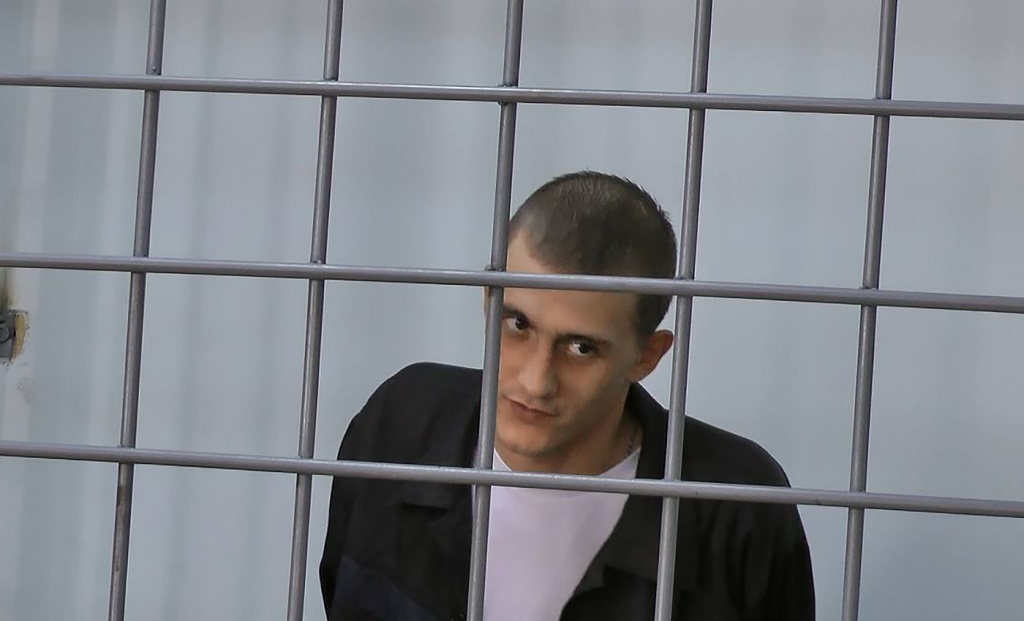
Lawyers who protect the prisoners accused of false denunciation of the FSIN tithes insist: the administration expects to intimidate other convicts with indicative processes of “complainants”. Timur Rakhmatulin notes that after the case of Seliverstov from IR No. 4, in which his client was serving, much fewer complaints began to act. “I am sure that this is not because they began to beat and torture less, but only because it works well word of mouth, and the prisoners understand what it is fraught to them,” says Rachmatulin.
«Если раньше заявления просто никуда не уходили, но у заключенных был хоть какой-то шанс через родственников, адвокатов передать его, то сейчас они понимают, что еще срок могут добавить, а это исключает возможность досрочного освобождения», — вторит ему адвокат Ростошинская.
Глава «Комитета по предотвращению пыток» Игорь Каляпин отмечает, что правозащитникам сегодня проще привлечь к ответственности полицейских, чем сотрудников ФСИН. «Собрать доказательства чрезвычайно сложно, потому что и сам потерпевший, и все свидетели, и места, и документы, которые могут содержать доказательства, находятся в руках администрации колонии, то есть в руках тех людей, на которых человек жалуется», — говорит Каляпин. Он предполагает, что оградить заключенных от давления администрации колонии можно было бы, создав в регионах специализированные учреждения, в которые переводили бы заключенных, сообщивших о преступлениях тюремщиков.
Определять места содержания таких осужденных должен центральный аппарат ФСИН, считает Каляпин, а контролировать их — служба собственной безопасности, и опять же — из центра.
Правозащитник указывает на неэффективность работы СК по расследованию жалоб заключенных. «Но сейчас с них и спрашивать даже что-то невозможно. Они к таким жалобам относятся спустя рукава, прекрасно понимая, что зачастую перспективы у такого дела нет, что осужденный и свидетель через неделю или две от своей жалобы откажутся», — констатирует Каляпин.
Член ОНК по Чувашии юрист Алексей Глухов видит возможность хотя бы частичного решения проблемы в обязательной видеофиксации работы тюремщиков.
«Необходимо вводить ответственность за повреждение записи, неведение записи, ее монтаж, потому что в нужный момент включается пауза, если это обычная домашняя камера, и дальше уже продолжается, после того, как произошли определенные действия», — говорит правозащитник.
Глухов считает, что нужны специальные подразделения, ответственные за видеофиксацию происходящего в каждом учреждении ФСИН. «Эти подразделения должны подчиняться начальнику управления, чтобы они отвечали головой за все эти записи, — описывает возможную схему работы Глухов. — Причем записи должны быть сохранены как минимум три месяца, потому что осужденные иногда не готовы сразу писать жалобу».
Правозащитник также считает, что за адвокатами должно быть законодательно закреплено право не только встречаться с подзащитными, но и заходить на территорию учреждений ФСИН для ознакомления с условиями содержания.
Психолог, эксперт Совета по правам человек при президенте, подполковник ФСИН в отставке Владимир Рубашный более пессимистичен в своих ожиданиях — по его словам, тюремная система России практически не подлежит реформированию.
«Первое, что необходимо делать — совершенно поменять контингент персонала. Я провел огромное количество времени профессионального в этой системе. Я понимаю, что какого-то изменения отношения сотрудников к своей деятельности не будет», — подчеркивает Рубашный. Он отмечает, что сотрудников ФСИН не обучают, как правильно действовать при неправомерном поведении заключенных и минимизировать риски в нештатных ситуациях. Уголовное преследование заключенных-жалобщиков за ложные доносы психолог называет новым — и неожиданно жестким — методом давления администрации на осужденных.
«С психологической точки зрения для осужденных в колонии, которые содержатся рядом с ним и видят, что с их товарищем произошло, это даже похлеще (традиционных методов давления — МЗ). Заключенный еще десять раз подумает, писать ли ему жалобы, обвинять ли сотрудников в чем-либо, после того, как человеку добавили срок. С точки зрения сотрудников это даже более выигрышная ситуация, поэтому они и стали применять такую форму влияния на осужденных», — говорит Рубашный.