
Translated material
About gadgets and hypocrisy

"In the modern postmodern world, when a child is more qualified than an adult, teachers want to stay on the pedestal"
70% of adolescents, despite the ban, use mobile phones or other gadgets during the lessons if they need to find information on their studies. Analysts of the Center for Research of Modern Childhood of the Institute of Education of the Higher School of Economics came to such conclusions, interviewing more than five thousand Moscow schoolchildren 16-18 years old.
This situation clearly demonstrates the discrepancy between the official educational policy to real time challenges. As the study showed, despite the limited access to school computers and the filtering of content, modern adolescents cope with the search for the necessary information using personal gadgets, even if you have to do it secretly. Only 10% of respondents said that they are allowed to use their own devices in the lesson.
In other words, the notorious informatization of the school process, on which so many efforts and finances were spent, not only did not reach the tasks of acquiring modern skills, but turned into a device inhibitory educational process. Outside the school Internet, many educational resources, social networks that make it possible to have extracurricular contact, not to mention electronic journals in which you cannot correct the deuce, and electronic diaries that do not open.
Of course, you can’t forget about the availability of the Internet outside the house, but 91% of schoolchildren were called a mobile phone as a device, the tablet (45%,) laptop in second place in popularity - 39%, then other devices follow, and only 3.5% responded negatively. Moreover, 18% of respondents noted that they had to use their own devices when the teacher needs to help quickly find information.
However, not everything is so simple. Pisa data show that the correlation between performance and the use of the computer of the house is stronger than at school. Another, recently conducted OECD study showed that the presence of modern technologies at school does not necessarily guarantee a high educational result.
About how information technologies change teenage reality and affect relations between students and teachers, Radio Liberty was told by the analyst of the Institute of Education of the Higher School of Education Diana Koroleva , the head of the Perekrestok Center Kirill Chlokov , the head of the Center for Research of Modern Childhood of the Institute of Education of the Higher School of Education Ekaterina Polivanova and the expert of the school league of Rosnano, the teacher of informatics Anatoly Shperch .
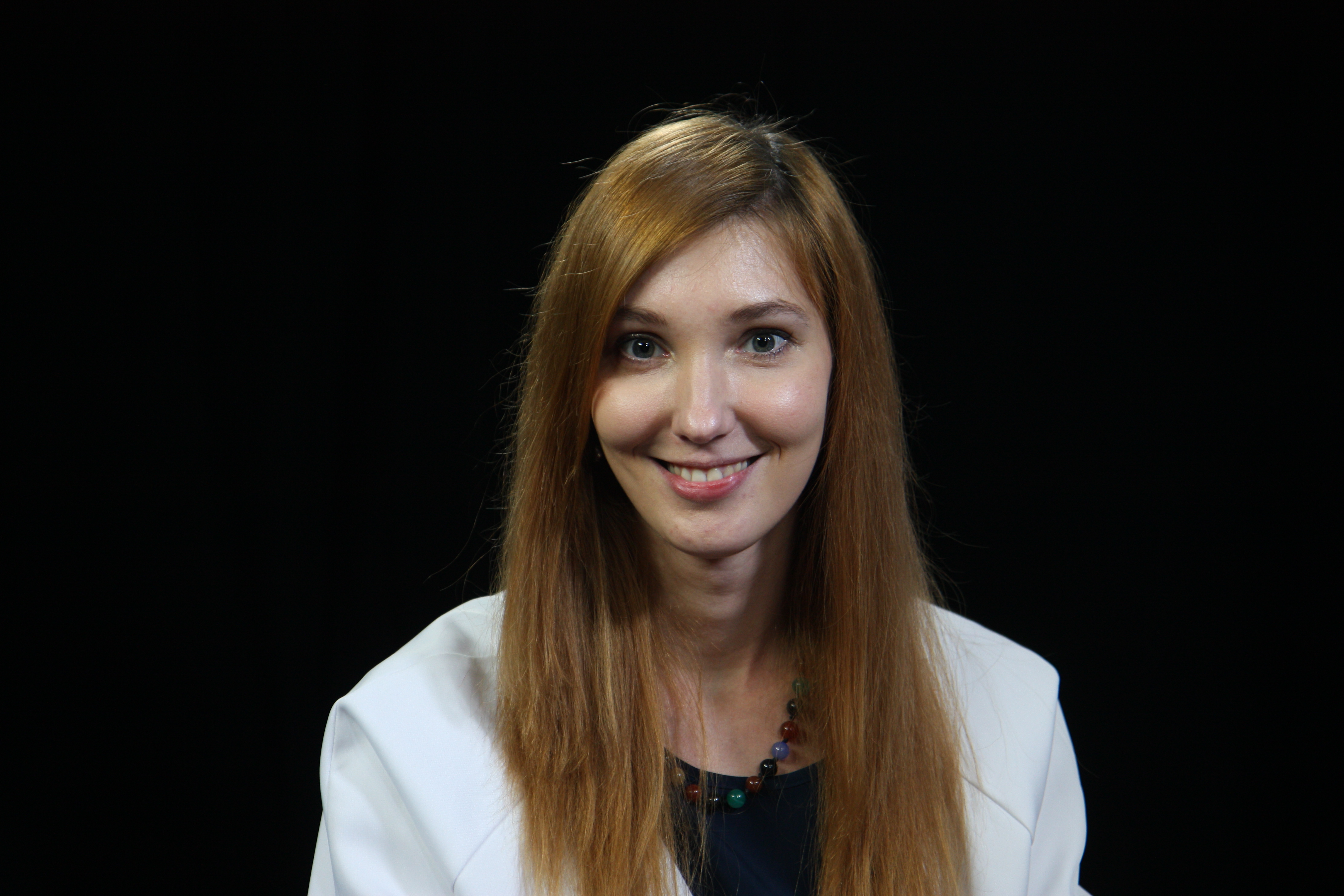
Diana Koroleva , analyst at the HSE Education Institute:
- The students of all schools unites one thing: they have access to computers only in computer science lessons, and the teacher controls this access, access to the Internet. School computers are not used for independent search for information. But here you need to understand: one thing is stationary computers closed behind the iron door, and the gadgets of the students themselves.
Therefore, in the study, we did not seek to analyze how information technologies affect the educational result, we wanted to make a cut and see how today the school itself reacts to the third wave of informatization, when 30 users of mobile technologies, high -speed Internet users, sits in the classroom. And we see that there is content that is blocked at the level of the provider on school computers, and intended for both students and teachers. It is clear that sites with conditionally dangerous and negative content are among the forbidden, but also modern sites that carry educational technologies. In addition, some of the children, albeit small, communicate with teachers through social networks, some teachers use social networks to complete homework. But if the teacher does this, he is bypassing school rules, most likely, from a home computer. That is, it is prohibited, but it happens.
But the most important thing is that we observe: gadgets cannot be prohibited. Pupils say that at school it is forbidden to use mobile phones, nevertheless, they all sit with mobile phones in the lessons. Moreover, they use them not only for entertainment, but also for training goals, but this is officially ignored by the system.
The teacher communicates in social networks with students bypassing school rules, from a home computer
Although not all teachers are ready to "be friends" with students in networks, and not only in Russia. I interviewed foreign teachers, and it turned out that there are units that somehow managed to integrate it into their system, but for most teachers, such communication causes fear and fears. When I asked teachers from Spain why mobile phones are prohibited in the lesson, they answered: to protect the teacher. They explained that children can somehow joke over the teacher and fix it. For example, they can find the answer faster than the teacher and show themselves smarter.
In the USA in different states, the situation is different. There is even a recommendation that the usual means for communication for training purposes should be used. But, for example, a teacher from New York said that their schools are prohibited in schools by a teacher with students. Different situations are everywhere.
We have a part of high -quality studies about how adolescents feel without a mobile. We made such a day without a gadget, and then they talked about our feelings. There were those that fell off. They themselves call it that: I broke, that is, I could not. Someone withstood, but it was not easy. Nevertheless, we do not perceive it as a dependence. When I was at the Summer School of the "Russian Reporter", where children have a very rich, active program, and they are in nature, they completely refuse it. Because another situation, another story - they are interested.
What did we understand thanks to this study? That the departure to the gadget is often connected precisely with boredom. It gets bored in the lesson - OP! - I looked at this window. I am talking with my parents, I'm tired of it, I again seemed to leave. And if a teenager falls into a rich space, where there is something new, interesting, he calmly refuses it.

Anatoly Shperkh , expert of the school league RUSNANO, Teacher of Informatics:
- The whole school program is today designed precisely for the use of school equipment. True, there are only a school’s fingers of one hand, which can use students of students in the educational process, such as the Bauman Lyceum in Yoshkar-Ola. But in 99% of cases, schools use exclusively school appliances, since we have adopted content filtering at our school, and it is quite difficult to do this on the devices of students.
But, despite this, as the study showed, 70% of children, despite the prohibition of the teacher, use mobile phones to find answers to the teacher's question. It's very cool. If you add to them also those 10% that answer the question with the help of a mobile gadget, when the teacher knows about this, it turns out that 80% of children in general help in their studies with the help of mobile devices. Good or bad is a separate topic. But the teacher is simply obliged to understand, to realize that this is the case.
The second part of the question: do social networks and entertainment in the lesson interfere? Here my answer is unequivocal - they interfere, but this is a matter of agreement. Children who come to me to lessons know that it is not customary for us to "ring" in the lesson, as is not accepted in the theater. If you need to use a mobile phone to solve the problem - please! If you need to find the answer to the question that the teacher asks, please! If you want to use Wikipedia in order to find out something new-please! But if it interferes - I'm sorry, it's bad.
If the answer to the teacher’s task can be easily found on the Internet, then this task does not make sense
Of course, it is very difficult to draw the border here, and it is impossible to solve something by ban. As you can’t give such tasks that can be easily found on the Internet. Or, at least, the teacher should understand that if he sets reproductive tasks, then they can easily be found on the Internet. About the same story happened with abstracts. Abstracts died as a class of tasks precisely because they could easily be downloaded on the Internet and copy two mouse clicks from there. Prior to this, teachers believed that this is such a difficult serious job - let's, we will set it for children. And they, having shoveled a large amount of information, will be able to give us out. Bach! It turned out that this is not so. Now no one sets an essay. I think that the same fate awaits other types of similar tasks. If the answer to the teacher’s task can be easily found on the Internet, you can easily calculate with a gadget, then this task does not make sense.
Social networks, in my opinion, today can be one of the most powerful incentives for learning. Look, who is the most popular “VKontakte” lecturer? Andrey Andreev. A person who simply tells the solution of problems in mathematics. He has dozens, hundreds, almost millions of subscribers and views of his videos. This is also a pastime of our children. They sit “VKontakte” and at the same time watch how mathematics tasks are solved. In my opinion, it is very important that our students know how to make their own social networks correctly. After all, it can consist of cats, or maybe from the conditional Andrei Andreevich, teachers of mathematics. And if we manage to teach children to do this, it turns out that the social network is not a distraction, not a window with entertainment, but this is another window in study.
Why are computers and, in general, at home information technology is more effective than at school? Because they are used when it is necessary, and in the way it is necessary. Otherwise, it is pointless to use them at home. The school has the same story, but for some reason we consider the number of computers for the number of schoolchildren, but we do not take into account what technologies the teachers use to introduce them into the educational process. Unfortunately, if we do not take this into account, everything else from the evil one, everything else is empty. It doesn’t matter - what is important - how!
The mobile phone is originally arranged in such a way that any person can use it. Another thing is that 95% of people use it either as a caller or as a communicator to exchange messages in the same social networks. But there are a fairly large number of programs, already in advance, already known and tuned, which the teacher can also use for his work. For example, in almost any modern smartphone today there is a lighting sensor. There are many programs that display data from the lighting sensor to the screen in the form of digital information. All! The physicist teacher has a wonderful device that can measure illumination in one place or another at school. He can make a lot of things that are no longer limited to the hardware part of the phone, but his own imagination. There is no serious preparation from the point of view of the hardware. We need fantasy, you need creativity, you need an understanding that ordinary simple things can be used very differently. For example, in the same phone there is GPS. Using data from this GPS, you can find points on the ground, draw contours on the map, and then do something with them. Almost any teacher can do this. Moreover, in fact, many students can do this. And if the teacher consults with students, without imposing his opinion, he will try to make a project with students, then students may well tell him completely non -trivial decisions. And it can be very interesting for everyone.

Ekaterina Polivanova , Head of the Center for Research of Modern Childhood of the Institute of Education of the Higher School of Education:
- If we talk about gadgets at school, this is a very strange problem of relations between “children” and “adults”, absolute hypocrisy. Each of us has a source of information in our pockets that I can use easily at any time, but we play "Yes and no, do not say." Complete strangeness and stupidity, especially since the ban comes from an adult. And this, in my opinion, works to lower the prestige of the school, which, unfortunately, has not grown so much lately. Add more outdated equipment in schools, despite the fact that the child has a completely advanced device or gadget in the pocket. But it cannot be used. That is, we closed our eyes with our hands and pretend that this is not.
Another question is that gadgets are distracting in the lessons. But the children always looked out the window, because something is happening there. Yes, in the lesson it is boring, frankly. Can there be 100% interest? It is unlikely. Most likely, there will be a lot of routine. But you really need to negotiate, to talk to them humanly, first of all, teachers.
The children always looked out the window because something is happening there
In general, I would discuss this issue not at the scientific level, but at the popular. Imagine the following picture: a seventh grader runs after the teacher of mathematics. She goes towards the teacher’s, he is trying to ask her a question. She says to him: "I have no time now. Come after the 6th lesson." That is, she can still refuse him this communication. There is a topic of division into a child, who, like a poor man with an outstretched hand, and an adult who can ozol, or may not be ozol.
It is clear that in the modern postmodern world, when a child is more qualified than a formally more adult, teachers do not want to lose this. They want to stay on the pedestal. Unfortunately, this is also a part of hypocrisy. Because the child will find another way out: oh, you don’t want to explain to me how the problem is being solved, but Andrei Andreev will explain to me remarkably on the Internet and - goodbye! “I will not approach you anymore.”
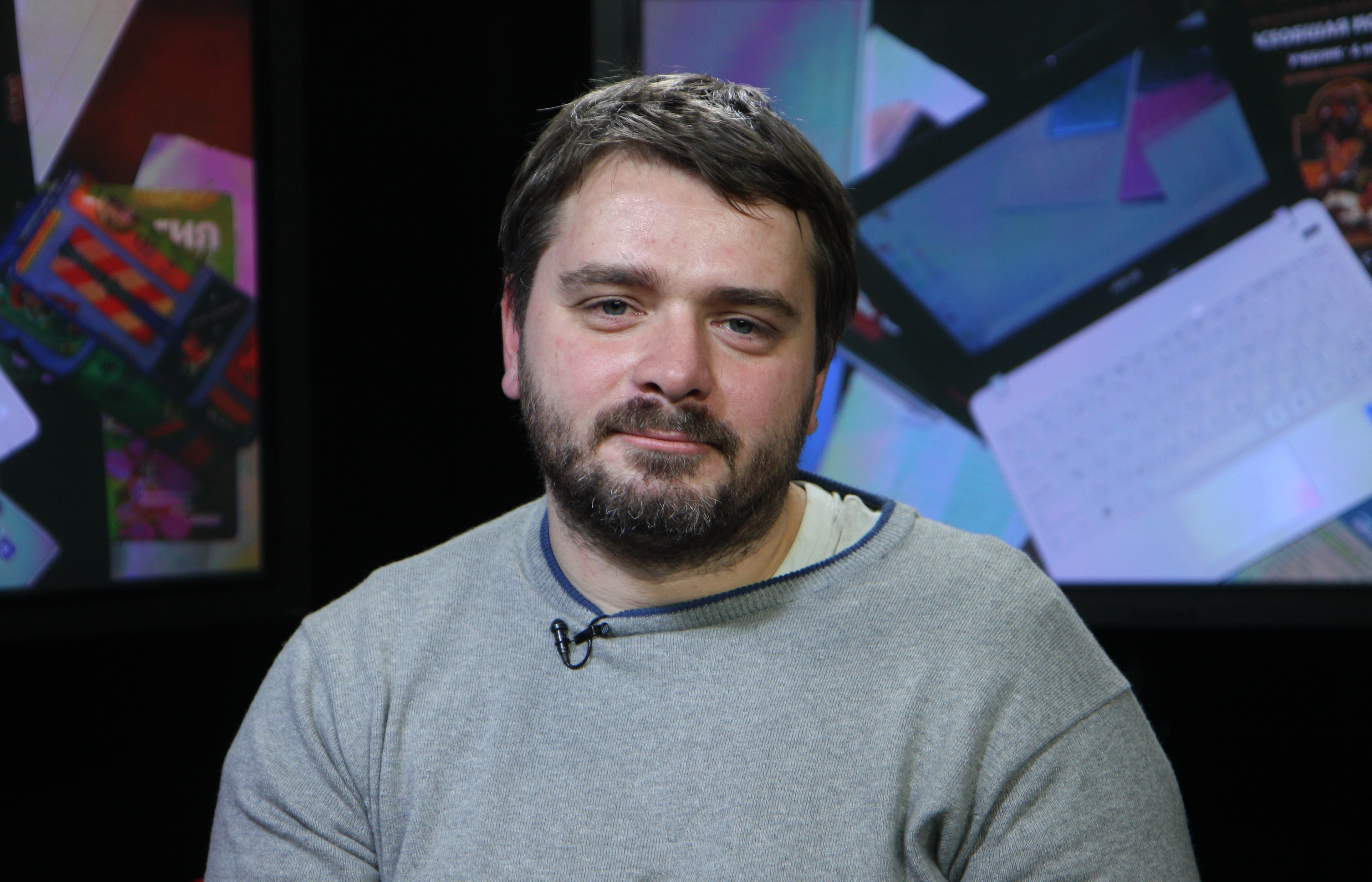
Kirill Khlomov , head of the Perekrestok Center:
- Now all adolescents are people who have had the Internet all their lives, and for the most part - gadgets. And our study in the Center "Perekrestok" showed that there is no difference for them - they know a person only on the Internet or live. For them, the Internet is part of reality.
Of course, the temptation of social networks is high. But I like the idea of seduction of gadgets, the idea of seduction of social networks. And when I think about the skill, I believe that one of the important tasks for adolescence now is to learn how to somehow develop the skill of self-control, associated with managing and regulating oneself in relation to the temptation.
When we, in turn, tried to deal with this phenomenon in our center, we got that communication in social networks is more characteristic of children from good schools. Based on this, we are on the hypothesis that communication, communication through social networks as a type of lesson that the child is engaged in gadgets more contributes to socialization, the development of communicative skills than he-lines.
If we are talking about dependent behavior, then I would rather talk about abuse. Because now I can not imagine the normal socialization of a teenager without at least some use of a gadget, language of computers, and the language of the Internet. The main subculture that we observe today is the subculture of computer slang, computer language, gigs, etc.
I cannot imagine the normal socialization of a teenager without at least some use of the gadget
In the "Crossroads" there was and partially remained the street service - specialists who go outside and work with adolescents on the streets. They have routes. They go along these routes and make contact with adolescents. The idea was in the prevention of risky behavior and the ability to contact the risk group at the initial stage at the initial stage. For this, a specialist needs to establish relations with the company. Therefore, the unit of measurement we had the number of teenagers on the street and the company. And we found that from the moment the gadgets with available mobile Internet became popular, the number of companies from 40 on one route decreased to 0 over 3 years.
If we compare the curves - just as the number of sales of gadgets with personal Internet grew, we had the number of companies on routes in the city. We worked in different areas of Moscow - and this result did not depend on whether the sleeping area or not. That is, we see exactly that the spread of mobile Internet changes the reality of the communication of adolescents. How to change - we now have to study it all.