
Translated material
Poetry of affect
1.
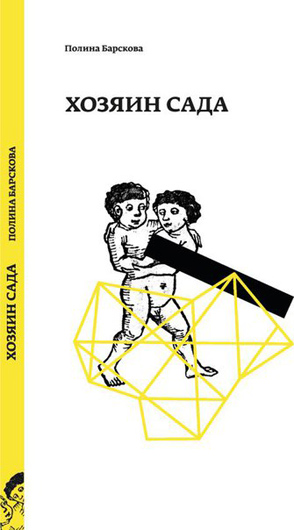
The new poetic book of Polina Barskova “The owner of the garden” opens the series “New Poems. Practice ”, published by the book project“ Order of Words ”in St. Petersburg. The book consists of four parts, which, as reported in his preface, Irina Sandomirskaya, according to the author’s intention, they say: 1) about the movement and choice of a place of residence; 2) about literature; 3) about love (as “a way of replacing a completely impossible direct speech”); 4) about shame.
All four parts are crowded. A conversation about literature is also a way of “bashful” indirect statement about “life”. And in the fourth part, for example, the character of the imaginary translator Zinaida C., who bashfully “lets out its own exposure to the flag of Musse and Verlaine, turning its emotions into literature. Here everything is permeated with reflexivity and mirror (“I do not exist / but everything is reflected”).
Many "love poems" Barskova also characterize a kind of reflexivity. So, often in them an object of love languor is almost not present, but is like a shadow, absence, a mirage whose presence is experienced through the metamorphoses of the body of a lyrical heroine. We can say that the desire of the other here is constantly mirroring himself. Here, for example:
When you leave the room, incoherent, viscous
My double, that the baguage is stuck on the wax.
So he wants me and tramples me and whines,
As in Odoevsky Morok - black hog.
When you are reflected in a mirror full of dry snow,
I scatter, like in the paws of a dowan child-a house from LEGO.
The phenomenon of another here is given through the end of the body, and not through vision, the contemplation of the one to whom the desire is addressed. There is no desire here at all. Instead of another, emptiness gaps. If vision occurs, then this is pure openness, which absorbs, and not directed outside:
And to the form, to the word, to the delivery of mockery before grief
You will saturate my vision like a city over the sea.
The vision is saturated, absorbed, absorbs forms that have foggy uncertainty. In general, love is understood “in a woman’s” (I apologize for the cliche), as the adoption of something fiery, burning in himself:
Breaking through me like a ball of fire - through a dream.
Or in another poem:
My cave lad
A piece of fire is not mine
Live my forehead with fire
Fire to me my eyes
Pour me with salt
The bloody pores.
Or:
He falls into me:
Huge, icy
And burning.
He is filled with me.
He falls in his unknown way
In a gaping through me, he hurries later.
I open my mouth
And I substitute my forehead ...
This kind of erotica is built on the reflection of another in itself . Only I, “my body” is the arena of this erotica, the activity of desire here gives way to passivity of undergoing. And poems turn out to be, as it were, a product of the deep affect that gives rise to this kind of mirror:
... when the earth
All blazes from the brains, intestines,
Limbs prescribed food,
And it is necessary to swell the smell,
I think about the happiness-person,
I get a poem out of myself.
Poetry arises in response to affect. In philosophical, poetry is not given as a result of intentionality, orientation outside, but as a result of affection, testing of penetration, fire, pains that awaken the poetic answer. The French phenomenologist Henri Maldina called this ability Transpassibilité (an unusual term, awkwardly translated into Russian as “superfortal”). We are talking about the ability to endure an unexpected event that can transform the susceptibility to it into a certain activity of the subject, that is, about undergoing, in which passivity turns into activity. In the same way, in Barskova, the complete passivity and openness of the invasion produces poetry as a reversal of directions. What came from the outside, is transformed and itself converts outside.
Such an understanding of literature is significant. It primarily implies reactivity, and not the original activity of consciousness. The poet is not the one who invents and draws up his plan as part of literary models, canons, etc. Poetry is not a product of skill, skill, design, but there is the ability to affiliate, undergo, susceptibility in the most strong affect and the ability to transpassibilité , that is, turning passivity into a letter. This practice of writing, in which the poet’s body is included, is expressed by Barskova in the Metaphor “Human Liber”:
Humanian
Emerald puffing scarlet
Brown black already.
Unbearable completely unprecedented.
That on whom I am writing
Pencil with a tongue tearing off <...>
Who writes on me
Signs of life, signs of desire ...
Or in the poem "Translator I":
Mine around the sloping bunks appear in you on you
With an awkward definition -
Tattoo,
Not yet dried up, with the blood trace of the needle,
A trace of my letter appears for you.
A letter on the poet’s body, produced by his beloved, turns out to be the text of the poet himself, converted outside. In such literature there is no difference between the subject and the object. And the process of formation of the text is described (and this often) as an immersion in a certain earthen or moist amorphousness, from which a response prone of blood painted, radiant and bright. Barskova verses are full of radiance and color, which is curious that it itself has no objectivity - this is only a stain, a surge, flash, reduction and compaction of blur into the release of the reaction, response.
Description of the primary "somatic state" of poetry is
Squature transparency
Transparency and spot in the middle.
Or: "Everywhere spots are spots everywhere!"
The type of prose that I am going to learn from myself is attracted.
As a magician extracts from the cylinder -
Rabbit, and from a rabbit - a silk red scarf.
I think that such a poetry of affect explains the close interest of Barskova in the Leningrad blockade, which is enclosed in a certain “crypt” of a stranger/its experience as a generator of such a deep, inexhaustible and incurable affect, without which the literature of the Barshcovy is impossible.
 © Book workshops
2.
The fact that the text is released from the body, and is not the result of the intention, makes the poetic experience of the barsk very modern. Such a generation of the text questions the linear deployment characteristic of intention, and, therefore, is also reflected in the temporality of texts. After all, time always sets us as directed from the past to the future, as a linear deployment. Barskova does not know such a movement, but it is focused on the motive of memory, which is non -linear, but breaks the memories painted with affects. This is a kind of Freudian memory of traumatic experience. The most interesting in this connection are the texts of the first part of the book “Movement”, which generally seem to me the most significant achievement of the poet in the “Master of the Garden”. The attitude to the place, to the city, the habitat dominates here over the attitude towards a person, to another, even to the lover.
The city, the place is significant primarily because they create the basis for repetition. Repetition often reveals its effectiveness when a certain event proceeds in a place in which the event has already unfolded and which can be assigned similar features. A new event arises by virtue of the unity of the place (names, toponyms, topography) as a playing of the old, that is, as a memory risen about him. In the article “Memory, Reproduction and Processing”, Freud wrote that repetition often replaces the memory. And repetition underlies affective poetry. First, the poet is covered with letters, which then returns to the world as his poetry. A humanistic man is a figure of multiplication in a single "who writes on me" and "the one on whom I am writing." This is Echo’s poetics. In repetition/memory, the deceased turns out to be repeated in living, but inseparable from him. Something similar can be found in a number of modern poets, for example, in Maria Stepanova.
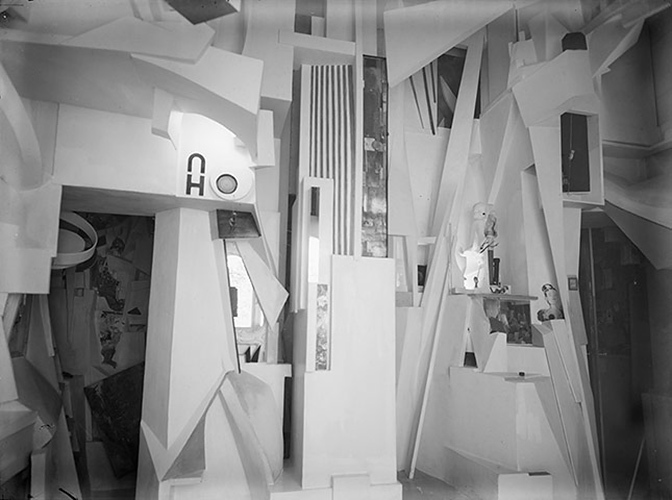
At the Barsky body, the city is inscribed in urban space, the city is as susceptible to influence as the human body, equivalence is established between them (“and it returned to its natural creature, / which all / was reduced to the connection with this city”). Barskova writes about Kurt Shviters, who builds a tower from herself, and in this image she finds an expression of the non -deputy of architecture and body:
Kurt Shvitters is building a tower
From scales from forehead
From senile children's accent
And the tower slapps him like a placenta
On the fetus -
Dying and destroying.
Graffiti corresponds to the bodily writing ("Cracking buildings covered with cracked Graffiti / protruded from moist noon"). The city and man germinate at each other and exchange time, a person absorbs the time of the city, and the city - man (“the city of three restorations grows through it that the bush / many -lump -haired camellia”; “a childhood growing, flickering mild another body of the city”). Actually, this connection with the city is just interesting in that it introduces a bizarre temporary dimension into the world of Barskova. I even think that the topics of the blockade Leningrad are particularly important for her work that in it the “suffering” of the city is inseparable from the suffering of a person, from the deep affect of the intake with urban space.
A person becomes the body in which the history of the city emerges from darkness. A person exchanges a biography with a place (“Day after day, he indulges in deeds / with unnatural stubbornness imposing the past of the city ...”). Gilles Delez in a book about Leibniz wrote: “... I have to have a body, because I have darkness. <...> there is no darkness in us, because we have a body, but we must have a body because there is darkness in us ... ”(Gilles Delez. The fold. Leibniz and Baroque. - M., Logos, 1998, p. 145-146). The body is what the inner darkness clarifies on. He also pointed out the torn interior and exterior in the building. The interior is internal, the facade is only the surface. Petersburg, the beloved city of Barskova, is this torn in the most naked form. His facades are torn from his interiors. This opposition of the interior and facade reproduces the opposition of the soul and body, surfaces and darkness in its own way. The connection between them by Leibniz Delez described as an endless fold: “Baroque constantly produces folds. <...> But Baroque twists and bends them, directing to infinity, a fold behind a fold, one to the other. The main feature of Baroque is aimed at the infinity of the fold. And, above all, Baroque differentiates them, respectively, two directions, two infinites - as if infinity had two floors: folds of matter and bends in the shower ”(ibid., P. 7).
Barskova’s poetry is in essence the baroque, and the connections of the bodily and internal, as well as the connections of man and the city, facades and interiors, pathos, affects and letters, take the form of such an endless fold, in which everything is found with everything and creates the intensity of meaning. The fold combines the heterogeneous, like a shutters tower-placenta. The finale of the text, the named "movement" describes the death of the hero as such a fold:
He is worth a voluptuously grinning
When
From the red dusk of avenue (yes, as in a horror story!)
A red car appears
It doesn’t have time to slow down
It falls easily and steeply
Something there
Repeating
Repeating
Repeating
Repeating
Repeating
It would seem that the “road accident” is described here, but in the topology of the poetic world of Barskova everything becomes a semantic movement . The machine arises from darkness and depth, grows, as if arising from the abyss of the body with a red bloody spot (a typical motive for it), and knocks down a hero who falls into repetition, into the infinity of darkness and memories. The movement of the machine only seems horizontal: in fact, this is a vertical movement that is repeated in the fall that turns it out. Such a structure of space and physicality allows you to realize texts of incredible topological complexity based on folds that bring the city, body, memory and present. And this movement usually does not know horizontal and linear scanning. It follows a certain metaphorical shaft of the elevator, because the time layers are strung here in the same place. Moving is, in the end, by moving in time, and not in space. For example, in the 1998 poem, it all starts with a pure movement between times, depth and surface. Such movements of Barskova often go in parallel, the erotica of these diving/occurrence is quite abstract:
... important but not where but
The discharge separation begins
Flapses to the outside ...
And then this movement acquires bizarre baroque:
... how Dant on the elevator you go down the circle
in that basement where a blind cat is a piece of glass gnaws
or in a skinny aspen behind a fat park
where, having seen, it pars the moron on the smoldering shmat of foliage
With that careless dignity, as if he were in Peterhof
Faun Fountain.
The boudoir difference between you and you ...
Transitions from the basement to a skinny aspen with a pissing moron, to Petergof and the erotica of a boudoir - these are constant transitions between internal and external: basement, forest, park, boudoir, in which different eras are woven into such an endless baroque fold. Sandomirskaya interprets a blind cat, gnawing glass, as an image of a blockade (which is not excluded), but for me here a combination of blindness (darkness) of the surface and transparency (glass), which opens the depth that is not available to the vision of a distraught animal.
In the first part of the “owner of the garden”, this baroque metamorphosis acquires an almost epic size, affects its sensual intensity and becomes the basis of poetics. In the "owner of the garden", Barskova’s poetry reaches new heights and a new level of complexity.
Polina Barskova. The owner of the garden. - St. Petersburg: Book Workshops, 2015. 120 p. (Series "New Poems. Practice")