
Translated material
The man of ascent
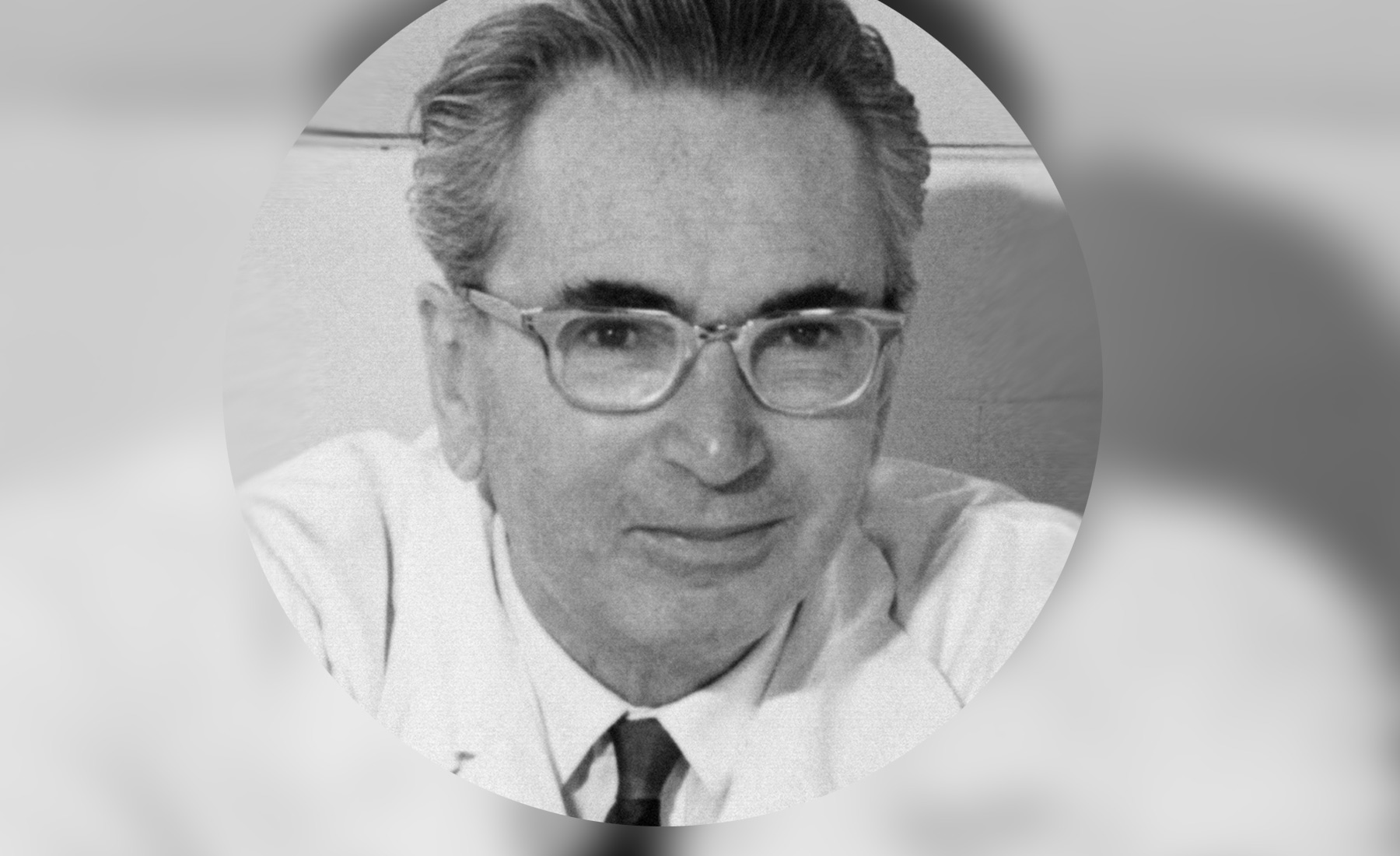
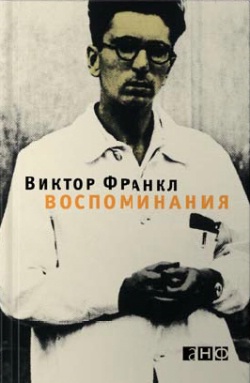
Victor Frankl. Memories / Per. With him. Love the sums. - M.: Alpina Non Fikshn, 2015. - 196 p.
The first impression of the book of Victor Frankl is inhuman clarity.
What he writes is not a confession, not even self -analysis with self -testing. No, calm, restrained, often - ironic and detached, almost even dry sometimes, a report on the lived. He speaks, about success and disasters, about happiness and grief, about love and death, in essence, with the same intonations. Including - in a no longer trembling voice, without changing the tone - about which, it seems, only a scream, if - in general. About what, imagines, it is impossible to look at inner eyes; And looking - not to sake what you see, to stay in their right mind.
“... When it came to the point that I and my first Tilly’s first was taken to Auschwitz and my mother and I parted, I asked for her blessings at the last minute. I will never forget, like with a cry that came from the very depths of my soul - with a passionate, desperate scream,” answered me: “Yes, I bless you,” and I gave me a blessing. Before she was transported to Auschwitz and there was immediately killed by gas. ”
Frankl speaks and looks straight, point blank. And his mind remains crystal clear, and his attitude to life - (attentive, active) love and gratitude.
Not a single member of the Viktor Frankl family survived the Nazi camps. His parents, his brother, his beloved first wife, with whom he managed to live quite a bit, died.
"... Tilly died in Bergen-Belzen. She died after the camp was liberated by English troops. They found 17,000 corpses in the camp, and in the first six weeks after liberation to them another 17,000 were also added to Tilly. I was also informed that the gypsies were cooked at night, especially preferring the liver. Then I was persecuted for a long time. obsessive picture: gypsies eating Tilly's liver ... "
Even more unbearable: to his father, with whom he ended up in the camp, he helped to die. Frankl with his own hands introduced him a deadly dose of morphine, "when the doctor saw that the terminal edema of the lungs was developing, that is, he had a deliberately losing dying struggle for every sip of air." "... I kissed him and left. I knew that I would no longer see him alive, but a marvelous feeling swept me: I fulfilled my duty. Because of my parents, I stayed in Vienna, and now I took my father on the last journey, saving him from meaningless torment."
Can I write about it? Is it possible to live after that?
Frankl did not just survive and did not break, although there were more than enough grounds. After that, he lived a long life, meaningful, fruitful and - we can speak completely confidently - happy, harmonious, full of pleasure. At least, it looks in his presentation. Frankl does not let into his text either longing, no despair, or anger, nor regrets - nothing dark at all: he keeps all this by brackets, not allowing this to influence the course of the narrative. This is understandable - although you can imagine how difficult it is. But it is much more incredible that he - we learn by the fruits of him - really lived after salvation from the concentration camp on a directly and steadily rising line. He was a man of ascent.
“I was fond of mountaineering up to 80 years. The year when I could not go to the mountains because I wore a yellow star, I dreamed about the nights at night. <...> I have three all -consuming classes - a roulette game, an operation on my brain and the first climb. I climb a serious mountain ... "
However, he speaks of his post -war life briefly, almost summary. It represents it as a chain of achievements and confessions. If it were not for the fundamental neutrality of intonations, one might even think that he was somewhat boasted. He dares chaos. He laughs at him.
"... at the age of 67, I began to study at the pilot and after a couple of months I made the first independent flight." About the design of the glasses: "I understand this so great that one of the world's largest factories sent me another sketch with a request to approve a new design before it was launched into serial production." "The amateurism does not bother me at all, I bravely rushes into it. I compose the music: I wrote an elegy that the professional composer arranged - it was often performed by the orchestra, and my tango was transferred on television."
And this is also, in addition to professional and universal recognition, the numerous evidence of which is “Rids to Books and Articles”, “Acquaintance with Philosophers”, “Audience by the Pope”, “Speech around the world” - He does not tire of listing.
For old age, he found his objection: "... aging does not scare me until I manage to grow to the same extent that I am aging. And I succeed, that the guarantee that the manuscript finished two weeks ago is no longer quite satisfied. The compensation process continues very actively."
Francla’s life, cut in half in his very core with a terrible tragedy, does not think to represent himself as a tragic one.
The most important thing happened to him during the war.
Actually, two circumstances turned out to be key for the occurrence of logotherapy. The first is the fact that Frankl, a psychiatrist in a specialty, for many years worked in his clinic with people who made a suicide attempt: helped them find the will to life, to resist its impossibility. (He did the same during the Nazi occupation of Austria. "My assistant, Dr. Rappander, considered it wrong to return to the life of people who tried to commit suicide. The day came when Mrs. Rappander herself received an order about deportation. She made an attempt to suicide, was taken to my department, and as a result it was deported." concentration camp.
And now the second circumstance is the camp, to which they soon sent Frankl himself, where he went, in essence, voluntarily: he could get an American visa, leave, but preferred to stay in Austria with his parents doomed to death. That is, he himself had to experience some of the ways to confront the inability to confront his effectiveness - and confirm their effectiveness.
"Apparently, the concentration camp became a genuine exam for a certificate of maturity. <...> That was a critical experiment: a purely human, ancient ability to distance himself from myself and go beyond myself, about which I discussed so much in the years that preceded the interdance, in the camp was completely verified and confirmed."
It sounds wildly and painfully, but it turns out that, if there were no disasters, its maximum anti -relations, we would not have a meaning.
"Otherwise, they managed to survive those who were guided by the future, on the meaning, which was expected ahead."
Frankl made almost impossible: he found and clearly formulated the ways to use the semantic, humanizing the potential of the disaster. The fact that destroys a person and denies him.
It is interesting that in the worldview of Frankl, although he received in childhood the proper dose of religious education ("My father forced me and my older brother, he forced the prayer in Hebrew on Friday evening ..."), it seems at all religious components. He has separate rudiments of religiosity, including lexical ones,: “... any events that happen to us,” he writes, “possess <...> maximum, unknowable meaning - the highest meaning is not available to us, but we must believe in it” (why should? Who obliged? - Do not ask); "<...> I hear my thoughts, rather even an internal anthem:" Fate is blessed, may its meaning be established ! "But in general - the slightest appeal to the transcendental:" <...> the main meaning eliminates our knowledge, in a word, this "super -thought", but in no case the last author even diverted this, for a longitudinal, for a long conviction]. In general, to understand whether he is a believer or not, he is heated: the author of "Memories" did everything to do without frankness on this topic. Even in the chapter specially dedicated to the "faith", he manages not to speak out directly about it. Yes, "in childhood he was due, the teenager survived the time of atheism", and then what? And then, Frankl tells us, it’s better not to discuss. “It will never occur to me, communicating with professional psychiatrists, speaking about logotherapy as a psychotherapeutic method or technique, discussing personal faith issues. This will not be good for the matter, that is, strengthen the popularity of logotherapy ...” Well, non-professional, can I admit? No. All that we are invited to limit ourselves is the recognition of accidental apparently, but too eloquent to be random, coincidences, "which is better not to try to interpret. I am too stupid to comprehend the meaning of this event, but too smart to deny this meaning."
In general, it seems that Frankl is a firing man, like many of his contemporaries: learned in childhood and, it seems, religion, which was not divided in maturity, left a forming imprint in the form of external and internal discipline and the idea of its necessity, but did not leave its most significant contents. He considered all the resources necessary for a person to survive, he considered it possible to find - and really found it! - In the man himself.
Just what was urgently needed in times with exhausted ones - as then, at least, it seemed - resources of susceptibility to the transcendental - at a time when a person remained on himself.
The creator of treatment with meaning had to turn here not only to his own personal qualities and the mental discipline in the family, not only to modern therapeutic concepts and practices (primarily for psychoanalysis, from which he studied with which he argued) and generally to the experience of modern culture, but also to the deep roots of this culture, which goes into antiquity.
In its attitude to the life of Frankl, with its ancient clarity, it clearly inherits antique stoicism. He even has direct references to the Stoics. The beginning of “Memories” repeats the beginning of “thoughts” by Mark Aurelius, the “first book” of which is entirely dedicated to the one from which of his ancestors and mentors what qualities the author inherited, from whom he learned and to whom he is grateful for. "1. From Vera, my grandfather, I inherited cordiality and non -malignancy. 2. From the glory of my parent and his memory left by him - modesty and masculinity. 3. From mother - piety, generosity, abstinence not only from bad deeds, but also bad thoughts. As well as the simplicity of lifestyle, far from all luxury ..." This is Mark Aurelius. With the same pedantic equanimity, it lays out its symbolic inheritance on the shelves, leads its spiritual economy into the foreseeable order of Frankl - even intonations are similar: “Mother <...> was kind and cordial, and the character of my father was an extreme opposite. Father was distinguished by a Spartan attitude to life and the same concept of duty. I am the same perfectionist, and they have been brought up more than the father, but I apparently inherited from my mother in the structure of my character with my father. He said that he did not encounter anything like this: such a strong contradiction between extreme rationality, on the one hand, and deep emotionality - on the other, I obviously received from my father, the second - from the mother ... "
In building a life program, which was then useful to many and many people, the extreme rationality prevailed. Without suppressing deep emotionality, but, on the contrary, allowing this latter to rely on.
Frankl, with all his attention to the ethical component of human existence, is not a moralist at all, is not inclined to teach either the reader-senior or himself. Rather, he is a pragmatist - in an extremely expanded, though understanding of pragmatism. Its pragmatism is special, daring to say - non -altimate. Overpractic, suprakatical, making any practice justified and possible. Making grounds for practice.
He has everything in the furnace of meaning. Nothing disappears.
"... In addition to (cash) of weaknesses, I also intuitively look for (potential) opportunities to overcome these weaknesses, looking for ways to get out of a difficult situation, I try to identify the meaning of this situation and thus transform the meaningless suffering into deep human experience. And in general, I am convinced that there are no situations that could not have been extracted from the meaning." Frankl, however, says that he acts as “in the role of a psychiatrist or psychotherapist”: “This is a belief, in a more structured and systematized form, and underlies logotherapy.” But he does the same thing outside this role, outside of all roles, in everything in general!
Even what destroys a person, together, seemingly, with any representable meaning, is the very intelity - in Francles serves the meaning, works for it.
"In many respects, it is death that gives life the meaning. And, above all, the transient being is by no means meaningless for the simple reason that in the past nothing is lost irrevocably, but, on the contrary, is forever preserved. The transient cannot affect the past: the past is already saved."
It would be nice to remember this all the time.