
Translated material
You will not dance with us
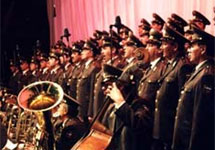
In Lithuania, a concert of the Academic Ensemble of the Songs and Dance of the Russian Army named after Aleksandrov was canceled, which was supposed to take place on December 6 at the Visaginsky Cultural Center. According to Interfax, the director of the center Danuta Morcunena told about this. According to her, the leadership of the institution did not know exactly who should perform from them, "a certain person bought one of the halls of the cultural center and did not say why."
The reason for the abolition of concerts, considers Morcunene, was the "ideological load of the ensemble." “This ensemble is the heritage of Soviet times,” she added.
The ensemble planned to give a concert in Lithuania as part of a European concert tour. Meanwhile, according to the Lithuanian Radio LRT, the ensemble from nine concerts held until Monday in the Czech Republic was ambiguous, and Poland activists, in which the tour of 13 concerts will begin at the end of November, threaten to disrupt the performances with a “roar of pots and whistle”.
The European round of the Academic Song and Dance Ensemble of the Russian Army named after Alexandrov began on September 5, it is dedicated to the 70th anniversary of the Victory. Concerts, according to the head of the Department of Culture of the Ministry of Defense Anton Gubankov, were supposed to be held in the capitals of European states liberated by the Red Army from the Nazi invaders, including in Budapest, Belgrade, Sofia, Bucharest, Chisinau. In addition, the performances of the ensemble in Vienna, the cities of Slovakia and the Czech Republic, Berlin, Warsaw and the Baltic countries are planned.
In July 2014, Latvia banned the entrance to the country to three Russian singers - Joseph Kobzon, Oleg Gazmanov and Alla Perfilova, known by Valery's stage pseudonym. The head of the Latvian Foreign Ministry, Edgar Rinkevich, decided on the basis of the law on foreigners. "These persons contributed to the violation of the territorial integrity and sovereignty of Ukraine with their actions," the report said. Rinkevich called the artists "apologists of imperialism and aggression."