
Translated material
The European Union is again trying to solve the problem of refugees - this time at a mini -sammit
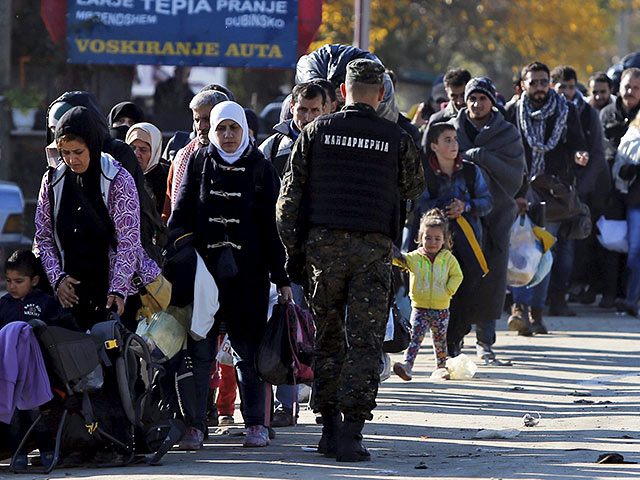
The European Union is once again trying to develop a single approach to the problem of refugees - this time, having collected a mini -sammit with the participation of mainly Balkan countries, through which for illegal migrants it often runs a way to Western Europe. Scattered statements before the start and during the summit give an idea of the contradictions in the positions of the participants.
The mini-sammit in Brussels is attended by the leaders of Austria, Bulgaria, Hungary, Germany, Greece, Macedonia, Romania, Serbia, Slovenia, Croatia, the chairmen of the European Commission, the European Council and the European Parliament, it is convened at the initiative of the head of the EC Jean-Claude Junker, Interfax reports.
German Chancellor Angela Merkel, who recently visited Turkey, said that the countries of Central and Eastern Europe without Ankara could not independently solve the problem: "Only with Turkey we will be able to move from illegal migration to legal." She urged to concentrate on resolving practical issues, in particular, creating centers of registration of migrants on the external borders of the EU and the help of Greece.
The same hope was expressed by the head of the diplomacy of the European Union Federica Mogherini: "As we already said, this is a matter of responsibility and solidarity of all players." (Quote for RIA "Novosti" .)
However, the statements of other "players" showed that solidarity is still far away.
Thus, the prime minister of Serbia, Alexander Vucich, said that his country is ready to accept part of the migrants without being a member of the European Union, and is not going to build walls: "We expect that today a comprehensive solution for the whole of Europe will be found, especially for the Western Balkan countries."
And the prime minister of Hungary, known for his nationalist position, Viktor Orban, on the contrary, said that Europe could not accept everyone who is “looking for a better life” and called for the development of a “clear plan” with a “solid answer”. He stated that he was not talking about "anti -Muslim politics", but immediately noted that 70% of migrants are men, and this is "like the army."
Somewhere in the middle of this spectrum were the leaders of Slovenia and Greece. Prime Minister of Slovenia Milo Cerar called for strengthening control on the border between Greece and Turkey, through which many migrants penetrate. And the head of the Greece government, Alexis Tsipras, noted that the most important partner of the European Union in the migration problem is Turkey, not invited to the meeting of the leaders: "Today the discussion will pass between the countries located on the refugee stream. But everyone knows that there is an entrance at the other end of this corridor. If we cannot agree with the country of the entrance, then I am afraid to find a solution."
According to the European Frontex Border Agency at the end of September, over 710 thousand migrants arrived in the first nine months of 2015. The European Commission said that the current migration crisis in the world has been the largest since World War II.