
Translated material
Empty Moscow
Whether the metropolitan developers will be able to survive the crisis. Reporting Ilya Zheguleva
Last week in Krasnogorsk (Moscow Region), entrepreneur Amiran Georgadze shot four people, including the vice mayor of Krasnogorsk and the head of local electric networks. Previously, Georgadze sold lands to developers, and also helped them receive the necessary documents; But then his relationship with local officials deteriorated. Such entrepreneurs as Georgadze in Moscow and its environs are dozens: developers no longer take loans at the bank for the purchase of sites and prefer to look for partners with the ground. The second crisis in the real estate market in ten years, as a result of which the fall in individual sectors amounted to 70%, forces many companies to review the tactics of doing business. The special correspondent of Medusa Ilya Zhegulev tells how Moscow developers survive.
Marina Barman, the owner of a liquid production company for electronic cigarettes, a month ago she decided to move from the office on Smolny Street. She needed a room more spacious, which is production on the papers - to avoid problems with various inspections. The former landlords clung to her with a dead grip. “We will cover the firefighters, just stay,” they convinced Barman. But she still decided to leave; In the meantime, I was looking for a new office, I managed to study the offer in the market, which is now with excess. “Everyone is trading. Inertia, initially, give [rental] bets that were a year ago. With everyone, I took off the price in half, and it was discussed normally. At first they refused, then a week later they called back and agreed, ”says Barman. A new, more spacious room-with all the necessary documents-she found in the Everest business center: 750 rubles per square meter per month.
For entrepreneurs such as Barman, the times of new opportunities have come: it is not difficult to bring down the rental price or change the office. According to the results of the third quarter of 2015, the number of empty office space in Moscow was one and a half times higher than the similar indicator of the crisis of 2008-and reached three million square meters (a fifth of Moscow class B and a quarter of class A offices are free). This is a historical maximum.
In trading real estate, a similar situation: the share of free space has doubled. The new shopping centers "Aviation" (at the end of 2014) and Hudson (in the spring of 2015) opened half empty.
Demand fell sharply in the housing market: this summer transactions were 38% less than in the same period in 2014. However, there are no large bankruptcies yet. Moreover, some companies even visually rose in the crisis. The crisis almost primarily touched real estate; So Moscow developers come up with how to survive it so that the banks do not have new non -core assets - in the form of bankrupt companies.
The largest picture in the world
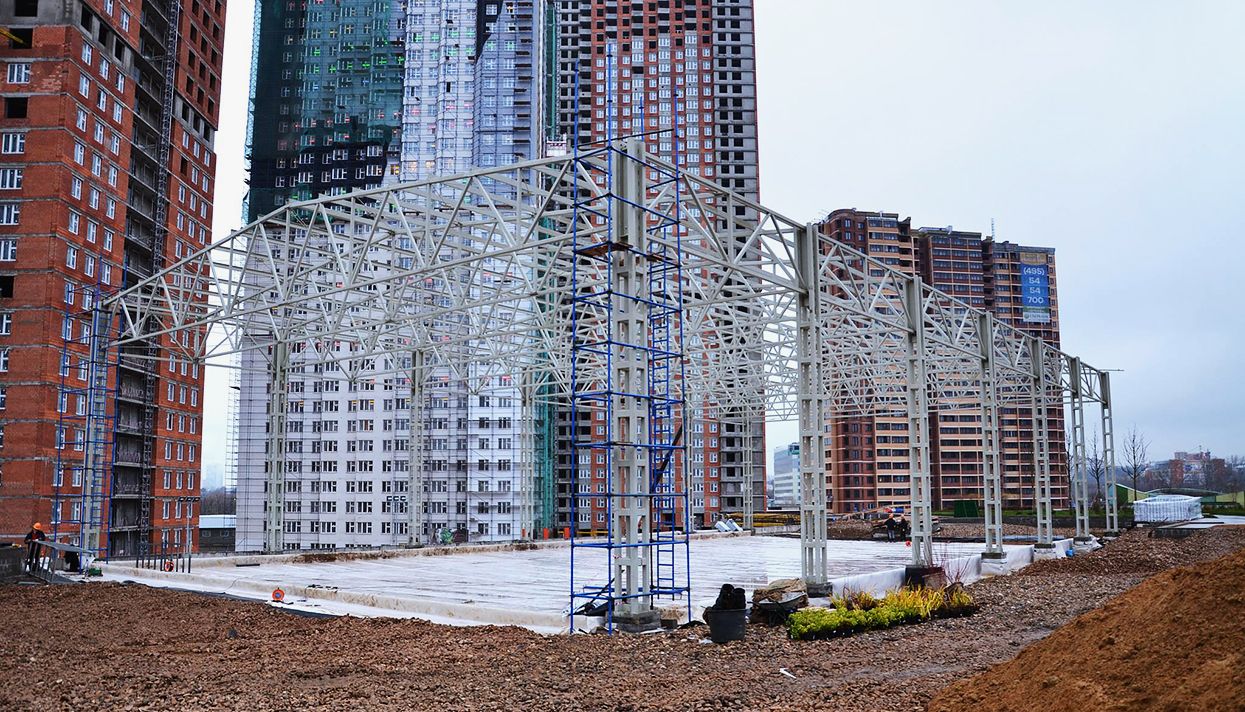
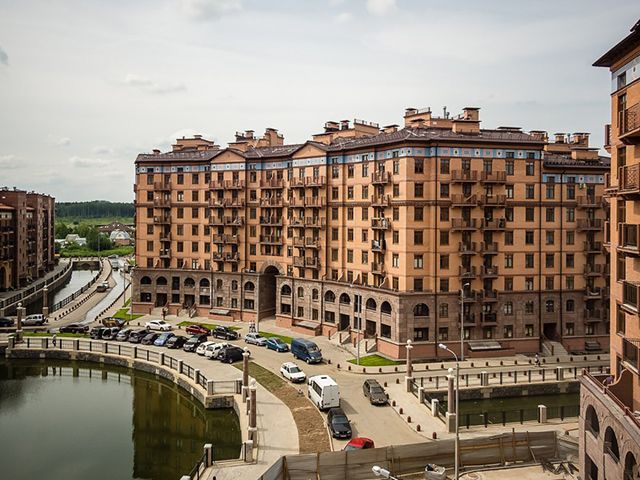
The famous ART residential complex in Krasnogorsk (Moscow Region) designed the bureau of Italian architect Dante Benini, and painted buildings in bright colors symbolizing the Olympic fire, the artist of the vocabulary of Mario Orlati. The ensemble of five 45-storey houses entered the Guinness Book of Records as the "largest picture in the world." True, the inhabitants of the neighboring area Pavlyno were not impressed with this - and fought with the construction of skyscrapers since 2011.
“The largest picture in the world” began to be built by the local developer Amiran Georgadze-his Real-Service company owned the land plot. Georgadze skillfully resolved issues with dissatisfied residents and missing construction permits: the protest movement gradually came to naught, and the Krasnogorsk City Hall, as a result, did not have any questions for the builders. Later, Georgadze sold his share in the project of the metropolitan investor - KROST company. Meanwhile, his friendly relations with the administration of Krasnogorsk for some reason were divided.
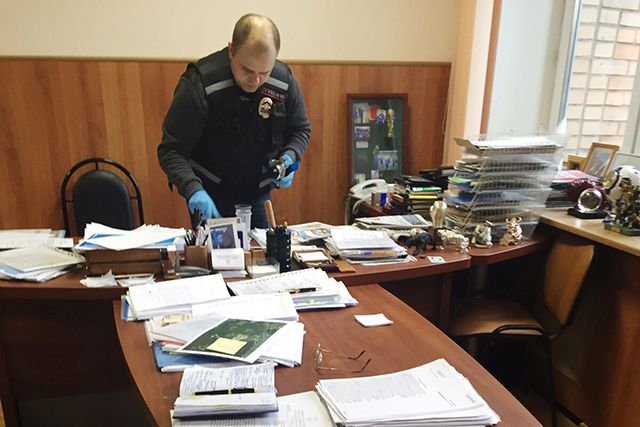
Exactly at an hour of the day on Monday, October 19, the entrepreneur went into the building of the Krasnogorsk administration. Georgadze was passed inside without question, and then in the same way they missed his driver with a backpack, in which the machine gun was lying: the businessman often looked at the city hall - and he was familiar with almost everyone here. When Georgadze from the Krasnogorsk vice mayor’s office, Yuri Karaulov, called another official-the head of Krasnogorsk Electric Networks OJSC George Kotlyarenko, he was not surprised and came. The mayor of Krasnogorsk Boris Rasskzov was saved only by the fact that he was not in time in time. Five days later, Georgadze found the dead near the dacha of Rasskzov, where he unsuccessfully guarded him, and then shot himself.
There are several versions about why an entrepreneur with 20 years of experience decided on this desperate step. According to Kommersant , the new project of Georgadze - the already built village in the Pavlin floodplain - was not connected to the networks. According to other sources, officials tried to squeeze him out of the business, and Georgadze believed that his share costs $ 20 million. Georgadze also said that this money was stolen by officials who sold his land and construction.
How is this sad story related to the crisis in the real estate market? Directly.
The owner of Krosta, Alexei addsin, is now rejected from Georgadze: according to him, they met several times, and the criminal has nothing to do with Krasnogorsk projects. Nevertheless, market participants say that investors now prefer to build in partnership with the owner of the Earth - this has become a very common practice. Previously, companies took a loan at the bank to purchase the site, after which they themselves arranged a land plot and received the necessary permits. During the 2008 crisis, this led to the fact that several large developer companies immediately moved to banks for debts. Instead of acquiring land for credit money, now developers are looking for “local” partners in whom the land is owned.
Firstly, the risks of extra limitations are so insured; And secondly, it becomes possible to solve issues at the municipal level. “This is especially true in corrupt regions. Krasnogorsk [in the Moscow region] is the most difficult territory in this regard, ”says one of the market participants on anonymity. This scheme also has disadvantages: no one guarantees that a local entrepreneur, “resolving issues”, will not quarrel with officials.
Despite the fact that developers are no longer as actively lending as before the last crisis, delay on loans taken by construction companies reached 19%, the chairman of the Central Bank Elvira Nabiullina said in the State Duma in the State Duma. A comparable delay level is only for air carriers. The total portfolio of construction loans in rubles at the beginning of autumn amounted to 1.7 trillion rubles; 321.8 billion are expired of them. For foreign exchange loans, 14.4 billion rubles are expired, respectively.
At the same time, banks are in no hurry to bankrupt construction companies: they had enough problems with assets that were obtained after the last crisis. So, the VTB group has to come up with different tools so that its non-core asset-the construction company Galsi Development-ceases to be unprofitable. In 2009, the main owner of the company, AFK Sistema, had to give the control package of Galsa Bank VTB to restructure the debt, which was 23.5 billion rubles.
The VTB group in the management of a giant construction company was useful to a banking “pillow”. Since the summer of 2015, business class apartments, together with VTB-Linging, proposes to buy in installments. In fact, the bank provides an interest-free loan (up to 100 million rubles)-if only someone bought elite real estate.
Offices for furniture
I tried to get rid of the Office Real Estate of the Galses Development: wherever possible, unfinished offices were redone for apartments. So most new construction projects have non -residential purpose; Apartments are sold without the possibility of registration. Say, the Iskra office complex has turned into a complex of sparks-park apartments; And on the territory of the Hamovnic-breeding plant, the Galses Development built the Elite Complex "Writer".
In the same way, vodka magnate Valery Yakovlev wanted to act in the former alcohol plant Crystal, which a couple of years ago went to the structures of the Rotenberg brothers. Businessmen owned land and property in the territory of the plant, and Valery Yakovlev’s company Krais Development was supposed to be responsible for the development of the territory and the construction of loft on Crystal. Yakovlev hoped to receive funds for this from the sale of eight water plants "Rosspirtprom" - they were promised to acquire the state. The amount of the transaction was estimated at 8-11 billion rubles-it was their Yakovlev planned to invest in construction.
While the deal was closed, “Crais Development” was engaged in the “development of the territory”: experimental theaters were invited to the crystal site, and exhibitions of young artists and festivals were arranged there. Yakovlev spent two billion rubles on this. He already had an architectural project-with loft for housing, “public greenhouses” from Lavkalavka and art sites. But the transaction for the sale of vodka factories fell off; Plans for the development of the territory of Crystal also collapsed.
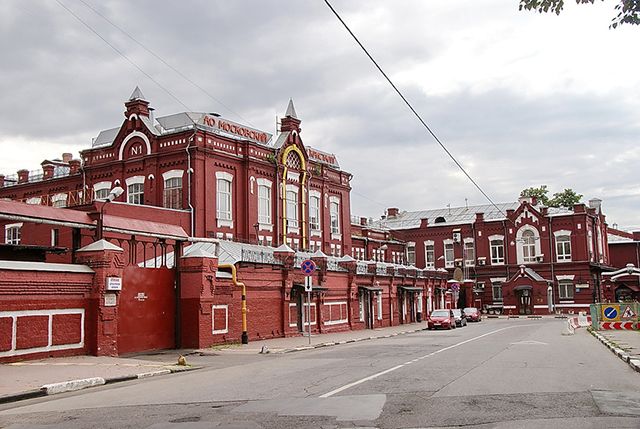
The plans of the "CROSELOPENT" are rolled up to better times; The project of the city-garden at the site of Crystal is frozen. “We took a pause until the shareholders agree on the future of the project,” says Lyubov Devyatkina, the marketing director of Krais Development, which was engaged in the development of a new space for a year. Most of the company employees either quit or go to other organizations belonging to the owner of the Chrais Development.
At the same time, Krais Development has another similar project - Klein House, a former Charayscling Factory near the Krasnoselskaya metro station. She is not so huge and did not require such serious investments as the Crystal plant. Already now, loft are sold there, which cost from 5.5 million rubles.
Developers who have offices remain, with all their might try to hand them over. The most difficult thing is the owners of the space in Moscow City. According to Knight Frank analysts, Moscow entered the top ten cities of the world with the highest rental rates in skyscrapers: according to the results of the second quarter of 2015, the Russian capital took eighth place in the world ranking; The average rate in the premium skyscrapers of the city is $ 850 per square meter per year (for example, in Los Angeles skyscrapers can be accommodated for $ 784). Moscow occupied the same place a year ago, despite the fact that rental rates fell by 20%. Owners with great reluctance move in price, so 26% of the space in Moscow City are empty.
Say, Capital Group was just lucky: 30 thousand square meters of space will buy the Moscow government from her. This was announced in early October 2015 by the Moscow Property Department. It is possible that this transaction is explained by the close relations of the owner of the Capital Group Pavel Tue with the family of the powerful deputy mayor of Moscow Peter Biryukov.
The Capital Group does not comment on this deal in any way. The representative of the Capital Group Dinara Lizunov neither confirmed nor denied the message that the largest buyer would soon appear at the Eye skyscraper.
True, 30 thousand square meters belonging to “capital” make up less than one tenth of all areas of the complex of two towers in the City. The rest have yet to be handed over: according to Lizunova, the company decided to invest in offices repair in order to make it more attractive (previously the tenants did it), as well as to record a dollar exchange rate for a year, which calculates the rental cost.
Tax for stores
The crisis has completely changed the system of relations in trading real estate.
In February 2015, nerves were handed over from the owner of the company producing women's clothing VASSA & CO Vladislav Granovsky. He wrote an open letter where he described the history of three-month attempts to agree with the managing company of the largest Moscow shopping and entertainment center "Golden Babylon" "On an acceptable form of cooperation in a crisis, the devaluation of the ruble, the fall of consumer activity." The struggle ended with surrender: Granovsky unilaterally broke the lease and closed the store. But in parting he wrote a letter. “It is possible to endure, and when there is no strength to endure - to give yourself to ruin these bloodsuckers, who over the past three months have not found the opportunity to meet people who pay them a rent equal to the turnover of the store,” Granovsky wrote.
The entrepreneur was not available for comments. However, the market says that the Golden Babylon really has long occupied an inflexible policy regarding tenants. Some of them left earlier, and the remaining rebelled at the end of 2014 (in addition to Granovsky, there were many dissatisfied, who at the same time decided to perform incognito).
However, the rebellion did not end. The owners of the shopping center - the Austrian company Immofinanz - did not listen to Granovsky, they did not change the fixed rental rate from the turnover. True, the largest shopping center recorded the dollar and ruble rates at 40 and 50 rubles (rent is still calculated in dollars at a fixed rate).
The intransigence of the owners of the malls does not always end well. Another shopping center - “Hudson” (it also belongs to Immofinanz) - opened in March 2015 half empty. A similar story happened with the Mosaic shopping center, which was built by entrepreneur Alexander Nakhmanovich. The shopping center during the construction process (since 2012) was interesting to tenants. But Nakhmanovich could not decide at what price to rent the premises - he hoped that she would grow up yet and did not conclude agreements. “The owner of the“ mosaic ”thought: I will not take it now, I will wait for the bets above,” says one of the market participants. “And then the crisis struck.” And if earlier Nakhmanovich did not agree to the usual rate of one and a half thousand dollars a year in similar centers, now he is ready to pay no more than $ 500.
At the end of 2014, the Mosaic opened completely empty. “About five stores for the entire huge shopping center were opened,” says a representative of a company engaged in the promotion of Mosaic among tenants. A year later, the shopping center is still not filled. “One of the owners of M-Video said:“ Twisted and twisted and twisted, ”says the market participant. As a result, “M-Video”, without concluding an agreement with the “mosaic”, went to the competitor-the Riviera shopping center, which was originally in much worse competitive conditions, moreover, it was put into operation later than Mosaic.
According to the head of the analytical department of the Knight Frank Consulting company Olga Yasko, before not a single store went to an agreement, which contains a percentage of turnover instead of a fixed rate; Now 70% of new areas are surrendered according to such a model. “The market becomes flexible in all areas. Developers are mostly wandering in terms of discounts, no one wants to sit with empty areas, ”says Yasko.
Beauty for the poor
The lesser from the crisis was affected by the housing market. Here, the first thing “high price segment” collapsed here. The volume of the new proposal of elite real estate in the first half of 2015 in Moscow is five times less than the 2014 indicator, the Barclay-Group says in a half-year analytical report.
Ostozhenka (an elite area in the center of Moscow), which was previously adored by developers, ceased to be attractive to them. Even the Barkley-Group company, the main developer of the so-called Golden Mile,, the quarters around the Ostozhenka, which are considered the most expensive in the capital, left there. The owner of Barkley Groups Leonid Kazinets, who previously built club houses there, decided to steeply change the strategy-and leave for the Moscow Ring Road in order to build an economy class housing.
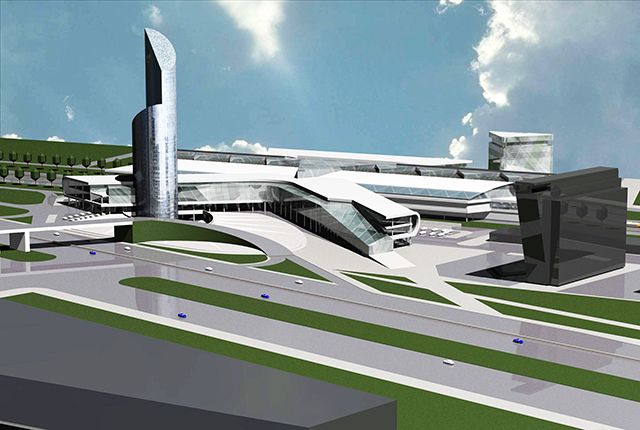
On the 23rd kilometer of the Leningradskoye Shosse in Khimki on a plot of 4.5 hectares at the end of 2015, Barkley is going to finish the project, which will be based on the Khimki-2 vehicle, which will also be erected by Barcley. Nearby there will be an apartment-hotel complex for 120 thousand square meters, and another 62 thousand square meters of retail and office space. In all this, the casinets will invest 11.5 billion rubles.
Another developer is counting on this project - the owner of the young Urban Group company Alexander Dolgin. If the casinets builds its station, the Dolgin’s solar quarter under construction nearby will become even more attractive.
At the same time, Dolgin himself does not complain of demand. On average, the sales volume decreased by 25-33%in the market, but its sales increased 2.3 times. Ежемесячно в каждом из своих проектов Urban Group продает по 250 квартир — это рекордные цифры в России.
Бывший глава металлургической компании «Союзнихром» Александр Долгин в 2007 году решил вложить деньги в строительство поселка таунхаусов. Он обратился к архитектору Максиму Атаянцу, который когда-то ему самому построил дом в Крыму. Атаянц, прежде известный как архитектор очень дорогих элитных домов, впервые решил поработать со «средним классом» — и в полной мере развернулся. Уже в случае с таунхаусами он очень грамотно формировал пространство. Но особенно ему удался квартал «Город набережных» в Химках (тоже проект Urban Group).
«Невозможно поверить, что это достроено три месяца назад, — писал архитектурный критик Григорий Ревзин, впечатленный «Городом набережных» Атаянца. — Кажется, что это европейский город, ему лет сто, и там все давно и счастливо живут уже третьим поколением. Невероятно, что это построено сегодня — это блестящее опровержение тому, что нынешние нормы не позволяют строить качественные города. И что уже просто нереально — что квартиры там, по уверениям представителей девелопера, стоят как в панельном жилье. Ок, у нас все же есть шансы».
Сам Атаянц говорит, что беда российской градостроительной политики состоит в том, что она не сосредоточена на структурировании пространства районов, а архитекторы не привыкли мыслить целыми кварталами, придумывая устройство внутри двора.
Скажем, в «Солнечной системе» той же Urban Group все пешеходные дороги будут на эстакадах, а дворы закроют для автомобилей. В итоге год назад «Солнечная система» получила в Лондоне премию European Property Awards в номинации «Лучшее жилое высотное здание в Европе». Неудивительно, что даже на стадии котлована квартиры в новом комплексе очень быстро продаются.
«Я посмотрел на среду обитания, человеческую социальную среду и обнаружил, что существует много полезного, на что есть потенциальный спрос, который никогда не был удовлетворен, — говорит Долгин. — Некоторые люди не знают даже, что это можно хотеть. Но люди быстро начинают отличать хорошее от нормального».
Повысив расходы на архитектуру, Долгин начал искать способы снизить издержки: построил собственный бетонный завод и оконное производство. А чтобы максимально защитить себя от от посягательств банков, в 2015 году снизил кредитную нагрузку до нуля — с таким спросом это сделать было несложно. Другим коллегам он рекомендует сосредоточится на полной достройке домов, которые близки к завершению, а также выставить на продажу земельные активы, накопленные на десять лет вперед. «Марк Твен не имел в виду Россию, когда сказал «покупайте землю, ее больше не производят»», — смеется Долгин.
В отсутствии зависимости от кредитов видит свое преимущество и владелец финансово-строительной корпорации «Лидер» Владимир Воронин. Он тоже искал особый подход к клиенту — и построил новый дом «Дыхание» с четырьмя видами внутренней отделки от известного промышленного дизайнера Филиппа Старка. И Воронин, и Долгин усвоили главное: люди перестали покупать квартиры в качестве инвестиций, но покупают их для себя.
* * *
Главным московским приобретателем квартир в качестве инвестиций в свое время был предприниматель Григорий Куликов. В начале нулевых его риелторская компания «Миэль» скупала квартиры у застройщиков оптом и с большой скидкой (фактически становясь соинвестором стройки), а позднее продавала их в розницу. Позднее Куликов сам решил стать застройщиком: «Миэль» сделала несколько успешных проектов, но в кризис 2008-го увязла в Барвихе, не успев достроить поселок «Барвиха-Вилладж».
Несколько долевых инвесторов решили разбираться с «Миэлем» не через арбитраж и обратились в следственные органы. Владельца компании, чей оборот в 2007-м составлял 20 миллиардов рублей, разыскивают за хищение у дольщиков 86 миллионов рублей. Григорий Куликов скрывается от уголовного преследования за границей, недавно его включили в список «Интерпола».
«То, что поселок [«Барвиха»] не достроен, — правда, — признает Куликов в интервью по скайпу (где он находится, неизвестно). — В 2015 году имущество, земельный участок и объекты незавершенного строительства оценили в два миллиарда рублей, а если взять деньги всех дольщиков — в 1,4 миллиарда рублей. С большинством из них давно все вопросы урегулированы».
Куликов считает, что поселок был не достроен, в том числе потому, что его обокрали: по мнению предпринимателя, два миллиарда из компании вывела бывший менеджер Наталья Тихоновская. Та, в свою очередь, полагает, что обокрали ее — выведя из менеджмента и обанкротив компанию «Миэль-Новостройки», в которой у нее была доля. На Тихоновскую также заведено уголовное дело в связи с выводом денег. Несмотря на это, Тихоновская остается в Москве и возглавляет компанию «Метриум», которая обгоняет «Миэль» по продажам квартир в новостройках. И только одно объединяет бывших партнеров: никто из них больше не инвестирует в строительство.
Ilya Zhegulev
Moscow