
Translated material
"Break to get too early"
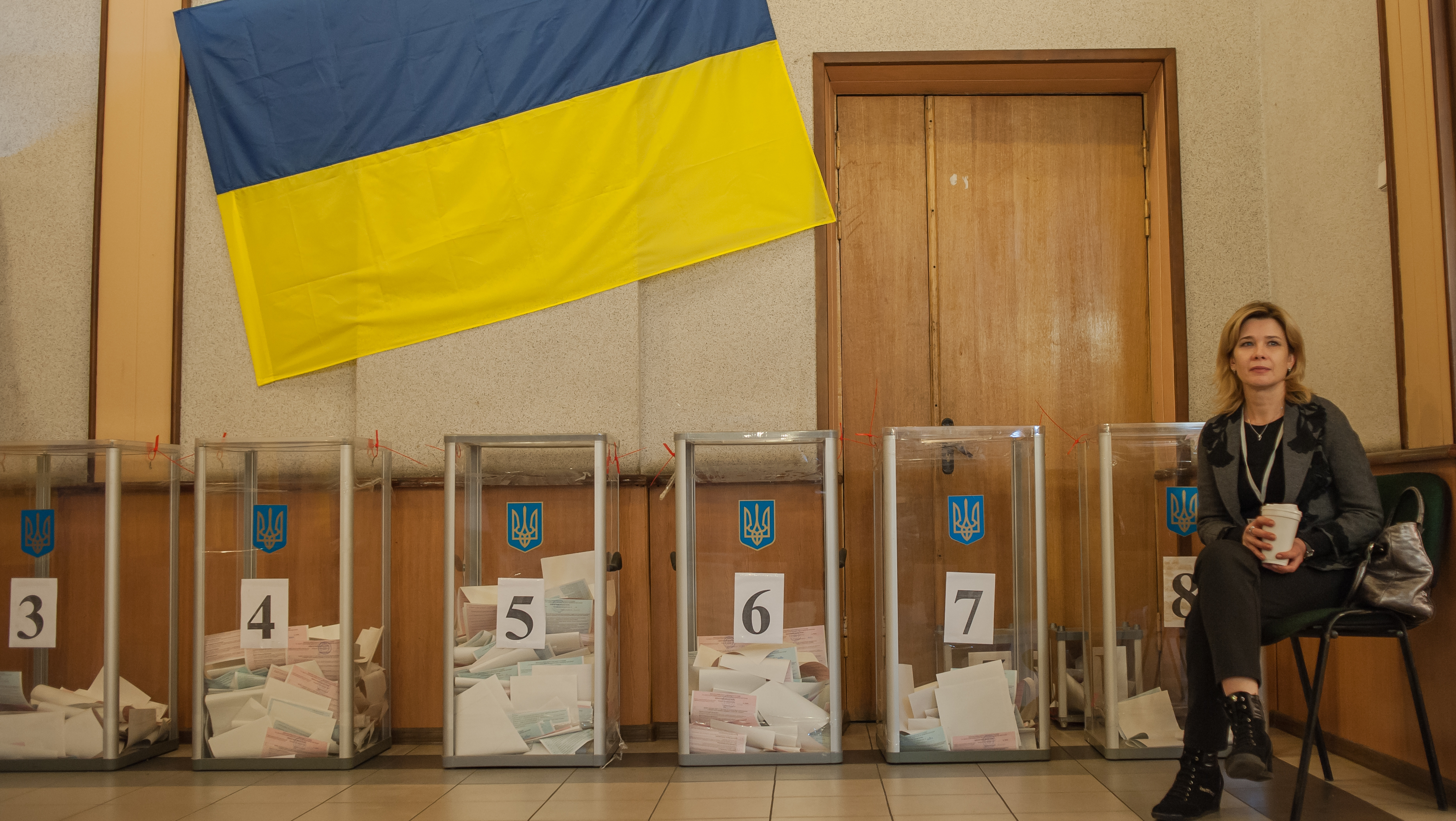
Ukraine after the elections and on the eve of winter: why there will be problems, but not a riot
Kharkov, Dnepropetrovsk, Odessa. Three large cities in the south and east of Ukraine, on which the situation in the country as a whole largely depends. No wonder in Dnepropetrovsk, for example, they joke about his city that he is "not the first in Ukraine, but not the second." "It is very likely that after the elections to the local authorities on October 25, a critical attitude towards the President and Parliament will increase in the areas"-this is stated in published before the elections by the Ukrainian representation of the Friedrich Ebert (Germany) report "between stability and instability. The socio-political situation in the east and south of Ukraine."
What forecasts and expectations were confirmed, and which were refuted? Can the south and east be considered a powder barrel under Ukrainian statehood? What happens in Kharkov, Dnepropetrovsk and Odessa with pro -Russian activists and their pro -Ukrainian opponents? The author of the report “between stability and instability”, an employee of the Center for the Study of Eastern Europe at the University of Bremen, Nikolai Mitrokhin , told about this Radio Liberty.
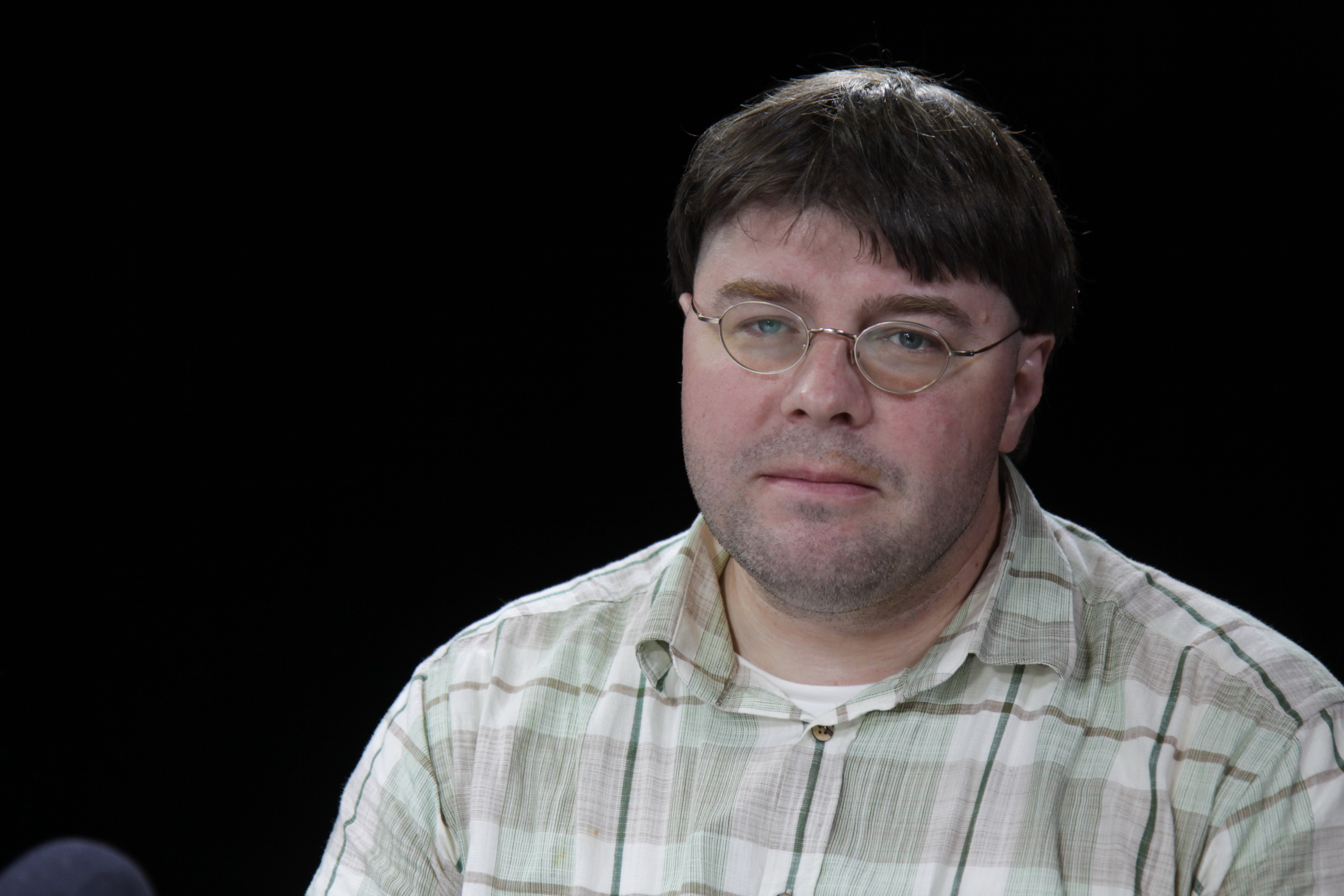
- We talk a couple of days after local elections in Ukraine, including in the regions that your report is dedicated. Did you surprise you with the results of these elections or not? I will quote the political scientist Andrei Okar, who very briefly wrote : "If in one word to identify the results of the municipal elections in Ukraine, then this is the word counter -revolution." Do you agree with this?
The results of the elections in Ukraine look much better for the current president and government than they could
- No. I believe that the results of the elections in Ukraine look much better for the current president and government than they could. During my trip this spring, when I collected materials for the report, it was noticeably growing dissatisfaction with the population with slow reforms. The disappointment experienced not only the wide layers of society, which primarily monitored the decreasing course of hryvnia to the dollar, that is, their losses in salaries, but also a politically motivated city class that did not see that the revolution gives him something for which the second Maidan was arranged.
Nevertheless, according to the results of local elections, the country's leadership received opponents where they were. First of all, the mayors of Kharkov and Odessa, Gennady Kernes and Gennady Trukhanov, retained their places. On the other hand, Blok Poroshenko received his 20 percent almost everywhere. The party "Self -help" , which are, first of all, Lviv and Kiev: in all southern and eastern regions, it received from 5 to 10 percent. The Ukrop party performed well in Dnepropetrovsk, confirming that the so-called Privat group, that is, Igor Kolomoisky and his associates, are still popular in Dnepropetrovsk. (Although, of course, Poroshenko’s allies cannot be called by their allies.) Another positive result for the Ukrainian leadership - the fact that the main heir to the Party of Regions - the Opposition Bloc - did not perform too well.
Poroshenko should most likely expect quite serious problems, but not this winter
In general, the political community that arose on the site of the former Party of Regions is split into several parties - this isa “revival” , which is associated with Kernes, the “Our Land” party , which received a new impetus during these elections. Now it is difficult to say whether the pro -European forces will be able to build coalitions with them, as, for example, is expected with "our edge." Nevertheless, Poroshenko had the opportunity for some political game with the remnants of the former Party of Regions. All this looks much better for the authorities than it could have been assumed. Politically motivated people with pro -Ukrainian orientation to the elections came, were quite active.
Of course, the main problem is that Poroshenko and the government were still unable to offer the population of some new initiatives, promising reforms. Even the appointment of Saakashvili for the post of governor of the Odessa region did not change the real situation in Odessa. So Poroshenko should most likely expect quite serious problems, but not this winter, as many suggested before the elections, but, most likely, next year.
- That is, you are inclined to evaluate another political analyst - Vitaly Portnikov, who believes that all this already begins to resemble “ a boring policy of a developing European country, only groping its own future” ?
“I would say that it’s still too early to get bored.” The situation in Ukraine is extremely unstable, in any case in the southern and eastern regions. There may be serious political problems in the future. The Ukrainian authorities should not relax, take a clock, although so far they have given a large and somewhat unexpected credit of trust.
- When I met your report, I was interested in the point where you describe a very large array of the political population of Ukraine. It is not that it is completely apolitical, but it does not openly show its addictions - pro -Russian or pro -Ukrainian, does not participate in mass shares. Such, as they say, "gray zone." In your opinion, will this zone shrink or, conversely, expand? And what is it - a potential threat of stability, if the situation falls into a crisis again? Or vice versa - a guarantee that the next revolution will not occur?
"Gray zone" was more likely to expand, somewhere around 60 percent of the population they generally refused to vote
-The elections showed that the "gray zone" was more likely to expand, somewhere around 60 percent of the population they generally refused to vote. Some of my acquaintances of political activists will not go to vote in the second round, because they do not see the prospects of worthy candidates. And these are those people who usually go to the polls and urge others to do it. I write in my report that it is very difficult to predict the behavior of people of the "gray zone" in case of some calls-which side will they take? But situationally, they can try to use them somehow. In particular, to involve such people in the acting real interests of action. It seems to me that the phenomenon of the “Self -help” party arose exactly on this field, which just mobilizes people with an active life position, but dissatisfied with existing parties and wanting to show their own initiative. With this part of the population of the Ukrainian authorities, one still needs to learn how to work.
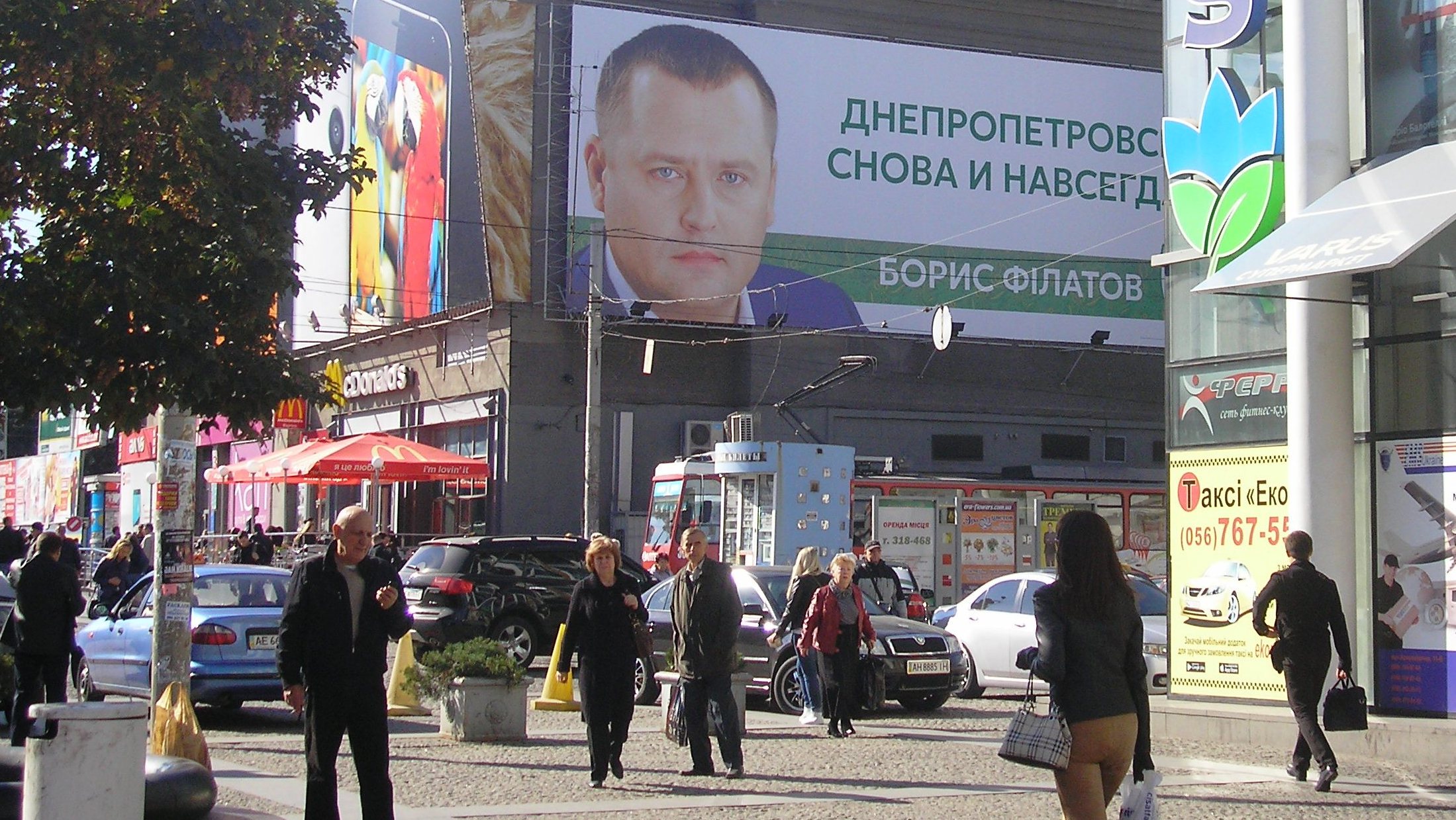
- One of the software attitudes of the Ukrainian authorities, in particular Petro Poroshenko, is the so -called deoligarchization. And somehow there is nothing to boast of the authorities here. You in detail in the report you analyze the ratio between oligarchic groups, in particular in Dnepropetrovsk. And here are the elections there. Candidates of oligarchic groups are published on the second round: candidate of Kolomoisky, the Ukrop party - Boris Filatov and Alexander Vilkul , candidate of the Opposition Bloc, associated with the oligarchic group around the Metinvest holding . That is, the oligarchs are indestructible in Ukrainian politics - or is the authorities simply not stubborn enough in the extermination of this phenomenon?
A noticeable cleansing of Ukrainian policy from the influence of financial and industrial groups or individual large entrepreneurs is a task for the next decades
- It seems to me that this is indestructible in Ukrainian politics. Look, the Poroshenko block itself consists to a large extent of the so-called oligarchs-Light, managers or owners of large companies, but not as famous as Igor Kolomoisky or Rinat Akhmetov. If we look at other parties, for the most part, they are sponsored by large financial and industrial groups, one way or another protect their interests. Here is a controversial question whether it is possible to achieve deoligarchization quickly, at the expense of which oligarchs this process will go and so on. In my opinion, a noticeable cleansing of Ukrainian policy from the influence of financial and industrial groups or individual large entrepreneurs is a task for the next decades. Strong ideological local politicians should appear who can do this. But I do not see that this was done in the near future. Although the example of the same Andrei Sadovoy in Lviv shows what is in Ukraine in principle possible.
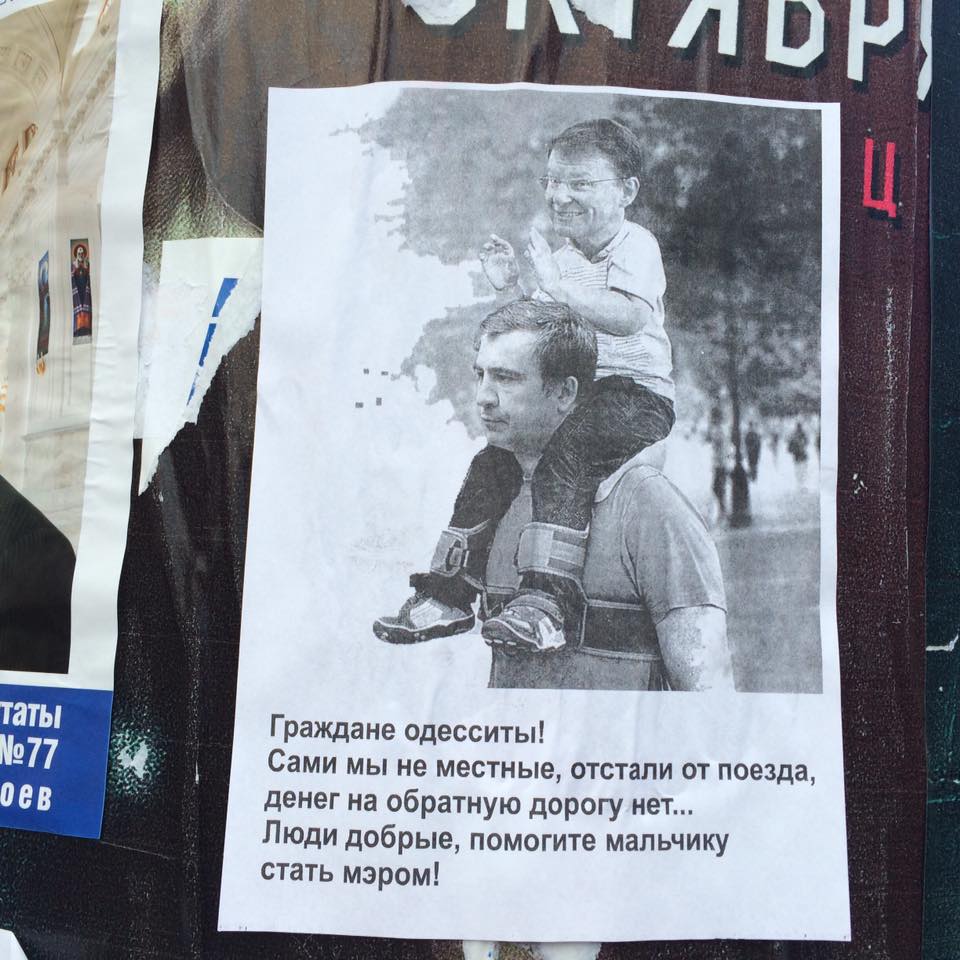
- You met with so many Ukrainian activists and citizens of various social background and beliefs. The overall impression of this communication in Kharkov, Dnepropetrovsk and Odessa: the pronounced pro-Russian activism is suppressed there, or is its potential still great enough? Does he wait for some next crisis to splash out?
- Open activism is broken. Definitely pro -Russian organizations that professed faith in the possibility of creating separatist republics following the example of Donetsk and Lugansk, which later, according to their plans, should join Russia - such organizations are liquidated or are under the close supervision of the SBU . At the same time, in Kharkov and in Odessa there is an underground, perhaps not so numerous, but nevertheless, capable of conducting terrorist acts and potential rebellion. But we are talking about several hundred people in each case, no more.
These territories cannot be attached to Russia, especially in the current political situation
As for the wide masses, in each of these cities there are pro -Russian citizens, and their share is tens of percent of the total population. Another question is the lack of obvious leaders and the awareness of these people that they are not a majority in their cities. Hence the passivity. Therefore, in the near future I would not expect some riots. Although in Odessa, where a particularly unstable situation in this regard can be expected, including mass riots, but not so much because of a special love for Russia, but because of a critical attitude to the activities of local and central authorities. Let's hope that this can be avoided. After all, such pro -Russian activity really has no prospects. These territories cannot be attached to Russia, especially in the current political situation. These people will not be able to establish control of the city, since there are relatively few of them, and they do not have the support of the main part of the population. That is, at best it will be a hopeless rebellion with a sad ending.
Winter, quite likely, will be heavy, but not so much that the European Union does not give an extra billion or two in a critical situation
- We are now on the verge of winter, in Ukraine it can be very unfavorable, given the economic situation. Recently, it has been to meet such hypotheses that the lull in the conflict in the east of Ukraine is such a expectation. There is a version that Putin is simply waiting for another deterioration in the situation in winter, and next year, perhaps the new destabilization of Ukraine. In your opinion, this is a real scenario-or is it still a great eye?
- I would say that in general the situation works for Ukrainian independence. Winter, quite likely, will be heavy, but not so that the European Union does not give in a critical situation an extra billion or two to purchase fuel for hospitals, relatively speaking. Therefore, we can rather say that the population will increase dissatisfaction with the specific socio-economic steps of the government or the lack of reforms. But rather, it will be implemented as part of the Ukrainian policy itself - say, by supporting socially oriented parties of moderately pro -Russian orientation, which are fragments of the Party of Regions. That is, it will be not so much a pro -Russian protest as anti -government.
Will Putin be able to use this? I have great doubts. As the experience of the last two years showed, in the case of direct Russian intervention in Ukrainian affairs, even in the southern and eastern regions, there is a tangible pro -Ukrainian, pro -Ukrainian mobilization, which continues until the reflection or suspension of aggression, ”says Nikolai Mitrokhin, historian and sociologist, associated the Center for the Study of Eastern Europe (Germany).