
Translated material
Russia in the sky over Aleppo
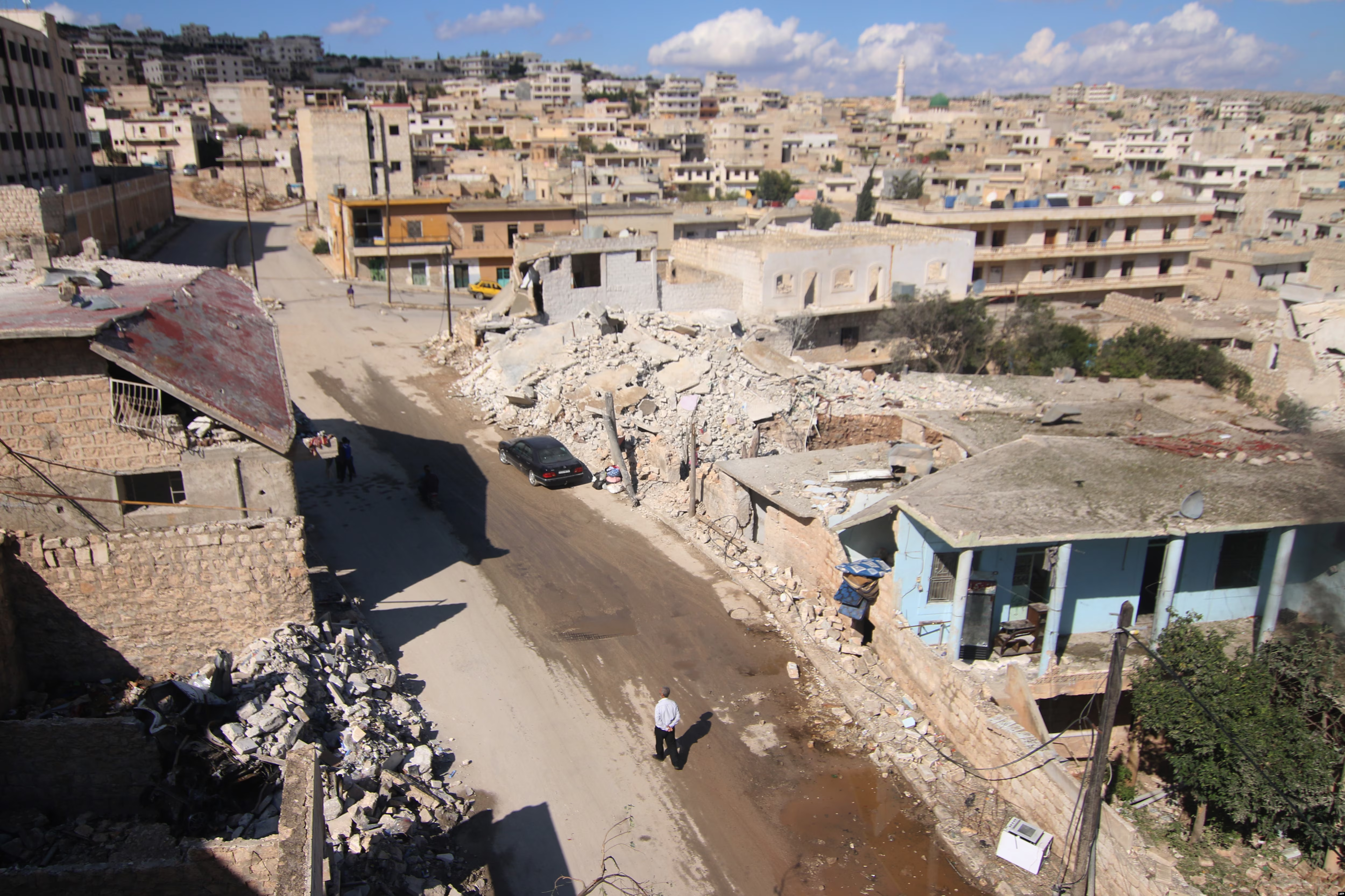
Assad’s offensive has been choked, and Russia is looking for exits from the Syrian conflict
Assad’s troops, with Russian support from the air, attacked the forces of the opposition, and meanwhile, the extremist group of the Islamic State attacked Assad’s troops.
This is how the puzzling picture of a multilateral confrontation in the north of Syria looks at the strategically important city of Aleppo.
The fighters of the IG seized several positions of government forces near Aleppo, fierce battles are underway in the area of the city of Zafir. These messages coming from Syria may seem to be the next local combat reports, and their importance needs to explain - this can turn into a severe defeat for Syria President Bashar al -Assad, on the side of which Russia operates with its aviation.
The offensive "IG" threatens to cut the only way to supply Assad forces in the north. Aleppo is the once largest city and the financial center of Syria, is at the intersection of strategic roads, and in mid -October in the area the offensive of government troops began with the support of the Iranian military, the militants of the Hezbollah and Russian aircraft group.
To imagine what the offensive in the Aleppo area needs to look at the map: this is a space divided into three sectors, where in the south, territories controlled by Assad, in the north-west-opposition groups, in the north-east-"IG". The front line is bizarrely bended by a spiral.
Assad forces repelled several settlements near the Aleppo opposition. Then, as far as one can judge, the offensive stopped. According to the Voice of America, this has two most important factors: an influx in the ranks of rebels of fresh forces and a significant increase in the supply of Tow anti -tank missiles. Representatives of the rebels, who talked with the Voice of America, said that the reason for the appearance of a large number of recruits was participation in the Russian war.
The fighters of the Islamic State took advantage of the battles between government and opposition forces. According to the Stratfort analytical center, at the beginning of the offensive operation of government troops, the rebels weakened the positions of contact with the Islamic State, sending reinforcements to the province of Hama, Idlib and south of Aleppo. As a result, the IG went on the offensive and occupied new territories in the north of Aleppo. Now the government troops, concentrated on hostilities with the opposition, have become victims of the Islamic State. Assad forces, notes Stratfort, cannot afford to lose the only supply path to the north, in Aleppo, and depending on the success of their actions, this will only be a temporary retreat or a “potential catastrophe”.
The Syrian opposition has repeatedly stated that it was the main goal of Russian aviation bombing, and the United States warned that the Russian military campaign in Syria on the side of Assad weakens the opposition and thereby strengthening the Islamic State. The balance of power in the Syrian war, obviously, shifted.
"There is a lot of information that the offensive ( government forces is on the forces of the opposition. - RS ) has choked. There is no confirmation from the Russian side, but by various statements it can be understood that they are not too profitable. Obviously, the resistance was more serious than it was supposed," says Zvi Magen , an expert at the Israeli Institute of National Security, a military man, the head of one of the Israeli, one of the Israeli. The intelligence services, which in the 90s was the ambassador of Israel to Russia.
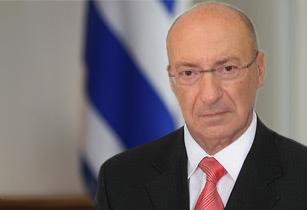
Magen was born in the Soviet Union, in Siberia, in the 50s with his little boy his parents took out through Poland to Israel, where he grew up. Commenting in an interview with Radio Freedom the Russian air campaign in Syria, Magen notes:
- Russia is involved in this offensive only as air support, although, as I understand it, the Russians participated in planning. But whoever leads the offensive in practice is Assad’s army, and it is not God the news in what chic state is located, and there are Iranians, there are not enough of them, and some remnants of the Hezbollah. Therefore, there is nothing surprising that everything has stalled. Even if it were a more serious offensive force, they would not necessarily succeed. But this does not mean that this is the final picture, everything can still change.
Imagine, Aleppo is one of the big cities, like Hama, Homs, Damascus. This chain of cities ( stretching from north to south of the country. - RS ) for government forces with Russians is extremely important, and they are trying to seize or level the line along these cities. Aleppo is a very important settlement in itself and strategically - this is an important crossroads in the direction of "East - West", towards the coast, and in the direction "North - South". There is mainly, as they say, a moderate opposition, rebels, a “free Syrian army”, all these groups that operate along this chain of cities, some of which they captured. And government forces tried, until that moment unsuccessfully, to squeeze them out of there. This offensive is aimed at capturing this line, so Russians bombed them throughout the last month. Most likely, not effective enough. In parallel, there are indeed the sorties of the Islamic State in all these areas. But they do not have a serious group in this area, they are sprayed throughout Syria, in particular, in its eastern part. Therefore, I do not take them seriously now in the Aleppo area. But everything can be.
- At what level is Russian aviation valid there? How much does this change the picture of military operations?
- This is almost the main aviation component of the crisis. Syrian aviation is practically not present from an operational point of view. They can apply separate blows, but in fact it is not serious. The Iranians who are there do not have their aviation on the spot. The only air fighting force that is there is Russian. And of course, the planes that Russia used is an order of magnitude higher than what the Syrians had. How effective they are is another question. Although they give very impressive numbers of air attacks, in practice they are not enough, in my opinion, and they work for wear. They continue to bomb the same places, but the rebels continue to resist, and the IG does not react to this. It may well be that they are not effective enough. But the "IG" bombed both the Americans, and not only them, for a month now, and also there is no effect. So this is not such a serious form of hostilities that can change the situation. This can be an auxiliary force to influence one way or another, but quite limited. And this is not, in my opinion, the main task, but probably the task is more strategic or political. If they wanted or were very necessary, they could introduce a wider contingent there and instead of two squadrons, 30 with something of aircraft, they could send 100 and 200, and this would change the situation. But they do not do this, and probably, one should not count on more.
- How is Israel relate to what is happening in Syria? And what is beneficial to Israel in this situation? The head of your institute Amos Yadlin, together with Carmite Valency, wrote an article that says: “Despite the high level of complications created by Russia's participation in Syria, or perhaps for this reason, Israel should be involved in active actions to shift the Assad and inflicting strategic defeat Iran in Syria, collaborating with regional and international interests of Israel.”
-Israel has no immediate interest on someone's side in Syria. As for Russia, this is a separate question, there is an interest in coordinating certain actions with Russia in order to avoid problems. In any case, there is no interest to conflict with Russia, and this is a mutual sensation, in my opinion. As for the atmospheres in Syria, there are now the forces of the coalition headed by Russia, and in which Iran, the Assad army, Hzbollah participate - this formula is unreasonable for Israel. In view of our borders, this group is considered as a potential threat. There are different opinions what should be done. Any decision in Syria, in which Iran’s armed forces remain in it, Hezbollah or other Shiite groups that live there, is perceived negatively. At the same time, in Israel it is hoped that Russia has no negative goals in Israel in the future, so there are even optimists who claim that Russia will be able to restrain the Iranians and others. Further will be the result of negotiations-in my opinion, the political component of this conflict begins, and everything will be directed into a new direction. On the other hand, I have the feeling that Russia and Iran do not have a good news, what positive relations in their future interaction in Syria. Each country has its own interests.
- But it turns out that in Syria, an axis was created - Iran, who is the main enemy of Israel, the Hezbollah group, which has a huge history of confrontation with Israel, and Assad’s regime, which they support and which Russia supports at the same time. And Russia says that Assad will not pass. This is the formula of the long -term union. And Russia may not have plans against Israel, but it turns out that for a long time it declares itself an ally of the forces that are opposed to Israel.
- There is a problem. But we do not choose our neighbors, and we have to cohabit with Russia in one geopolitical space in the foreseeable future, and this was not decided by Israel, this is the accomplished fact set before us. Israel must find certain conditions of coexistence. On the other hand, the Russians are more flexible, more convenient, less hostile than just Assad than just Iran, so its presence can be restraining. It would be better if this is not, but not so scary if it is.
-And anyone in Israel recalls the events of the 1982 Lebanese War, when the confrontation led to the direct clash of the Soviet and Israeli military?
- In Egypt in 1970 there was a direct clash with very deplorable results for the Soviet armed forces. Five Soviet aircraft were shot down in one air battle, without loss from Israel. In Lebanon in 1982, the largest in the world was completely destroyed then, and, in my opinion, so far, the air defense group, the entire Soviet, and about 80 Syria aircraft were shot down without a single loss from Israel. These were two main combat clashes, and these are the results. This, in my opinion, is very well remembered in Russia too.
- And now there are no fears in Israel that current events will lead to such a scenario?
- There are no concerns, and there is no such assessment at all, given that Russia has no interest to conflict with Israel. And I’ll say more frankly, the Russians have no possibilities to do it. The most serious armed system in the Middle East and not only Israeli. And no one is looking for conflict, except terror, of course, but this is a different level. In my opinion, there is no interest to conflict with Israel, especially in Russia. She came not to fight, but to solve her problems in Syria, and this was clearly and clearly said by our political leadership.
- And there is an idea of how the conflict in Syria can develop?
-In my opinion, the scenario is as follows: in general, Russia has reached its main interests or plans at this stage, they come down completely not to military, but to political successes. Russia positioned itself as an influential power at the regional and international level. She has a lot of her interests, and to solve them, she participates in this conflict. Now the time has come for the second act of this action, namely, negotiations. And Russia would very much like to complete the conflict now, being a leading negotiating player, and on this to end its epic of the conflict in Syria. This does not necessarily solve the issue with the Islamic State, but, in my opinion, they will leave it for later, and now they are mostly trying to agree with the existing Syrian leadership and rebels to create some kind of transitional government, to agree on Assad, and battles are underway around it. Europeans, Americans, and Middle Eastern states are involved in this, and this is practically realized. It will turn out or not is another question. If it turns out, then the formation of a temporary, transition or permanent government will begin - with the replacement of Assad or yet with Assad. And everything else about the “IG” is the third stage in which the members of this negotiation group, the Western states, and the Middle Eastern ones, which will probably try to “destroy”, squeeze out, squeeze out, squeeze out, squeeze out of the region and so on. In my opinion, there is this scenario, and I will be very surprised if they have another, ”said Zvi Magen.
The analysis of Stratfor says that Russia maneuvers, trying to pronounce a profitable way out of the conflict: "One of the main strategies is to divide the rebels, allowing the possibility of negotiations with the" free Syrian army "( combining numerous groups. - RS ).
Moscow on Monday reported contacts with representatives of the Free Syrian Army. However, her representatives refuted this. The BBC quotes the statement of one of the groups of the Syrian opposition: "The Syrian coalition considers these statements to be part of the Russian propaganda, which is misleading and aims to divert attention from the failure of Russian aggression against the Syrian people."
As a result of exacerbation of hostilities in Syria after the start of the Russian air campaign, the number of refugees in October reached at least 120 thousand, the UN reports. This is more than half the previous calculations.