
Translated material
The gospel from Pazolini
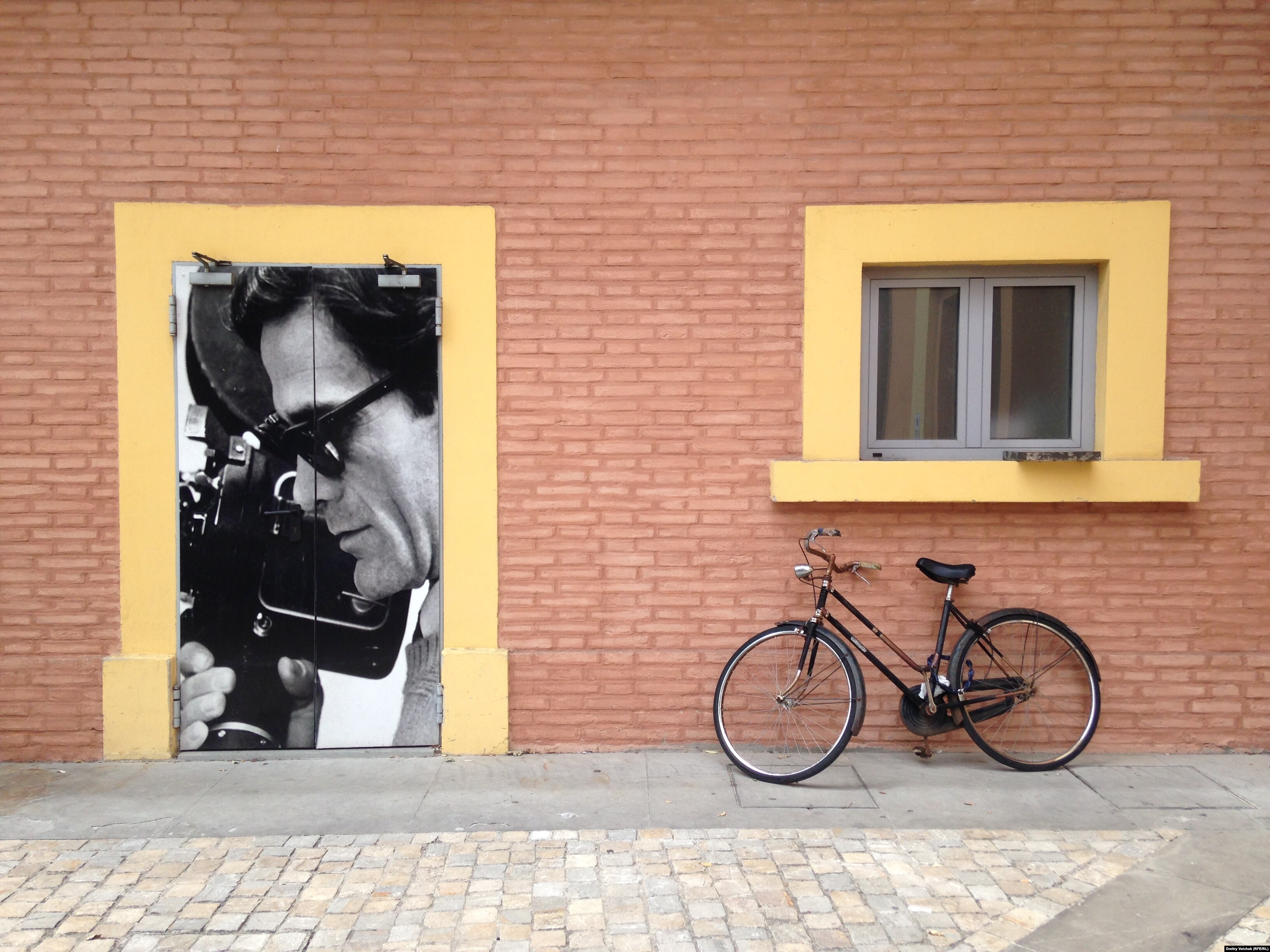
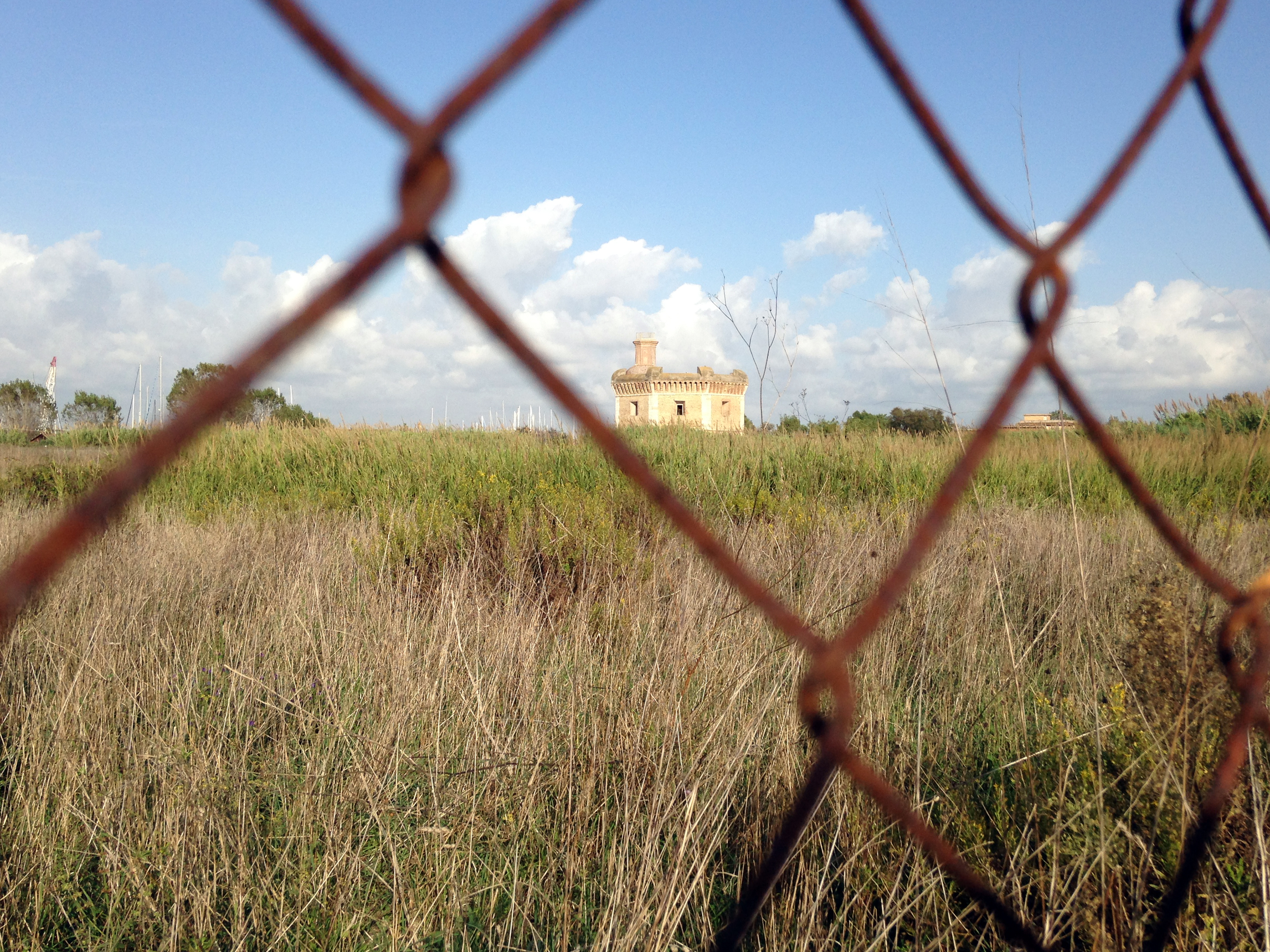
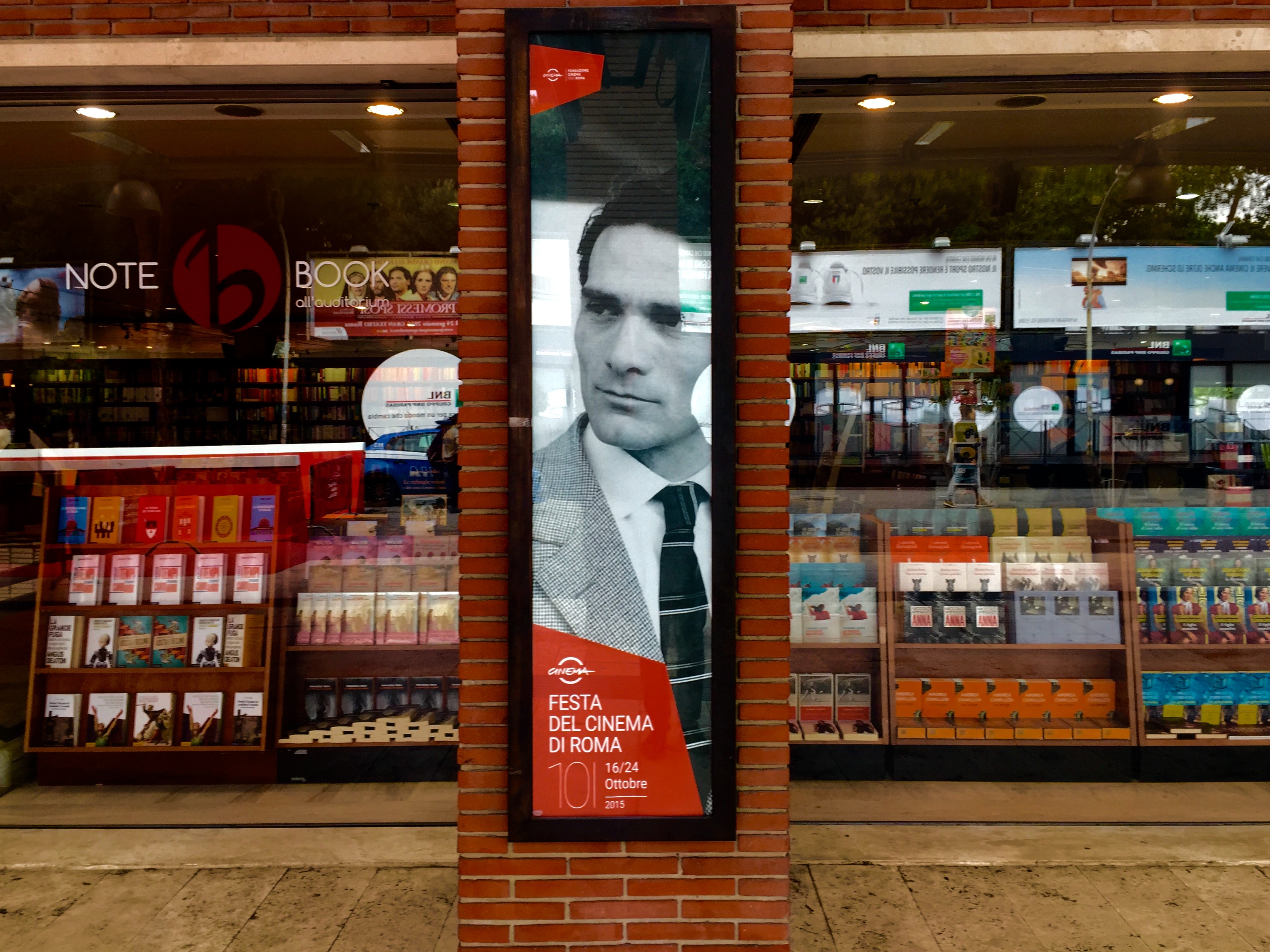
Forty years have passed since the day of Pazolini's lifeless body was discovered on a deserted beach in Ostia. The killers - and Pelosy’s “frog” Pelosy’s guilt can only believe in very gullible people, however, who planted him for thirty years - beat Pasolini with their feet and sticks, crushed the car until his chest exploded.
The terrible death was not unexpected. From 1949 to 1977 (!), 33 trials were excited against Pazolini; He was accused of attempts to seduce minors, insulting public morality, apology of crimes, insulting the honor of the police, diffamation and slander against individuals, complicity in the robbery. For 20 years, the Italian media, not without success, created the image of the “renegade” of Pazolini.
"Many could not forgive me for what I was doing, not prepared by anyone from those in power and not obeying the law of survival ... I caused hatred and insults to a much greater extent because I enjoyed the right to freedom of speech, which never refused anyone than sexual deviations."
The polemic arrows from the poet’s quiver with equal accuracy aimed at corrupt authorities, a bourgeois establishment, a progressive intelligentsia and neo -fascists.
In the last months of his life, Pazolini was often threatened by reprisal, shortly before his death, he was greatly beaten by neo -Nazis, he had stolen the bobbin of the last film "Salo". Pazolini all his life went to this risk, defending his defiant independence and hoping for feline vitality:
"The history was done by those few who said" no. "So that the refusal would take the action, it must be complete, and not on individual points," absurd ", alien to common sense."
Pazolini spoke his categorical “no” to the authorities, the school, newspapers and television - "the unperturbed guardians of the terrible order based on the ideas of possession and destruction."
Pazolini, of course, had no illusions and looked into the future with the insight of the true artist. In 1975, shortly before the death of the author, his book "Divine imitation" was published. A certain publisher publishes scattered scraps of the manuscript of the late author. These are notes found in the drawers of the desk, notes used as book bookmarks, a notebook found in the glove compartment of a car, finally a sheet in the pocket of a jacket, which was on it at the time of death. As for the author of the work, he is "dead, scored to death with sticks in Palermo last year."
The film Abel Ferrara was shown at the last Moscow International Film Festival as part of the program "Films that were not here." The curator of this program Stas Tyrkin, changing the future time to the past, gracefully hinted at the fate of these paintings in the Russian film distribution.
Probably, Abel Ferrara is difficult to attribute to directive directive. In his biographical film about Pazolini, he followed the path of the least resistance. Pazolini is a chronicle of the last day of the poet’s life. The last installation strokes "120 days of Sodom", the last dinner with relatives and friends (mother, niece, Laura Betty some others), the last interview is a conversation with Furio Colombo, published after the death of Pazolini.
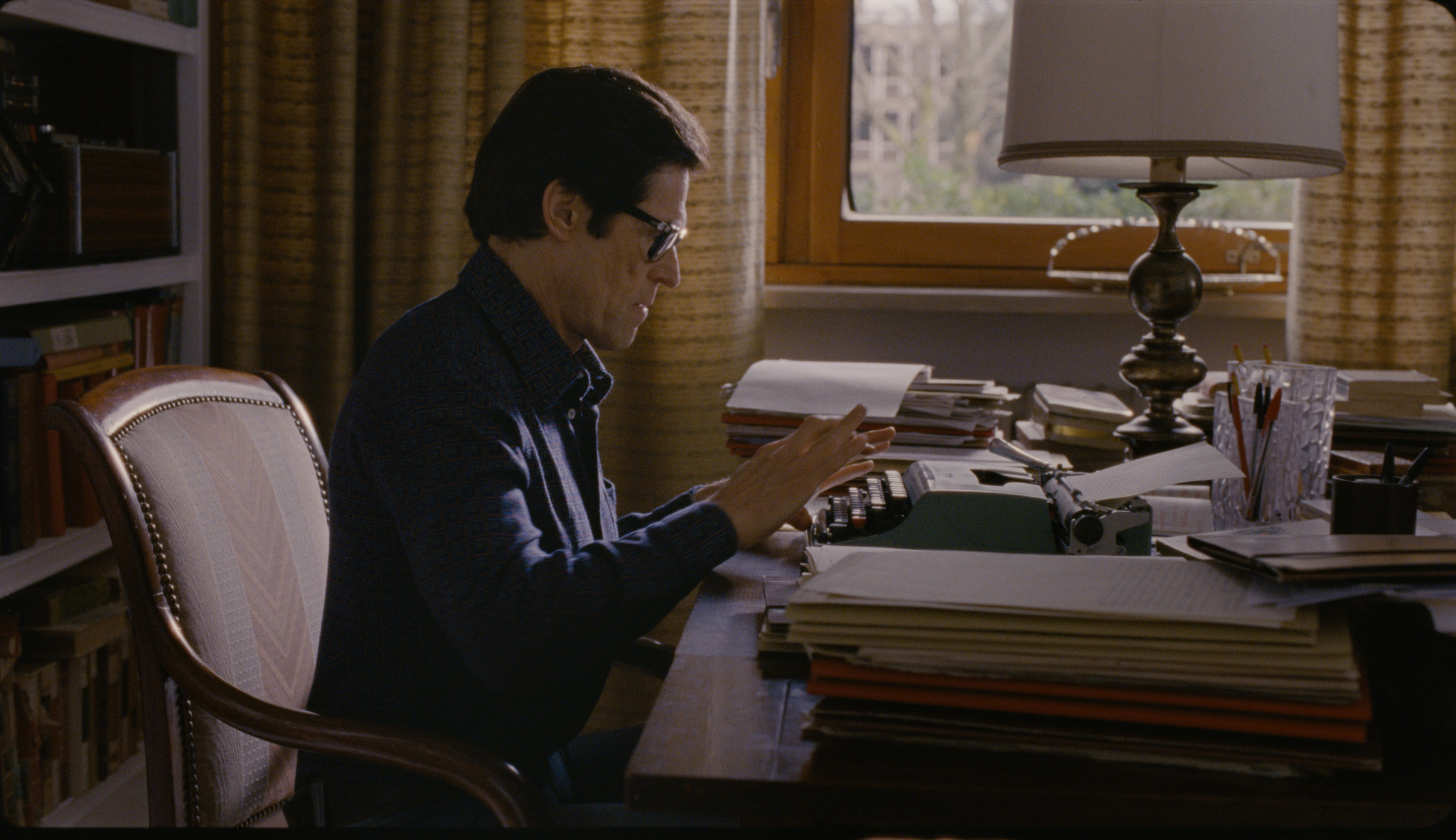
The last time Pazolini sits down at the typewriter to work on the main work of his last years - the novel "Oil". Here, Abel Ferrara is trying to transfer a fragment of this essay to the screen: high -ranking employees of the National Oil Industry Association (ENI) appear, a mysterious catastrophe of the aircraft over the pink desert occurs, and the head of a pretty stewardess turns into a terrible skull crowned with a pilot.
In the evening, Pazolini last dinner with Ninetto Davoli and his family, which enables Ferrara to turn to the work of the capital hero again. Pazolini suffered the idea of the film about modern magi - Epiphanio and his son Nunzio. The role of Epifanio was supposed to be writer Eduardo de Filippo. And in the scenes shot by Ferrara, Epiphanio played Ninetto Davoli, whose appearance on the screen immediately recalls the "birds of large and small" and "form to the ground from the moon." The similarity with the second picture intensifies when Epiphanio and his son in search of earthly paradise look at the planets from space.
Modern Magi follow a comet by rail and arrive at the Roman station Ostiens. Met by more than friendly border guards, they do not fall into the current Rome, but to the city of tolerance, where there is a stormy holiday of sexual unity.
Fasting with a former lover and understanding his baby, Pazolini gets behind the wheel of his car and leaves for twilight, towards death and immortality.
Perhaps the main advantage of the film is the rare persuasiveness of Willm Defoe, who played the title role.
The retelling of the content of the picture will help to feel the atmosphere in which Pazolini worked on the latest creations, namely, they are devoted to publications in Foreign Literature and Mitin magazine.
For a better understanding of Pazolini’s late work, it is important to note the idea of a conscious sacrifice for public recovery.
Now the equally important creative introduction. A few years after the filming of the Gospel of Matthew, Parolini decided to return to the content of the New Testament and transfer the history of St. Paul to the modern world, in 1966–67. It was supposed to change all toponymy. The focus of power would not be Rome, but New York, the center of intellectual or spiritual life-Paris instead of Jerusalem, modern Rome replaced ancient Athens, London-Antioch. Paul’s wanderings, thus, would no longer be limited to the Mediterranean, but would hug the entire North Atlantic. The socio-historical realities of a slave-owned society were planned to be replaced by the realities of the bourgeois modernity.
Presolini suggested developing in his failed film and such a motive:
"The travels of Paul Proler confront the immobility of Pavel-Svyaty. Thus, the film will also be dedicated to the image of a bifurcation, obvious to schizophrenia. On the one hand, the founder of the Church is strong, active, confident, fanatical and, so odious, on the other-humble creature, enthusiastic, patient, weak, obsessed with thoughts of God."
Speaking of the latest works and days of Pazolini, one should not forget about the topic of twin, nor the Holy Scriptures.
Since 1972, Pazolini, simultaneously with the filming of the Trilogy of Life, renouncing it and the creation of Salo, or 120 days of sodom, the scripture of poems and “Corsair” journalism, hard personal experiences (the marriage of Ninetto Davoli), is working hard on the extraordinary text - “oil”.
“I began to write a book, the work on which I will take from me for more than one year, and possibly for the rest of my life. I don’t want to talk about it ... I’ll only say that it will become a generalization of everything I experienced” (interviews in January 1975).
The novel remained incomplete - the author died. In 1992, the performers published what Pazolini managed to do: 521 page of manuscript and typewritten text with editing. The text is a series of fragments, of varying degrees of completeness, called the author himself "sketches" and numbered from 1 to 133 (the later additions to the "sketches" were supplied with letter marks: a, b, C, etc.).
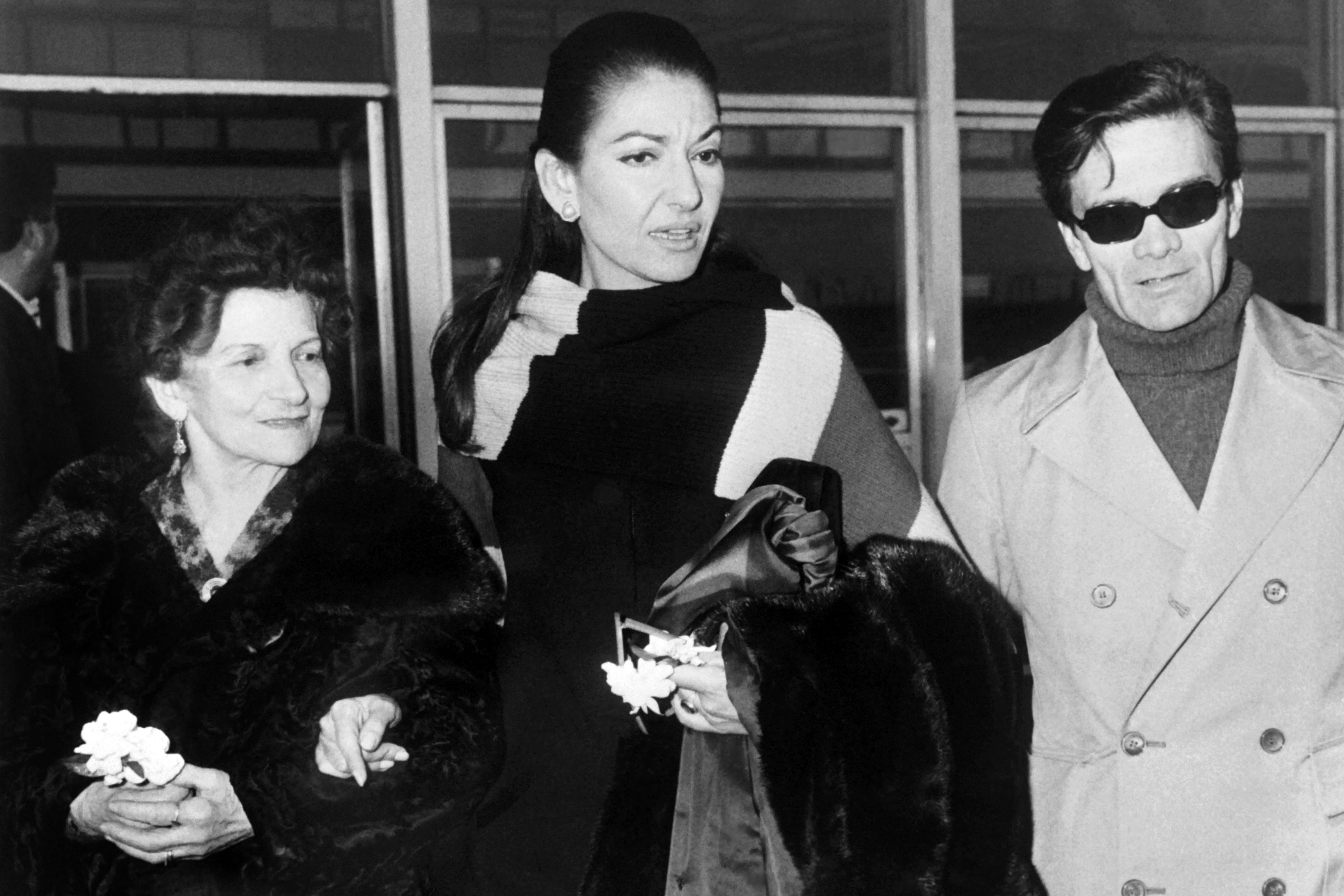
Two years ago, I was at the exhibition "Rome Pierre Paolo Pazolini" in the center of modern culture in Barcelona. So, the curators placed fuel tanks in which they loaded the novel, his manuscript and the creator’s printing machine. Pazolini thought to name the book VAS, translated from Latin means "Vesse of Alchemists."
Emanuel Trevi emotionally offers her own version of the publication: “A few years ago I got a photocopy of original typewriting, dotted editing and alterations, this novel-monster. It was in this form that I should publish Oil.
It is quite relative not only completeness, but also the safety of the text. Since the plot threads of the novel are closely intertwined with the history of ENI, complete crimes, from time to time information about the missing "sketches" appear.
In the preserved text, Pazolini used the pamphlet of D. Steamettse (possibly a fictional person) called "this is Chefis" dedicated to the illegal side of the life of the president of the Eni, bred in the novel under the name of Aldo Troya. In particular, he probably eliminated his predecessor E. Mattei (in the novel - Bonocor), who died in a plane crash. So, in 2010, Senator Del Wry, the “faithful squire Berlusconi” , who was under court and soon fell behind bars, said that at the spring antique auctions in Milan a raising of the 21st novel called “Lightning over the Eni” would be set. The mysterious owners, as well as the lost fragment, did not appear. However, despite the mention of this name in the outline of 22a, one cannot be firmly confident in the existence of the chapter. For example, in the sketches of 74 and 130, Pasolini refers to a place unenchanged in the text, that is, the author's mystification is also possible.
And here it is already necessary to talk about the features of the novel declared by Pazolini himself.
"Oil" should look like a critical edition of an unpublished manuscript (which is considered a monumental work, a modern "satirikon"). Four to five copies of manuscript autographs reached us reached us, in places consistent with each other, there are no places in places, some describe events, in others there are no, etc. The reconstruction of the text is carried out by comparing preserved manuscripts (some, for example, turn out to be apocryaps containing funny, caricature, naive or “overwhelmed properly” texts of the text); But not only this, other materials are involved in the work: letters of the author (whose personality is an insoluble philological mystery), letters of the author’s friends who are familiar with the manuscript (all contradictory), the oral evidence of people published in newspapers or in collections, different songs, etc. There are, among other things, illustrations for the book (apparently, fulfilled by the author themselves). "
And completes his peculiar preface, written in 1973, Pazolini with these words:
"The fragmentary nature of the holistic book leads to the fact that, for example, individual" narrative pieces "are brought to perfection in it, although it is difficult to understand whether they are talking about real or dreaming events, or, perhaps, all this is a cooking of some character."
More information about the genre features of Roman Pazolini reports in an unpertured letter to Alberto Moravia, included in the publication of the book. "Everything that resembles a novel in this text is just a memory of a novel." The text "Oil" is often written by the language of journalistic, epistolary, even poetic. "The main character of the novel, in addition to the analogies of his story with mine, or with ours, is a similar environment, psychology, all these existential shells designed to specify what is happening inside them - I am disgusting."
Pazolini proposes to consider “oil” by the prototype of the will, by the transfer of knowledge accumulated for the life of “woeful notes” of heart and mind.
A combination of all kinds of literary styles and genres, a clash of many, often contradictory votes and opinions, a mixture of science fiction and didactics, a premises in the emotional center of the story of a hero-sacrifice-what essay are such signs? First of all, the Bible, mainly the book of the New Testament, is recalled. It can be assumed that Pazolini, developing his previous work on a new round of biography, deliberately created his biography in “oil”, offering commentators, editors and critics to make a feasible contribution.
If you are not afraid of the courage and independence of the judgments that Pazolini always adhered to, then we can say: the project called "Oil" was an attempt to create the latest covenant, and Pazolini was its Prophet. Perhaps this thought sounds blasphemous, but after all, the recognition of the status of Jesus Christ was delayed for several centuries, up to the Ecumenical Councils.
Among the works that need to be considered in close connection with the "oil", in addition to the Bible, it should be called "Roman about the rose" and medieval visions (allegorical descriptions and dialogs), "Karamazov brothers" (lengthy quotes, themes of doubles and fathers and children), "Fireless Earth" (Center Principle, Styrele diversity, The theme of biceps or soreness), "Madame Bovari" (relations between the author, heroes and readers), "Maurice" (homosexuality as a printing of human rejection and at the same time chosenness), "cold -blooded murder" (transparency of a documentary narrative).
The plot of the novel was sketched by Pazolini, in his words, in less than an hour. A thirty-year-old native of Ravenna or Alessandria, and now the inhabitant of the prestigious Roman district of Parioli, a neftekhimik engineer and the progressive intellectual Carlo Valletti becomes an arena of the struggle of angelic and devilish forces. Due to his inherent “Catholic hypocrisy”, Carlo is divided into two people, one of whom stores “good” qualities, the other is “bad”. But there is complete consent and balance between them - a and b complement each other.
“Good” Carlo and successfully builds a career in the ENI, makes several long business trips to the Middle East, where he is experiencing a kind of mystical appeal, similar to the case with Pavel on the way to Damascus. This part of Pazolini planned to liken the swimming of the Argonauts behind the golden rune and partially write in the Novo part.
“Bad” Carlo B, meanwhile , ”he repeatedly entered into a full-fledged intimate relationship with his mother, with her four sisters, with his grandmother, with her girlfriend, with her family maid, with her 14-year-old daughter, with two dozen girls of the same age and even younger ...”
Then Carlo B turns into a woman and copulates with 20 young people in the meadow Casilino (in 1995, J. Bertolucci shot a 50-minute film using recording 55). Further, Carlo B works closely with the Nazis in the oil palace.
Meanwhile, Carlo A, having returned from the east, also becomes a woman and experiences an irresistible erotic enthusiasm for fascism. The personification of fascism is ordinary young people resembling those "daffodils" whom Pazolini painted in his youth: an oval watercolor in which the chubby proletarian stares intently at his reflection, and not a single thought runs through a wave in the face or water. Carlo and suffers, and God heses his suffering.
"The Angel of God is in the oil Palace just at the time when there is a meeting there, even the Minister of Commercies participates: the castrate B and the purulent fascists together gave a powerful impulse to scientific research and economic reorganization. The angel heals them. B becomes back to a man, and the Nazis are again decent people. When they all healed, we must decide how to live further. They decide that they will live as they live. "
In the endless, deliberately chaotic book of Pazolini, several leading topics can be distinguished.
Firstly, this is the theme of the Earth , perhaps the mother’s womb into which a man would sprinkle with a seed. Mostly the poor land of the Roman outskirts, bordered by the same new buildings and dialing suburbs. But the same meager and exhausted land can be the last refuge, as happened with the author.
In the framework of the past Ruri Tiennale, I saw the production of Aktaton with the participation of the outstanding collegium vocale ensemble, which performed fragments of the cantata I. S. Bach. The performance was on an abandoned coal warehouse of Levberg shops in Dinslakene - an unusual space that contains an endless scene with the narrow -blade rails leaving the forest long distance, and the small figures of the “excessive heroes” of Pazolini, which disappear into the thickening twilight, and the warm flames of the fire, this illusory shelter of the poor, and the cold sandy sand The grave in the foreground is the place of inevitable and desirable reassurance.
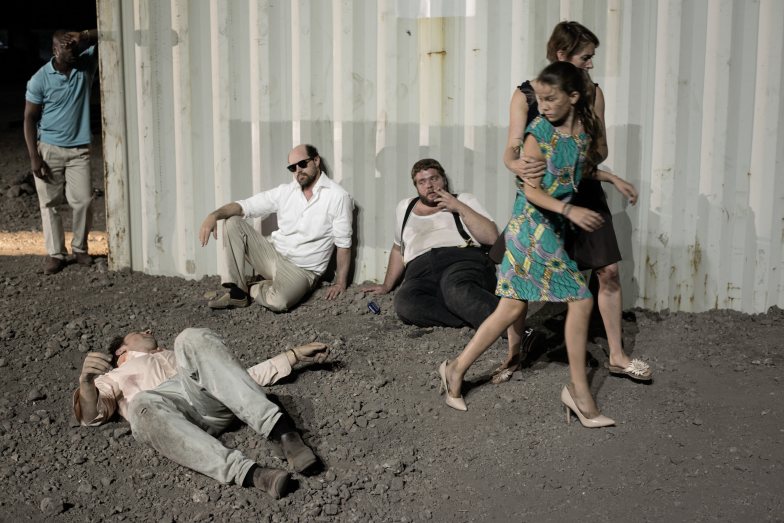
The scenography convincingly revealed the theme of the path important for Pasolini. Many of his heroes become wanderers or dream of it. The paths and wanderings of the “monstrous twins” - Carlo A and Carlo B, as well as the travels of Karmelo, this too earthly lover, make up the external plot of “oil”.
Thirdly, this is the topic of secrets and the story : "He who decides to tell about something receives a chance to tell about the whole universe." The circle of storytellers, which arises in the Quirinale and in the Madame F. salon, exchanges enlightened stories , including the "first parable of the authorities", "Bucus Slave", "History of the city of Patan and the state of Bihor."
The theme of secrets , in essence, is bodily: "There are things - even the most abstract and spiritual - which a person experiences only by means of the body."
In an attempt to reveal the bodily of secret and consists in the charm of fascism described by the author.
Here the topic of secret and story is combined with the fourth - the topic of power . The power, according to Pazolini, is far from equivalent to the law that acts in the "Aktaton" as one of the characters. В рурском спектакле прекрасный артист Бенни Классенс изобразил Закон рыхлым толстяком-андрогином, чувственным и истеричным.
Пазолини считал, что власть – понятие, раскрывающее суть отношений между сильными и слабыми людьми.
"Державный кобель не бывает двусмысленным, как не бывают двусмысленными и те, кто готов лечь под него, желая урвать клок власти. Жертвы, напротив, глубоко двусмысленны: их решимость во что бы то ни стало свергнуть власть, которая у них за пазухой, дабы в туманном и маловероятном, а зачастую идеализированном будущем установить новую власть, не может не настораживать".
Но только таким и должен быть выбор говорящих "нет".
"Не подлежит сомнению, что обладание есть зло; поэтому те, кем обладают, как нельзя далеки от зла, или, говоря иначе, их опыт – единственно возможный путь познания Добра".
Потому главной темой "Нефти", скорее всего, следует считать приумножение познания , знаком которого становится гермафродитизм двойников Карло. Для мифологического мировоззрения древних гермафродитизм был знаком приобщения к высшим истинам; этому отдает дань и Пазолини в пророческом видении Карло в Наброске 17.
Но и для самого автора сексуальная зыбкость становится культовым явлением:
"Возможно, гомосексуалистам более свойственно ощущение священного происхождения жизни, чем тем, кто строго ограничивает себя гетеросексуальными отношениями. Почитание матери как святой предрасполагает к отождествлению с ней всякой женщины; я сказал бы даже, что в основе гомосексуализма лежит неосознанное требование от женщины целомудрия, стремление к ее ангелизации".
Итак, умножая свои познания, герои, а за ними и читатели, должны научиться таким вещам, как: перемена участи, несение своего креста, безропотность перед расправой…
Именно тема познания сближает Пазолини с модернизмом , по мнению Э. Треви.
"Пазолини родился в 1922 году и изначально варился в супе модерна… С этим словом почти непроизвольно сочетается постоянная в бесконечном разнообразии стилей и личных точек зрения мысль о том, что литература является незаменимой формой познания мира. Не набором добротных сюжетов для кино и, тем более, не средством для призрачного роста "духовности", а вызовом, оскорблением, последним оборотом винта в самую сердцевину истины".
И тогда название книги – "Нефть", – довольно случайно избранное Пазолини, если верить вполне его словам, приобретает символический смысл. "Наброски" становятся топливом, необходимым читателю для плавания по неспокойным и часто враждебным жизненным морям. Но подобно тому, как топливо должно сгореть, чтобы сдвинуть с места машину, так и автор "Нефти" должен был прожить книгу и жертвенно умереть, чтобы она дошла до сердец и умов читателей.
"Пазолини" (Франция – Италия – Бельгия, 2014), режиссер Абель Феррара.
"Аккаттоне" П. П. Пазолини – И. С. Баха, спектакль Рурской Триеннале 2015 года, постановка Йохана Симонса.
Пьер Паоло Пазолини. Нефть: Фрагменты романа / Публ.,пер., вступ.ст. and comment. В. Лукьянчука // Митин журнал. 2015. № 68. С. 243-472.
Эмануэле Треви. Кое-что из написанного: Фрагменты романа / Пер. Г. Киселева //Иностранная литература. 2015. № 2. С. 156-222.