
Translated material
The birth of a skyscraper: William Le Baron Jenny

Starting from the New Age, we, as a rule, know who exactly designed one or another important structure - the palace, bridge, temple, fortress; Later it will be an exchange, theater, station, town hall, university. Over time, residential buildings will acquire authorship. At first it is small, most often two-story, a house for one face and his loved ones-what is called a mansion in Russian , and in French- Hotel or Palais . Gradually, more and more multi -storey buildings will become more and more; They, as a rule, have a mixed purpose: in the lower floors - retail premises, restaurants, offices, workshops, higher - residential. Citizens are little interested in those who and when exactly built their house, as well as other structures, including famous ones. Maybe the reader remembers who not so long ago erected a unique bridge from Denmark to Sweden? I even saw his bridge from afar, - but the name of the architect immediately forgot ...

Until recently, I either did not hear or heard, but did not remember that there was such a large American architect of the 19th century William Jenny (1832–1907). But it was William Le Baron Jenny who proposed a fundamental technical solution that allows to increase the height of the houses of more than five (!) Floors - that is, invented the skyscraper . And quite successfully embodied his ideas in life. William Le Baron Jenny was born in 1832 in a small town in Massachusetts. He received engineering and construction education mainly in Paris, from where he returned home in 1861. As a military engineer, Jenny participated in the civil war and built fortifications for the armies of Grant and Sherman. The war for Jenny ended in 1867, he married and opened his architectural company in Chicago. In the future, several future large architects - primarily Sullivan - were formed thanks to work at the architectural bureau under the leadership of William Jenny. Over time, their work gave reason to talk about the Chicago school of architects. Jenny glorified the 10-story building of the housing insurance company (Home Insuraance Building, 1885, Chicago-see photo 1). The function of the supporting structure was performed not by walls , but by steel beams; As a result, the weight of the metal structure was a third of its usual weight for the building of a similar height. This made it possible to further increase the number of storeys of buildings (see photo 2, 3).
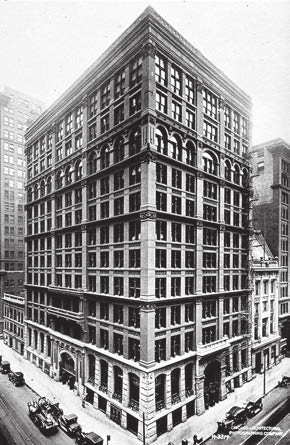
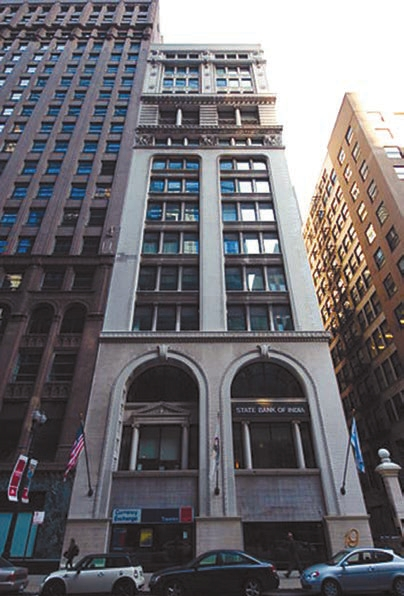

Prior to this, the house with the number of floors of Bo -Lei was not built at all. (Recall that this is defined as the space between the floor and the ceiling; therefore, buildings such as the hangar and other arched buildings are not described at all in the terms of the number of storeys.)
In addition to the invention of the steel “skeleton” of a multi -storey building, Jenny proposed using elevators instead of stairs, and also developed materials that ensured fire safety.
So skyscrapers arose, and with them a completely new look at the structure and aesthetics of a multi -gofunctional house for housing and work. Accordingly, new sections were formed in construction mechanics and material science, a new construction practice and completely new materials arose. The successes of the group of American architects, who will subsequently call the Chicago school, contributed to the fact that they, in a well -known expression, showed themselves to the world at the right time and in the right place. The rapid industrial development of Chicago and the entire area adjacent to it, the presence of waterways, a tragic fire in the city in 1871 ...
In general, they built a lot at that time, moreover, a building of various purposes, respectively, of different storeys - libraries, temples, educational institutions, theaters, banks ...
Buildings were also built, which in the Russian tradition we call mansions. So, among Jenni’s work in 1889, reference publications indicate the project (apparently unfulfilled) of the private residence of Walter Newberry. Against the backdrop of my ignorance of the history of American architecture, this picture seemed to me an exotic fantasy - but here I was deeply mistaken.

Walter Newberry was an venerable American citizen and deputy of Congress, and Jenny’s “fantasy” proposed to him was not at all-he reflected the tastes of wealthy Americans and, in particular, resembled the style of the most prolific and demanded contemporary Jenny, architect Henry Richardson (1838-1886).
Richardson lived a short life; It is not clear when he managed to do so much, moreover, to do all this in the material. The style of the project of the house of Walter Newberry was characteristic of Richardson and his many imitators; It is called Richardson Romanesque. But this is already a separate plot ...