
Translated material
Five days of versions
What they say in Russia and in the world about the possible causes of the crash A321
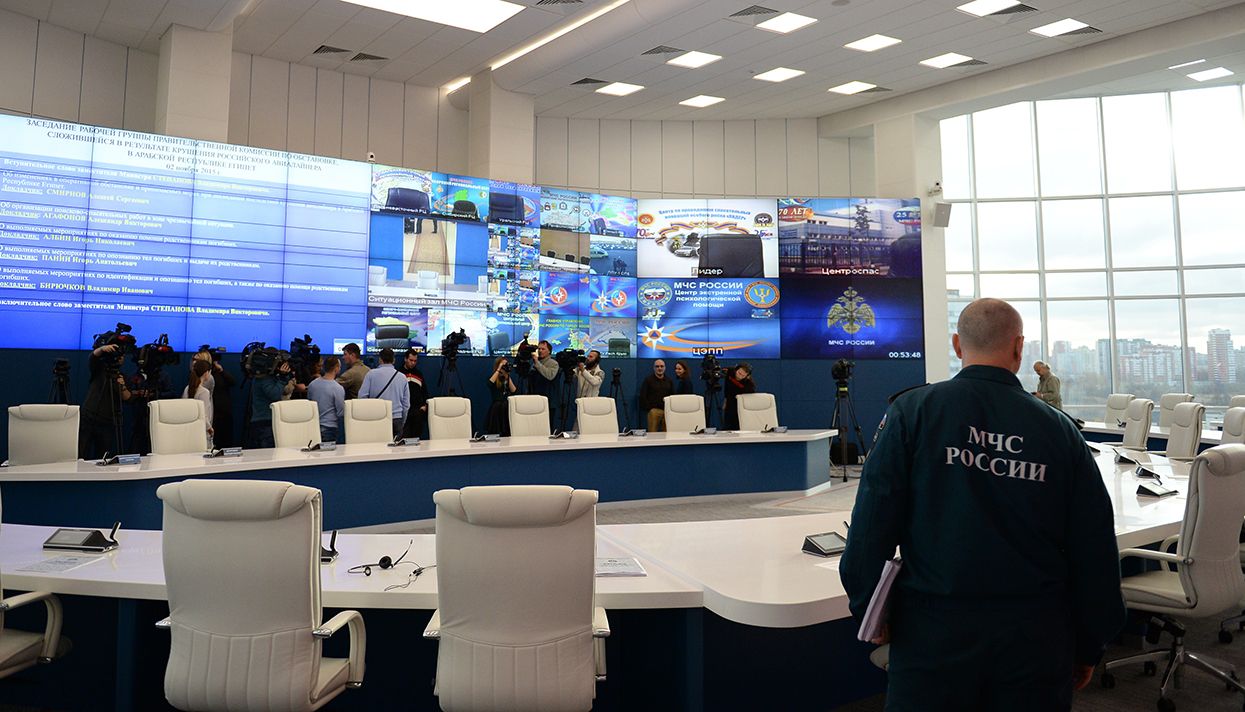
Five days after the crash of the “Airbus” of the Russian Metrojet airline in Egypt, it is still not clear what caused the death of 224 people flying from Sharm El Sheikh to St. Petersburg. The United States and the UK talk about the likelihood of a terrorist attack, and Russian officials are asking to refrain from speculation, not excluding any of the possible causes of a crash. Medusa studied how the versions of the fall of the Metrojet aircraft are discussed in Russia and abroad.
Foreign version: perhaps it was an explosion
The version of the explosion on board A321 along with the rest (technical malfunction, pilot error) was called immediately after the crash of the aircraft, but no one mentioned it as the main one before the publication of the American private intelligence company Stratfor. The company’s report (it has nothing to do with the official investigation and is based exclusively on indirect data) is built on the “from the contrary” method - considering all possible versions, Stratfor experts came to the conclusion that the explosion on board seems to be the most likely cause of the disaster.
Then information about the explosion as a priority version appeared in several large editions at once. In particular, the CNN television channel on the evening of November 4, citing interlocutors in special services, said that, most likely, the Islamists laid an explosive device on the aircraft and put it into effect when the liner was at an altitude of about 10 thousand meters. The special services noted that insufficient security measures at the Sharm El Sheikh airport were well known.
On the evening of November 4, the British Foreign Ministry made a comment on the crash of the aircraft. The agency updated the safety memo in Egypt and spoke about the “significant probability” that the Metrojet liner broke after the explosion on board the aircraft. In this regard, the British authorities forbade the airlines of Great Britain to fly to Sharm El Sheikh and recommended that all citizens not use this airport. They also began joint work with the Egyptian authorities to strengthen security measures-in particular, a small group from the Kingdom of Defense of the Defense went to Sharm El Sheikh.
British Prime Minister David Cameron subsequently stated that the British authorities have no exact data on the causes of the aircraft, but the explosion version looks more likely than others. He called the abolition of flights to the security of British citizens for whom Egypt is a popular resort direction. The UK did not consult with the Egyptian authorities on the issue of canceling flights. Some airlines, including Easyjet, have already promised to reimburse the cost of burned tickets.
The Islamic State announced involvement in the crash of the aircraft on October 31, however, terrorist groups often take responsibility for certain events that in reality have nothing to do-for example, Dokarov called the Caucasian Islamists an accident at the Sayano-Shushenskaya hydroelectric power station. The version of the American special services, which CNN managed to get acquainted, is based on the words of militants, but not on public statements, but on intercepted internal negotiations of terrorists. There are no details about what exactly was in intercepted messages.
The head of the US State Department, John Kerry, in a conversation with the Egyptian Foreign Minister, with the media, said the media reports do not reflect Washington's position.
Russian version: you need to wait for the investigation results
The most detailed in the Russian media the possible versions of the crash of the aircraft sorted out shortly after the crash of Kommersant. Among these versions were the fatigue of metal, and a terrorist attack, similar to an explosion above Lokerbi . The possible external impact on the aircraft was also stated at the Metrojet airline, thereby refuting rumors about the poor technical condition of the aircraft. In the Federal Air Transport Agency, the airline was asked to refrain from premature conclusions, and also stated that there is no reason to consider any version of the priority-whether it is an external impact, technical malfunction or human factor.
The Ministry of Transport shortly after the crash of the aircraft declared (citing the Egyptian side) that there were no thermal damage on black boxes. The authorities did not see any grounds for canceling flights to Sharm-El Sheikh in the Russian authorities.
After the possible explosion was spoke in the Western media, the Russian and Egyptian authorities made several statements about the disaster. The head of the Federation Council Committee on International Relations, Konstantin Kosachev, who called the UK decision to cancel flights to Sharm-El Sheikh politically motivated and connected it with Russia's actions in Syria.
Officials, including the press secretary of President Dmitry Peskov, said that none of the versions of the crash were excluded, but there is no reason to call any of them the main one, and only the result should talk about the causes. The UK decision to cancel the flights of Peskov called the “certain data” about “some explosion”, and noted that Russia is counting on cooperation with those who have information about the possible causes of the aircraft crash.
The authorities of Egypt shortly after the crash of the aircraft stated that its cause was technical problems. There are no evidence indicating a terrorist attack, the team of investigators does not yet have such information. The RIA Novosti source in Cairo also reported that there were no traces of explosives on the wreckage of the aircraft, but subsequently in the Federal Air Transport Agency they said that they would continue to look for traces of explosives and still do not exclude this version.