
Translated material
"Tanks did not take Vilnius"
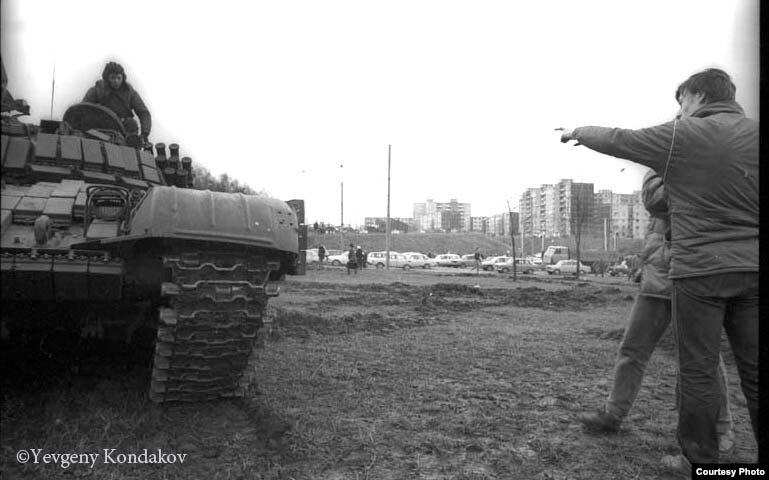
The project of the photographer Evgeny Kondakova recalls how much the independence of Lithuania was conquered
"Tanks did not take Vilnius" - this is the name of the project of an independent Moscow photographer Yevgeny Kondakov, dedicated to the events of January 1991 in Lithuania. A quarter of a century ago, a young photojournalist of the Moscow News weekly, who went on his first independent business trip, became a witness to clashes of Lithuania citizens with Soviet troops introduced into the city center.
On January 11–13, 1991, according to various sources, from 14 to 16 people, almost one and a half hundred were injured. The versions of these events are significantly rebuilding, Lithuania still continues to search for the former Soviet military involved in the tragedy, several people - mainly from the number of the Baltic Communist nomenclature that collaborated at that time, were sentenced to prison "for participating in an attempt by a coup d'etat." The military operation in Vilnius became the reaction of the Kremlin leadership to the proclamation of Lithuania's independence. Soviet paratroopers and tankers stormed the Vilnius television center, occupied public buildings. The USSR President Mikhail Gorbachev said the next morning that he knew nothing about what had happened. The Lithuanian Communist Party tried to organize the Committee of National Salvation, but to no avail: the Political process in the Soviet republics of the Baltic states could not be deployed.
Evgeny Kondakova plans to submit black and white historical shooting in the Moscow Winzavod Center for Fotoloft Gallery:
“I'm going to print photos on newspaper paper in the Moscow News format of the 1990s,” Kondakov said in an interview with Radio Liberty. - Each such newspaper U -turn is a completely exhibition format. I am going to use traditional photos of large size, but the nuclear of the exposition should be a kind of special release of "Moscow News" With photos. I found an envelope with negatives in my archive and now I am completing a scan. In total, the project will have about 60 photos. I would like to print several hundred such "newspaper" sets. This will allow the exhibition at many sites and distribute part of the circulation to visitors. Everyone who will have such a multi -page paper kit will be able to glue photos on the wall, a fence, in the underground crossing - as it happened in Vilnius 25 years ago.
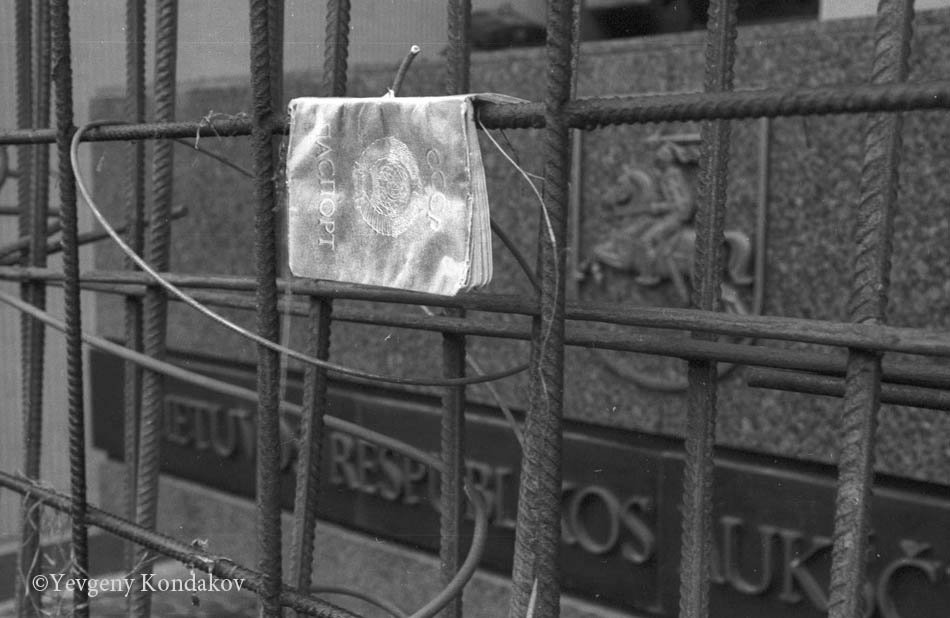
Tanks did not take Vilnius
- Among the materials that you sent to me on the eve of the interview, there are photo collages in which your Vilnius photos printed on the pages of Moscow News are “imposed” on the walls of modern Moscow houses. What did you want to say this?
You understand that in our time of total control of special services such a harmful exhibition is impossible in the municipal library. Now the time of kitchen conversations has returned again
- It seemed to me that the best place where you could hold an exhibition dedicated to the events in Vilnius than Vilnius Street in Moscow could not be found. I went to Yasenevo and found a library on Vilnius Street, and next to it in an adjacent room - an isomed with an exhibition hall. He turned to the head. They were ready to support me and said: "Well, prepare your materials, we will hold an exhibition." However, a few days later I received a letter from the head, which reported: "The authorities did not support the idea" due to the fact that this kind of exposition is not their format. A colleague of the head expressed more expanded: "You understand that in our time of total control of special services such a harmful exhibition is impossible in the municipal library. The time of kitchen conversations has returned."
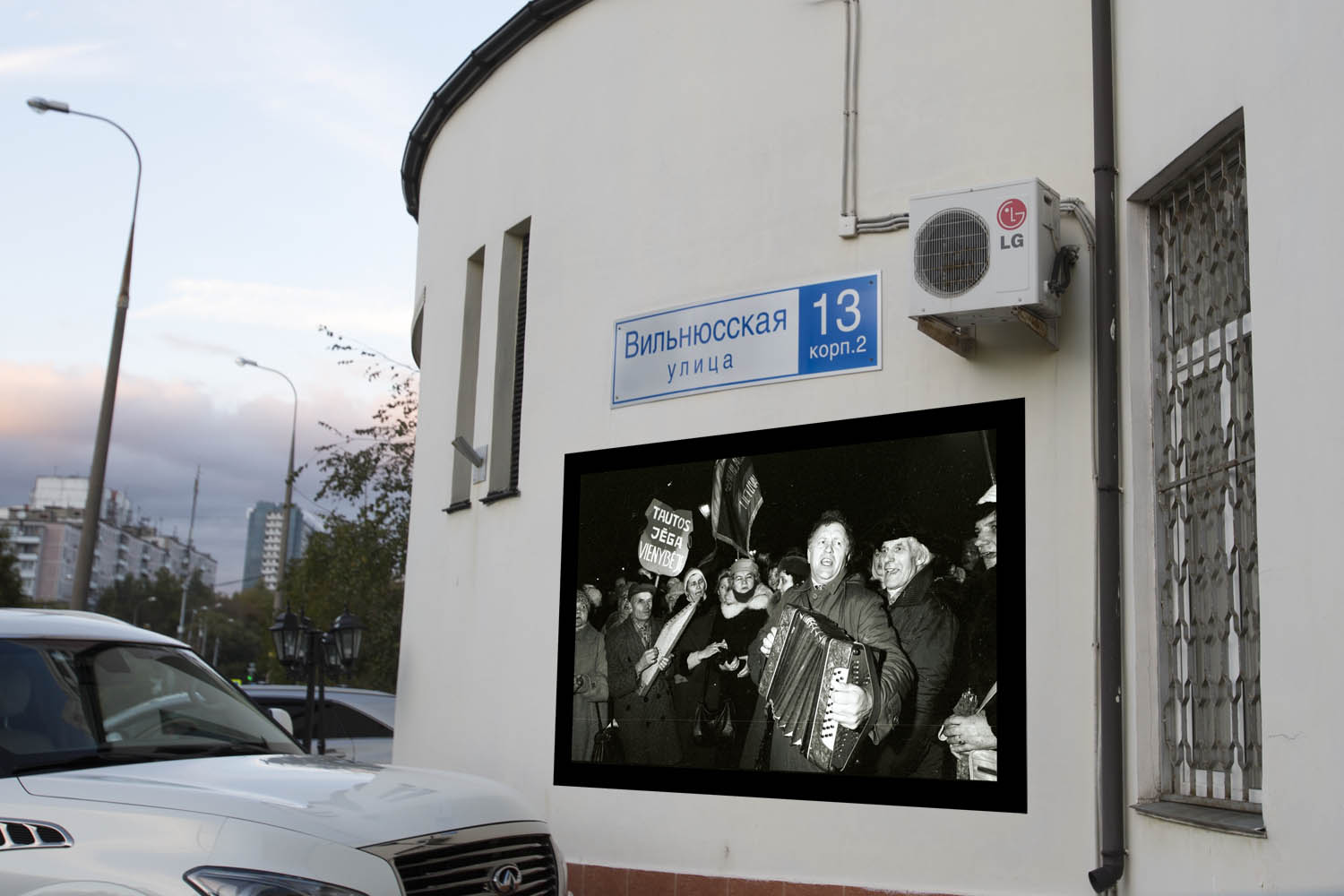
I decided not to despair, because no one can prevent me from holding a virtual exhibition - and not only on Moscow Vilnius Street, but also on Vilnius streets of other Russian cities. I turned to my photographs of my friends with a request to send me pictures of Vilnius streets. In the right places of these images of Vilnius streets, I will post my photos of 1991, and then somewhere in a special place, for example, in Facebook, we will arrange the exhibition "on Vilnius streets".
The project of the photographer Evgeny Kondakova recalls how much the independence of Lithuania was conquered
I am trying to raise money for the project using crowdfunding - it would be great to make an exhibition about Vilnius for money collected by the Russians! - But the fellow citizens now (or always), of course, have other priorities, and the process frankly, the process is beating. However, having learned about my project, the Fotoloft Gallery, located in the Center for Modern Art, "Vincuvod", contacted me: we, of course, are a private gallery and must earn money, but such a project cannot but support, we will look for the opportunity to move our schedule and even let you go to the gallery for a week. This is very important for me, and now I have nowhere to retreat.
“Have you turned to Vilnius?” Is there any interest to see your photos?
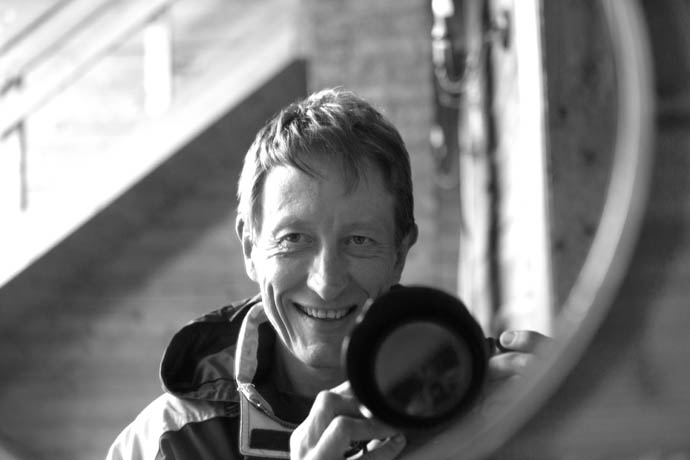
- For Vilnius, these events are generally an important national topic. Lithuania has always been a photographic center, and, of course, dozens of Vilnius photographers shot these events. I did not even contact Vilnius, because it is important for me to present my shooting in Moscow. If I manage to print at least a few dozen sets of my photos, in the form of a newspaper special issue, and maybe even in the form of an album, then, of course, I will find a way to send several copies to Vilnius, for example, to the Lithuanian Independence Museum.
- Tell us about the history of these photos. How did your memorable trip to Vilnius develop?
The contrast of singing people and tanks, as the only argument of the authorities in a conversation with their then citizens, - this, of course, made a depressing impression
- A trip to Vilnius actually turned out to be my first independent business trip. I went to Vilnius even without a writing journalist, the correspondent was sent after the event when events began to develop rapidly. But my colleague and I did not even meet in Vilnius, since mobile communications did not exist yet. There were no tickets to Vilnius, the city was in a special position, and only the personal participation of Yegor Yakovlev allowed to solve the problem. I flew to Lithuania in a half-empty plane from the already non-existent, in my opinion, Bykovo airport . The Supreme Council of the Republic of Lithuania proclaimed an act on restoration of independence in March 1990, political processes developed quickly and contradictory, and in early January 1991, tens of thousands of people participated in demonstrations on the streets of Vilnius. And I shot on the streets of the city of singing people ... I flew to Lithuania on Saturday, January 12, and in the evening of the same day, Soviet tanks entered the center of Vilnius. The contrast of singing people and tanks, as the only argument of the authorities in a conversation with their then citizens, - this, of course, made a depressing impression.
- Did you feel the hatred of the Soviet Union on the streets of the city?
- No, I did not feel any hatred. People were very kindly configured, the situation was very warm, easily moved from Lithuania into Russian. But decisiveness was felt. Here people have made some decision for themselves, and they are not going to change it. It was felt that they would stand on this area as much as they need, and if necessary, they would remain there forever.
- Have you seen the assault on the TV tower?
- The assault on the TV tower occurred at night from Saturday to Sunday. I was at the parliament building, and when the reports came that the tanks surrounded the television center, I went there. But people have already died by that time, with my own eyes I have not seen the actions of the paratroopers.
- Then you returned to Moscow and went out the number of "Moscow News" with your shooting?
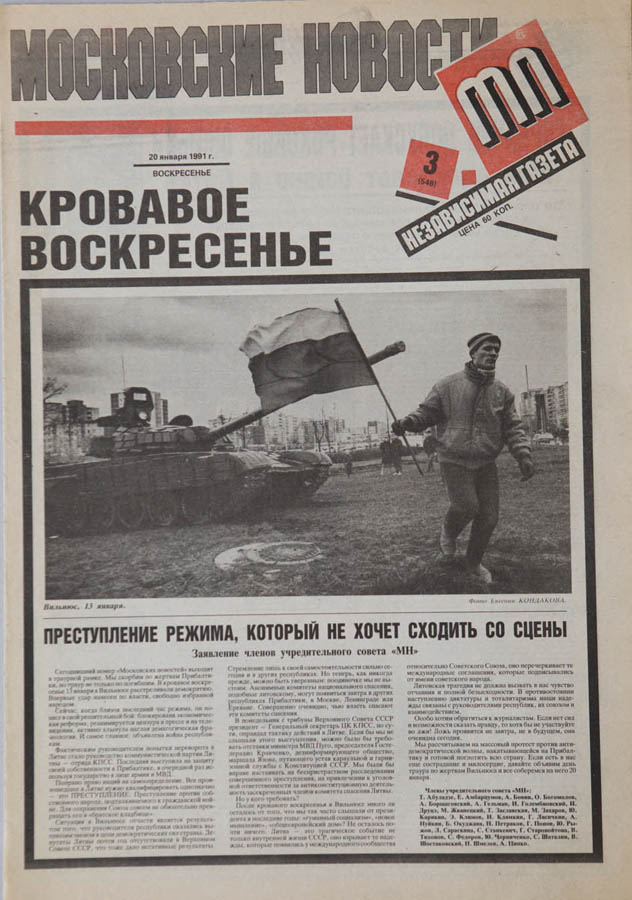
- Returning to Moscow - it was a separate difficulty. There were military patrols at Vilnius’s stations, and I was afraid for the shot photography. In order to catch the room, I had to deliver the film to Moscow, because digital technologies appeared 10 years after the Vilnius events. In order not to attract the attention of the special services, fearing the confiscation of the films, I was forced to leave all the equipment with random acquaintances and on a passing train, in a reserved seat car, went to Moscow. A day later, the Moscow News newspaper with a cap “Bloody Sunday” and a photograph of Vilnius events in the first lane came out. Hundreds of people stood all day on Pushkinskaya Square, at the editorial office of Moscow News, and read this number, exhibited in wall stands. A few days later in Moscow, a multi -thousandth rally in support of the Lithuanians took place. Part of the circulation with the help of Aeroflot pilots was transported to Vilnius, the newspaper was distributed on the barricades around the parliament ... And they gave me photographic equipment a few days later, I don’t even know the names of these people. But all the technique returned to me intact.
“Have you been to Vilnius since then?”
For Lithuanians, Europe has become its own home
- Vilnius events have become a very personal story for me, from time to time I am pulling in Lithuania. A few years ago, I even took off in Vilnius a report on the trail of my first shooting. In the very places where the tanks and crowds of the protesters stood, I shot some new stories from the new city peaceful life. These are absolutely two different cities, of course. The point is not that new buildings, business centers, cars appeared, but the meaning is how people have changed. The 20-year-old guys with whom I talked on the streets of Vilnius are discussing where to work-in Norway or in Scotland. That is, Europe has become its own home for Lithuanians, ”said Radio Liberty, Moscow photographer Yevgeny Kondakov.
Collisions in January 1991 occurred not only in the capital of the republic, but also in Kaunas, Alitus, Shaulyak and other Lithuanian cities. The situation in the republic got out of the control of Moscow gradually. In early 1991, the Lithuanian government carried out the liberalization of prices in the consumer market; In response, the Communist Organization "Unity" conducted a demonstration of protest at the building of the Supreme Council of the Republic. The rally participants sought the resignation of the government and made an attempt to break into the building. By that time, soldiers of the Alpha special forces, the Pskov division of the Airborne Forces and other parts were already transferred to Lithuania.
Mikhail Gorbachev demanded the abolition of anti -constitutional acts and the restoration of the Soviet Constitution; The Chairman of the Supreme Council Vitautas Landsbergis called on independence supporters to prevent the seizure of parliament, government buildings and infrastructure facilities. The actions of the military did not lead to the resolution of the crisis: the coverage of events with the media, the international and public reaction (including in the USSR) made further attempts to force Soviet control in the Baltic states. In February 1991, the Republic of Lithuania was recognized by Iceland, and then by other countries.
Fragment of the final issue of the Freedom Time program
-

Andrey Shary
I.O. Regional Director of Radio Free Europe/Radio Liberty for Russian -Sound Content
Andrey Shary on Facebook
Sharya@rferl.org