
Translated material
The Tambov court refused the Ecologist Vitishko in an amnesty for the 70th anniversary of the Victory
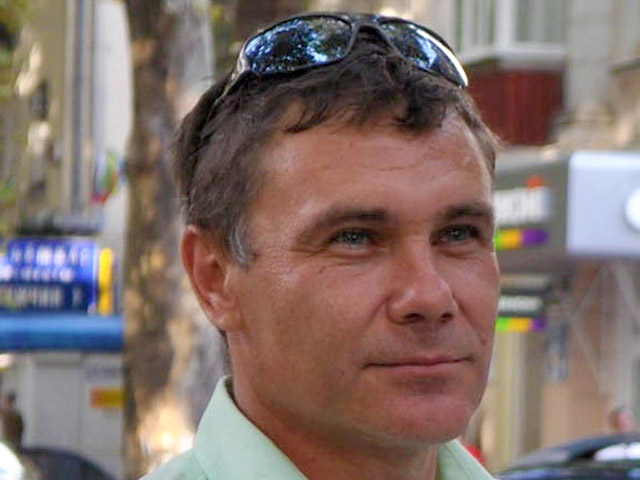
The Kirsanovsky District Court of the Tambov Region refused the ecologist Evgeny Vitishko, who was serving a sentence in a colony-settlement, in an amnesty in connection with the 70th anniversary of the Victory. According to the judge, the corpus delicti, which is accused of Vitishko, as expected , does not fall under an amnesty, the Russian BBC service reports.
At the same time, the court explained that in the event of a decision to mitigate the punishment, Vitishko will be able to again file an amnesty. The court hearing to mitigate the sentence Vitishko is scheduled for Tuesday, November 10. At a meeting on Monday, the ecologist performed without lawyers. It is noteworthy that the representative of the colony did not object to the use of amnesty.
Initially, the Kirsanovsky District Court refused to consider the application of Vitishko for an amnesty, but on October 8, the Tambov Regional Court returned the case to the court of first instance.
A little earlier it became known that the Supreme Court of the Russian Federation will again consider the Vitishko case. According to the Ecological Watch in the North Caucasus, earlier the Supreme Court of the Russian Federation represented by the deputy chairman Anatoly Tolkachenko already made a decision that called the legitimacy of the verdict issued against Vitishko and Gazaryan.
Journalists note that after on October 1, information on the illegality of this sentence was personally informed to Vladimir Putin at a meeting of the Presidential Council of Human Rights, the chances of an objective consideration of the complaint of lawyer Sergei Badamshin increased. Earlier, the Supreme Court of Russia repeatedly refused to accept such complaints, this time the complaint was accepted for consideration. This happened a few days after the president’s meeting with the Human Rights Council.
The incident, which became the subject of the trial, occurred in November 2011. According to the investigation, Vitishko and his ally of Suren Gazaryan were insulting insulting on a metal fence in the forest. Among the inscriptions were "Sanya Thief", "toad", "This is our forest", "This is our earth." Ecologists also removed the fence section, behind which, according to them, is the residence of the governor of the Krasnodar Territory Alexander Tkachev and where, according to them, the trees listed in the Red Book were cut down.
Before the action, environmentalists tried to fight for the forest both with the help of appeals to official instances, including former President Dmitry Medvedev, and by holding stocks, but this did not give any results.
The fence that appears in the case file began to be built after civil activists carried out a picnic-rally on February 27, 2011, cutting the barbed wire surrounding it. On the site, they saw how unique Pitsund pines cut down for the construction of new mansions. More than 20 people were detained during the action, four of them were arrested for a period of five to 10 days "for disobedience to the legal requirements of police officers."
The press service of the former Kuban governor denied its involvement in the residence, but environmentalists found documents confirming that Alexander Tkachev personally owns one of the sites.
In June 2012, Vitishko was sentenced to three years conditionally. However, in December 2013, the court replaced this conditional punishment with a real term in the penal colony. Suren Gazaryan, also found guilty of damage to another's property, received a residence permit in Estonia as "a person in need of international protection." In Russia, a new case was instituted against him under the article “The Threat of Murder”.