
Translated material
Alexey Simonov: "I am not a judge, but a son"
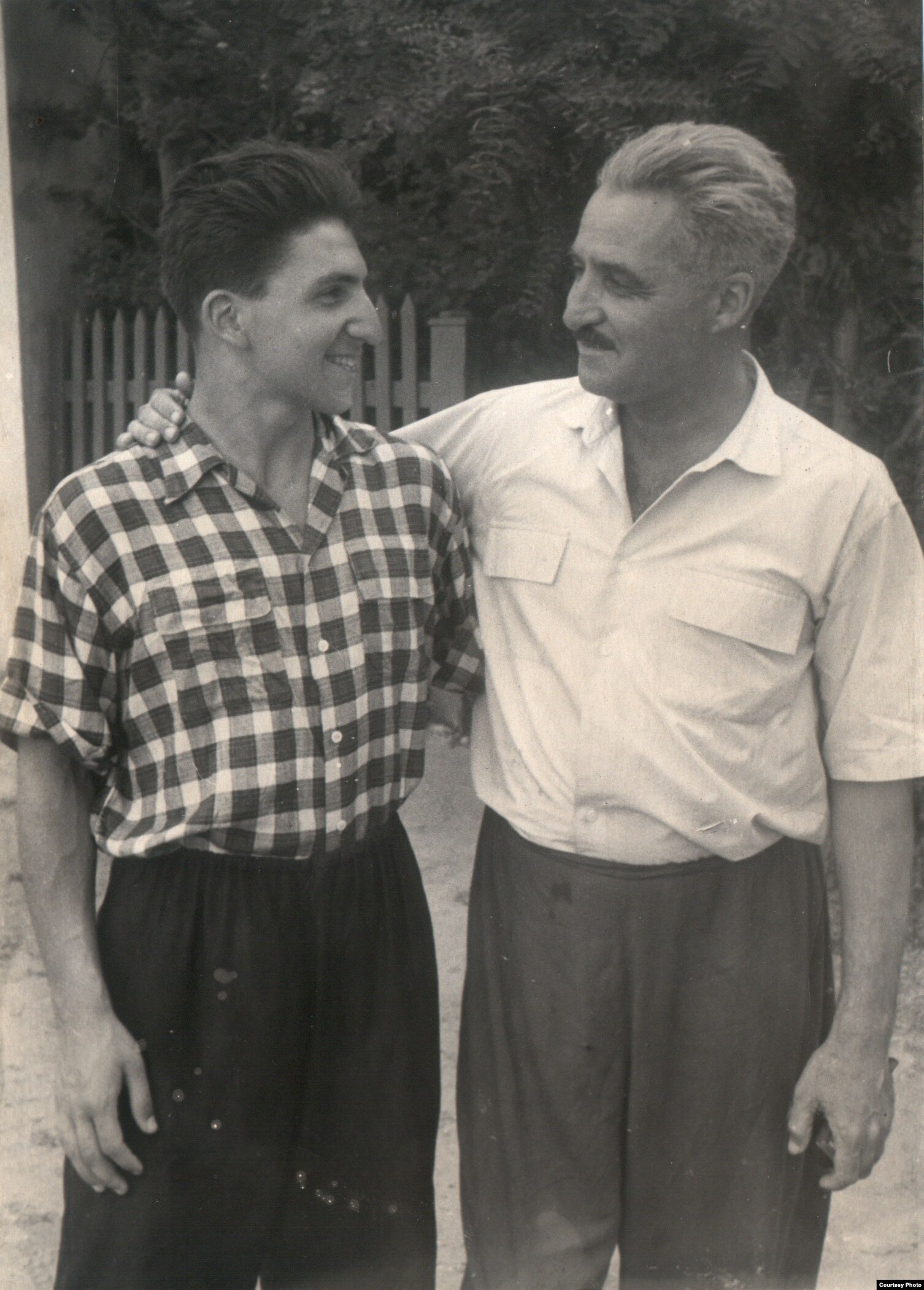
The famous human rights activist is about the famous Soviet writer with a “contradictory biography”, which is 100 years old on November 28
Leonid Velekhov : Hello, on the air, freedom is a radio that is not only audible, but also visible. In the studio Leonid Velekhov, this is the new issue of the program "Cult of Personality". She is not about tyrants, she is about real personalities, their fate, actions, their views on life.
On November 15, according to the old style, the 28th-the new one performs the 100th anniversary of the birth of Konstantin Simonov, the writer and the man who left a noticeable mark in Russian literature and public life. We are talking about this outstanding and contradictory personality today with his son, the personality is also without a doubt of a large and outstanding, Alexei Simonov .
( Video of Konstantin Simonov. Success text :
In the former, Soviet times, the anniversaries of Konstantin Simonov were celebrated magnificently, because he was one of the main Soviet writers. The current anniversary, a century, will not celebrate as before. Nevertheless, they will refuse, as they say, in the first category: Simonova, unlike the vast majority of Soviet literary generals, did not forget, because his name still causes living associations - with his good verses about the war and generally with the war, which was the main theme of his life and creativity.
History retains his name after death, how fate kept him himself during his lifetime. This is certainly as he wrote to himself: “Nothing in life can be knocked out of the saddle ...” The nobleman by origin, the son of General of the Tsarist Army and Princess from the Obolensky clan, - throughout the logic of the Stalinist time, he had to become an outcast and deprived of a frying terror in a meat grinder for himself. And he became a pamper of fate, a laureate of six Stalinist awards and other and other. But prizes are, of course, empty, who will now remember about them, as well as many Simon writings. But what is remembered from them written will not be forgotten for a long time.
You remember, Alyosha, the roads of Smolensk,
How endless, evil rains went,
How tired women carried us how krinov,
Pressing like children, from rain to their chest,
How they wiped tears stole
As after us whispered: - The Lord save you! -
And again they called themselves soldiers,
As the Great happened in Veliky Rus ...
... you remember, Alyosha: I hut near Borisov,
On a dead crying girlish cry,
Seda old woman in a plisov salopchik,
All in white, as for death, dressed, old man.
Well, what can they say, how could we console them?
But, woe to his labie instinct,
Do you remember, the old woman said: - Mother
As long as go, we will wait for you).
Studio
Leonid Velekhov : I said a "contradictory personality." Will you argue with the fact that Konstantin Mikhailovich was a contradictory person? And if you do not become, then what was its main contradiction?
Alexey Simonov : I would say that he was a major person with a contradictory biography. I would rather agree with this wording, because in fact the country went through trials that often made scum from the personality. And the contradictions of time were reflected in public, who were more or less involved by this time, strongly. And on such a person as the paternal one, who belonged to his time, is very strong. And to the advantages of time, and to its shortcomings, and to his high motives and high accomplishments, and to a low reprisal against his own kind - the father’s personality is involved in all this. But the personality, in my opinion, was not contradictory.
Leonid Velekhov : Was it whole, do you think?
Alexey Simonov : The whole person was a whole. And many bad deeds flowed out of absolutely, I would say, positive intentions, although he was aware of what kind of actions it was.
Leonid Velekhov : celebrate his 100th anniversary. But, it seems to me, the 100th anniversary of Surkov, Fadeev or Fedin, of the same rank of literary generals, and far from mediocre, did not particularly celebrate. That's why I do not call any Sofronov here. Why is Simonov, in your opinion, out of this row, is breaking out, what did he remain in history? What will you read from it in the 21st century, what do you think?
Alexey Simonov : At least military poems will be read. Still, he is the author of the most famous military poem, which today already exists as legends in a number of other countries, in other languages. Do you know, for example, that the song “Wait for me” is the main song of the warring Jews in 1944–1945 - m?
Leonid Velekhov : Grandnose!
Alexey Simonov : Or that this song in Lithuania is considered written by Salome Neris, because she liked the poem so much that she transferred it to Lithuanian and printed? You can see, for example, a set of photos released in Italy, on the cover of which is written "in memory of the Italian campaign. 1943." A photograph of the walking string of soldiers and it is written: "Wait for me, and I will return." And below: "From a letter from the Italian soldier home" ...
Leonid Velekhov : Indeed, in almost every pocket of the Red Army tunics, this verse was rewritten by hand ...
Alexey Simonov : So, until this very pocket of the tunic is dear to descendants, until then the poem that was stored in it will be memorable.
Leonid Velekhov : My question was, of course, provocative, I myself believe that the Simon military poems will remain. Although I have other his favorite poems, I love “you remember, Alyosha, the roads of the Smolensk”, “The Son of the Artiller”, “The Major brought the boy on the carriage” ... What do you think, what was the main talent of his father - poetic, prosaic?
Alexey Simonov : The main talent of his father, from my point of view, - he knew how to change until the end of his life. He was not afraid to change. He all the time, if you want, studied something and tried to understand something again. Therefore, such a long evolution of his views on Stalin, for example. I hope that closer to the 28th “New Gazeta” will finally print his records made in preparing the novel “Soldiers are not born”, where he reflects on different features of Stalin, and thinks so that I, already much more old than he (he was at 63 years old, and I have already 76), I read and surprised how smart my father was.
Leonid Velekhov : This is no doubt.
Alexey Simonov : He continued to grow. And this is his most important talent.
Leonid Velekhov : Did he stay with the Stalinist?
Alexey Simonov : No, of course! He remained objective. He was more a historian than a writer, in the last years of his life, this is undoubted for me. Therefore, it is no coincidence that he switched to documentary cinema, it is no coincidence that he began to engage in soldier's memoirs. He died at that moment when he had more than 3 thousand pages of soldier's memoirs in his hands, recorded during the filming with the gentlemen of the Orders of Glory. He wanted to make a book out of this. He talked with them - people whom we often accuse of Stalinism - and he did not play along with them. He himself considered him great and terrible.
Leonid Velekhov : But did you think the great one until the end of his life?
Alexei Simonov : Yes, he thought, because a person who was able to deceive everyone like that, of course, the great. Maybe he was a great bandit, this is another matter ...
Leonid Velekhov : But in his youth, as I understand it, he was just in love with Stalin.
Alexey Simonov : Naturally!
Leonid Velekhov : He even imitated him ...
Alexey Simonov : No, he did not imitate him.
Leonid Velekhov : Pipe, mustache?
Alexey Simonov : No, no, no. He did not imitate Stalin. He changed his appearance very much. Very frivolous to her, I would say, treated, especially in war.
Leonid Velekhov : frivolous? And, in my opinion, he watched very much.
Alexey Simonov : Either he wore a mustache twisted up, then he smoked a pipe at all, then he walked in Bekesha and in black leather coats. On the steps of the Reichstag, I took a picture with a stack - a brave lieutenant colonel. He, in fact, was a man, a man, always remained for him. And it was the strongest that was in it.
Leonid Velekhov : Why did he stop writing the lyrics?
Alexei Simonov : Well, the father answered this question very simply: "So far, there is someone to write lyrical poems - you write lyrical poems. And when there is no one to write lyrical poems - you will not write them yourself."
Leonid Velekhov : Still, Valentina Serova?! Or not only?
Alexey Simonov : Well, how to say. On the one hand - yes. But on the other hand, remember he has such a poem "remembering the names for an hour"? This poem is definitely not about Valentina Serov! ( Laughter in the studio ). Therefore, there was no such unicellular attachment to Valentine, especially since the novel was not at all so simple.
Leonid Velekhov : Very difficult, as I understand it.
Alexey Simonov : He was quite intermittent. See for yourself. So, he falls in love at the beginning of 1941, there is no war. There are plush wolves, rattles, brown row - everything is here. Then the war begins. But the year 1941 was held, the whole 1942 passed, half of 1943 passed, and they are still not married. He is still achieving her. Firstly, in fact, he fell in love with her, to put it mildly, to it. She just widowed.
Leonid Velekhov : Yes, she lost her Serov.
Alexei Simonov : Valentina Vasilievna was a woman in this sense. She loved. Roman with Serov was much more romantic than with Simonov. He ended, unfortunately, romantically, ended with misfortune when Serov died during a night flight along with Polina Osipenko. And she was pregnant when he died. My named brother Tolya was born a month later with a little after me. I was born on August 8, and he was September 14. And dad two weeks after my birth went to Khalkhin-Gol. Then he returned, managed to finish the poem "Suvorov", about which my grandmother recalled that in our cottage in Ilyinka, that is, at their dacha (I never had a cottage), at the cottage of my mother’s relatives, he put me, another year -old, on his shoulders and went to compose poems. And it was the poem "Suvorov".
"Having broken into Mutten, he found out
From the Muttental spy,
That Rimsky-Korsakov fled,
Leaving guns and banners,
That all the allies are gone -
Around the Austrian treason,
And in the heart of the enemy land
He barely gets away from captivity.
What does captive mean? Half a century he
Taught shelves and battalions,
What are the words: "give sorry",
But there are no words: "Ask sardon."
Do not retrain with them!
So, maybe to submit Rock
And order the shelves with your
Itti on the way back?
But he taught a year a year,
Behind the generation of generation
What are the words: "Itti forward",
But there is no word: "retreat."
It's time to rush the packs on the trip!
He believes: for his soldiers
And the long way forward is shorter
Short track back ".
He composed it then.
Leonid Velekhov : Well written, good!
Alexey Simonov: In general, in fact, he learned to write poetry well. And this began not with the “general”, but with the poem “Pavel Black”, which for some reason he disliked, I don’t know why. Maybe because he corrected her so much before she was finally printed.
Leonid Velekhov : This is almost his first poem.
Alexey Simonov : The second. Her main character is Pavel Black, Odessa thief.
"At the beginning of the thirty -second, black rode in Karelia -
Taturatedly tattooed, resident, untreated, unshaven.
He was riding from Odessa, from his beloved Black Sea
On the damn white sea. Chort, take him!
Just in the prison car, the thirties hit him.
One hundred times safely fled from chases,
Were with him their guys were taken into the board,
Passed copper pipes, water, vodka, fire.
We drove for a long time and boring: for five days they cut into cards;
A hundred times went through hands, grub, tobacco ...
The car, like an autumn fly, crawled down on a cold map,
And it seemed to black that his work was tobacco! "
Leonid Velekhov : In what poetic series would you put it? Whom did he value most in poetry? Who was imitating in his youth, because everyone imitates?
Alexey Simonov : I don't know. Honestly, I don't know. Loved Kipling.
Leonid Velekhov : This is the first association, of course, which comes to mind.
Alexey Simonov : He loved Gumilyov.
Leonid Velekhov : Feel. Bagritsky, Tikhonov ...
Alexey Simonov : Maybe. He taught him Lugovskaya. Then they were very friends. But, you see, the war, in fact, stops training relations - either you begin to realize yourself, or you can’t do anything. He succeeded. He said that he did not discover anything new in poetry. Simonov’s poetics do not exist. He revealed the secret of sincerity in poetry. In his poems, the sincerity of feelings is beyond doubt.
Leonid Velekhov : Of course, we mean military lyrics.
Alexey Simonov : Of course, of course.
Leonid Velekhov : And not poems for the death of Stalin.
Alexey Simonov : I recently had one meeting at the Sphere Theater. The audience tells me: “And how do you feel about the poems“ Maizhzura Bay ”,“ Haming in Canada ”,“ The speech of my friend Samed Vurgun at dinner in London ”? I say:“ I relate well. Only each of these poems is necessarily spoiled by some ideological stamp. "Maizura Bay" is a wonderful poem, poetic, subtle, but it ends:
"Well, in general-the matter is bad,
I will not reassure you:
Communism will win everywhere!
Here is your foreboding - true! "
It was he who turns to an American intelligence officer. Well, at least do not read! When I read, I say every time - well, here I would stop here!
Leonid Velekhov : But this is not in the best military verses. In the "son of an artilleryman" ... "Hold on, my boy // In the world do not die twice!" Wonderful lines!
Alexey Simonov : Yes! Although this is one of the front-line ballad, but it somehow turned out to be the most successful. After all, then he met the hero of this poem, Loskutov.
Leonid Velekhov : Still, they did not write about the war before him.
Alexey Simonov : Further, from the next generation, he loved Slutsky the most.
Leonid Velekhov : Bravo!
Alexey Simonov : There was a story with his first "chosen". 24 poems were thrown out of it. And his father undertook to write a preface and undertook to break through the book. And he struck, and wrote the preface. And I am very proud of this, because my beloved military poet is Slutsky.
Leonid Velekhov : And my beloved! ( Laughter in the studio )
Alexey Simonov : How we found each other! ( Laughter in the studio ).
Leonid Velekhov : Poems can be thrown out of the collection, returned back. But there are things that, as they say, cannot be thrown out. In particular, the story with his participation in the campaign to combat "rootless cosmopolitans." Why did he get into her? Although I know that he had his own explanation.
Alexey Simonov : You can believe this, you can not believe this, but I believe it. If this report (two people could make it - he and Sofronov) undertook to make Sofronov, he would add ten of his unloved Jews to the mandatory list that was already launched from above. Therefore, Simonov undertook to make this report.
Leonid Velekhov : That is, he believed that he went to a certain self -sacrifice ?
Alexey Simonov : Absolutely fair. It was a self -sacrifice in relation to meanness. You can’t do anything - it's time.
Leonid Velekhov : Is it really that at the same time one of the cosmopolitans, Alexander Mikhailovich Borshchagovsky, lived in his country house?
Alexey Simonov : Well, in the country is not in the country, but the fact that he called Alexander Mikhailovich on the eve of the report and said: "Shura, I will make a report about you tomorrow. You are on this list. I can’t name your name. The list is required to read it." I tell in the intonation of Alyosha German, who told me this story ten years ago. "You will be kicked out of the party tomorrow, the day after tomorrow will be kicked out of the" New World ", and I can’t help you with anything in this sense. How can I help you? You will be very difficult for you with earnings. I will not only help you, I’m ready to do it today." And he did. And Sveta Karmelita, the daughter of Borshchagovsky, who was then small, says: "Many writers disappeared from our everyday life. And Simonov always remained." That's all.
"And if any of us
The shirt will not give a friend,
Bread will not share in half
Solzhezhs, or change us,
Il, being in the ranks of the big,
Friends will forget the front -line,
We will collect the soldier's court
And in this house we will send him. "
Leonid Velekhov : But still, you are a little staging for your father? ..
Alexey Simonov : Of course! I love him. What are you talking about?! Of course, I intercede. Why should I be a judge? I am not a court, I am a son!
Leonid Velekhov : Of course. Then let's recall, using the image of Yuri Olesha, a list of good deeds, since we affected the list of atrocities. He was also. And his participation in the publication "Master and Margarita", which probably would not have happened without his intervention ...
Alexey Simonov : Yes, this is true.
Leonid Velekhov : And his participation is very important in the fate of the Taganka Theater. Largely thanks to his commendable newspaper note about the "good man from the Sezuan," Lyubimov managed to maintain his remarkable course and turn it into the theater. What else was? After all, Ilf and Petrov, their novels, also received a new life largely thanks to Simonov ...
Alexey Simonov : And not only that. I was quite closely engaged in his letters. What are they talking about? The first, most frequent. I ask this fee to transfer this monument to the construction of such a monument ... The problem of your pension: I had it ... The problem of your apartment: I had a commercial ... I know that you have a bad vision, my friends from Germany brought glasses for you, as I would give them to you ... and this is every third letter.
Leonid Velekhov : By the way, he really answered all these letters, was this legend?
Alexey Simonov : Yes. In addition to idiotic letters with a request to share millions ( laughter in the studio ) .
Leonid Velekhov : These good deeds are all in the post -Stalin time ...
Alexey Simonov : Yes, of course.
Leonid Velekhov : Probably a little he rejected sins in this way?
Alexei Simonov : I don’t think to beg sins. See what is the story. So, two people who were present recall this. One of them is Lazar Ilyich Lazarev, and the second Marietta Omarovna Chudakova. Both the one and the other recall: 1955, there is a meeting of literature teachers at Moscow State University. Выступает Симонов и говорит: "В постановлении по поводу журналов "Звезда" и "Ленинград" есть довольно много недодуманного, неаккуратно написанного, неточного". Он первый человек, который попробовал на зуб это постановление.
Леонид Велехов : Но Ахматова его считала своим гонителем.
Алексей Симонов : Это право Ахматовой. Перед Ахматовой он не виноват, потому что не он писал это постановление. Он виноват перед Зощенко, причем, виноват глубоко. Приезжает группа английских студентов. Просят, чтобы им устроили встречу с Зощенко и Ахматовой. This is 1954. Им интересно, они задают вопрос: "Согласны ли вы с этим постановлением?" И Анна Андреевна говорит: "Да, согласна". Зощенко говорит: "Как я могу согласиться с этим постановлением? Оно говорит, что я трус. Я – офицер русской армии, у меня золотое оружие за храбрость! А мне говорят, что я отсиживался в тылу! Меня вывезли больного, еле-еле живого вывезли из Питера! Вы что?!" И экзекуцию Фадеев поручает Симонову. И Симонов едет и проводит эту экзекуцию. Отрицать это бессмысленно. Объяснять – почему, я, например, не берусь. Это печально очень. Это нехорошо очень. Но сказать, что он это замаливал – не думаю. Нет, не было этого.
Леонид Велехов : Еще хочу вспомнить историю, очень меня занимающую, когда он в 1946 году ездил в Париж приглашать обратно знаменитых эмигрантов – Бунина, Бориса Зайцева, Тэффи. Он понимал двусмысленность этой миссии или нет?
Алексей Симонов : Я честно пытался разобраться с этой историей десять лет назад, когда снимал фильм об отце, двухсерийный фильм. Он называется "К. М.". Я тогда написал в архив соответствующего ведомства, а четыре месяца назад опять написал в архив этого ведомства. Они мне отвечают, что никаких материалов по Симонову у них нет. Есть они или нет – я вам сказать не могу. Задачу эту от КГБ он не получал. Мне кажется, он искренне хотел, чтобы Бунин приехал. Бунин ему очень нравился как писатель. Легенда гласит, что в эту поездку с ним пустили его жену. Вот уж кто должен был работать приманкой.
Леонид Велехов : Валентина Серова.
Алексей Симонов : Да. Дальше идут чистые апокрифы, вроде того, что Симонов разливается соловьем, чтобы Бунин приехал, а Серова за его плечом делает ему глазками или ручками, что нет, нет, не приезжайте! Все это фигня.
Леонид Велехов : А что из экранизации Симонова вам больше всего нравится?
Алексей Симонов : Вне всякого сомнения, "Двадцать дней".
Леонид Велехов : А я люблю "Жди меня". С замечательной песней, с замечательным Борисом Блиновым, со Свердлиным, той же Серовой.
Алексей Симонов : Валентина Васильевна там очень хорошо играет. I can't say anything.
Леонид Велехов : Хочу задать вопрос совсем уж желтый, но я не могу его не задать. С Рокоссовским был у нее роман?
Алексей Симонов : Я свечки не держал. Вы помните, в каком году, по легенде, это было?
Леонид Велехов : В 1942 - м
Алексей Симонов : Так вот, в1942 году Симонов еще не был женат на Серовой. Она свободная женщина. Да, он в нее влюблен, да, он пишет ей стихи, да, она время от времени с ним живет, потому что он настолько настойчив, что невозможно ему отказать. Вполне допускаю. Но она еще не вышла за него замуж. У него нет на нее, извините, прав.
Леонид Велехов : А теперь личные вопросы, связанные с вашими отношениями с отцом. Насколько вы были близки с ним?
Алексей Симонов : 8 августа 1979 года я приехал в Выборг, я там снимал кино. Мне исполнялось 40 лет. Мать привезла мне телефон отца в больнице, где он в это время находился. И я ему позвонил. Это был последний серьезный, осмысленный мой разговор с отцом. Отец мне сказал: "Я горжусь, что у меня есть такой 40-летний друг, как ты". Через 20 дней он умер. Он мне это подарил. А дальше считайте, как хотите.
Леонид Велехов : Вы сказали, что Сталину отец никогда не подражал. Но вы-то уж точно отцу подражали в облике, опять же, в трубке или, может быть, скажете, что нет?
Алексей Симонов : Трубка у меня была четыре или пять недель, когда я взял эту трубку с собой в экспедицию и понял, что это абсолютное пижонство. И если ты живешь нормальной экспедиционной жизнью, то курить трубку тебе некогда, потому что есть только время закурить сигарету – это я с удовольствием и делал. А трубку набивать, выбивать – это все требует времени, которого у тебя нет. Это требует обстановки. Вообще, жить в общежитии, как я жил, и курить при этом еще и трубку, было невозможно. Поэтому больше я этого никогда не делал.
Леонид Велехов : Ну, невозможно было такому отцу не подражать, пусть и неосознанно ...
Алексей Симонов : У меня счастливое детство. Мне все говорили, что я очень похож на папу. Мне этого было вполне достаточно. Единственное, в чем я ему, действительно, подражал – он был женат четыре раза, и я был женат четыре раза. ( Смех в студии. ) И последняя жена – самая долгоиграющая. Лариса Алексеевна с ним с 1956 года и до 1979-го. Моя жена Галя, которая работала здесь у вас на Радио Свобода, актриса БДТ, с 1982 года и до сих пор. Вот так сложились наши жизни. ( Laughter in the studio )
Леонид Велехов : Тень отца вам мешала как-то, особенно, в молодости, довлела над вами?
Алексей Симонов : А это бывало по-всякому. Должен сказать, что быть сыном Симонова иногда было очень выгодно.
Леонид Велехов : Вы пользовались этим, спекулировали?
Алексей Симонов : Спекулировать этим я кончил очень рано. Я в 4-м классе вдруг почувствовал себя Симоновым. Меня перевели в новую школу, и я там стал, что называется, этим козырять. Недолго я козырял. Через три месяца ребятам это надоело, и они мне пытались устроить темную. Я два дня от них прятался и одновременно пытался понять, почему они ко мне пристали. Потом понял, что вопрос не в том, что я Симонов, а в том, что я этим в нос тыкаю. И больше никогда этого не делал. That's all. На самом деле, конечно, когда-то мне это помогало. Например, это помогло получить первую игровую постановку на "Ленфильме", "Обыкновенную Арктику", которую я снимал по сценарию якобы Константина Симонова, хотя сам сценарий был написан Симоновым-младшим.
Леонид Велехов : Отец просто дал свое имя.
Алексей Симонов : Дал, посмотрел сценарий, прошелся рукой мастера. Тем более что эта идея принадлежала ему, и он очень любил автора этой книги – Бориса Горбатова. Это был его самый близкий друг.
Леонид Велехов : А как у отца, сталиниста, пусть не на протяжении всей жизни, но в молодые и значимые годы жизни, получился сын-антисталинист?
Алексей Симонов : Да, очень просто. Я всерьез стал думать о жизни тогда, когда она начала меняться. До 1952 года у нас были весьма отдаленные отношения. Он никак на меня не влиял. На меня влияла моя мама, которая была далеко не сталинисткой, у которой сидела ее сестра. И, в 1953 году поехав в Воркуту на свидание с ней, она вызвала отца ночью и сказала ему: "Я тебе запрещаю, если меня на какое-то время задержат, забирать Лешку от бабки и деда. Он должен оставаться с ними, потому что он вырос в этой семье, он в ней любим. И мне не нужно, чтобы он был сыном твоего весьма разнородного полка". All. Like this. Therefore, everything is fine. Поэтому у нас были темы, которых мы не касались.
Леонид Велехов : А вы, став правозащитником и оппозиционером, может быть, неосознанно, но замаливаете какие-то отцовские грехи?
Алексей Симонов : Никогда даже это не приходило в голову. Близко не было! Я слишком ценю все, что связано с отцом, для того, чтобы думать, что мое поведение может каким-то образом повлиять на его облик. Для людей это, может быть, и это существенно – ну, пускай они на эту тему и думают. Я на эту тему думать отказываюсь и говорить тем более. ( Laughter in the studio )
Леонид Велехов : Что вы взяли отца? Что хотели бы взять, но не удалось? И что никогда не хотели бы от него взять?
Алексей Симонов : Что бы хотел взять – это профессионализм. Когда-то мы с ним стали переводить одну пьесу с английского языка. Как известно, из нас двоих английский язык знал я, а переводили мы вдвоем. Поэтому я сперва сделал черновой перевод этой пьесы…
Леонид Велехов : Это был Миллер?
Алексей Симонов : Да, это был Миллер, "Цена". Он сел к столу, и вдруг на моих глазах очень приличный перевод пьесы для чтения стал превращать в пьесу для театра. Это было просто колоссальной школой профессиональной.
Now the second. У меня нет твердого характера, который, если считал, что он прав, мог проломить стену. I don't have this. В нем мне это не нравилось, а уж применительно к самому себе тем более бы мне это не нравилось.К сожалению, я на 5 см его короче. Во мне 173, а в нем было 178. Когда ты берешь донашивать за отцом пиджаки, это очень мешает. Поэтому лучше всего я за ним донашивал головные уборы, потому что и него, и у меня размер головы 61. Есть фотографии, на которых он в тех кепках, которые я потом за ним донашивал.
Leonid Velekhov : Great! Thank you! Это было очень интересно!