
Translated material
Putin in the "Logov of the Enemy"
The Big Twenty summit did not strengthen the foreign policy positions of Russia, says Andrei Piontkovsky
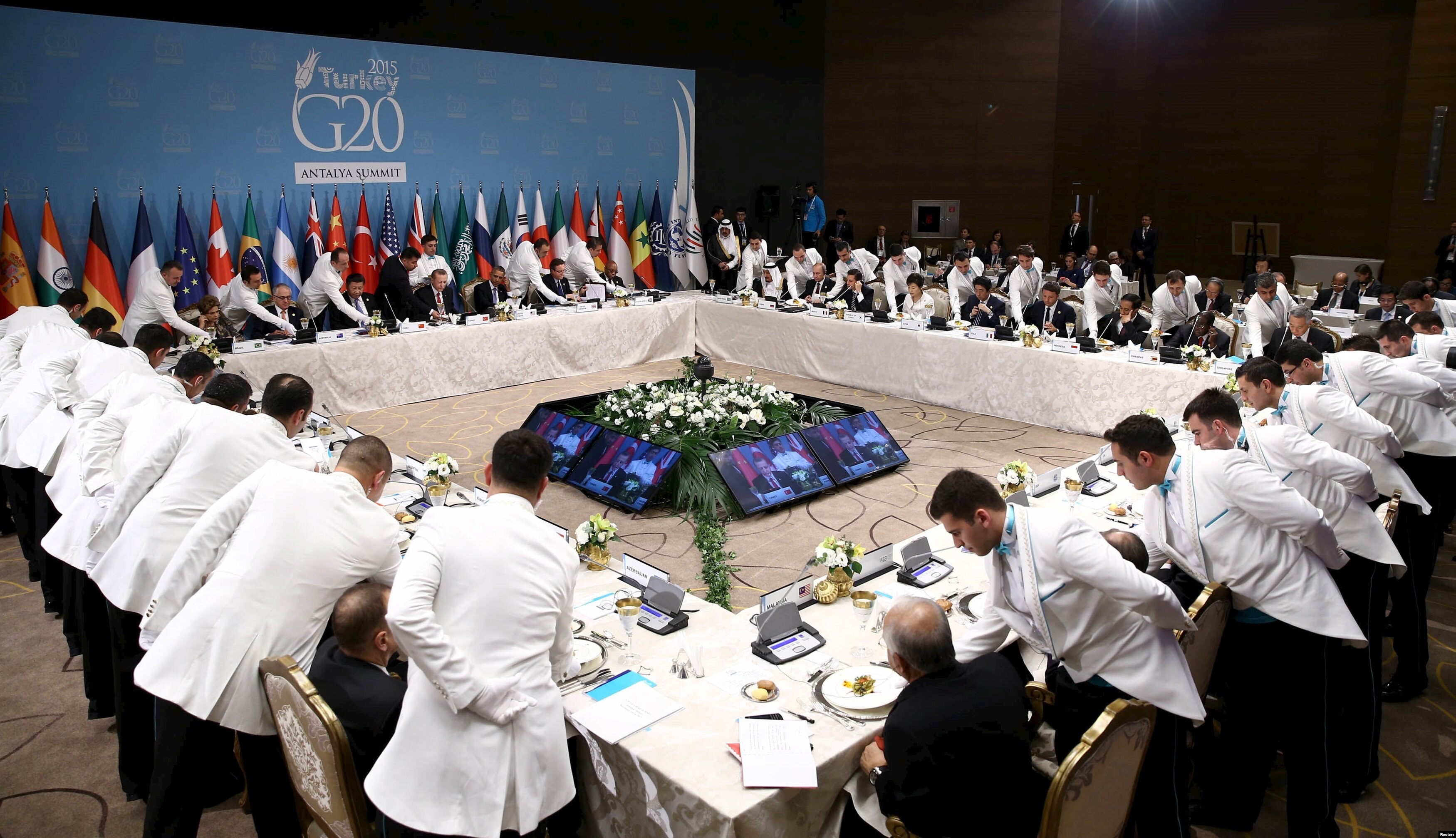
The media close to the Kremlin evaluate the participation of Russian foreign policy by Vladimir Putin in the Big Twenty summit in Turkey. The agenda of this meeting was largely revised in connection with the attacks of terrorists in Paris. Putin's brief meetings with Barack Obama and other Western leaders, during which it was not the situation in Syria, the issues of combating terrorism and the development of events in Ukraine, the parties diplomatically characterized as “constructive”. However, the tonality of messages from Moscow and the Western capitals is different.
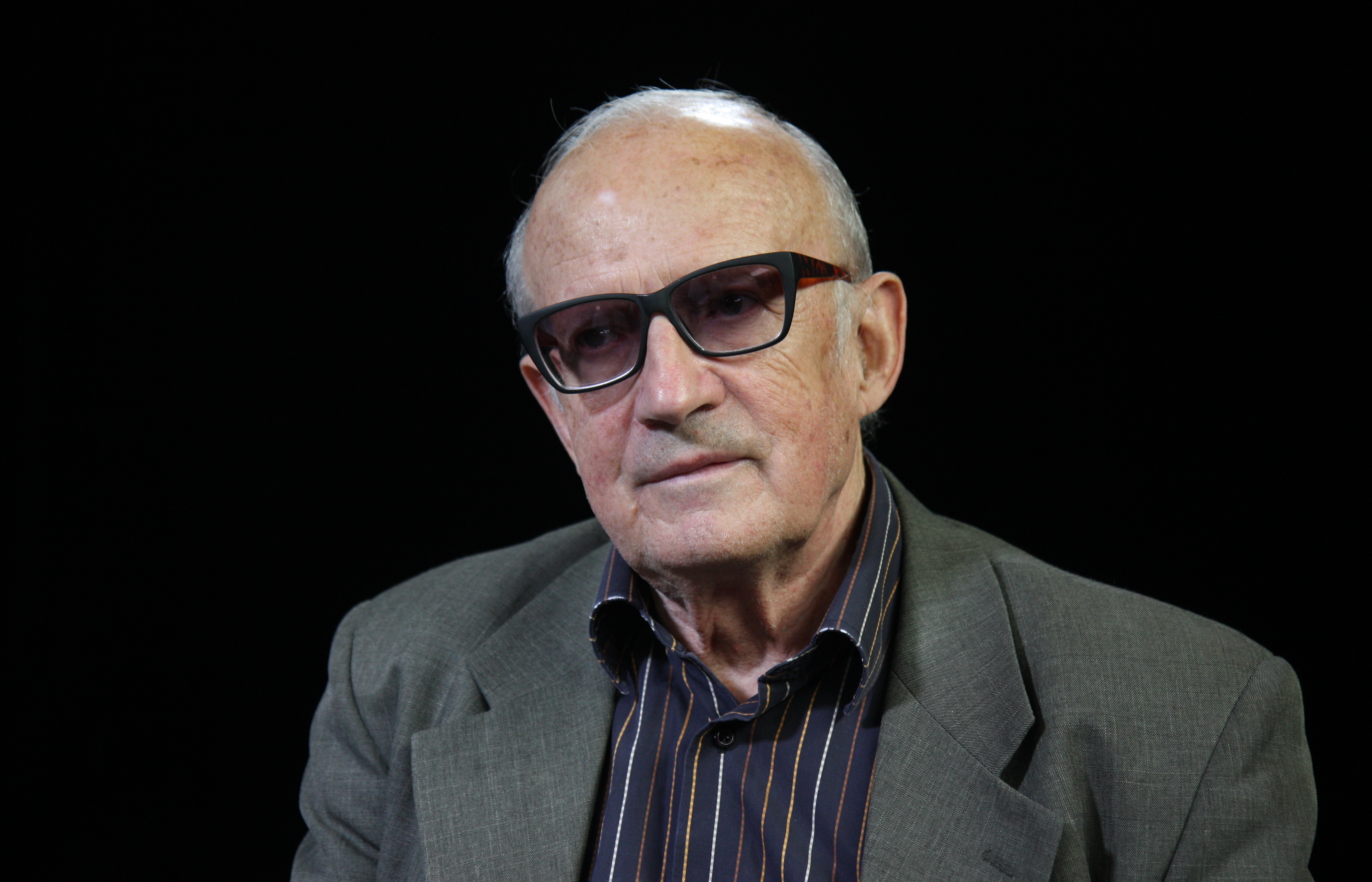
How will the attacks in Paris affect the prospects of relations between Russia and Western countries, on the course of a military operation in Syria? Will the EU and the United States soften sanctions against Russia and change their position on the issue of Russia's annexation of part of the Ukrainian territory? The Moscow Political Expert Andrei Piontkovsky answers these Radio Liberty questions:
-As Mao Zedong once remarked, "it is too early to evaluate the results of the great French revolution." It is all the more early to draw final conclusions about the Putin performance at the meeting "Big Twenty". However, the goals of the Russian delegation at this summit were completely clear. In my long political memory, I do not remember such an aggressive, even cynical propaganda-diplomatic campaign, like the one that the Kremlin unfolded immediately after the tragedy in France. On dozens of votes - from the Minister of Foreign Affairs of Sergei Lavrov to the political scientist Sergei Markov, who was faithful to the Kremlin, turned to the west with demands and calls: “We will discard all our minor disagreements, we must unite in the face of a common threat and create a“ new anti -Hitler coil. Markov: It is urgent to stop the conflict of Russia and the West because of Ukraine, to replace the "junta" in Kyiv by the technical government, since this junta is one of the main obstacles to our joint struggle against terrorists.
The desired deal about the new "Big Yalta" as a reward for Putin’s participation in the fight against the Islamic State, it seems to me, the West will not go, and Putin was made to understand this during the summit.
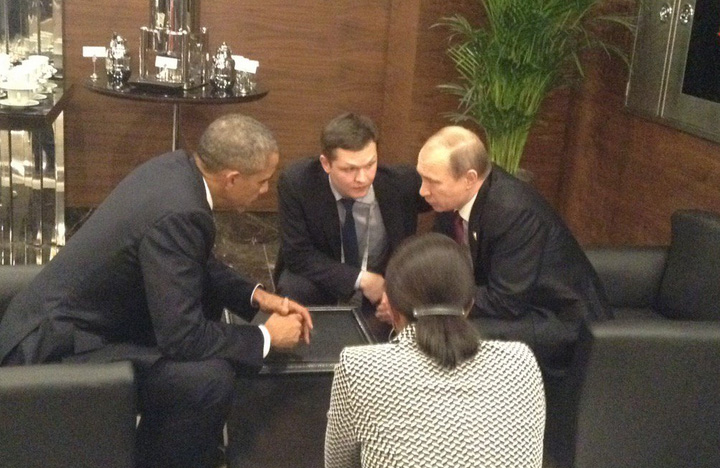
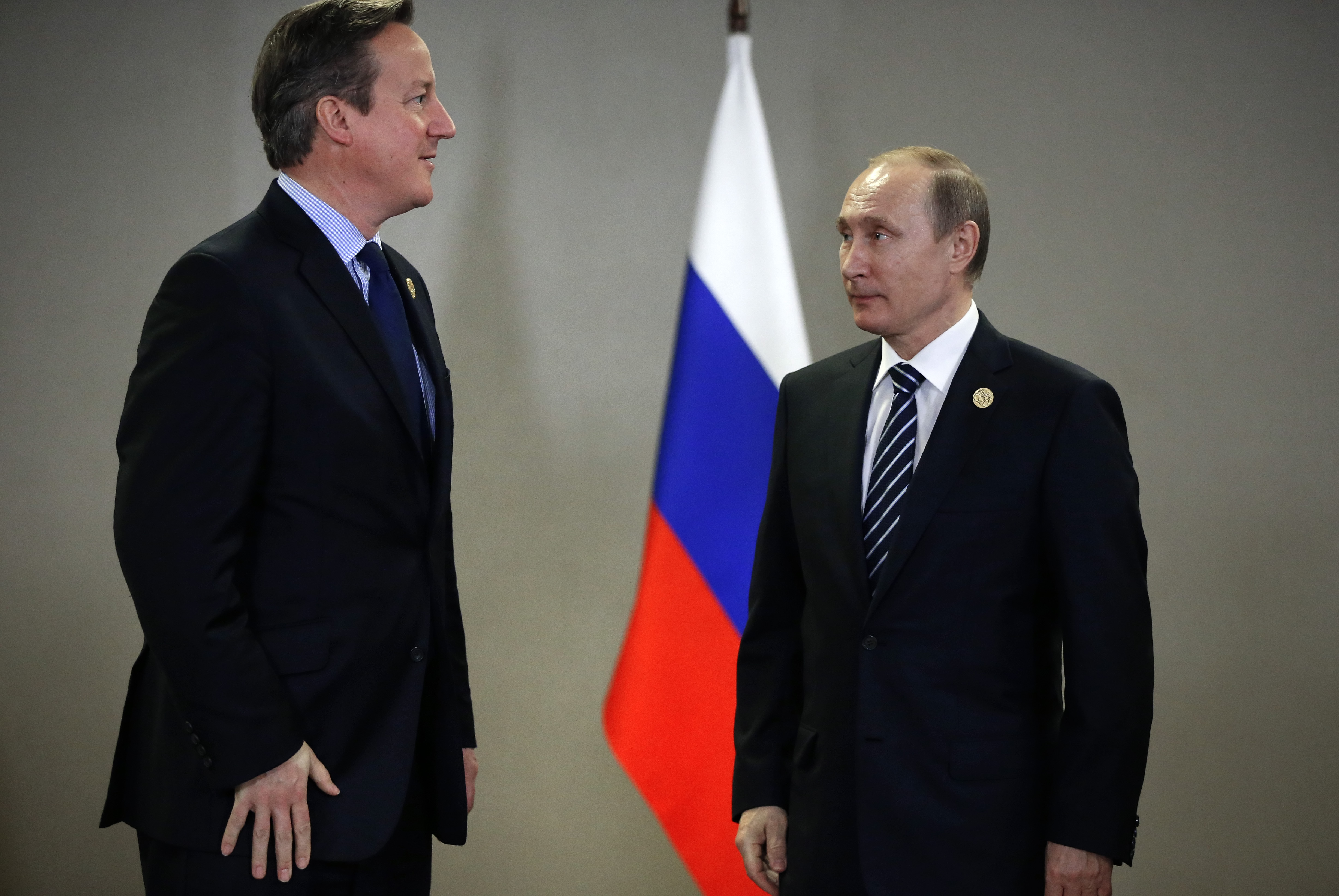
Here, in fact, Putin came with this task for the "big twenty." But the swing was too big, and Putin clearly could not cope with the realization of his goal. This can be judged at least by the dry communique of the White House , which was noted: Putin and Obama discussed Ukraine, which, by the way, was not mentioned in the press messages of the Kremlin. Putin was indicated by the need to comply with all the provisions of the Minsk Agreement. But PR-in any case, among the Russian audience, on Russian television, Putin reached a certain PR-Uspekh. It was clearly not a picture of Brisben , where the previous “Big Twenty” summit was held. It was a picture, if not the gloss of the globe, then in any case, the state leader of Russia, who was taken as a common table. Putin with great pleasure pronounced the words "David", "Barak", "Angel" to the Russian television cameras, showing that he was again "his" among Western leaders. But, perhaps, this PR serif within Russia and the achievements of a trip to Turkey are exhausted. It seems to the coveted deal about the new “Big Yalta” as a reward for Putin’s participation in the fight against the “Islamic state”, it seems to me that the West will not go, and Putin was made to be clearly understood during the summit.

-Do you think the tragedy in Paris somehow set a new way to the Euro-Atlantic community the problem of combating terrorism? With all the horror of what happened and sorrow about victims - this is not the first, although a very large terrorist sortie. Should any fundamentally new conclusions be extracted from what happened?
When solving the problem of the Islamic State, Putin and his Assad will only get confused under the west
- I'll start with an answer about the place and role of Russia in the international struggle against terrorism. No matter how much from the Kremlin they shout that “we are not the West”, that Russia has a special way, but in the eyes of those who want to destroy Western civilization, Russia is part of this decadent, godless, doomed world, and, perhaps, its most vulnerable part. Terrorism is our problem to the same extent as the problem of other countries. In this, Putin’s propaganda is a common threat, but this threat did not occur yesterday, it has been acutely on the agenda for 15 years. This is a challenge to the West from the side ... And here the issue of terminology begins. I prefer to use the term "Islamofashists" - that is, people who preach radical Islam are a small marginal part of the Islamic world. But since two billion people belong to this world, in this marginal part there may be tens of millions of people who profess the idea of destroying Western civilization. This problem will not be resolved for, perhaps, several decades.
This problem has a lot of aspects - political, propaganda, military, but I would now identify a more local problem lying on the surface, this is the problem of the so -called "Islamic state". Unlike al-Qaeda, IG is not so much a network structure as a military organization, territorially tied to a particular region. The problem of this structure is quite solved by military and political means. The West can independently solve this problem, and no Putin is needed for this. On the contrary, when solving the problem of the Islamic State, Putin and his Assad will only be confused under the feet of the West. And it seems to me that yesterday’s attack of French aviation on Rakka, the capital of the Islamic State in Syria, shows the determination of Paris not to give up, to end this terrorist education. By the way, I note that this time for some reason there was no standard statement by the Russian Foreign Ministry that the bombing of the French is illegal, since the Assad’s legitimate government is not agreed.
- So, you do not see the possibility of creating the Coalition "NATO - Russia" in solving a private problem - the fight against terrorism in Syria? If not, what are the real limits of coordination of actions (or even cooperation) of Moscow and Western allies in Syria?
- Once again, I repeat: the new "anti -Hitler coalition" is a false meme. The West could not defeat Hitler without Stalin, just as Stalin could not defeat Hitler without the West. But to cope with the "IG" West may well independently - military and political means. By the way, today's “take -off” of the “Islamic state” is the result of two political errors of the Barack Obama administration in Syria and Iraq. In Iraq, he did not even leave the symbolic contingent of American troops that would provide working military contact with the Sunni tribes in the province of Anbar , who themselves expelled with the help of Americans of the predecessors of IS. Leaving the Sunnis defenseless before the Shiite government in Baghdad, Obama contributed to the inevitable - they began to see their defenders in the radicals of the "Islamic state". The same thing in Syria: succumbing to Putin’s trick with chemical disarmament, Obama refused to support a moderate opposition. Tens of thousands of disappointed young Sunnis rushed into the ranks of more radical organizations.
- One gets the impression that the situation is in the world, and in Europe in particular, from a month to a month is becoming more and more complicated. If you count from the culmination of the Ukrainian crisis, new ones are layered on old problems: the annexation of Crimea - the war in the east of Ukraine - sanctions against Russia - a surge of hostilities in Syria - the entry of Russia into this war. Now the terrible Parisian terrorist attack is "superimposed" on the problem of a million refugees from the countries of the Middle East. What to do with it? Is there, in your opinion, the opportunity to develop a correct, flexible system of working with these unfortunate people?
The call of the Angels Merkel of the first days of the massive influx of refugees: “Come everything, we will help everyone”, as it seems to me, lies outside the rational balance
- This is a very difficult problem, and I am the least ready to give recommendations to Europe. I want to pay attention to how much bitterness and gloating on this subject is noticeable in the comments of the Prochrevsky media on this subject. I sometimes think that, probably, to the majority of the population of Russia, as well as our propaganda, such feelings as human solidarity, are simply not familiar. And when Europeans show such qualities of character, it is perceived as falsehood or conspiracy. In general, when solving the problem of refugees, it is very difficult to find the right balance. On the one hand, of course, this is wonderful - sympathy for the unfortunate. But two things are obvious, very unpleasant. Firstly, among a million refugees, of course, hundreds and thousands of ideologized Jihad fighters penetrate into Europe. The second, even more unpleasant, history is this: no longer a minority, and a significant part of Muslim emigration in Europe does not want to integrate into European life. Moreover, this community is quite aggressive and wants to impose its own rules to Europe, up to the laws of Sharia. It would be useful to look at the example of the United States, where Muslims are much more tightly integrated into American society than in Europe, where we do not observe mass aggressive behavior of Muslims.
The EU is heterogeneous in its understanding of the problem of refugees. Among its new members, Central European countries, a kind of allergy to migrants is clearly manifested, while "Old Europe" looks much more generous and merciful. In general, however, the tendency to tighten the security regime and limit migration will be traced. The call of the Angels Merkel of the first days of the massive influx of refugees: “Come all, we will help everyone”, as it seems to me, lies outside the rational balance, ”said the Moscow political expert Andrei Piontkovsky.
Fragment of the final issue of the Freedom Time program
-

Andrey Shary
I.O. Regional Director of Radio Free Europe/Radio Liberty for Russian -Sound Content
Andrey Shary on Facebook
Sharya@rferl.org