
Translated material
"State regulation" of history
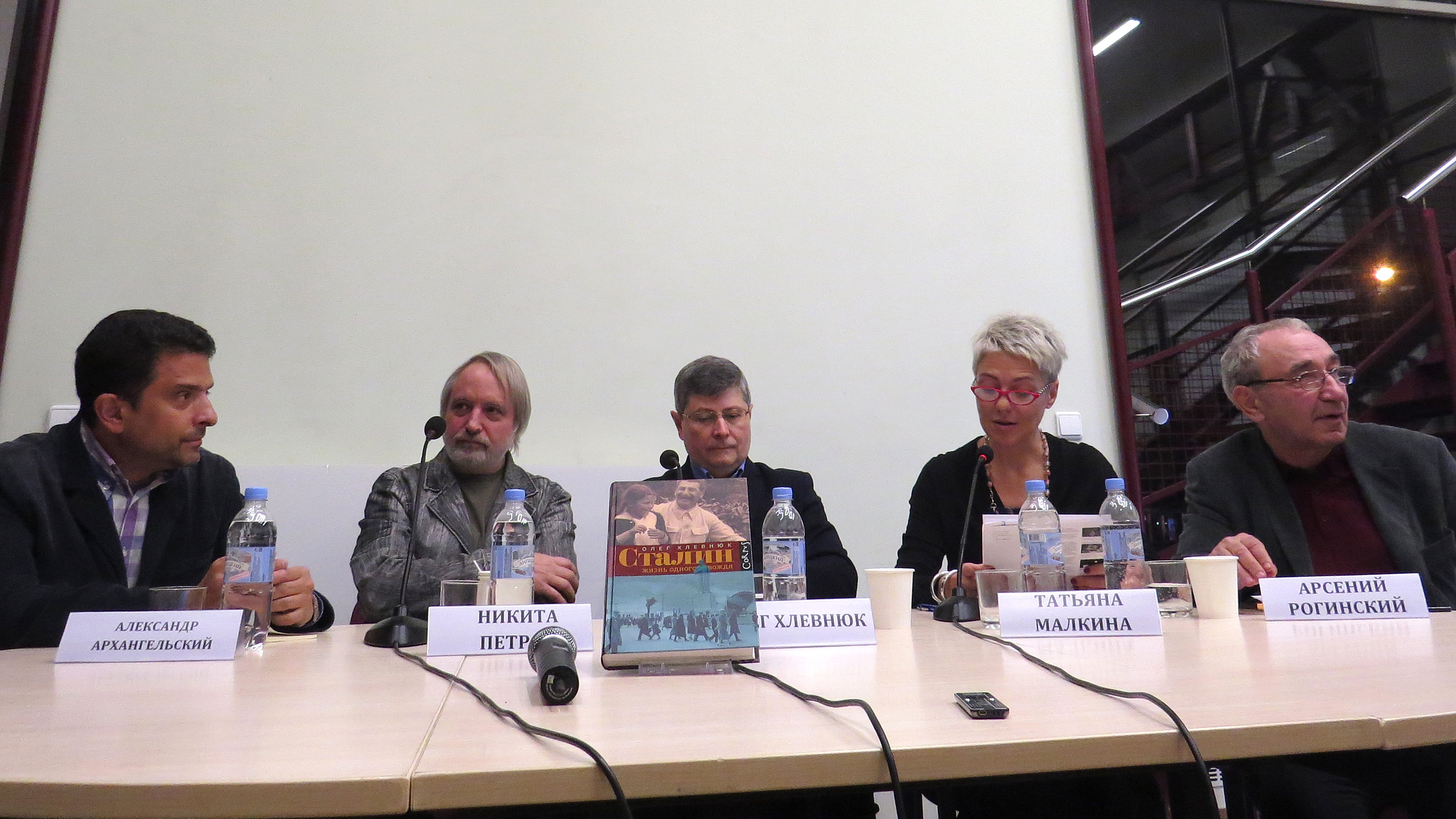
The state is trying to force historians to play according to his rules - the participants of the round table in the Memorial society believe
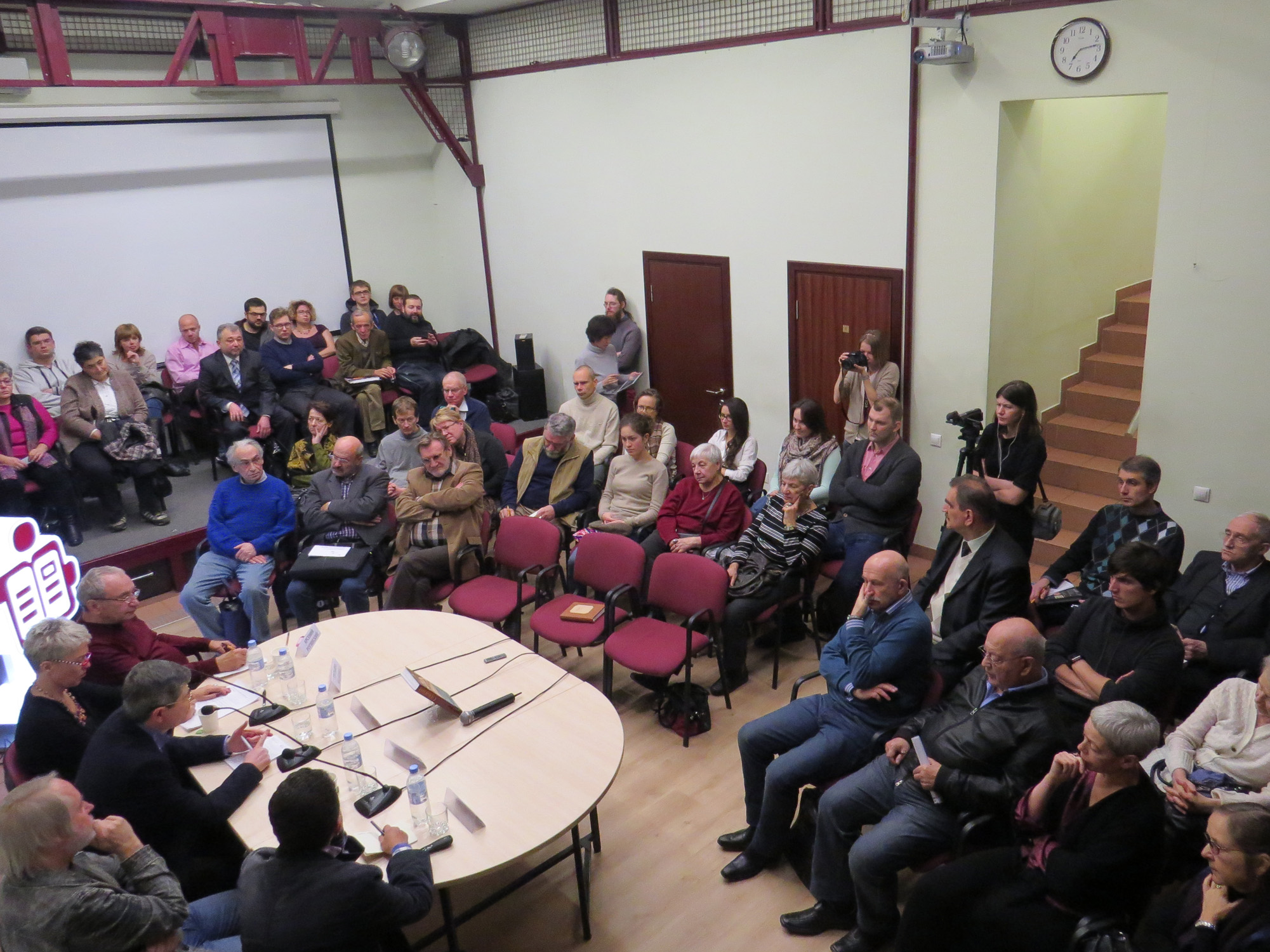
Are there any boundaries of objectivity and assessments in the social sciences? What is the civil, social and intellectual responsibility of the historian, sociologist or philosopher? These issues were asked by the participants of the round table "Truth and the expediency in historical research", held in the international "memorial" on November 13, 2015.
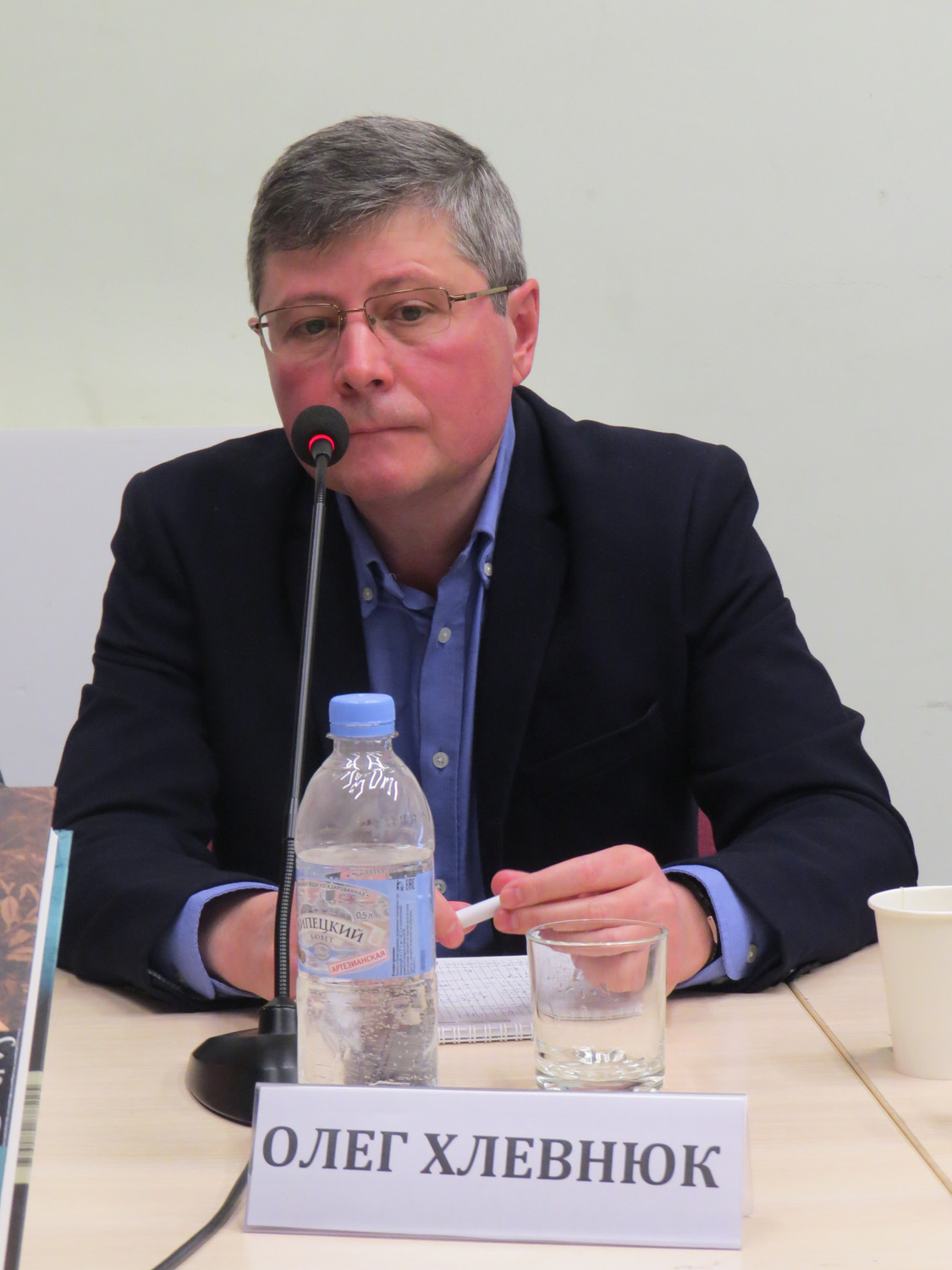
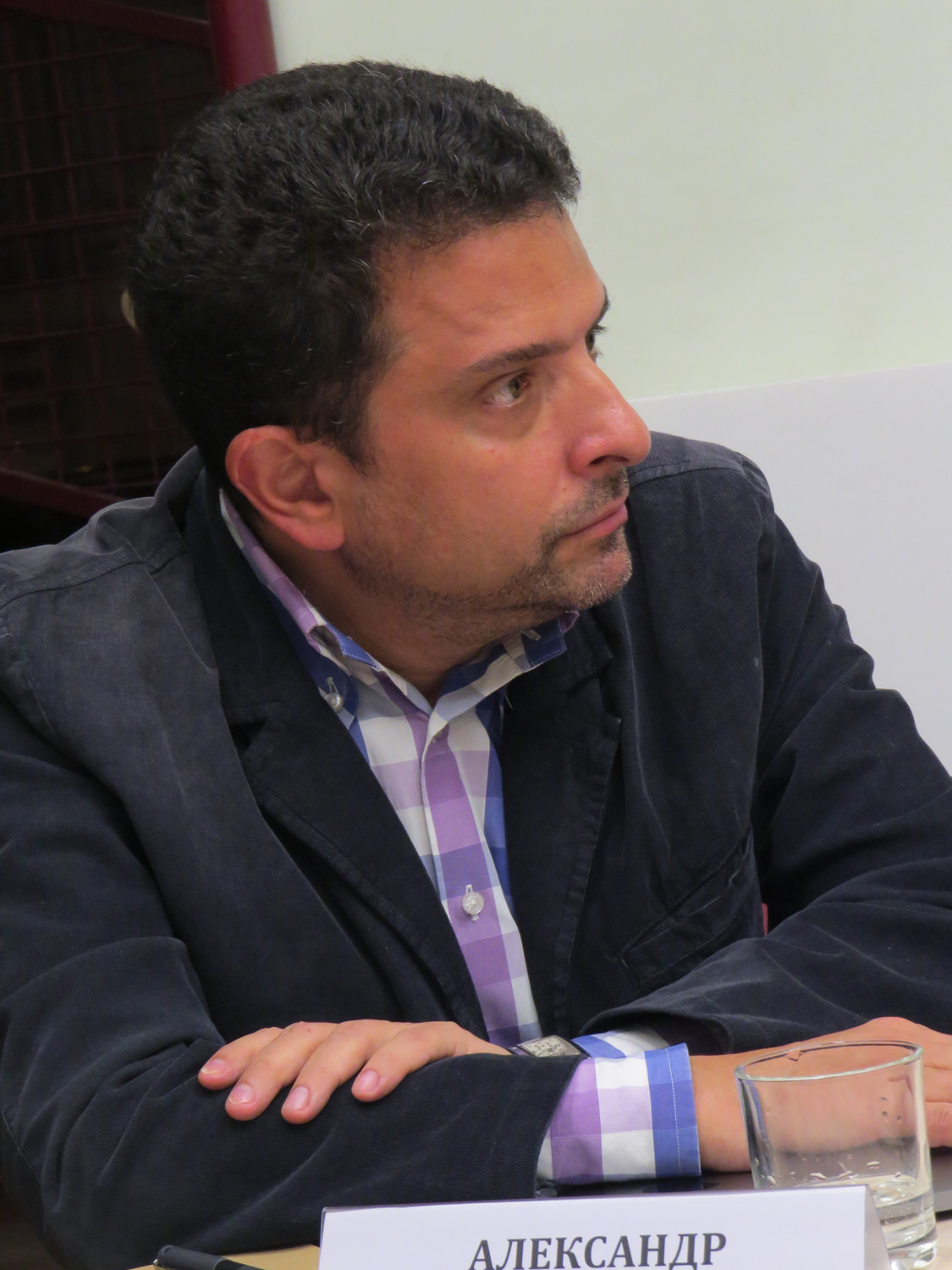
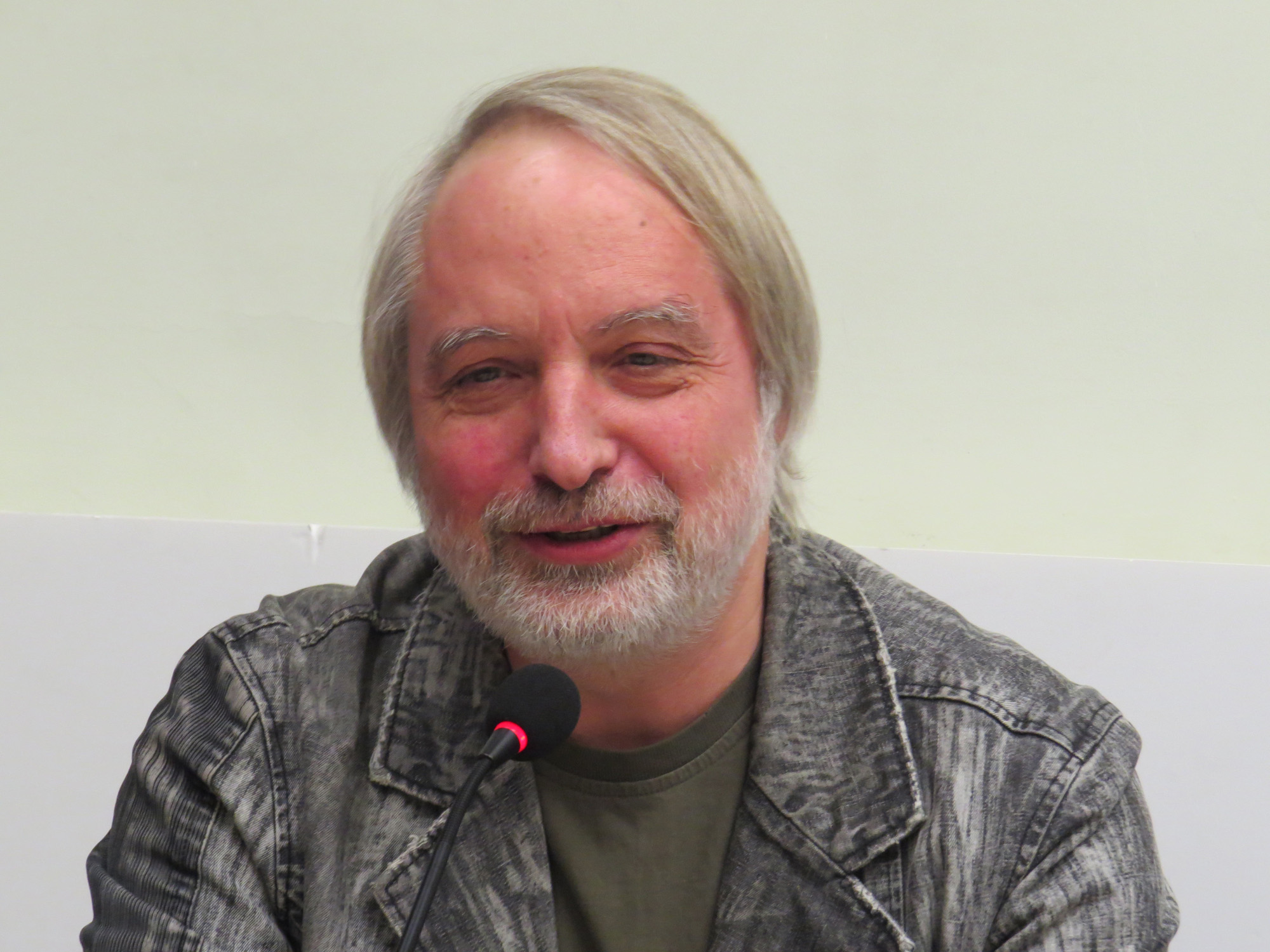
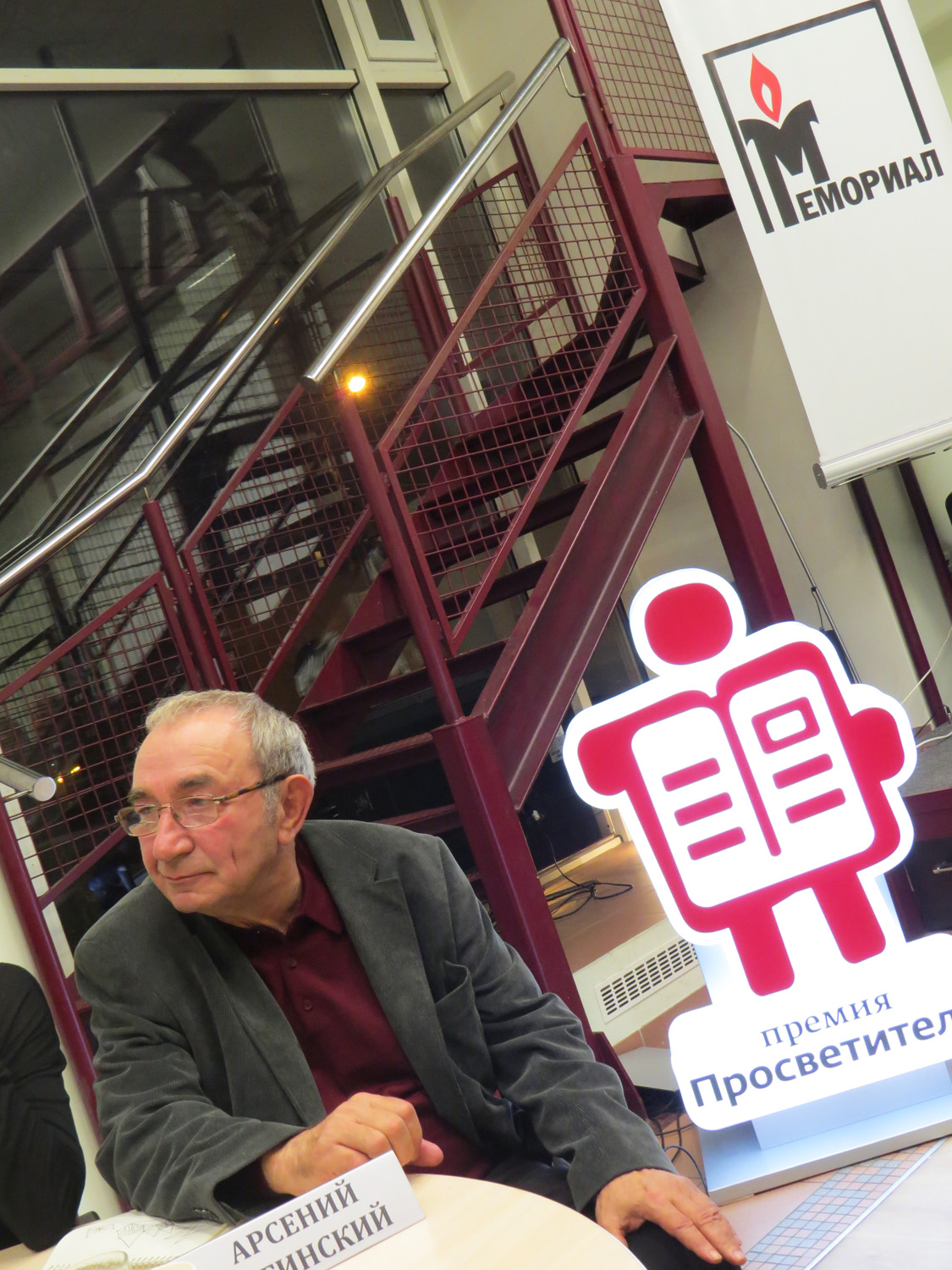
In the discussion as part of the Festival of the Enlightener Prize, established by the Dmitry Zimin Foundation "Dynasty", the writer and TV presenter Alexander Arkhangelsky , the author of the intellectual bestseller "Stalin. The Life of one Leader" Oleg Khlevnyuk , Deputy Head of the Council of the Scientific and Educational Center (NIPC) "Memorial" Nikita Petrov and Chairman of the Board of the International Memorial Arseniy Roginsky . The moderator of the discussion was journalist Tatyana Malkina .
Today in Russia a particularly acute character has acquired an eternal contradiction between mass historical ideas and professional historiography
Oleg Khlevnyuk, speaking of his study of the personality of Stalin and Soviet ideology, noted that the Internet users present two diametrically opposite claims to his book:
- The first is Prostalinskaya, and it is obvious. Since in the book I tried to show what happened during the Stalin government more or less objectively, this, of course, does not suit the leader of the leader. And the second position is extreme on the other hand. It consists in the fact that it was just a maniac who found great pleasure in the destruction of people. Any kind of explanation in relation to this person is absolutely unacceptable. Today in Russia, a particularly acute character has acquired the eternal contradiction between mass historical ideas and professional historiography. In a certain sense, the community of historians is challenged.
- What do historians do in these conditions and what should historians do? How to confront pressure on the one hand of mass historical consciousness, and on the other, those who are ready to engage in silence, falsifications, overexposures for the sake of “noble” goals or commercial interests, when the books written in the same way will be sold, but in the other - not?
- The community of historians, we, unfortunately, are weak. It is largely easily easily exposed to new trends, refuses professional positions, allows unprofessionalism, or even direct falsifications in its ranks. It refuses to speak directly to its members about where they are mistaken or cross the facets of the permissible. Moreover, we do not even have tools in order to start these mechanisms.
In addition to the fact that we destroyed the institutions of the professional community, we did not put up the institution of wide pronouncing important academic problems
Alexander Arkhangelsky pointed to deinthituanization as the cause of existing problems:
- deinthituanization, part of which is an attempt to destroy the Memorial society, has not begun today. One of the elements of this process is the destruction of the professional community. Do we have historical time in stock to restore institutions? I have no answer. In any case, you need to do your work. In addition to the fact that we destroyed the institutions of the professional community, we did not add the institution of wide pronouncing important academic problems. How can I tell you something so important and at the same time not to spray everything into complete nonsense? This is not such a simple task as it seems.
Television should also serve to “pronounce” history, although, according to Alexander Arkhangelsk, “TV is a leaving nature”, and young people need other, more modern, technical means. There should be such educational projects as, for example, the ARZAMAS Internet project, which found its move-this is packaging in a glossy shell of a serious conversation.
When the state body acts and clearly says that he wants to see in the writings of historians, and, in general, what is possible and as possible, science ceases to be science - Alexander Arkhangelsky is sure.
As Nikita Petrov draws attention, the already weak academic community is subject to pressure from the state, which imposes its utilitarian requirements for historians:
- We see a clear state order in relation to historians. When they began to formulate the idea of a single textbook of history, say that it was history that should educate patriotism in the younger generation, it became clear: it is about emasculated any scientific essence from history. When the state body acts and clearly says that he wants to see in the writings of historians, and how, in general, it is possible, but as possible, science ceases to be science.
The Russian Foreign Ministry does not accept the formulas of equal responsibility of the USSR and Hitler Germany for the outbreak of World War II, calling this "falsification of history." The 70-year rule of Soviet power has not been summed up, a legal assessment of acts committed by the state during this time was not given. The most important periods of the history of our country are not meaningful with mass consciousness, ”the expert emphasizes.
The literature has formed mass consciousness, and it is no different from the consciousness of a person who owns the fullness of information
The society is subject to the influence of myths created and preserved for the sake of a certain “expediency,” says Arseny Roginsky :
- In 1992, a special commission was formed to transfer documents of the KGB of the USSR for state storage. We [members of the Memorial] represented the working group of this commission. We were given two or three tables in the KGB, and we read an endlessly a lot, looked and wrote different regulations. All the documents with which we dealt with were not just classified - these were “special folders” for all the years. It was necessary to declassify it. And we give all this to photocopying. I am going, as the head of the working group, to Anatoly Krashushkin [Head of the registration department and archival funds of the MB - FSB - FSB of the Russian Federation]. But this is a "special folder." This is Yezhov - Stalin. Abakumov - Stalin. Beria - Stalin. Krayushkin cannot declassify only one person - Minister of Security of the Russian Federation, Viktor Barannikov. We go to the minister. He: "Give the folder." Starts to leaf through. And he says: "Come. Come. Come." What was not there! Documents about which I was completely sure that no one would declassify them. Suitcases with money that were carried by the fraternal committee. Some sabotage. Political killings. There was the most top-secret state. And he quite calmly says: "It goes." Then one puts aside. Passes to the end, returns to this and says: "Why is this?" And what was "this"? The document, which I, as a former literature teacher, simply could not help but declare. The report of Abakumov Stalin from 1947 that, in fact, it is necessary about all these bastards who hung, tortured, and so on to arrange a process in Krasnodon. And everything is ready for this process, but, unfortunately, in the course of preparation, a number of details that did not coincide at all ... with the novel "Young Guard"! But he, Abakumov, understands how to get around all this, so that there are no discrepancies. The Minister of Barannikov looks, everyone's horror calmly declassifying, on this document and says: "This is impossible." Why?! We go back with Krayushkin, go to his office, and he replies: "Inappropriate." Literature-or something else-formed a mass consciousness, and it is no different from the consciousness of a person who owns the fullness of information. Who knows how it was true. For him, it turns out to be more important than what he learned from childhood.
Nikita Petrov continued the thought of myths:
- Almost 20 years ago, a document was published that the story of 28 Panfilovites was a fiction. And now, at the moment when they began to say about it again, they are going to money and shoot the film "28 Panfilov" with these dogmas. Minister of Culture of the Russian Federation Vladimir Medinsky states that talking about the "fake" feat of the 28 guards are immoral.
Alexander Arkhangelsky, in turn, emphasizes:
- This is a "civilian religion." Medinsky is an adept of a new "civil religion". This is more than ideology, it is a secular "religion", which involves its "shrines." It does not matter at all how it really was, and it became conscious.
It is not enough to call Stalin a "bloody tyrant", this does not contribute to the understanding of history. It is necessary to contrast mythology with a calm conversation, intelligible facts, Oleg Khlevnyuk believes:
The most common Stalinist myth is that they planted only wandered officials. This myth was so tightly in our consciousness that it began to use it fashionable in a modern political struggle.
In fact, among one and a half million victims of large terror, about 40 thousand officials were planted and shot, a relatively small percentage of the total number of victims. It is necessary to talk about demographic losses in tens of millions of people, and about the then corruption, and about the extremely low standard of living under Stalin - such that it is even difficult to imagine a modern person. For example, according to the most optimistic calculations of historians for all Stalin’s rule per capita, there were 4 square meters of housing.
I would still insist that the influence of the state in post-traumatic mythologization, of course, has a certain meaning, but we better work with the myth itself. We cannot change the state policy. But we can fight the myth. And moreover, not just to fight, I consider it a professional duty of historians, but to tell how it was, how much it cost. Answer at least two of these questions.