
Translated material
Dr. Aibolit for separatists
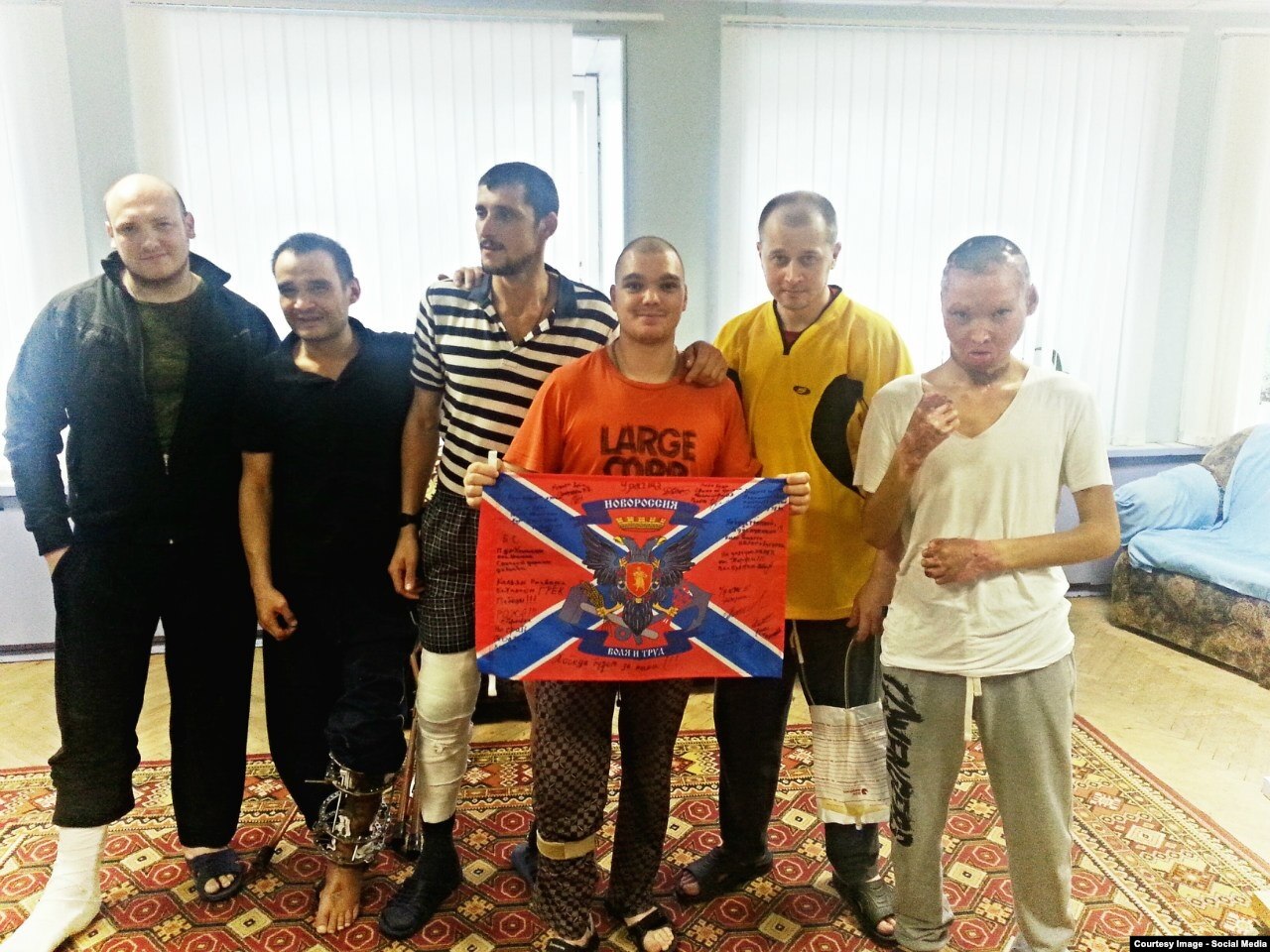
Tankers from Buryatia are treated in the hospital of the Ministry of Defense of Russia along with the "militias" from "DPR"
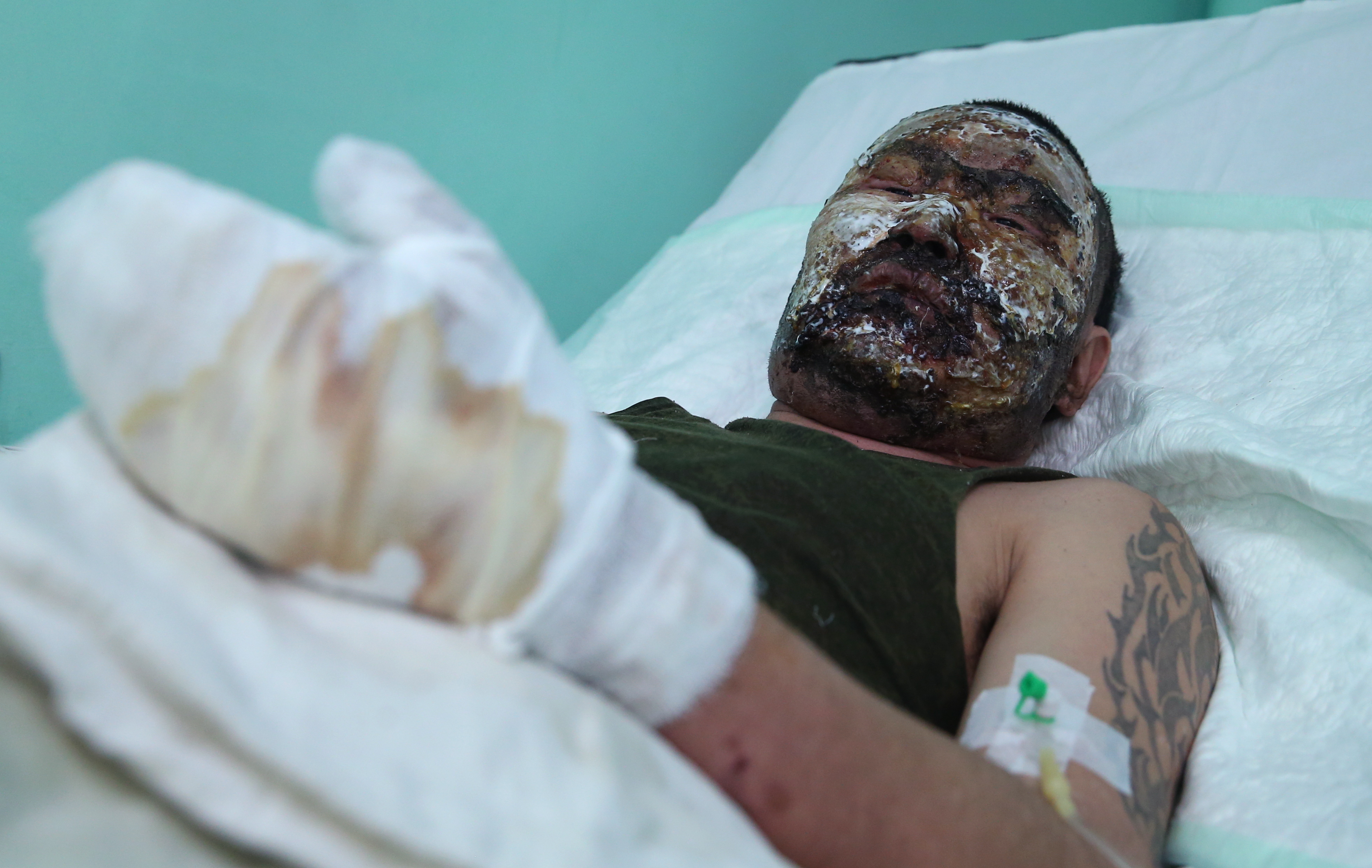
The International Group of Informnapalm volunteers found that the separatists wounded in battles against the Ukrainian army in the Donbass are provided with medical care in Russian hospitals along with the Russian military, including "legendary" tankers from Buryatia. The story of the tanker Dorzhi Batomunkuev was well remembered by the Russians after Joseph Kobzon himself visited him in the hospital in Donetsk. In an interview with Novaya Gazeta, Batomunkuev spoke about his colleague named Spartak, who also received burns during the fighting for the Ukrainian city of Debaltseve. In March 2015, activists managed to establish that we are talking about the Russian soldier Spartak Tynov. Thanks to the pictures laid out by Tyanov on Instagram, it was possible to find out that Russia provides medical care not only to its soldiers who went to the “vacation” in the Donbass, but also to Ukrainian separatists, residents of Donetsk and Lugansk regions, wounded in battles with the Ukrainian army.
The budgetary expenses of Russia for health and education in 2016 will continue to contract - this is stated in a study by experts of the Higher School of Economics, excerpts from which the Gazeta.ru publishes on Tuesday. The draft federal budget for 2016, approved by the State Duma in the first reading on November 13, provides for a reduction in medical expenses by 8% compared to 2015. The Ministry of Finance of Russia talks about the imminent deviation of the reserve fund and proposes to introduce a fee for more medical services - for example, for an ambulance call more than 4 times a year . In theory, the reductions should also relate to military medicine - military hospitals have long been included in the compulsory medical insurance system. However, in practice, it turns out that contrary to the shortage of funds, the budget allows the Russian authorities to pay from the pocket of Russian taxpayers even the treatment of Ukrainian separatists wounded in battles in the Donbass.
Now in the Russian military hospitals, those participants in the fighting that were injured in early 2015 before the “ silence regime ” are mainly treated in Russian military hospitals. However, due to the risk of returning the conflict to the “hot” stage after the firing in the last weeks of the firing in the last weeks , the flow of the wounded may grow again. Judging by the fact that the so -called "New Russia" is treated in Russia, the healthcare system of self -proclaimed Donetsk and Lugansk "people's republics" does not fully cope with this task.
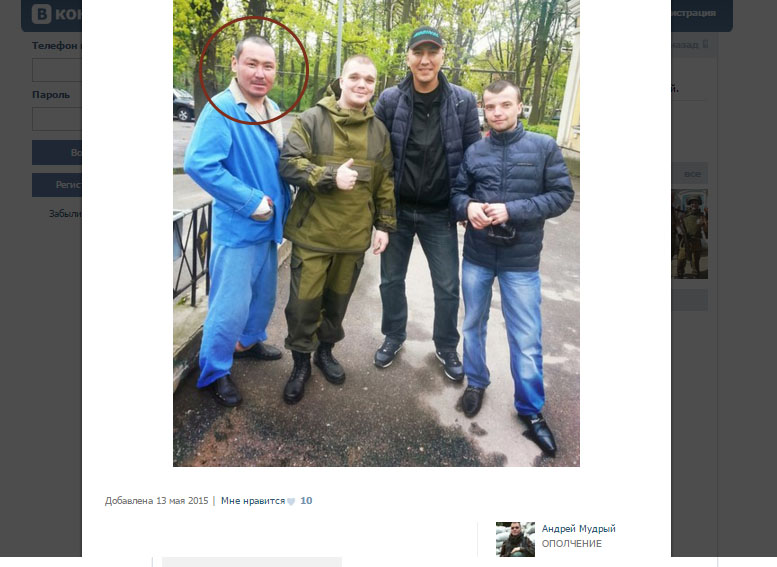
Informnapalm activists have studied publications on social networks, for example, a profile (saved copy ) on the Vkontakte network, the resident of Donetsk Andrei Mudny , who often visits the wounded comrades in the Donetsk regional trauma hospital, the same where Dorzhi Batomunkuev was treated. In the photographs of the wise in May of this year, there are Dorzhi himself and his commander Spartak Tynov, who, according to the words of Batomunkuev, Novaya Gazeta correspondent, also burned in a tank in a battle for Debaltseve, but received not so serious damage.
The traces of Spartak Tynov himself were soon found on Instagram, where he publishes photos under the nickname Radomir20100 (in the profile, however, his real name is indicated ). Photos indicate that relatively recently, in early autumn, Tynov was treated in the 442nd Military Clinical Hospital of the Russian Ministry of Defense, located in the village of Kamenka near St. Petersburg:
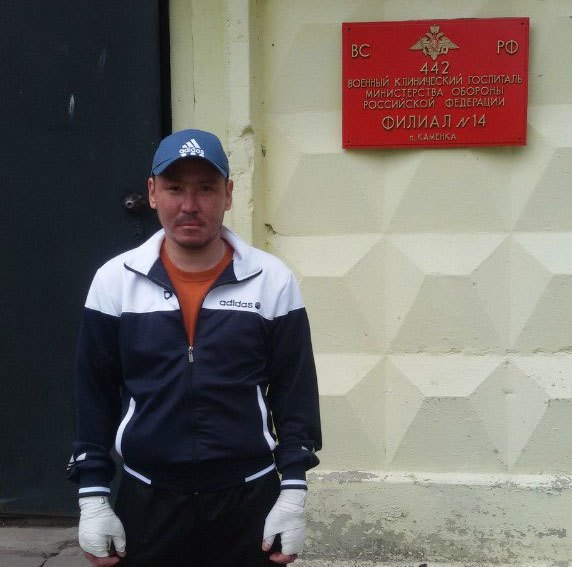
The village of Kamenka is known as the location of one of the largest military training grounds in the Leningrad region. The local military unit has repeatedly been in the center of scandals related to the cases of grandfature , from here, according to human rights activists and soldiers' mothers, conscripts were sent to fight to Ukraine, forcing to sign contracts with the Ministry of Defense - Radio Liberty told about these stories more than once. One of the few civilian objects in Kamenka is a wooden church. Against her background, Tynov himself and Andrei Wise were photographed, with whom they, apparently, became friends.
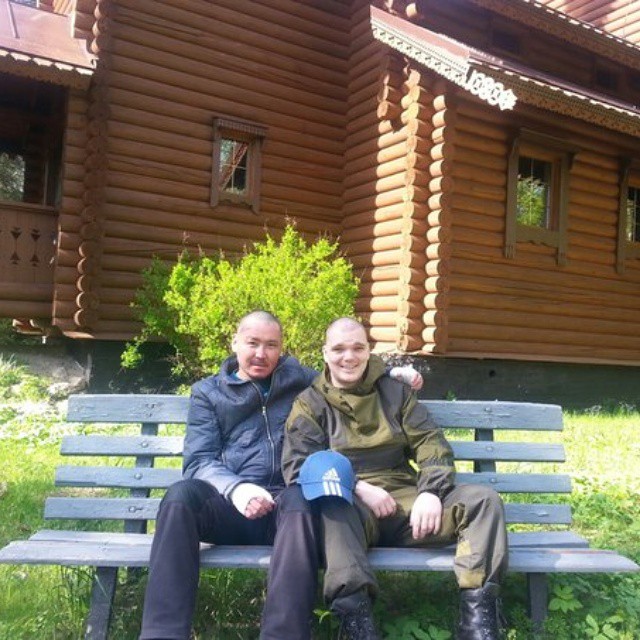
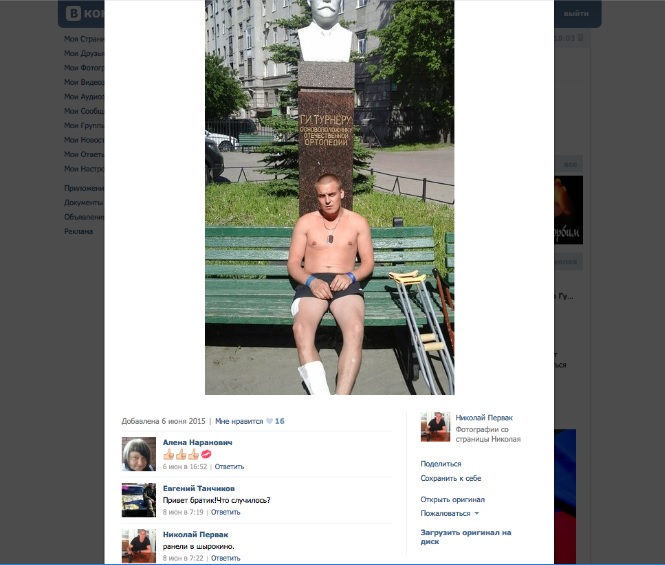
Informnapalm activists found other evidence that separatists are treated in Russian hospitals side by side with personnel Russian military. One of these examples is a resident of Mariupol, Nikolai Pervak , an active supporter of “Novo A Russia” - this is exactly the failed quasi -state education in his profile on the VKontakte network (preserved copy ) . He was wounded in a battle against the Ukrainian army in the area of the village of Shirokino in early 2015, and in the summer, as follows from photographs in his profile, he had already healed wounds in the Clinic of Military Traumatology and Orthopedics named after Henry Turner in St. Petersburg. One of the photos of Pervak was taken in the courtyard of the hospital against the background of the monument to the tourner itself:
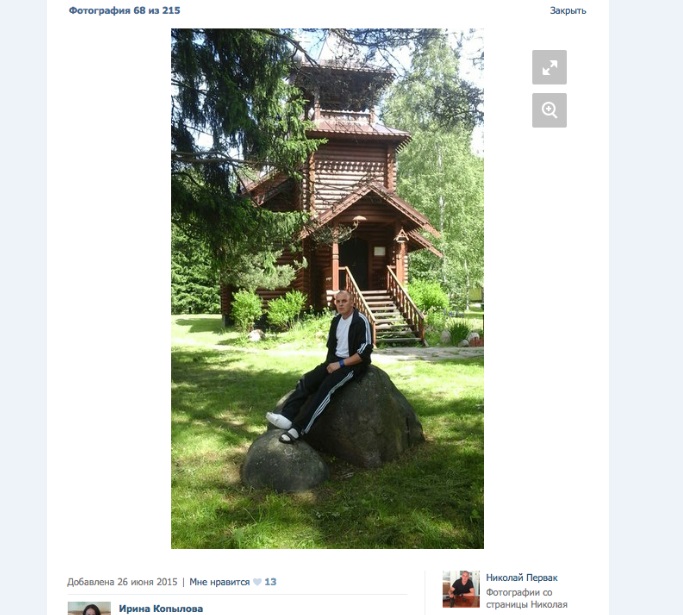
After the operation, Nikolai Pervak went to rehabilitation to Kamenka, where he took a picture against the backdrop of the same wooden church:
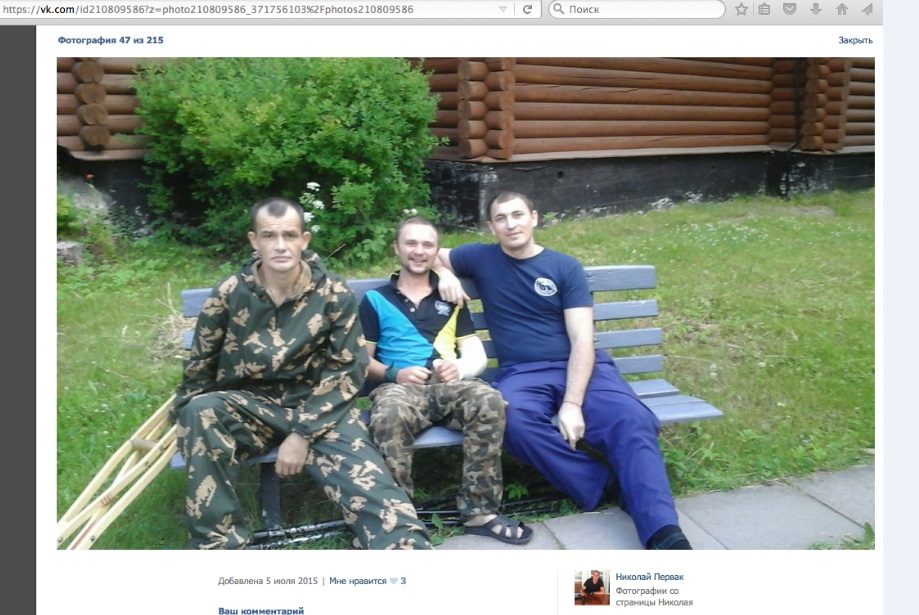
In the hospital in Kamenka, Pervak takes pictures of other "militias". They managed to establish their personalities in the photo below the Informnapalm volunteers: on the left - a resident of Chelyabinsk Makim Fedulov , in the center - Alexander Lisova from Donetsk, on the right - a resident of the city of Dokuchaevsk, Donetsk region of Ukraine, Roman Babich .
The compulsory medical insurance system includes not all medical institutions that previously received funding directly from the budget. However, if you believe the register of medical organizations serving citizens under compulsory medical insurance policies, the 442nd District Military Clinical Hospital of the Leningrad Military District in the compulsory medical insurance system is included . The Department and Clinic of Military Traumatology and Orthopedics named after Tourner are part of the Kirov Military Medical Academy of the Ministry of Defense of the Russian Federation and are directly funded from the defense budget, which in 2016 will again grow and draw up- according to the Higher School of Economics -almost 20% of all government spending. It is possible that separatists from eastern Ukraine are treated in Russian medical institutions at their own expense, although it is difficult to imagine where they got money from this: about 3-4 thousand rubles are in a hospital in a hospital in a regular Russian hospital, and the volunteers who who fought in the Donbass sometimes lack money even for the most necessary, as a result of which they are forced to ask for financial assistance on the Internet.