
Translated material
Estonia began the arrangement of the border with Russia
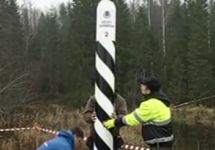
In Estonia, the first border post on the border with Russia was installed, the Estonian National Television Radio broadcast reports . He received number 2. The column with the first number will be set after ratification of the border agreement.
"Against the backdrop of not the best interstate relations with the eastern neighbor, Estonia decided to begin the arrangement of the border strip, without waiting for the ratification of the border agreement with Russia," the report said.
The head of the Ministry of Internal Affairs of Estonia, the head of the Ministry of Internal Affairs of Estonia, called this event historical. "After 95 years, a border post was again installed on the Estonian -Russian border, which symbolizes the beginning of the construction of a new border," he said.
In total, Estonia plans to install 760 border posts 210 cm high on land and 412 floating border signs in reservoirs. In infrastructure, the border of Estonia with Russia will be the most modern in the European Union, Pevour noted. Border guards will be at the disposal of tracking cameras and unmanned aerial vehicles, with the help of which they will be able to receive an image of what is happening in real time on a tablet computer.
A control strip will also be equipped, it is planned to build a fence on both sides. Its length will be 108 km with a total length of the land border of 136 km. The arrangement of the border will cost almost 80 million euros.
In September, the Latvian State Building Square said that the country intends to spend 17.5 million euros on strengthening the border in Russia , including the arrangement of the border strip, and in some places for the installation of barriers. The work is supposed to be completely completed by 2019.
On May 18, 2005, Estonian Foreign Ministers Urmas Paet and Russia Sergey Lavrov signed agreements on land and sea borders. However, the Estonian parliament included in the law on ratification of references to the Tartu Peace Treaty of 1920, which established the pre -war border between states. Russia considers the agreement to be lost. According to this document, Estonia departed land in the Leningrad and Pskov regions. After the Second World War, all these territories were returned to Russia.
In Estonia, they said that they consider the Tartu agreement to exist only in the part regarding the continuity of the Estonian state. However, the Russian side considered that the link to the contract could be in the future the reason for territorial claims in the future and withdrew its signature under the border documents .