
Translated material
Plotnitsky: Savchenko's process - political
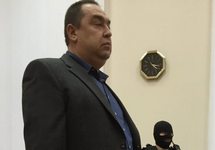
The head of the LPR Igor Plotnitsky, speaking in the Donetsk City Court of the Rostov region as a witness in the case of Nadezhda Savchenko, called the passing process political. This was reported to the "Franes" by the prisoner’s lawyer Nikolai Polozov. The political nature of the process, as the militant commander explained, is due to the fact that Savchenko is an officer of the Armed Forces of Ukraine.
Plotnitsky also stated that Savchenko did not tell him that he was a gunner. The conversation about this, according to him, came to her only with reporters who interviewed her.
The head of the LPR assured that he was talking with Savchenko as an officer with an officer and she is respect for him, as he has combat experience. He noticed that he did not put pressure on the prisoner when she refused to report information about the location of the Ukrainian troops and name the names of the commanders.
On June 23 or 25, 2014, Plotnitsky continued, he ordered the militant Sergei Moiseev (call sign) to take Savchenko to the village of Severny on the border with Russia, return the mobile phone and SIM card and release. Moiseev later reported that he had fulfilled this order, said the head of the LPR.
Plotnitsky explained his decision to release Savchenko by the fact that the militants had already accumulated a large number of prisoners, including the wounded, and there was nowhere to keep them, and also had nothing to feed and treat. They tried to give the prisoners to relatives, said the militant commander. Sumping Savchenko towards the Russian border - that is, the opposite of the one where she needed - was dictated, according to Plotnitsky, considerations of security: North was in the rear where hostilities were not conducted.
Meanwhile, Polozov recalled that the Moiseev militant himself, questioned in the process earlier, gave completely different testimonies.
“That is,” the lawyer concluded, “Plotnitsky denies his direct participation in Savchenko’s export outside Ukraine. In general, his position is such that he did nothing, he knows nothing, gave the order, and his subordinates did everything else. The only thing he personally did was talked a couple of times with her.”
The prisoner herself, listening to the statements of the head of the LPR, convicted him from a place in a lie. “The court did not respond to her comments, but she forces Plotnitsky to communicate not with the court, but with herself,” said Polozov. At the same time, according to the lawyer, Plotnitsky, answering the questions of the prosecutor, is more addressed not to the court, but to Savchenko, and the presiding judge Leonid Stepanenko does not make any comments on this score.
As of 17:30, the interrogation of Plotnitsky continued.
Earlier it became known that the collegium, which, in addition to Stepanenko, includes Ali Khaibulaev and Evgenia Chernsh, at the request of Plotnitsky decided to interrogate him in closed mode . The head of the LPR motivated his request by the fact that he is a "public person."
Savchenko objected that she did not understand what could threaten Plotnitsky. Lawyers also opposed the closure of the meeting. When the court nevertheless satisfied the petition of the head of the LPR, the defense demanded to withdraw the entire composition of the board. Savchenko’s right to defense is constantly violated, lawyers explained, and the process goes with the indictment. The challenge, however, was rejected.
In violation of the Code of Criminal Procedure, prosecutors also demanded that during the interrogation of Plotnitsky, audio recording was prohibited. They were denied this. Nevertheless, the court forbade the verbatim to retell the testimony of the witness.
At the end of October 2014, the Kiev prosecutor’s office in absentia notified Plotnitsky and Russian citizen Alexander Popov of suspicion of abduction by Savchenko and taking it into hostages. He was charged with part 3 of article 146 (illegal imprisonment or abduction of a person committed by an organized group; from 5 to 10 years of colony), part 2 of article 258 (a terrorist attack committed by a group of persons by prior conspiracy; from 7 to 12 years old) and part 332 of the Criminal Code of Ukraine (illegal transfer of persons across the state border of Ukraine, committed by an organized group; from 7 to 9 years).
As follows from the materials of the case, on June 17, 2014, Plotnitsky, who at that time was the "Minister of Defense" of the LPR, Popov and other militants attacked the Aydar fighters and captured Savchenko. The prisoner was delivered to Lugansk to the building of the regional committee and interrogated for several days, and late on the evening of June 23 under the escort was taken from Ukraine to Russia.
On the same days, the lawyer Polozov reported that his client, seeing Plotnitsky on TV, recognized him as one of the abductors. Plotnitsky led a group of persons who took Savchenko from Lugansk to transfer it to the Russian FSB officers on the Russian border, Polozov said.
Feigin announced the possibility of interrogating Plotnitsky at the trial of Savchenko back in early July . “This is a separate event giving this Kafkian process even more infernicity,” he said.