
Translated material
Metro without urns, planes without liquids
How security measures changed after terrorist attacks and disasters
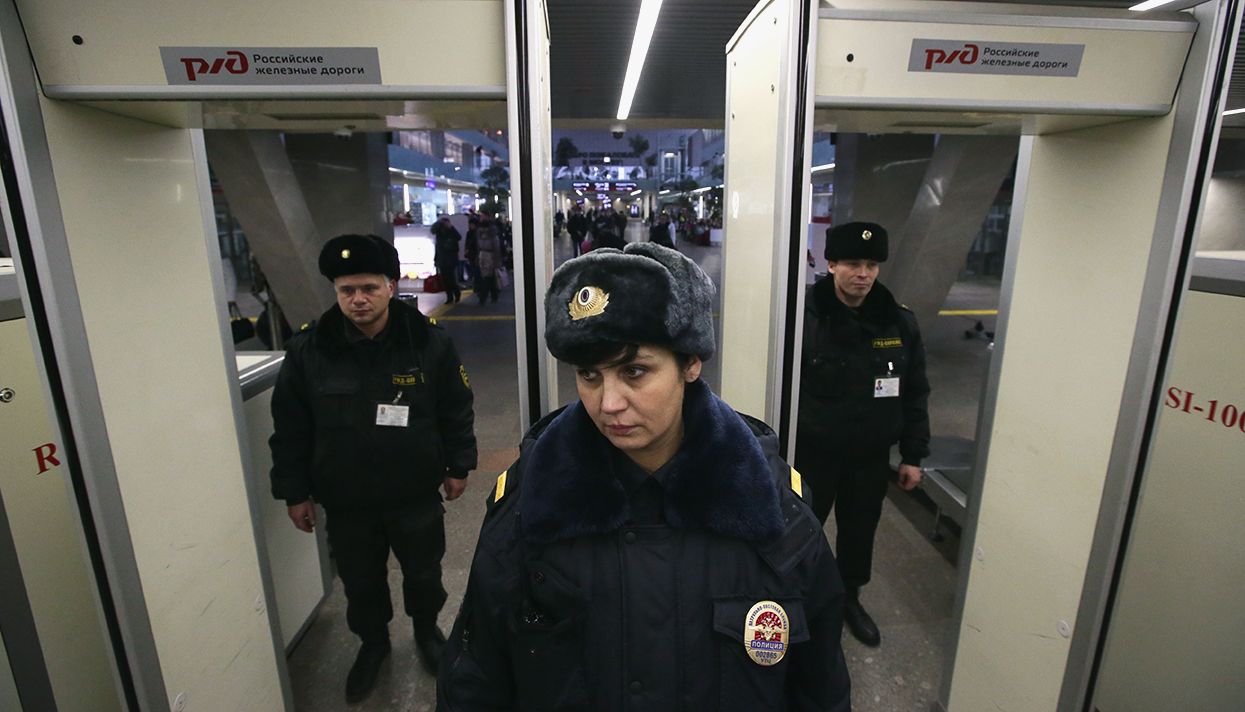
After the fall of the A321 aircraft, the Russian authorities forbade flying to Egypt; And after it turned out that it was a terrorist attack, officials began to discuss a number of prohibitions. Strengthening safety measures after large terrorist attacks and disasters is a common practice. Many anti -terrorist measures have already become so familiar that no one remembers the reasons for their appearance. At the request of Medusa, journalist Vladislav Voronin gathered the main innovations introduced after terrorist attacks.
Moscow metro without urns
On January 8, 1977, three explosions occurred in Moscow: in the metro carriage on the stage between the Izmailovskaya and Pervomaiskaya stations; Next - in a grocery store on Lubyanka. The last explosive device was laid in the garbage urn on the street on October 25 (now Nikolskaya). After that, for security purposes, all the urns were removed from the Moscow metro. Some remained only at the entrance - for used travel. The same was done at the railway stations of Scotland in response to a series of explosions on July 7, 2005 in London. Then in the subway with a difference of 50 seconds three explosions thundered.
Anti -explosive urns in London
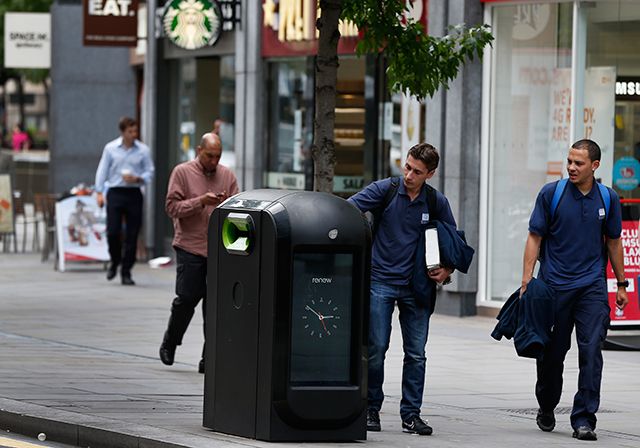
From the London metro of the urn was removed after the attacks on September 11. In 2002, new ones began to appear instead of them-made of very strong materials and able to restrain a powerful explosive wave. Conventional garbage, without technological delights, of course, have been preserved, but the holes in them began to make very narrow ones - so that only the newspaper could be thrown away.
By the 2012 Olympics, 100 new URNs were also placed on the streets of London. They are made of the material four times stronger than steel and are also able to restrain the explosive wave, the inventors from Renew Solutions noted . The cost of one such garbage is estimated at 25 thousand pounds, but all costs are beaten off using advertising. On each urn there are two multimedia screens on which you can show commercials or broadcast information about the situation in the city.
Intercoms in the porches and locks on the basements
In September 1999, four houses were blown up in Buinaksk, Moscow and Volgodonsk; 307 people were killed, more than 1,700 received various injuries. Houses in Buinaksk and Volgodonsk were blown up with trucks, and in Moscow, terrorists laid explosives in the basement and on the ground floor of houses.
The attacks caused panic among the population. People took turns going to evening and night patrols to prevent the appearance of criminals in the entrance or near the house. Then the inhabitants began to install intercoms and code locks. In order to prevent the repeat of terrorist attacks, the tenants began to independently brew the entrances to the basements and exits to the attics. This was a direct violation of fire safety rules, since the entrance to the basement and exit to the attic should be closed only to the lock. In this regard, public utilities had to install new doors to all technical premises. Officially, new rules and security laws in residential buildings were not adopted.
Flight safety: metal detectors
In September 1970, in the United States, by order of President Richard Nixon, armed federal agents, the so -called air marshals, who monitored safety on board, began to work on civil flights. This measure was due to the fact that in the late 60s and early 70s, cases of captures of aircraft with various Islamic groups were more frequent.
There were not enough employees of the air marshal service for all flights. To strengthen control in 1972, the airports began to use the simplest compact metal detectors. These devices were spied on lumberjacks: they checked whether there were pieces of metal in felled trunks that could damage expensive wood processing devices.
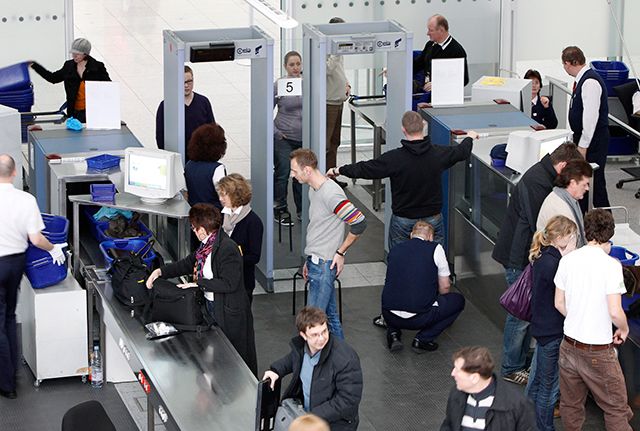
After September 11, metal detectors began to be used everywhere. Now manual metal detectors and frames are so common at stations, at airports, metro and various public events that everyone has long been accustomed to them.
Baro -chambers for baggage at airports
In December 1988, Boeing 747, flying from London to New York with 259 people on board, was blown up over the Scottish Locher. The bomb was in the cargo compartment and was associated with barometric sensors, that is, detonated when the pressure changes at high altitude. After that, it became clear that a manual inspection of suitcases and luggage transmission to protect against terrorist attacks is not enough.
By March 1989, the first vacuum barocamer was installed at Miami Airport. It creates reduced pressure corresponding to different heights, and if a similar bomb is hidden in the baggage, it will explode even inside the chamber. According to the inventors, passengers will not suffer in any way, because the walls of the baroacers are made of particularly durable materials. The cost of one camera was estimated at 770 thousand dollars, and not all airlines were ready for such expenses. As a result, only the Israeli EL Al Al became massive vacuum baroacers.
Surfacing shoes during checks at the airport
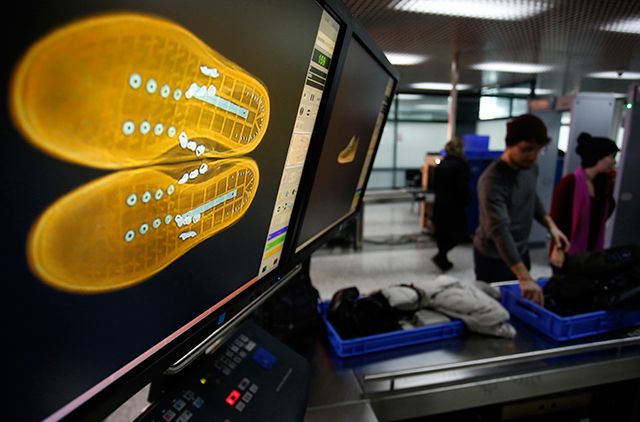
In December 2001, Briton Richard Rayd, recruited by Al-Keda, tried to blow up the aircraft of American Airlines, flying from Paris in Miami. The peculiarity of the planned terrorist attack was that the explosive device was hidden in the sole of the boot. True, the raid did not have time to bring the bomb into effect: it was neutralized in time tortured flight attendants and passengers. Soon, most airports in the world of passengers were obliged to take off their shoes for verification. In 2011-2012, the rule was facilitated, and now it is not necessary to get off with the height of the heel-less than two and a half centimeters, and the thickness of the sole is less than one.
Liquid ban in hand luggage
In August 2006, the British intelligence agencies revealed Al-Keda's plans to demolish with a difference of two and a half hours of seven aircraft flying from London to various cities of the United States and Canada. Explosives were planned to be disguised as familiar drinks, which at that time could be carried freely on board. After that, the rule was introduced that in one container there should be no more than 100 milliliters of liquid. Sometimes it is tightened - for example, in Russia before the Olympics in Sochi, a complete ban was introduced on the demon of liquids, gels, aerosols, creams, pastes, drugs and even baby food. Later it turned out that thanks to this extent, the special services managed to prevent the attack: the suicide bomber planned to use an explosive device hidden in a hand cream.
Prohibition on discharged equipment in aircraft
On July 8, 2014, the United States and Great Britain introduced special rules for aircraft arriving from Europe, Africa and the Middle East. All passengers who decided to take with them smartphones, mobile phones, laptops, tablets, players and other electronic devices are required to make sure that charging is enough to turn them on at the inspection points. Otherwise, with selective check, they will simply not be allowed onto the plane. If the passenger flies with a transplant, and the battery of the village after the first inspection, it may still not be allowed to the docking flight. There is only one way out - either throw out a technique or look for a socket. Such security measures were taken due to the threat of terrorist attacks using a new type of explosives. According to special services, people who returned to Europe from Iraq and Syria could be responsible for organizing such explosions.
Pilot safety: double doors to the cabin
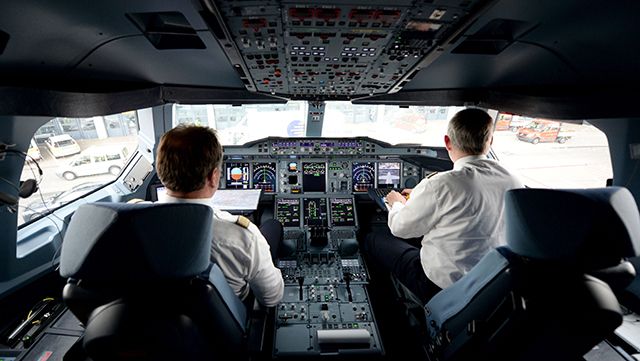
After the attacks on September 11, when the terrorists stole four aircraft and killed more than 2,900 people, the air carriers thought about protecting the cockpit. In order to avoid the appearance of outsiders there, double entrance doors were installed - to open them, special codes are required, which are known only to crew members. In addition, the second door can be open only after the first slammed slammed, and the pilots identified a person trying to go into the cab. If the pilots do not recognize this person, they can press a special button, and it will instantly block the door - the code will not help.
The rule of two people in the cabin
When developing options for protecting the cockpit of pilots, no one could assume that pilots are also able to specifically destroy the plane. This is exactly what happened in March 2015, when the second pilot of the germanwings low -cost airline Andreas Lyubits was left alone in the cockpit, locked the door and directed the Airbus A320 down. The commander, who went to the toilet, tried to open the door for another 8 minutes, but Lyubov did not react in any way. As a result of the disaster, 150 people died.
Some large airlines - Lufthansa, Air Berlin, Air France, Air Canada, Easyjet - immediately introduced the rule “Two people in the cab”. This means that if one of the pilots needs to leave the cabin, then a shift crew (on long flights), or a flight attendant, should take its place. In Russia, such rules were valid before the Germanwings disaster.
Missile defense systems on Israeli liners
In 2002, in Kenya, an attempt was made to bring down the plane of the Israeli ARKIA ARKIA using the Earth-ATO-AVOCHARTART MOUNTAING missiles. After that, the largest defense enterprises of Israel began to develop a passenger protection system from such attacks.
The first successful tests were held in 2004, and after another two years, the Flight Guard system was installed on some aircraft of the EL Al AL. The principle of operation is the same as in combat aircraft: the protective complex reacts to the launch of the rocket, then shoots special “thermal traps”, and they are shot down from the course of the missiles system that focus on heat sources. True, El Al cannot install Flight Guard on all planes, because some European countries have banned the use of this protective complex in their airspace.
Vladislav Voronin
Moscow