
Translated material
For an unkind memory
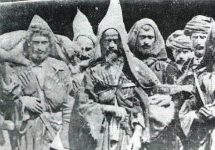
Activists of the Circassian national organizations criticize the installation of a monument to Alexander II in Sochi, the Caucasian Knot reports . This emperor is noted by social activists, guilty of the Circassians and Ubykhs genocide.
"The Adyghe community opens against the installation of such a monument in the territory where the blood of thousands of ancestors spilled," said Majid Chachukh, chairman of the Hase (public parliament) of the HASE (public parliament). He reproached the city authorities that the decision to open the bust of the emperor was not consistent with the indigenous people of the region.
“Probably, the monument could be erected,” the chachukh resented. “After all, this is a historical person who has done a lot for Russia. But we cannot forget about our dead ancestors. We cannot ignore us, as if our people are not at all.”
The Hase of the Black Sea Adygs-Svapsugs will discuss the current problem, the social activist added. At the same time, he assured that "the organization will not take any protest."
Arambius Hapai, the former head of Adyge Hase (Circassian parliament), operating in Adygea, spoke more sharply. "Establish a monument to the king in St. Petersburg - but not in Sochi, in the place where the blood of our ancestors spilled," he said. Alexander II, Khapai added, "practically destroyed the whole nation." “He gave the order to clean the Caucasus, and for two and a half years he was cleared of us, Cherkesov,” said the social activist. “My family, who lived in the territory of the current Adygea, was almost completely destroyed.”
Hapai also noticed that "the defenders of the Caucasus, Circassia there is not a single monument in the entire Caucasus."
In turn, the leader of Adyghe Hase Krasnodar Territory, Asker Sokht, responded to the installation of the monument: "We have people in society who sow interethnic discord. At the same time, they give their actions as a manifestation of patriotism."
At the same time, Sokht said that it would be correct to "leave these people alone and not succumb to provocations." “There will be no protests, there will be no rallies that they expect from us,” the social activist assured. “We plan to release an appeal from the organization in which we sharply condemn the actions of the authorities to install the monument.”
The monument to Alexander II opens on Saturday, on the City Day, on the Kiparisova alley at the Maritime Station. The installation of a bust is one of the events of the large -scale project "Alley of Russian Glory" , implemented by sculptor Mikhail Serdyukov. “The main merit of Alexander II is that he ended a long, bloody Caucasian war and began the economic development of the Caucasus,” Serdyukov told the “Caucasian knot.” “We think that the place is in Sochi in this monument.”
The funds for the installation of the monument were allocated by a Russian legal university, which this year opened his branch in Sochi.
Circassians and Adygs, as well as the Kabardians, are one people. Sochi was built on their original lands. In the 19th century, after the end of the Caucasian War, hundreds of thousands of Circassians sailed to the Ottoman Empire; Many died on the way. Adyghe activists seek the recognition of the Circassian genocide by the Russian authorities. In 2011, the Georgian parliament recognized the actions of the Russian Empire in relation to the Circassians by genocide.
In the KBAAD tract (modern Krasnaya Polyana) in 1864 the last Adyghe detachment surrendered to Russians. With its surrender, the Caucasian war ended. Later, during the construction of Olympic objects, the ancient Circassians cemeteries were destroyed in Krasnaya Polyana.
All this led to a sharply negative attitude of Adyghe intellectuals and social activists to the 2014 Olympics in Sochi. On February 7, 2014, on the opening day of the games, a protest against the Olympics was held in Nalchik . Demonstrators were detained. Representatives of the Circassian diasporas in Israel, Jordan and Syria, as well as the Adygs living in London and Berlin, also made protests.
The losses related to Circassians evicted to the Ottoman Empire with all the people and over 100 years completely dissolved in the Turkish ethnic group. The last native speaker of the Ubykh language, Tevfik Esench, died in 1992 at the age of 88.