
Translated material
Sanctions against Russia will be extended for another six months
Leading European countries and the United States agreed to extend economic sanctions against Russia for six months, until July 2016, Reuters reports citing a European diplomat. The confidential agreement was reached during the meeting on the sidelines of the G20 summit in Turkish Antalya.
The meeting was attended by the Federal Chancellor of Angela Merkel, US President Barack Obama, British Prime Minister David Cameron, the head of the Italian Government Matteo Renzi and the head of the French Foreign Ministry Laurent Fabius, representing President Francois Olland. According to the diplomat, the leaders came to the conclusion that the extension of sanctions, in particular, is important to maintain pressure on Russia before the planned elections in the Donbass. “We have a chance to get what we want only if we play a map of sanctions. Economic sanctions should remain in force to the end,” the agency’s source emphasized.
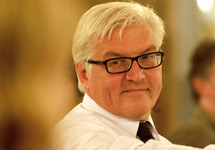
Sanctions against Russia can be lifted if Moscow will cooperate with the West in resolving the conflict in Ukraine and on the Syrian issue. This was stated by German Foreign Minister Frank-Walter Steinmeier in an interview with the German newspaper in an interview with the newspaper Bild Am Sonntag, German Wave reports .
“If in resolving the Ukrainian conflict we will continue to successfully overcome obstacles and if Russia in the Syrian conflict and further, as until now, will work with us to work on a decision, then the West will not and will not be able to exclude long -term interest from the discussion between the leading Western powers,” the minister said. When fulfilling these conditions, he also did not exclude the possibility of Russia's return to the G8.
On November 9, Handelsblatt German newspaper reported that the decision to extend sanctions will be made in December at the EU summit . “There are no reasons for lifting sanctions,” said one of the interlocutors of the publication. According to him, sanctions can be weakened only if the Minsk agreements are fully implemented, as well as after the placement of international observers on the Russian-Ukrainian border. According to sources, German Chancellor Angela Merkel firmly supports the extension of sanctions.
On Thursday, The Wall Street Journal reported that the EU did not want to "at the cost of Ukraine" to receive Moscow help in the fight against the Islamic State. According to the publication, three possible options for continuing the sanctions policy are considered: extension of restrictive measures for six months, a year or for only three to four months. A reduction in the deadline will be possible only if a real change in Moscow’s position on the Ukrainian issue.
The sectoral sanctions of the European Union, adopted due to aggression of Russia in Ukraine, came into force on August 1, 2014 . They were introduced for a period of 1 year. Restrictive measures affected the banking and oil sector, the defense and industrial complex, dual-use products and technology. In particular, a ban on the supply of equipment for the oil industry, on technological cooperation with Russia in the development of Arctic shelf and shale deposits was introduced. The EU also introduced the embargo for weapons with Russia and the export of dual -purpose technologies.
In September 2014, the European Union strengthened sanctions against Russia . The sanctions list included new companies, and the period for which it is allowed to attract credit funds was reduced from 90 to 30 days. In June, foreign ministers of countries - members of the European Union extended the effect of sanctions against Russia for six months, until January 31, 2016.