
Translated material
Oil reaction
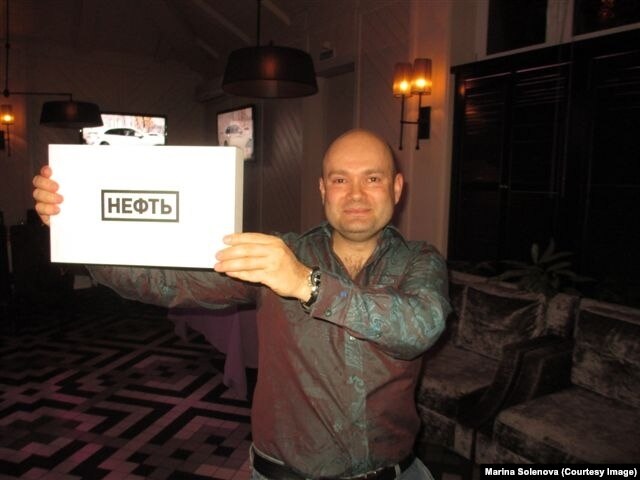
From scoop to scoop: History of the oil industry of Russia of the last decades on the example of one career
After an interview with a former employee of TNK-BR, Ilya Zaslavsky, who told the RS, how a group of Russian shareholders of the company survived in 2008 of Western managers led by Robert Dudley, the editorial office received a letter from a former colleague of Zaslavsky, who did not agree with his position. Karen Payrazyan, today the CEO of the Canadian company Irati Energy, worked in TNK-BP 8 years-from 2005 to 2013. Before that he worked in Yukos, after - in Rosneft. The conversation with Radio Liberty about a long -standing corporate conflict resulted in a story about how the oil industry survived the short market period and returned to the state -owned regulatory of the Soviet model.
- I graduated from the Russian State University of Oil and Gasov named after Gubkin, after that I received the PhD in France, and from there I left for America, worked for 5 years in Chevron. In Russia, in the early 2000s, a wave of rise in terms of the development of the oil industry began, many people who worked or studied abroad returned or wanted to return. In Russia, they offered a good salary, and in general there was an interest to return to the country of our specialists who have already worked there and gained experience in business development, foreign technologies. In the oil industry, then there was a very healthy atmosphere, and in Russia too, it was a different country. There were from 10 to 20 good oil companies, Sibneft, Yukos, Slavneft, Sidanko, TNC ... There was competition, companies developed, rival among themselves - for technology, for personnel. The vector of the development of the oil and gas industry was then correct, and our experts returned to Russia with joy, in anticipation of a new era of great changes and enormous opportunities.
In 2003, I was offered a position in Yukos, I accepted it with great enthusiasm, went for an interview with Khodorkovsky. Yukos transported a lot of our experts from abroad, and indeed he paid a lot of attention to personnel. We created there a program with the University of Heriot Watt on the basis of the Tomsk Polytechnic Institute, where we prepared personnel for ourselves. I led the scientific and technical center in the Yukos: we took from the institutes of young children-engineers, physicists, mathematicians, sent them to study at Heriot Watt, where they received an oil education for a year, and then finished off in our center in Yukos. We directed this stream of young specialists to the regions, these were our messengers, their main task was to introduce a new mentality, new narrow -minded technologies in old, ossified Soviet enterprises. We called them the bright side.
Then the spirit was completely different - the spirit of powerful development, the spirit of innovation and creativity, we did such things that no one did in Russia before - in terms of technology, personnel, ways to develop business, methods of development of deposits. We tried to combine Russian specifics with more advanced Western technologies.
We invited many foreign consultants, but not all in a row, but those who could teach something to our youth. These were engineers, high -level techies, authors of monographs in various fields, people with names. Of course, they were paid good money, but it was worth it - the company adopted the Western mentality, became more open, more successful.
- And then there was a defeat of Yukos ...
It was a huge shock for everyone. No one believed that they could do this with the most successful oil company in Russia
- It was a huge shock for everyone. No one believed that they could do this with the most successful oil company in Russia, with one of the largest taxpayers, we were sure that they would agree. I remember how in January 2005 we stood in the lobby of our building on Dubininskaya, there were news on the screens, in which from Yuganskneftegaz, our key enterprise in Nefteyugansk, removed the Yukos logo, and it fell, crashed on the ground, like a fascist flag from the Reichstag in the Chinese of the Second World War. Everyone cried then - men, women.
-When you moved to TNK-BP, was there already a future conflict?
-After Yukos, TNK-BP, undoubtedly, was the number one company for me. At first, as in Yukos, it was possible to combine Western technologies and mentality with the traditions of the Russian oil industry.
- What traditions?
- traditions related to approaches to developing subsoil, traditions in terms of scientific solutions. It is impossible to take some systems completely to Western technologies, we must take into account our specifics. Our experts, especially in the field, have gained vast experience. They may not take into account some ultramodern approaches to the development of deposits, but they know what brand should be used for sustainable drilling at a temperature of -50 ° C, what seismic exploration regime in the permophrost zones (permafrost), how it is necessary to design and build ground -based infrastructure, taking into account local features and so on. Here you need to observe a thin balance, improving existing developments using modern technologies. But also you need to respect the work of people who have produced oil for 20 years in Siberia. In Yukos, we managed to observe this balance.
-And in TNK-BP, it turns out, no?
People came absolutely unprepared, they did not know anything about Russian specifics
-When I came to TNK-BP, I first worked for two years on the Kovyktinsky project. I noticed that the majority are not successful of those expansion that BP sends us to us. People came absolutely unprepared, they did not know anything about the Russian specifics, about our oil and gas industry, about the deposits where they went to work. They were not familiar with our cultural traditions, did not understand how to interact with the Russians, how to position themselves in order to earn respect. This was turned by a disaster. Nine out of ten expans did not bring the value that they expected from them. Managers came who did nothing with their own hands for a long time, they could not bring something new.
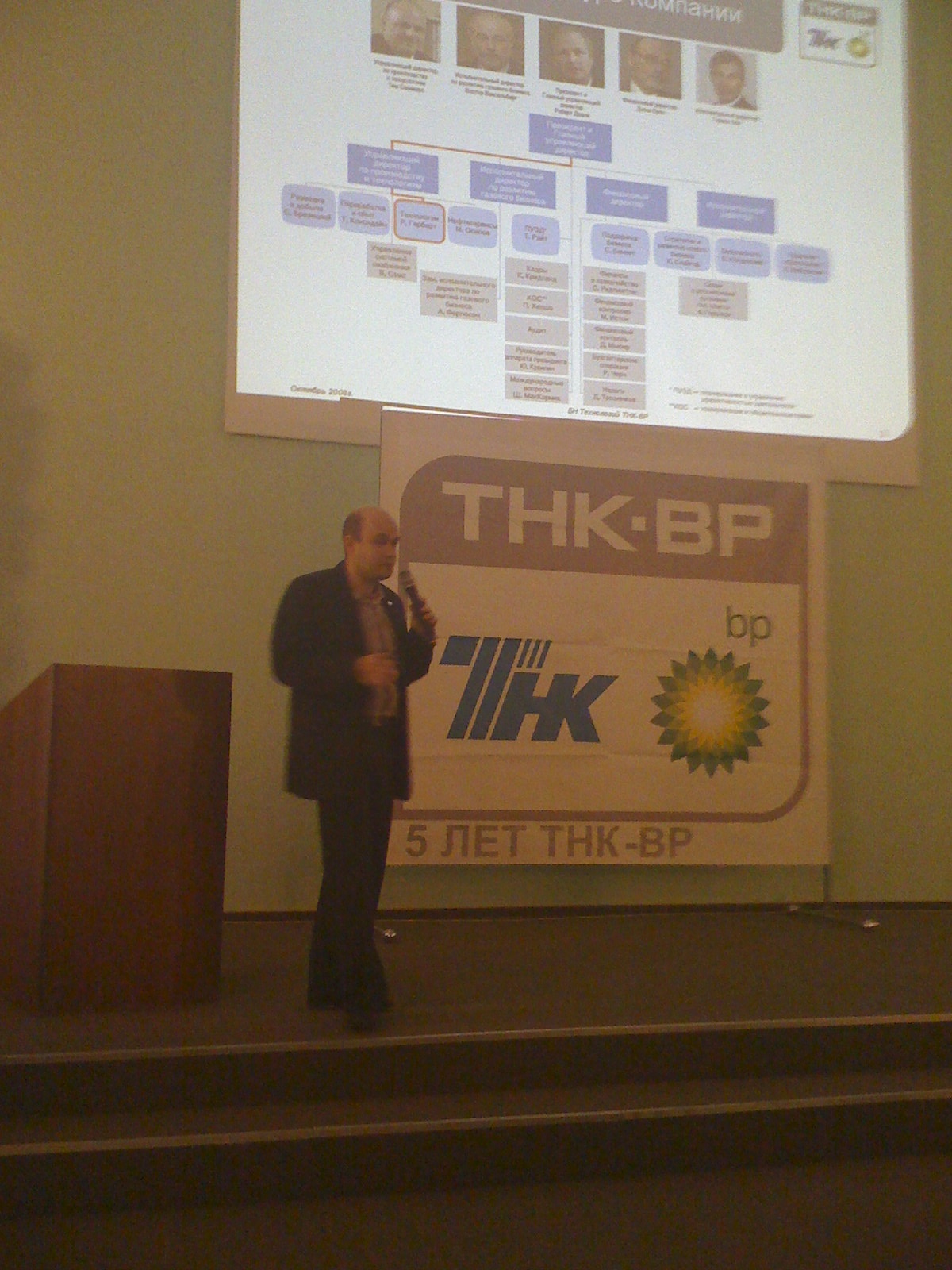
When I noticed these problems, I offered a BP to conduct a master class on the specifics of the oil and gas industry and the mentality of our specialists, it was very popular. I gave them survey information about the industry, about standards, state bodies, legislation ... And I explained to the head office that it is useless to send us managers, we have a lot of our own, we need techies who can teach something. And not just to teach, but to gain respect, including among the old guard. Because the foreigner arrives and says: "When I worked in Alaska, we did this, and therefore we will do the same." And Alaska, although it is similar in climate, but from the point of view of geology, production and development systems, differs. Here everything must be proved, you must get up and say: here is physics, but mathematics, and if you do it like this, then, according to all calculations, the production will be twice as much - this is a professional conversation. And those expanses that came, they could not. They had some experience, but they did not know anything else, they came to Russia, not considering that there were a lot of highly educated specialists here, they do not live here.
- Do you think that this was the reason for the 2008 conflict?
In addition to the package, they received a premium for a salary - this is a coefficient that is calculated depending on the country. The coefficient in Russia was approximately equated to Africa
- One of, of course. Conflicts arose before. For example, TNK-BP owned 50% of Slavneft, and some biped expans tried to introduce something there. But they were given to such an extent that in 2008 they even stopped letting them into the building. I was then asked to resolve this conflict, I came there with my team, and we managed to settle everything, because we tried to gently switch to Western technologies.
Nine out of ten expanses came here to mainly earn money, they had crazy explosion packages, it was also an annoying factor, their salaries were ten times higher than that of Russian experts. In addition to the package, they received a premium for a salary - this is a coefficient that is calculated depending on the country. The coefficient in Russia was approximately equated with Africa (from 40% to 60% of the salary), that is, it was the same for them - what to work in Moscow, what is in Luanda or Lagos, although in fact the risks are incomparable. And since TNK-BP covered 50% of these costs, it was a serious financial burden.
Let there be useless expans, but there were those who worsened the situation. For example, according to exploration, TNK-BP occupied a leading role, there were good developments. And then several expanses came there, which began to ruin the old system. When disagreement from Russian experts arose, this was repressively choked, because foreigners occupied higher positions. At the exit in exploration, less effective programs were obtained that did not bring the expected result. And just the old ones were more adapted to our conditions, to our methods of planning and coordination with state bodies, to our natural difficulties, especially in non -combined areas, such as Eastern Siberia, where there are no infrastructure, where the taiga, bears go, where some places can be reached only in winter, because in the summer there is a swamp. This is all, including the methods of exploration, you can and should be improved, but carefully, taking into account the gained experience.
- What, was it really so bad?
The project manager put his biped friends in good positions, took them penthouses for
15-20 thousand dollars overlooking capacabanes
- Of course not. For example, I worked on a project to increase the oil recovery of the Samotlor field. Western Siberia, large reserves, but it was more than 40 years in development, production fell, and we tried to reduce its fall. We analyzed how this deposit works, divided it into cells and studied each cell separately. VP specialists then helped us a lot. We used modern technologies for planting, drilling side trunks, drilling peripheral structures that have not previously raked off, and many of these technologies gave the result.
But there were other examples. In 2012, I entered the operating committee on the Solimoes exploration project in Brazil. TNK-BP created a joint venture with the Brazilian HRT, having bought a block of deposits on the Amazon for a billion dollars. The project turned out to be not very successful: they didn’t find oil there, 11 wells drilled, of which 4 were given a gas tributary, but no one needed this gas - there the closest consumers are thousands of kilometers there. The head of the project was the Vice President of TNK-BP for exploration, an Englishman, one of the former expanses of BP. At some point, German Borisovich ( German Khan-Executive Director of TNK-Br.-Approx. ) Invited me to him to tell him what is actually happening according to this project. I told him everything as it is and realized that in the presentation that bipishniki made for him, the results were very embellished. The reasons are clear. This is a prestigious international project with an office in Rio de Janeiro. The project manager put his biped friends in good positions, took them penthouses for 15-20 thousand dollars with a view of Kopakaban, people there at working hours noticed on the beach ... This vice president, of course, was offended, tried to survive me from this project. After all, if he himself said that 11 dry wells were drilled, he would be asked why he had been silent before: each well cost more than $ 30 million. However, when the investigation began, a merger with Rosneft occurred, the alpha was not up to it, and he moved to Rosneft.
- But that was four years after the conflict.
At some point, about a hundred vice presidents were listed in TNK-BR
- Similar stories occurred constantly. Many expansion quickly understood that the soil underfoot was not very hard, there were no respect from the Russians, there were no results. They began to create their British clans, to hire other expanses. A huge number of bosses appeared: at some point, about a hundred vice presidents were listed in TNK-BR! This further strengthened tension, because Russian specialists who have worked for decades did not receive advancement.
At some point, the situation was so glowing that it became obvious to leadership. Herman Khan took steps to limit the influence of expanses and to reduce their number. I do not know the details of these negotiations, I don’t know if they agreed on something with the Kremlin, I did not communicate close to Robert Dudley, but I know for sure that the conflict was not heir.
In addition, there was no such thing that they took and wiped all the expanses - the Alfovites wanted to return the balance, leave good specialists and get rid of ballast. Many remained moving from BP to TNK-Br. And now we were scared that after this outcome, everything would be bad, and we joked that the prey increased with an explosion of expans. The company has not turned into any scoop, all the useful developments of BP have remained.
- But as for the fact that foreign managers prevented companies from developing in the international market?
- This was also one of the reasons. Herman Borisovich was interested in international projects, but in some countries, BP was afraid of competition. I personally engaged in international development as a technical director for mergers and acquisitions, we looked at different assets, and BP often did not agree on their consideration or acquisition.
- Ilya Zaslavsky in his open letter to the leadership of Oxford asked to check whether cooperation with Leonid Blavatnik was responsible for the ethical rules of the university. In his opinion, Blavatnik and other Russian shareholders of TNK-BP were illegally enriched, selling their share in 2013 by 60% more than the market. What do you think about this?
- Well done, that they sold expensive. This is a market deal. The fact that Sechin agreed to purchase a company for such a lot of money was probably a decision of the Kremlin, and these people are businessmen. What may there be claims to shareholders who sell their business? I do not agree with this letter and would not sign it.
- You managed to work in Rosneft before leaving abroad. What can you say? Circle is closed?
If you need to buy a coffee machine in the department, you write a service note for Igor Ivanovich
- I worked there a year in the position of the director of the Department of International Projects. There is a completely different mentality, another culture. There is a certain format of people who feel like fish in water in Rosneft, they like this totalitarianism, bureaucracy in the style of ministries, when all decisions are made by one person. When I say "all decisions", I mean all the solutions, I do not exaggerate. If you are going on a business trip, you write a service note for Igor Ivanovich ( Igor Sechin is the president of Rosneft. - Approx. ), If you need to buy a coffee machine in the department, you write an official note for Igor Ivanovich. He really reads them and puts his visas on each. I wrote official notes in Rosneft all day.
Much of what we did there was a pure PR, behind which nothing stood. For example, we signed a large number of memorandums in large international forums, and now news appeared in the newspapers about multi -billion dollar agreements with Cuba, Venezuela, Mozambim or Bolivia. And then we had to fulfill what was indicated in these memorandums, but nothing happened, everything was lost in the wilds of the bureaucracy, the transfer of responsibility, as a result, the deadlines were broken, the tasks were not fulfilled. Maybe now it has become better, I'm no longer in the know.
In Rosneft, an opaque personnel policy-there are former employees of certain structures in many positions who have nothing to do with the oil and gas industry, in general, preference is given to people to whom Igor Ivanovich experiences personal confidence, not because it is a professional in the oil and gas business, but because he served somewhere earlier. I do not want to offend Rosneft employees, there are many talented and experienced people there, but such a personnel policy does not affect the effectiveness of the company.
Rosneft in 2013 bought TNK-BP almost for
55 billion dollars, and today it costs much cheaper than this amount
The king is a system that does not work in a commercial structure. Rosneft accounts for almost half of the entire Russian oil production - 251 million tons of 526 ( 2014 data - approx. ). At the same time, she asks for trillion rubles from the National Welfare Fund. In 2013, Rosneft bought TNK-BP for almost $ 55 billion, and today it costs much cheaper than this amount, and this is taking into account Yukos, TNK-BP, Slavneft, other companies that they absorbed. Of course, this can be explained by sanctions, the ruble, oil prices, a global crisis, but I am sure that not only macroparameters make a successful company.
- And what can you say about Sechin himself?
- Hmm ... I don’t want problems ... Igor Ivanovich loves to sue everyone, I do not need it. Maybe then we will discuss a glass of beer ...
Но можно сказать, что Сечин – человек другого склада, он считает, что это эффективно, когда все завязано на нем, когда он принимает все решения. Он сделал кальку с того, что происходит в России в целом, где все решения тоже завязаны на одного человека.
We see the result. По крайней мере, в нефтегазовой сфере: если в 2003 году многие с большим энтузиазмом возвращались в Россию, сегодня всё развернулось на 180 градусов, если кто еще не уехал, то хотят уехать, потому что отрасль уже не та, что была 12 лет назад. Тогда мы думали, что у нас, как в Америке, будут дружно сосуществовать тысячи компаний от мелких до очень крупных. Там ведь никто не пытается душить небольших игроков, пылесосить их в себя, все развивается по нормальным рыночным законам. А у нас включили политику и отключили рынок, ничего хорошего из этого не получится.