
Translated material
Neither like that
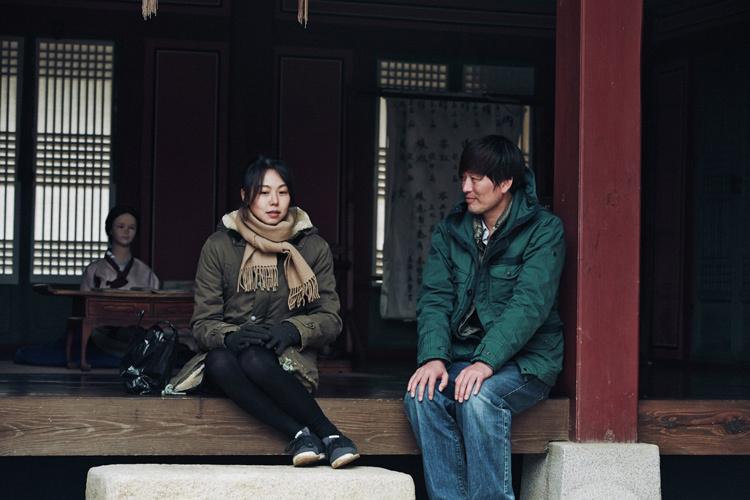
On November 27, a mini-festival of Korean cinema will begin at the St. Petersburg Cinema Aurora, at which (free!) The most important, according to the critics-fuelmen, Korean films of recent years will be shown: “Berlin” by the son of Van, “Bitterness and sweetness” Kim Ji Una, “Poetry” Lee Chkhan Don and, most importantly, the new melodrama Hon Sun “So-So-So-So-So-So-So-So Well, another time is bad. ”
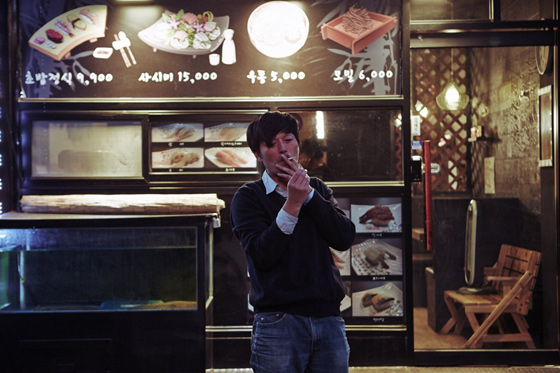
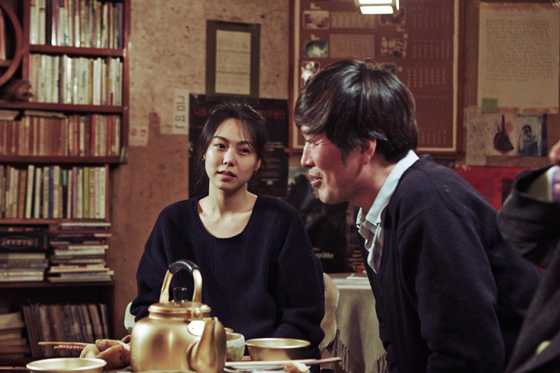
Ham Jung Su, a successful director, inclined to excessive hobby for the female sex (a weak romantic from the film industry, is a constant character of the majority of works by Hong Su), for two days he comes to Suvon (this is south of Seoul) to show his new film - judging by the number of spectators in the hall, not very popular. In the decision of the searches, an assistant from the locals helps him - they already worked together in three films, and Jung Su is very trying not to get into an affair with her. Going out for a walk, he finds himself in a temple, whose visit promises success in family affairs, and meets the abstract artist Yun Ha Yong there. After a small resin, in which Jung Su proudly informs the new acquaintance that he is a director, and she admits that she has not seen a single film, the heroes find themselves in a cafe, from there they are sent to the Ha Youn workshop (a thoughtful and emotional conversation about the nature of creativity), and then go to have dinner in Sushi-bar, where the director is terribly drunk and begins to frantically flirt. A drunken evening ends at a small private party of Friends Ha Yong - an embarrassment (another ordinary pattern of the films Hong Su). The next morning, the hangover Jung Su emotionally appears at Q& A and, having earned the approving arms of the assistants, goes home to Seoul. Again, the title titer - and Jung Su day is repeated, but in a more successful version: instead of vulgar awkwardness between the heroes, sincere, albeit fragile, fleeting, feeling arises. As if Jung Su and Ha Yong woke up in the morning in a few best of the countless days of existing days and worlds and, like the heroes of Hollywood science fiction, received the second, third, fourth chance to break out of the error cycle. Or maybe this is just the director Hong San Su, known for his improvisation on the site, woke up the next morning after the shooting day and decided to rewrite the script composed yesterday.
 © Jeonwonsa Film
The uncertainty, unsteady, the non -industrial comic of not only relations, but also worldly events, fate in general is a distinctive feature of the world in which the heroes of Hong San Su live. Tomorrow here it can easily be transferred to yesterday, the same events - to become a frame for completely different stories, the investigation - to turn into a reason ... What is the difference if all this is only different ways of manifestation of human nature, which is definitely ambivalent, not bad and not good, but as it will develop. In his penultimate film, the “Freedom Hill”, the director seems to explain quite clearly the principles of his anachronistic composition with the words of the protagonist, quoting some kind of pseudo-monochopp in a soft cover: perhaps nature does not actually know the category of time, it is only the aberration of human consciousness. But since we are so arranged, we have no choice but to live in the world of linear and irreversible causality.
In “So good, another time - bad” - like in many other films, Hong San Su, recall at least the recent “Dear Daughter Havon” with her blurry border between fantasy and reality - this irreversibility of causes and consequences is subjected to condescending revision. The logic of sin and punishment, virtue and retribution are represented here only by a blind and often stupid accident, comical in comparison with something real, the fact that Hon San Su always remains outside the frame, finding himself only in the details of the landscape, as a statue of the Buddha on the roof of the temple, to which the hero returns, the hero in a good version of the scenario of this film. So-good, another time-bad, but this and this one and this are equally funny if you look at them from above-like a ridiculous and frozen hero-lover who spent his girlfriend to the corner and now dancing in the cold from pressure in the bladder.
 © Jeonwonsa Film
The same thing with creativity. In each of the options for history, a monologue of a reiser hero is pronounced twice, explaining how it works (in fact-Hong San) cinema: one explanation is good, the other is not very good. The burden of choice is on the viewer. We can consider this minimalism with a brave author’s movement to the touch, from the stage to the stage. Or take him for the mature cultivation of “copyright motifs”, the eternal obsessive repetition of convenient techniques - such as a sudden zoom, with children's spontaneity violating an even series of obedient plans and signaling the emotional importance of the moment. We can be satisfied with an excuse about the impossibility of articulation of any method, about the tragic and fatal mismatch of any words with the phenomena-or ... and here Hon Su deftly inserts the lacuna, intentionally enduring the triumphant version of the lecture of his double in front of the audience, intentionally evading certainness in his melodramas, or evasive the final breaks or evasive the final breaks or evasive the final breaks marriage. Not from infantility and indecision, but because this moment before the choice, at the fork, is the only one when simple, small, web -tied in a web of complex relationships - and at the same time lonely - the heroes are not alone when life itself begins to feel under the fabric of social conventions and many years of route - euphoric and tragic at the same time. This sensation instantly brings the finished part closer to part, and it also gives stereoscopicism a simple, shot as a flat photo of history. The habit and social order make you look at things with one eye, the director hints to us. No need to choose which - try to open both.