
Translated material
Alexander Genis: "It's scary when friends prefer Crimea - freedom"
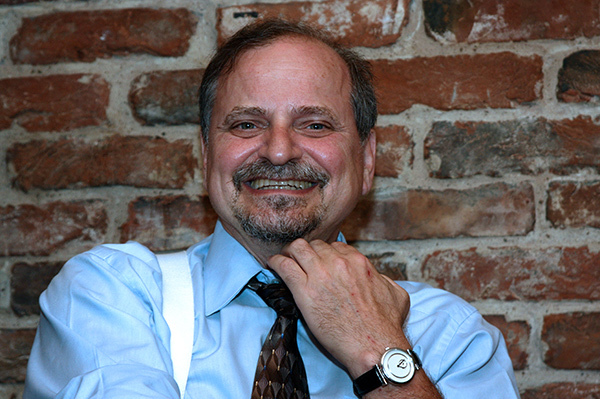
The writer and critic Alexander Genis was born in 1953 in Ryazan, grew up in Riga, since 1977 he has been living in New York. He worked in the "New American" under the command of Sergei Dovlatov and another press of Russian abroad. Since 1984-an employee of Radio Liberty, editor and host of the program “American hour. On top of the barriers ”in New York. Since 1989, Alexander Genis's books have been published in Russia. The author of twenty books. Books “Modern Russian Prose”, “Lost Paradise”, “Native Speech”, “The 60s. The world of Soviet man ”,“ Russian cuisine in exile ”,“ American ”are written in collaboration with Peter Vile. Among the recent ones - “Kama Suthernik” and “Cosmopolitan”. Since 2004-a regular employee of Novaya Gazeta.
-What is it-the 90s for you? You were in exile; How did it see from America?
- I stubbornly believe that it was during these years that the country got rid of the racist argument "Democracy and freedom not for Russians." The defeat of the 1991 coup was my national holiday. The colleague in Radio Liberty, Boris Paramonov, bought a box of champagne on this day and treated employees from other European editions. In those euphoric years, Russia was close to taking its place among the Western powers. When Yeltsin in Washington proclaimed a victory over communism, in Congress he was applauded standing standing. The fact that freedom was given to the state security organs did not change my attitude to 1990. Then a precedent arose that proved that Russia can itself be free from the totalitarian regime. The memory of this experience will always disturb and inspire. Maidan is an echo of the 90s.
-What was unpleasant for you, unacceptable in Russia of the 90s?
-The most terrible omission of the 90s was the lack of trial of communism and its punitive bodies. For this society paid the revenge of the losers. This is the same as if the Gestapo were entrusted with the denazification of Germany.
The fact that freedom was given to the state security organs did not change my attitude to 1990.
-In the 90s, your books began to print with Peter Weil. How did this affect your attitude to the 90th?
-When our “native speech” was released in 1990 with a 100,000th circulation, we were undoubtedly delighted with changes. But our books just fit into the publishing boom, which seemed the most important achievement of perestroika. No wonder the book market was the first. It is difficult to judge the rest and not for me.
- When did you first come to Riga, Moscow after emigration? What did you feel, what changes?
- In the same 1990, the first time after 13 years of emigration was in the USSR. First of all, it was struck by completely empty shops. It is good to recall this to those who forgot that it was Gaidar's reforms in the early 90s who returned the goods to shelves.
-Did a new language that describes the realities of the 90s appear in society?
-The 90s is the era of the total stalk. Having arisen from the denial of the crazy Soviet officialdom, the ironic “Stylek” of popular newspapers rushed to another extreme. This could have happened because the “average calm” was not created - an informal language of friendly communication. Sometimes it seems to me that this problem has not yet been solved.
-It is believed that in the 90s there was a heyday of modern Russian art. Is it so?
- It was the heyday of not Russian art, but of Russian society. Take a closer look at your faces in the pictures of the early 90s. I don’t know where this electorate has gone today, but it will return.
The most terrible omission of the 90s was the lack of trial of communism and its punitive bodies. For this society paid the revenge of the losers.
- What nevertheless do you remember from this time in Russian art?
-Mitki was a Russian response to progress, including social art. In my house, V. Shinkarev’s painting “Korovushka got lost” hangs, which, in my opinion, clearly expresses the confusion of the Soviet man who ended up in the post-Soviet landscape.
-And in the Russian literature of the 90s, in your opinion, was there a heyday?
- For writers, publicity was a harsh test: they had to compete with a whole layer of great literature, which went to readers after the cancellation of censorship. In this situation, the old seemed obviously better than the new one. And yet in these years Victor Pelevin appeared, who created the mythology of the transition period. Its masterpieces - “Blue Lantern”, “Yellow Arrow” and the magnificent novel “Chapaev and Emptiness” - will remain a smart and cheerful monument of the era.
- How then did the language of Russian prose change, those works, artistic statements?
-The 90s abolished almost all Soviet literature overnight. In conditions of freedom, it turned out to be reptil in shape and, to put it mildly, outdated in content. It survived a little, but it was the surviving authors that had a great influence on the development of post -Soviet literature. For example, the Strugatsky brothers - on the one hand and Venedikt Erofeev - on the other. Two very different author of the 90s are important to me. This is Tatyana Tolstaya, who sewed modern prose with the poetics of the Silver Age, and Vladimir Sorokin, who revealed the subconscious of the Soviet world.
Maidan is an echo of the 90s.
- Did you notice when censorship in Russia began to return? When it became different to breathe in Russia? I remember. Did you feel it through the ocean?
- As in Nazi Germany, the strangulation of freedom was gradual. The crisis became acute in connection with the Crimea. I felt it on my own when I began to worry about friends in the Russian press. Fearing to let them down, I try not to print in Russia everything that I think, because in America it is easy to be brave. This encourages me to self -censor. It turns out that the authorities are still achieving their own. But it’s really scary when close friends are on the other side, preferring Crimea-freedom. It's hard to live with this.
-You left in 1977. Why did you decide on this?
-I left to do in America what I could not in the USSR: to write and print in Russian.
-Did you have the thought of returning to Russia in the 90s?
-In the 1990s, I envied the remaining friends who built a free country. But the second emigration was not ready then.
- And now?
- Now I don’t think about it, because I can’t imagine life in a country where 90 percent welcome the regime terrifying me. But those who in these conditions live as if he are not, I respect it deeply and sincerely.