
Translated material
Sergey Ursulyak: "Do not improve someone else's life"
On November 29, the 14-episode “Quiet Don” in the production of Sergei Ursulyak started on the TV channel “Russia”. Why this novel turned out to be relevant and what concerns the most in it today - the director told The New Times
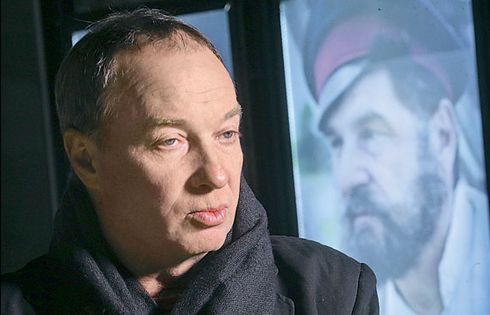
Sergey Ursulyak at the pre -premiere of the Pacific Don, November 12, 2015
Sergei Ursulyak is known mainly as the creator of “Liquidation”, although before that he shot several feature films that received bonuses at different festivals. His directorial debut was noted - “Russian Ragteim”, followed by “Summer People” based on the play by M. Gorky “Dachers”, “Composition to Victory Day” about three front -line friends, who were brilliantly played by Oleg Efremov, Vyacheslav Tikhonov and Mikhail Ulyanov, “Poirot's failure” with Konstantin Raikin in the main role and “long farewell” and “long farewell” and “long farewell” and “long goodbye” The story of Yuri Trifonov.
But after the "liquidation", so beloved by viewers, he became a "serial" director. Ursulyak himself says that the transition from cinema to the series has not changed anything in his manner of shooting. He rehearses and shoots on the film for a long time. After the series “Isaev” - about the youth of the famous Stirlitz - he filmed Vasily Grossman’s novel “Life and Fate”. And then for almost a year in the vicinity of the village of Veshenskaya, he shot the “Quiet Don”.
You did not want to film “Life and Fate” at first, it was the proposal of the Rossiya channel. And shoot the "Quiet Don" - your desire?
Honestly, after the "Life and Fate" I wanted to remove something local, without shots and violence. I offered several options. But they did not inspire the channel leaders. A conversation came about great good literature. Then, thinking that this is impossible to carry out, no one will give so much money, I suggested filming the “Quiet Don”. This is one of my most beloved novels, and I wanted to remove it for a long time. My idea in a completely unexpected way impressed the leadership of the channel. Our desires coincided. It was amazing. So everything turned out - and my long -standing desire to put this thing, and the financial participation of television.
The right to choose
After the events in Ukraine, “Quiet Don” is perceived especially relevant. Did you take it into account?
When we started to shoot, the war in Ukraine has not yet begun and I did not think about relevance. I thought about something else: what leads to the fact that any person who grew up in the Soviet Union has somehow absorbed intolerance to someone else's opinion, the unwillingness to hear nearby and nearby speaker, absolute neglect of someone else's lifestyle. I am just humanly very sorry for Cossack families of the Melekhov, Astakhov and Korshunovs. “Quiet Don” is a tragedy of any community where strangers come and destroy the usual world. Yes, this world was imperfect, but it was their world, but now it is gone. This topic worried me much more. I think similar feelings are experienced by the Iraqis that Americans come to; The Afghans we came to; Indians to whom the conquistadors came ...
“For me, the first to attack me are important below, the first dying and most affected. I want the viewer to sympathize with just such people "
The hero of Yuri Trifonov in “long farewell”, which at one time you have filmed, says that “the history of the country is a multi -core wire.” What "wire" from the "quiet Don" is important for you? And which of the heroes of the novel we will not see?
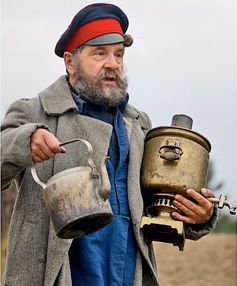
Sergey Makovetsky - Panteli Prokofievich, father of Grigory Melekhov, Rostov region, December 8, 2014
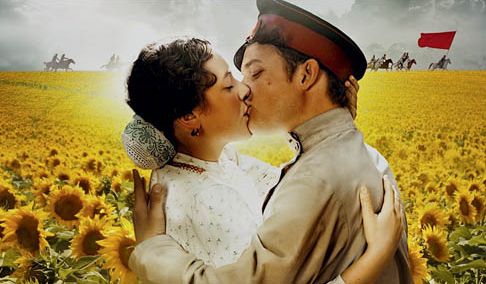
Polina Chernyshova in the role of Aksinya Astakhova, Evgeny Tkachuk - Grigory Melekhov
There will be no Shtokman line in the series, this strange Baltic, who came to the farm and began to corrupt the Cossacks, directing them towards the social democracy. It seems to me that Sholokhov introduced this line so that the work of the party to implement the Cossacks was visible. We removed the Bunchuk line. Unfortunately, we do not have Petrograd - we could not financially pull such huge crossings. In general, the movements of the masses in art for me have lost value. This does not make impressions of me in the cinema. We can perceive some loss only when it is connected with a specific person whom we know. I do not want to understand the rightness of white or red movement. This is not the point. I am convinced that with such cruelty, with such blood, with such victims, this rightness loses all meaning. The most important thing for me in this story is the human right to a free choice, to life without interference in it even with the most good intentions. People need to give the opportunity to live the way they want. No need to improve someone else's life. No need to be fascinated by false ideas and destroy what is done well. It was about this that I shot the picture. For me, the first to attack me are important below, the first dying and most victims. And in Ukraine, I most sorry for the dead and crippled children, old people, civilians, and innocent children. I associate myself with them and want the viewer to sympathize with just such people.
Film for yourself
“Quiet Don” has never been deprived of the attention of theatrical and filmmakers. What do you say about the films of Sergei Gerasimov and Sergey Bondarchuk?
I have not seen Bondarchuk's film. And the picture of Gerasimov was shot in the classic Stalinist "high style." Great artists starred in it. Gerasimov felt very well. A few years after the Pacific Don, he took off “People and Beasts” in a completely different aesthetics, in a different manner. I am sure that if he shot the “Quiet Don” two years later, he would have done it completely differently. Now the Internet is full of exclamations: how dare you shoot the “Quiet Don” after the film Gerasimov. Look - evaluate.
You, unlike Sergei Gerasimov, were shot not by stars, but by young artists. For many, this is a debut.
It was fundamentally for me. For some reason, all the adaptations of the “Quiet Don” begin with the shifted eyebrows and with the feeling that something terrible will happen soon. And it will not happen soon. And you need to understand how and why it was not scary before.
Gerasimov invited a forty -year -old artist to the role of Gregory, and at the beginning of the novel he was only 18 years old - he is a boy. And Aksinya is a very young woman. Polina Chernyshova plays her - this is her debut. She is in her gifted an absolutely outstanding actress. But, of course, in addition to giftedness, there should also be a profession in the hands. And she has not yet mastered the profession. But she has an extraordinary power of faith in the proposed circumstances. I have a frame where she walks around the house in a good mood, and then sees Stepan out the window. And suddenly I see that in her horror she begins to confuse her face. She does not just play by shifting the eyebrows or raising them, a wave comes from the inside. I think that if it were physiologically possible, she would give birth to a childbirth in the scene. She is one of those actresses who are capable of it. But to her, I will tell her again, like other young guys, of course, it is necessary to master the profession. Work with so many young artists is a unique experience for me. I rarely shout at the artists. And here I shouted at them without ceasing. He screamed from his helplessness. I am not used to the fact that the actor looks at me and does not do what I ask. There was a large group of young, debuting, shining from the camera of actors. But they are insanely talented. And of course, if we had filmed normal films according to the normal scenario, I think each of them would have a wonderful future ahead.
Did you and the youngest daughter first starred?
I did not want to shoot Dasha, but for a long time I could not find anyone for the role of Natalia, so I took it. I am very pleased with her work, just like the work of all young guys.
But youth youth, but you could not do without Sergey Makovetsky. Why did you choose him for the role of the "Turkovy" Pantelei Prokofievich?
Seryozha is not afraid to change. There are artists who are struggling to make it clear that they are only slightly over 40. And Seryozha is not afraid to be a repulsive old one.
What viewer do you count on?
In fact, any director, unless he does a commercial thing, does all films for himself. Here is this film - for people like me. It seems to me that if you do not turn on the TV with the desire to see Glebov and Bystritskaya, then it may even like it. Only you have to sit down and carefully look, without looking up at drinking tea. I try to make television films according to the Law of Cinema.
Stripes, checkers and caps
It is known that before the revolution, the Cossacks were a stronghold of the king and the Fatherland, and they did not accept the ideas of socialism. Under the Soviet regime, not only dispossession was underway, but also the testing. Even the ban on the Cossacks to serve in the Red Army was lifted only in 1936. How, in your opinion, are the relations of the Cossacks with the current government now?
I am not a specialist in the Cossacks, but the little that I understood and felt during the filming - it is not enough to put on stripes, a saber and a cap to be a Cossack. Cossacks are, first of all, the lack of slave consciousness and economic independence. And now those who have not been a slave over the past hundred years have been destroyed. The life of modern Cossacks has changed significantly. No economic independence. They go to the same supermarkets as us. They go not on horses, but on cars. As for their attitude to the political situation in the country, outside Moscow, many of our problems look different. There, people live a much more calm life, without solving global problems. They survive. There is no time for them. The atmosphere of life there is much calmer. Moreover, Ukraine is very close to them and refugees in the Rostov region poured a stream. But there is no unmotivated aggression, like ours.
“It is not enough to put on stripes, a saber and a cap to be a Cossack. Cossacks are, first of all, the lack of slave consciousness and economic independence "
In the "Quiet Don" during the war, one of the heroes says that "the heart does not absorb pity." I have the feeling that now we have something similar, some kind of process of discontinuation. Take at least a recent story about a five -month Tajik child, who was taken from his mother and the next day he died. What is happening to us?
This is the flip side of our life - when people do not perceive someone else's pain as their own. This is a protective reaction of the body. Our society is wild. The only thing I can do in this situation is to try to make a film that at least someone, that small mass of people who will watch it will give an impulse to another look. Maybe this is naive, but this is my individual petition. I do not know another way to influence society.
Photo: Vyacheslav Prokofiev/TASS, Valery Matytsin/Tass, Kinopoisk.ru