
Translated material
Conservation of negativity
Where does Russia “War of Sanctions” lead and is it possible to mitigate the situation - The New Times asked informed people

Oleg Vyugin, Chairman of the Board of Directors of the MDM Bank:
"The most serious effect is a sharp decrease in direct investment"
The results of the "war of sanctions" for Russia were expected. GDP had to lose about 4 % - according to preliminary estimates, the fall is 3.7–3.8 %. The mechanism that led to a decline was also the same as expected: the outflow of funds from the investment market and the fall of real incomes, wages. True, if salaries fell within the predicted limits - about 10 %, then in total income the situation was a little better.
But still, the essence of sanctions is more-in their impact on medium-term prospects: restrictions on technology, investment. The short-term effect that manifested itself due to sanctions in 2015 is the closure of capital markets for Russian companies that need to be paid on debts. If the sanctions are not canceled, clean outflow of funds from investment markets will continue in 2016 and in 2017. And I do not see opportunities for recovery in the next year or two.
However, for players in the financial market, changes are not very noticeable. The most serious negative effect is a sharp decrease in direct investment in Russia. For the first half of 2015, they amounted to $ 2.6 billion against tens of billions in past years. The second effect - most international companies in Russia reduced their activity.
Until there is a political settlement in relations with the West, there will be no significant investments in this direction. You can, turning away from Europe, increase cooperation with Asian countries - with China and India, for example. But the effect will be limited - such cooperation will more allow us to count on free capital, but rather on related to the implementation of specific projects. In addition, this process is extremely slow, although quite real.
The question of lifting sanctions in the near future is not worth it, but whether the West will be facilitated by the sanctions regime against Russia depends on political will and mutual desire to resolve issues. Now none of the parties is demonstrating the desire for a compromise, therefore, relaxation is still unlikely.
In general, pay attention to the tactics of China: it distance from major political conflicts solely due to economic interests. It is important for them to gain access to the newest technologies, grow economically. This is a sound approach.
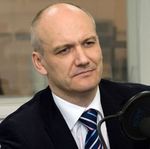
Igor Nikolaev, Director of the Institute of Strategic Analysis of the FBK company:
"We would still enter the crisis"
Sanctions are not the main reason for economic problems, although they are an additional factor in a decrease in economic growth. But there are, there would be no them - we would still enter the crisis.
In annual terms, according to our assessment, the impact of sanctions is 1.2 % of GDP, and the total fall is about 4 %. But our crisis is structural in nature: by mid -2014, when no serious sectors were affected by the sanctions, when there was still no drop in oil prices, the economy was almost no longer growing. And before that, the rate of her growth was consistently reduced.
But the longer the sanctions regime exist, the more painful their influence will be. The sanctions preserve the crisis, make it protracted. The income of the population falls, inflation is enhanced. The banking sector is now saying about a large -scale crisis, which I do not agree with. So far, there was enough money to support them. That's when they begin to exhaust, and the sanctions will remain, then serious problems will begin. Retailers also suffered from sanctions and antisanctions: retail trade in October fell by 11.7 % with respect to October 2014. This is the worst trade indicator - it is now falling. Behind it is engineering and construction.
It would be foolish to abandon the European market, which was almost 50 % of external trade. But nothing is impossible - you can go to such stupidity. And with the East, its problems: just like that, it is not possible to take money in the markets of Southeast Asia. Their economy also begins to experience difficulties.
A variant of "lightweight sanctions" in relation to Russia is possible, but only if the Minsk agreements are met. But for some reason, few people say that Russian counter-sanctions play their role in this dossier. In August 2015, Russia extended them for a year, perfectly realizing that in February 2016, in the case of Minsk agreements, we could expect a weakening of sanctions by the EU. Question: Why were there ahead of the lead - I liked playing in sanctions? Well, then you have to be prepared for retaliatory measures.

Natalya Volchkova , leading researcher at Tsephir, professor of the Russian Economic School (RASH):
"Reforms would help restore losses, but they are not"
Sanctions enhance depression in our economy. As a result of sanctions and counter -sanctions, a negative effect has arisen on all chains. After all, even import substitution was not fully realized, because it is necessary for him to have sales markets, which in the conditions of sanctions also suffer greatly.
In case of termination of sanctions in the financial market and retailers, the restoration will pass quite quickly: a resource will appear, which will be immediately captured by companies. But the fact that some large projects that could already be financed and launched, postponed or closed is, of course, a loss. Yes, and domestic companies that do not implement large projects or implement them on unprofitable conditions are also a big problem, if sanctions are lifted, they will be not interested or unprofitable to anyone.
If there is a significant shock associated with trade, and it operates a year and a half, then it will take up to three years to restore the economy. Constructive reforms that smooth out negative effects can reduce this period. And we do not take such measures, there are no reforms.
The only positive shift in the financial market was the expansion of the Customs Union, the entry into it of Armenia and Kyrgyzstan. But this has such a small economic effect that there is no need to expect strong changes. Neighboring countries occupy a wait -and -see position and, in most cases, prefer to turn their projects in Russia.
As for the alleviation of the sanctions regime against Russia, such a probability existed, but given the events of November 24 (the destruction of the Russian Su-24 Turkish Air Force.- NT ), we have to conclude: the situation is unlikely to soften in the near future.
*** recorded Anastasia Novak ***Photo: fbk.profile.ru, youtube.ru