
Translated material
Stop with an elephant
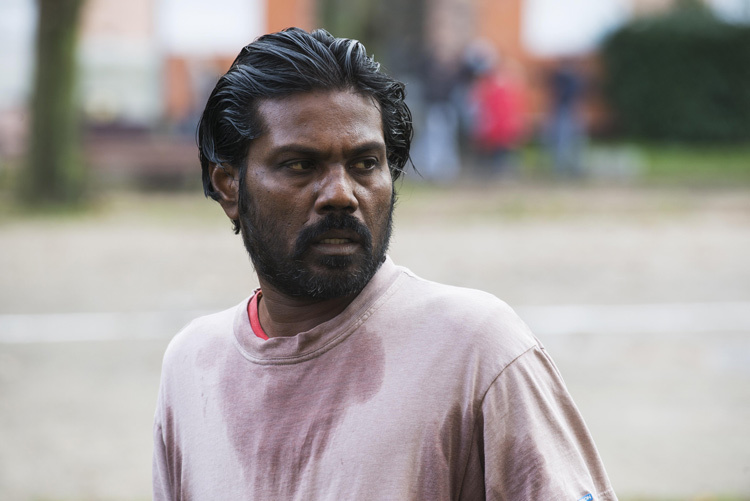
The Black-Pernant Dipan diligently sweeps the garbage and fixes the elevators in the Parisian suburb, which is forgotten by God and the law, trying not to particularly raise his eyes. Dipan is the former Tamil Tiger. Flying on a fake passport with a fake family from Sri Lanka to Paris (there were no tickets to England), he was fatally mistaken with his destination. A bit with one civilian one fell directly to another: the Old Arabic-Magristian microdistrict-the outpost of the war between ethnic gangs. Between the groups of the corps, sentinel on the roofs, headquarters in cabins, bullets above the lawns. To the nearest policeman - like to Colombo. But Dipan is not a flameless kuli (although ignorance by the hero of French is an important part of the general mechanics of tension in the film), and he has nothing to lose on a foreign land. Having finished his back finally and recalling that he tried so hard to forget, the sharpening from the third world stucks sharpening into the unwashed underbelch of multinational Europe, burning with his enemies in the flame of a personal revolution - but, as the warrior from the epic is supposed to, falling after his English -speaking Walgall with tea drinks and lawns.
 © Who Not Productions
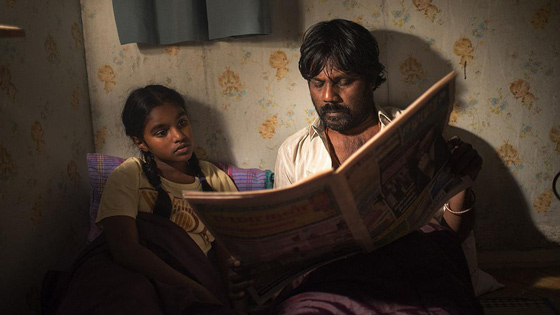
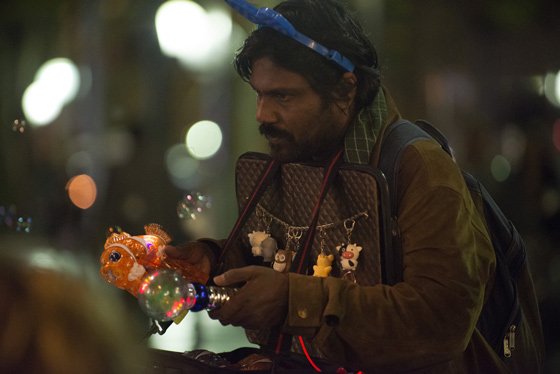
Director Odiara cannot be called a realist - he often removes about what he does not know, ignoring the obvious (so, the hero of the “Prophet” built his prison drug addiction on the traffic of a small -serious hash, and not obvious and unbearable in such conditions of heroin), his heroes are often on the subtle line between reality and sleep, hallucination. So Dipan in gray Paris is only with a body - and with thoughts he in a wonderful warm country, where, barely visible behind the leaves of palm trees, shifts a mystical elephant from foot to foot. All kinds of textbook humiliations of the immigrant in Europe (trade in all fluorescent garbage on the streets, interrogations in government agencies, dirty work in housing and communal services) in this context - there are no more than genre cliches, although you can’t refuse in photorealism. It is believed that the “palm branch” “Dipan” was given precisely for these social horrors. But if so, you need to love the film not at all for this. More precisely, not for compassion, but for the incredibly subtle discharge of this background, connecting the contours of the criminal thriller, and the sketch of family drama, and all the same notorious socialist. None of these lines are closed, all exist in the form of sketches-but very accurate and convincing, sometimes so much so that you forgive Odiara outright jambs, emissions of poster bourgeois humanism, moments of transforming a living person (and unprofessional actor-plant Antonitasan Jesutasan plays in virtually itself) The episode, in which the former partisan, like the hero of children's literature, draws with chalk crumbs on the lawn of the borders of the “demilitarized zone” - here it is ridiculous not only of the non -poems on the roofs of the microdistrict, but also to the audience).
 © Who Not Productions
The difficulty with Dipan is in the too simple effect of all these subtle directorial mechanisms. There is nothing to interpret, open or interpret. Like the “love” of Noe, “Dipan” belongs to the genus of rare, but more and more often emerging films-replacements, simply recreating part of reality on the screen. One story, one affect, zero conclusions. Well, yes, all this is about the fact that the experience of violence and resistance does not go anywhere, he cannot be burned with the form, he is always with you, he irreversibly forms your view of the world and his problems (hello to Balabanova's brother). Small, in general, wisdom-especially against the background of a beautifully licking stairs in a five-story building, to which, like a funeral bonfire, a veteran of a distant eastern war rises, which suddenly turned out to be both close and world.