
Translated material
Memory. Athanasius Fet
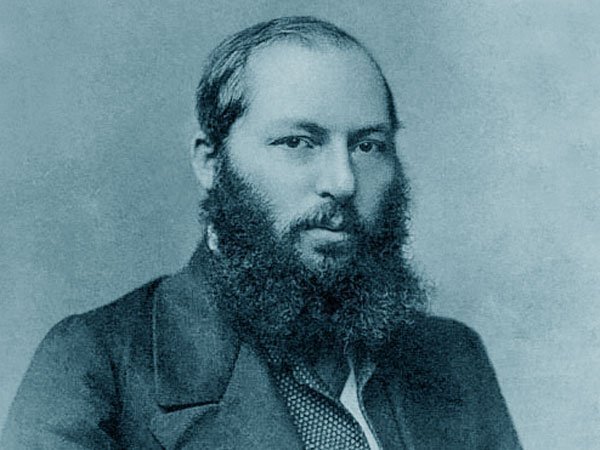
December 5 (November 23), 1820, poet Afanasy Fet was born
Personal business
Afanasy Afanasevich Fet (Shenshin, 1820 - 1892) was born in the village of Novoselki Mtsensky district of the Oryol province. A few months before his birth, Charlotte-Elizabeth Fet (nee Becker) escaped from her husband, a judicial official in the city of Darmstadt Johann-Pether Fet, with the Russian landowner Afanasy Shenshin. Afanasy Shenshin and Charlotte-Elizabeth were married only in 1822. After birth, the boy was recorded as the legitimate son of Shenshin, however, when he was 14 years old, the Oryol spiritual consistory considered the father of Athanasius, who was born before marriage, the Hesse-Darmstadt citizen of Fet, and appropriated his father's surname.
Afanasy Fet received primary education at home. Then, in 1835 - 1837, he studied in the German private boarding house Kryummer in Verro (now the Estonian city of Vyru). At this time, he began to write poetry. He spent six months in Moscow, preparing to enter the university in the boarding house of Professor Pogodin. In 1838 he entered the law faculty of Moscow University, then switched to the historical and philological department of the Faculty of Philosophy. Fet stayed a student for six years instead of four years ("Instead of jealously at lectures, I wrote new verses almost daily").
After graduating from the university, in 1845, wanting to get a hereditary Russian nobility, Fet received a non-commissioned officer in the Kirasir Military Order Regiment, stationed in the Kherson province. He hoped to become a nobleman, having risen to an officer rank. On August 14, 1846, he received the rank of cornet, but shortly before that the imperial decree (Manifesto on June 11, 1845) was released, according to which only officers from the major and older received hereditary nobility. As a result, the total Military Service of Athanasius Fet was 12 years.
During the service in the Kherson province, a tragedy occurred in Fet's life. During the fire, his lover Maria Lazich died, on which he did not dare to marry due to a lack of funds.
In 1853, Fet moved to the Guards Ulan Regiment, stationed near the capital. During the Crimean war, its regiment was part of the troops guarding the Estland coast. Having received the opportunity to be in St. Petersburg, Fet became close to the new edition of “Contemporary” - Nikolai Nekrasov, Ivan Turgenev, Alexander Druzhinin , Vasily Botkin . He married Botkin’s sister in 1854.
In 1856, Athanasius Fet dismissed military service in the rank of headquarters of the guard, without learning the hereditary nobility. Since 1860, he acquired an estate in Mtsensk district. In 1867 - 1877 he acted as a justice of the peace. In 1873 he managed to achieve the return of the surname Shenshin and the nobility, leaving the name Fet as a poetic pseudonym. In 1881 he moved to Moscow.
Athanasius Fet died in Moscow on November 21 (December 3), 1892.
What is famous
The outstanding Russian lyricist, whose work, according to Boris Budbat, is "rapture by nature, love, art, memories, dreams" and serves as a "as if connecting link between the poetry of Zhukovsky and Blok." In 1842 - 1843, Fet published more than eighty poems in the “Domestic Notes” that brought him well -deserved fame.
In 1850, a collection of Fet poems was published, after six years a new edition follows. Poems written in the last years of life were not published in magazines, but were printed in separate releases under the title “ Evening Lights” (1883 - 1891), with circulations of several hundred copies.
Also, Athanasius Fet was a lot of poetic translations. He owns the translations into Russian “Faust” Goethe, all the poems of Horace, works of a number of other Latin poets. In prose, Fet translated the works of the philosopher Arthur Schopenhauer, who had a great influence on his worldview, “peace as will and representation” and “about the four of the root of the law of a sufficient basis”.
What you need to know about
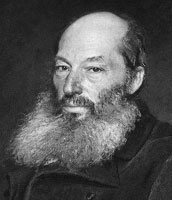 Athanasius Fet
Relations with literature-renovation of Fet were very uneven. Firstly, he disappeared from the literary process for a long time, for the first time-having gone to military service, for the second time-having become a landowner. Living in the village, he preferred to engage in agriculture and philosophy.
Secondly, since the 1860s, Fet adhered to conservative views, and, according to Turgenev, was "an inveterate and frenzied serf and a lieutenant of the ancient Transcal." He published in the reactionary “Russian messenger” essays, denouncing post-reform orders in the village from the standpoint of the landowner-landowner, and his article about Chernyshevsky’s novel “What to do?” It was so harsh that even the “Russian Bulletin” did not print it. All this led to a break in relations from Turgenev and many other writers. In the 1860s-1870s, only Leo Tolstoy maintained close relations from famous writers with Fet.
Direct speech
“Once, my father wrote to me without further explanation that from now on I should wear the name Fet, and the very letter to me was addressed: Af. Af. Fetu. <...> No matter how Gorky was this unexpected news to me, but convinced that my father had a sufficient reason, I considered the question to be delicate that I had never addressed it to anyone. “Fet is so Fet,” I thought, “it can be seen so. I will show my humility and forget Shenshin, whose name was all my textbooks.” Then, in the first letter to my uncle, I signed this surname. A month later, I received the answer to my uncle: “I have nothing to say against what maybe in your official papers you should subscribe to a new name; but who gave you the right to introduce official relations into our mutual blood attachment? After reading the letter with your new signature, I broke and drowned it with my feet, and you do not dare to sign letters to me with this name.” All this trouble could remain in the family circle, since no one had a third -party read my letters. But once a Kryummer, standing at the very cool door, while I was sitting on its opposite end, saying: “Shenshin, this is for you,” I handed the letter to me near me. At the same time, the unknown surname Fet on the envelope aroused perplexity and noise on the envelope. - What is it? Do you have a double surname? Why is there no other? Where are you from? What kind of person are you? etc., etc. All similar exclamations and inexplicable issues even more strongly affirmed the determination to keep silence on this subject, without demanding any of the home explanations ... "
Afanasy Fet "Early years of my life"
“The desire to go beyond the limits of time and space is one of Fet’s late motives. This motive expresses the “rupture” of the poet with nature and the God -finding, the irreconcilable of his poetry of these years. The poet completely conveys the usual religious representations for Christian religious ideas and the motive for the release of the human spirit from earthly limitedness through death. Fet does not tire of repeating that only life - and physical life, the life of the body - likes a person to the deity. Denying power over the time of time, he argues at the same time that the condition of boundless internal freedom is the unity of the soul and body and their combustion in creativity, thought and love. The poetic theme of free flight acquires in poems of these years a stable form of a philosophical dream about overcoming the power of time and space. The limitations of human being in space and time - a question that throughout his life was the subject of his philosophical thoughts - now becomes the tragic leitmotif of his philosophical lyrics. The “native space”, his “circle”, ceases to be a refuge for him at the end of the poet’s life, he cools to her and leaves it not for the sake of familiarization with nature, but for the sake of proud dominance over her in the sphere of spirit. He is obsessed with the thirst for life and enjoyment of it. Developing in their reflective verses the idea of philosophy, wisdom, and cognition as a way of overcoming the fear of death, and therefore his very death, Fet saw the relativity of this way out. His "pagan", in the words of N. Insurance, the love of life could not be overcome by speculation, and his love lyrics becomes the strongest means of struggle for happiness and life in the declining years of the poet. "
Lidia Lotman "A. A. Fet "
“From Fet's poems, it is primarily clear that he is a poet who abandoned the word. Not a single writer expresses as often as he, with his dissatisfaction with human words. They are material and heavy for him; "Human -so rude words" and never correspond to the "indescribable verbs" of the spirit, which at a moment of inspiration arise in sacred silence. The words are only approximate. Oh, if it were possible to reject their faulty mediation! Oh, if it was possible to affect the soul without a word! Silence, breathing, sighs; Eyes that look in the eyes of others; a call transmitted by "one ray from an eye to the eye, one smile of the lips of the dumb"; The golden blinking of friendly stars is all much more eloquent than our pale speech; All these are understandable and wonderful hints, which are generally more desirable for Fet than the shameful and imaginary distinctness of too smart, determining the words. After all, the fragrant soul of flowers in the wordless language of its aroma speaks; “Each color is already a hint”, and, heed the “flowers of dying calls”, so sensitively understands his couple in love, and so confidently she understands all the overflows, in the whole dumb gamut of these fragrant revelations. Flowers are eloquent than people. And Fet, maybe because he himself is always in love, it is precisely aromas that he wants to compensate for the poverty of the word; From here he has “plowing rhyme”, “incense speeches”. But you cannot do without a word. Naturally, it is only that our poet uses them very little, as few as possible, and each of his characteristic poems is concise and briefly. Fetu would not have stood the verbosity. Four verses are ready in my heart, I whispered all four verses - and this is enough. After all, the poem is a prayer, and the meaning of prayer is that it is short: she does not need more than one word, and in one word it is necessary to concentrate her pathos, her deep soul. The whole difficulty is to find him, the only thing; It will be the word of the world riddle. ”
Yuri Aichenwald
11 facts about Athanasius Fetu
- Initially, the poet’s last name was to be written like a Fet, but when publishing poetry in 1842 in the journal “Domestic Notes” she was typed as “Fet”. Since then, such a spelling has been preserved with all subsequent publications.
- Before the restoration of Russian citizenship, the poet had to sign the official papers as follows: “To this, a foreigner Athanasius Feth had a hand.”
- Feta wrote several parodies Dmitry Minaev to poetry. In one of them, he simply rewritten the lines of Fetov’s poem in the reverse order. Some parodies of Minaev signed θmet (the real name of Athanasius Fet was written through the Fert, and not through the fit).
- Fet is the author of the famous palindrome "A Rosa fell on the paw of Azor."
- In 1840, Fet at his own expense printed the book “The lyric pantheon” (“He did not dream of 19-year-old boys! By the way, I was sure that I had the opportunity to print my first poetic collection, which called the“ lyrical pantheon ”, then immediately acquired loud glory, and the money spent on the publication will immediately return to the story”). For the most part were the imitation of the work of Vladimir Venediktov, Evgeny Baratynsky, Vasily Zhukovsky. The collection had no success, and later Fet each time, meeting this book from the Bukinists, acquired it and destroyed it. Now the "lyrical pantheon" is considered a bibliographic rarity.
- At the end of life, a seriously illness of Fet, leaving his wife a note “I do not understand the conscious increase in inevitable suffering. I voluntarily go to the inevitable, ”tried to commit suicide. Soon after the secretary took the knife from him, Fet died of a heart attack.
- The editor of the poems of Fet in 1856 was Ivan Turgenev. He filled out about half of the verses of the previous edition (1850), and two -thirds of the remaining processing. Subsequently, Fet said that “the publication from Turgenev’s editors came out as cleaned as mutilated,” but did not make any attempt to return to the old texts.
- From the time of military service, Fet made not only love for horses (later he was engaged in horse -drawn business), but also the belief that "a great thing is military beauty." He wrote: “He who does not understand the pleasure of harmony, whatever it manifests itself: in the movements of a well-resisted and trained army, in the aggregate efforts of the Burlak, pulling the twine under the calculated-shaped sounds of“ Ivushka ”, he will not understand the significance of the amphion, which created Thebes with the sounds of the lyre.”
- In the last years of his life, Fet, when he happened to pass by the building of Moscow University, necessarily ordered the coachman to stop, went out and spat towards the university. Yuri Kuznetsov devoted a poem to this usual poet.
Materials about Athanasius Fetu
Article about Athanasius Fet on Russian Wikipedia
Afanasy Fet in the Library of Moshkova
Athanasius Fet in the Encyclopedia "Circle"
M. L. Gasparov "Fet Light"