
Translated material
War, Islam and Christianity
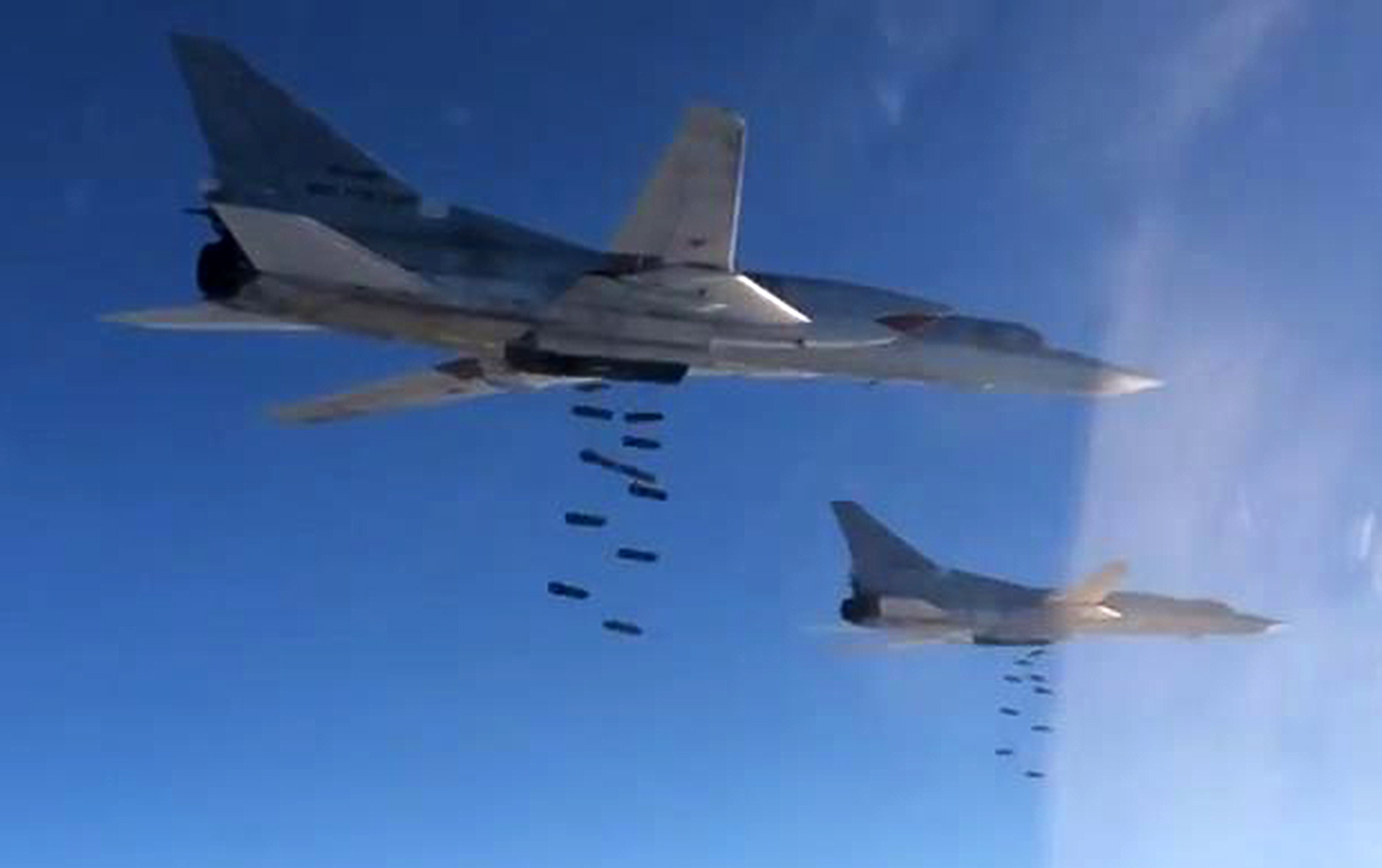
Is a religious factor determining for understanding modern wars?
Yakov Krotov: In our Moscow studio - Islamic Akhmet Labelkapov and Orientalist Renat Beckin . According to Skype from St. Petersburg - professor of the European University, historian Sergey Abashin .
Modern Christianity is very diverse. The old division of Christianity-Orthodoxy, Catholicism, Protestantism-in the textbooks of religious studies in the first place, but in life, when I meet a Catholic or Protestant, I am much more interesting to his attitude to war, to freedom, to abortion ... that is, confessional-state differences are not as important as, relatively speaking, division into liberal and conservative in Christianity. Do you have the same trend in Islam?
Renat Beckin: If we are talking about modernity, then, of course, there is such a division. Naturally, the old, classical division into Sunnis , Shiites and even followers of charihism is also preserved, but no one canceled both conservatives and liberals (I even like the word "progressives"). The fact is that in Russia those whom we call liberals is not quite that liberals in the West, just like conservatives. This is reflected in Muslims.
The voice of Muslims-progressors as a century ago is not so heard, but they exist
As for progressives and conservatives, there will be a good illustration. The beginning of the twentieth century. When the State Duma appeared after the first Russian revolution, there was a Muslim faction. Then, in St. Petersburg, the layer of the Muslim intelligentsia, the progressives, as they were called, was formed, and there was a clear confrontation, even reached the face between representatives of different parishes, between the so -called "bathrobes", that is, people who adhere to conservative views (Kasimov's parish, the second Mohammedan) ... before the revolution there were only four parishes - one official and one official and one of the officials and one of the officials and one of the officials and one of the officials and one of the officials - one An unofficial, progressive approach, and the Muslim intelligentsia, adhering to liberal views, was grouped in this parish. And when choosing the reign of a Muslim charitable society, also a liberal Muslim organization, these "neglines" were inspired by the imams of the other two parishes, and demanded that their voice be also considered. Chairman Zahid Shamil, a descendant of Imam Shamil, said that, of course, the vote will not be held yet, they left, and they still held the vote. So it was also very interesting.
Now the voice of Muslims-progressors is not so heard as a century ago, but they exist. And it does not depend on whether they are Sunnis or Shiite. Although the circle of my communication is mainly Sunnis, and among the Sunnis I met them more. And among the Shiites, I, honestly, can not remember them.
Confessional-state differences are not as important as division into liberal and conservative in Christianity
Yakov Krotov: Sergey Nikolaevich, how is it in Islam around the world?
Sergey Abashin: In addition to theological division, the Muslim community is characterized by all the same divisions as in general for any society with any religious denomination. That is, this division is social, class, ethnic, regional, country and, of course, ideological. We should not think about the Muslim community as something worthwhile outside of what is happening at all, in any community. This is part of the universal space. These are all the social processes that occur all over the world: both in the Christian and in the Buddhist world. Similar processes go in the Muslim world too.
Akhmet Labels: in our North Caucasus over the past 20 years, a striking mosaic of Islam occurs. In the Soviet years, this was not the case before that before. Among the Sunnis there is a traditional division into Sunnis-Hanafites and Shafiites, and Sunnis-Sufi. In recent years, a very powerful community of the Salafites has appeared, and the Salafites have fragmented into so many different groups! There are Salafites-Bezmashabniks, there are Salafites who say that “we are Hanafites, and we are Shafiites,” there are Salafites who are followers of Yusuf al-Cardi , and this is generally an amazing group. These are people who, being in Salafi positions, are at the same time very close to the Muslim brothers that perfect science fiction! This is the result of the activity of the mufti Yusuf al-Kardavi. About 20 years ago it was impossible to even think that such a group would appear among Salafi Muslims.
In our North Caucasus over the past 20 years, a striking mosaic of Islam has been taking place
And, accordingly, such a mosaization leads to the fact that the modern Muslim community literally seetches, there is a serious ideological struggle, ideological searches, searching for answers to modern challenges. It cannot be denied that many Muslim communities faced serious challenges of our time, and many people, especially young people, are looking for answers in religion. Complex modern life causes such a serious crushing. Moreover, what is happening in the North Caucasus is the result of the fact that we got out of isolation, and the processes that occur with Islam on a global scale are reflected among our Muslims.
Yakov Krotov: And among all this spectrum that you designated, are there liberal Muslims?
Ahmet Labelkapov: Absolutely, there are liberally tuned Muslims, but there are hard -minded - the whole spectrum is represented. Russian Muslims have a full choice.
Yakov Krotov: I have the impression that Muslims have more diversity than in Christianity. I would not say that our ideological life is very sealing. In modern Islam, people reflect on what is the source of authority?
Russian Muslims - a rather separate group inside Russian Islam
Renat Beckin: There are people of different views. There are people who have appropriate knowledge or do not possess it, however, they blindly do not follow any authority, try to figure it out themselves. This, of course, is particularly characteristic of those who came to Islam in the process of studying various religious sources, including from other religions. These are the so -called Russian Muslims, a rather separate group inside Russian Islam. There is no exact statistics, but there are people who, being Russians by nationality, accept Islam, and they are quite active and socially active. Most of them have just passed the process of studying, a stressful spiritual search.
At the same time, of course, there could be teachers, as in the case of Heydar Jemal , who brought many Russians to Islam.
The search is obvious here, especially among young people. People were looking for themselves, and someone is still looking for, trying to figure it out
Yes, the search is obvious here, especially among young people. People were looking for themselves, and someone is still looking for, trying to figure it out. And there are people who consider themselves ethnic Muslims, and rather, the situation can be attributed to them that there is a Qur'an, there is an understanding of traditions, everything is said in the Qur'an.
Yakov Krotov: In modern European Christianity, one can meet rationalism, which is characteristic of European civilization - a person is rational to his faith. He is a mystic, he prays, but subjects faith to rational understanding. Is it typical for Muslims today?
Akhmet Labels: The question is difficult. Islam is characterized by the whole spectrum, there are rationalists and those who mystically comprehend everything. There is an interesting trend, again, for European Muslims - a rethinking of traditions.
Yakov Krotov: Among modern European Christian leaders, an atheist can be found, because it cannot be discriminated with a civil service. Elsinore woman is officially an atheist, but at the same time a bishop. And there are thousands of priests, mostly Protestant, but there are Catholic ones who say: Resurrection is a myth, this is an attempt to poetically, figuratively say about some kind of deep spiritual truth, but, of course, we should not oblige parishioners that the body with legs and hands rises from the coffin. Is it possible to meet among modern Muslims those that will say that the journey of the Prophet to Jerusalem is a myth, a beautiful image, and nothing more?
Akhmet Labels: No, I have not met this. There are such trends in the States, there are even women-imams, which in general for Islam can theoretically be allowed, but in practice it is very difficult to do.
Now dozens of people die in Syria, Afghanistan, Pakistan, Iraq every day
Yakov Krotov: Now, every day dozens of people die in Syria, Afghanistan, Pakistan, Iraq and so on. In Christianity, there is a very ancient pacifist tradition, but it has never been dominant. There are absolute pacifists, such as Jehovah's Witnesses, whom the Kremlin hates, whom the GPU, the NKVD, and the Cheka were oppressed all the years of Soviet power, and now they spread rot. In America there are ameshi , there are quakers , there are very few of them. But much more ideologists of the concept, as Alexander Blok said: "Cross and sword - one." Most Christians, of course, are in the middle: the world is better on Earth, but out of need you can bomb the Syrians and introduce troops into Afghanistan, and so on.
I know that in Chechnya there was Kunt Haji , one of the few Islamic pacifists. I remember how US President Barack Obama recently mentioned the Saudi Theologian, Imam, who created a very small movement of Muslims in defense of the world. If we talk about Russian Islam, that is, such a division, there are disputes on this topic, are there pacifist and distinctly expressed militaristic trends?
Due to the variegation of Islam, it cannot be said that the Sunnis are peaceful, and Shiites are vice versa. There are representatives of different directions, there are people who adhere to pacifist views
Renat Beckin: Due to the variegated Islam, it cannot be said that the Sunnis are peaceful, and Shiites are vice versa. There are representatives of different directions, currents, there are people who adhere to pacifist views, and this is due to their political views, education, and so on. If we talk about the currents, then the Ahmadites, if we consider them Muslims, are just attributed to the fact that they generally deny jihad. In fact, they do not deny jihad, but they bring him to the jihad the Great, that is, not military, small. They believe that only in the case when there is a real threat to Islam, when it comes to whether Islam will exist or not, you can take up weapons. And a certain part of the liberal, pacifist Muslim intelligentsia adheres to the same views. If we take famous Russian people, then, for example, Talfit Ibrahim, thinker, specialist in Arab-Muslim philosophy, just defends the peaceful character of Islam in his works.
There is a very ancient pacifist tradition in Christianity, but it has never been dominant
Yakov Krotov: The Great Jihad seems to me an analogue of Christian asceticism, that is, it has nothing to do with war, it is a purely spiritual, bodily practice that has a task for self -improvement and the path to the creator. Most of the Russian Orthodox, unfortunately, supported the actions of the Russian military both in Chechnya, in Georgia, and in Ukraine. There were opponents of these wars, there was a picket at the Memorial, when there was a war in Chechnya, and Victor Popkov , our wonderful peacemaker, even died in Chechnya. What are Russian Muslims - they are one, did they have some position on these tragic events? And how important is it that Russia wages war in Orthodox Ukraine? Do they believe that this does not concern them? Maybe the events in Syria are more concerned about them?
Many people of Muslim religion can negatively or neutrally relate to Russia's actions
Sergey Abashin: As I understand it, there is no single position of the Muslim community. Different groups come from different positions. Some of the people from the Caucasus or from the Volga region who participate as volunteers in Ukrainian events come from religious positions, but from the standpoint of the loyalty of power, the Russian state and so on. And many Islamic organizations, too, rather interpret the relations of Russia and Ukraine not from religious positions, but from the standpoint of patriotism, as they understand it, or loyalty. But we also know that many people of Muslim religions can negatively or neutrally relate to Russia's actions. Here we also see a wide variety of points of view.
Yakov Krotov: That is, the fact that the Crimean Tatars are still Islamic people, matters to the Muslims of Russia?
Ahmet Labelkapov: This year I was quite often in the North Caucasus, in particular, in Dagestan. And sometimes absolutely not religious, secular people told me: "How bad that our Sunnis bombed in Syria. We are Sunnis, and there are our own." People inside have this feeling. Moreover, a person may not even understand how Sunnism differs from Shiism, he simply knows that he is a Sunni, his ancestors of the Sunnis and so on. Of course, this plays a huge role, and such things immediately work at some level ...
Yakov Krotov: I will say poisonously - this is an animal level. Indeed, in modern Russian Christianity, the farther a person from truly religious depths, the less the experience of Christianity he has as a meeting with the creator, the more Christianity is for him-these are painted eggs on Easter or "to bother the child," the more careful this person will be: "But somewhere Orthodox offends." For him, religion is something ethnic.
Supporting a group of extreme Shiites in power in Damascus, Russia makes a political mistake
Renat Beckin: Not only. This is perceived by many quite secular believers as the fact that the leadership of Russia is actually fighting with the Islamic world, because the Sunnis make up the majority of the Muslims of Russia, and the entire Sunni world is configured against Assad and its regime. Therefore, it seems to me that supporting the group of extreme Shiites in power in Damascus, Russia makes a political mistake. I do not presume to judge geopolitically, but in terms of politics in relation to Russian Muslims, I think this is a mistake that has not yet been fully realized by the Muslims themselves in Russia.
The leadership of Muslims is silent
The leadership of Muslims is silent. If the same Gainutdin in the 90s, before the first war in Chechnya, wrote letters to Yeltsin to prevent this war, now the leadership of Muslims, spiritual leaders, with permission to say, are either trying to keep silent or comments that "we support the policy of Russia."
Yakov Krotov: In Russian Christianity, for many decades, the party apparatus and the NKVD created a special layer of religious leaders (both Orthodox and Catholic) through Nazi selection, that is, the rebellious shot, destroyed, dwottes in camps, and their place was taken by submissive. And the more loyalty was, the higher the person rose. I think that most Russian Christians of all faiths with great skepticism relate to their leaders, because for conservative people these leaders are too unprincipled and unprincipled, although they look like conservatives, and for people free -minded people are not related to leadership in human sense, these are puppets of power. Does the Muslims of Russia have similar positions in relation to the country's Muslim leaders?
There is such an attitude to many official Islamic leaders - as the leaders appointed by the state
Sergey Abashin: I think there is such an attitude to many official Islamic leaders - as leaders appointed by the state, and in this sense, their authority is in doubt. Although they have their own influence, their own circle of people with whom they maintain relations, and it is impossible to deny their influence on part of the Muslim community, but there is also a critical attitude towards them.
In Christianity, there is a formal leadership, enshrined in Christianity itself, there is a church as a kind of institution growing from the dogma of Christianity itself. And in Islam, all these spiritual administrations are, strictly speaking, structures created not inside Islam, but from the outside. Therefore, in Soviet times, there was a huge number of Muslim leaders who are not included in these structures, and the Muslim can go to the mosque where the appointed imam is operating, and it can go to an informal mullah, and from the point of view of Islam it is equally, there will be no violation of the order. So here is a more flexible situation.
I think that most Russian Christians of all confessions with great skepticism relate to their leaders
Yakov Krotov: I go on the Internet to the Islamic site created by supporters of the caliphate, caliph Ibrahim, and there a person writes that there are Muslims who say that it is impossible to fight, but the Prophet fought. And the criterion of truth in Islam is to imitate the Prophet: what the Prophet did is good for his followers, this is the highest authority. In Catholicism and Orthodoxy there is a concept of imitation of Christ, such words are in the epistles of the Apostle Paul, but few Christians know about this. Но когда доходит до подражания, одни поступают, как господин Цорионов : «вот Спаситель выгнал торгующих из храма – и я кого-нибудь выгоню», а другие говорят, что «Спаситель подставлял щеку тем, кто на него напал, значит, и мы должны подставлять щеку». Насколько для мусульманина на первом месте авторитет подражания Пророку?
Пророк не пострадает от того, что какие-то дураки нарисовали карикатуру, и объявлять из-за этого джихад явно не стоит
Ренат Беккин: Безусловно, мусульмане должны подражать Пророку, и здесь тоже существует такая вилка. Есть большое количество преданий, где достаточно подробно повествуется о действиях Пророка, приводятся его высказывания. Это вопрос толкования, вопрос понимания. Если брать самую биографию Пророка, то речь шла о выживании мусульманской общины, когда многобожники хотели ее уничтожить. Здесь нельзя проводить аналогий, это была абсолютно другая историческая ситуация. И если большую часть своей миссии Пророку приходилось отстаивать, иногда с оружием в руках, религию, ислам, то это не означает, что в современных условиях нужно делать то же самое. Сейчас вопрос о выживании ислама как религии не стоит. Появляются карикатуры на Пророка, но даже если рассматривать его как авторитетного исторического деятеля, то он не пострадает от того, что какие-то дураки нарисовали карикатуру, и объявлять из-за этого джихад явно не стоит. Позицию такого плана разделяют большинство мусульман, которых мы можем условно назвать умеренными.
Яков Кротов: В православии существует концепция Священного царства, как говорили на Руси в XVII веке, Подсолнечного, это есть в виршах Симеона Полоцкого , где Россия именуется «Подсолнечное царство», но это означает, что «русский мир» - там, где есть хотя бы один русский человек. Когда президент России говорит, что "мы будем бомбить, потому что в Сирии есть выходцы из России, и это наша каноническая обязанность", - насколько это тогда мутация суннизма, и насколько это логично для российских суннитов?
Мусульмане в значительной мере живут по шариату, потому что они пять раз в день молятся, постятся и так далее
Ахмет Ярлыкапов: Точно так же, как и в христианском понимании, в исламском понимании ислам есть всюду, где есть хотя бы один представитель уммы . В этом смысле халифат не имеет политических границ, как и шариат, собственно говоря. Вот когда говорят, что мусульмане хотят вести шариат… Мусульмане в значительной мере живут по шариату, потому что они пять раз в день молятся, постятся и так далее, и все это - тоже шариат. Умма и халифат – в идеале эти вещи должны быть совмещены, потому что в идеале умму должен вести заместитель Мухаммеда, который есть халиф. Но так случилось, что халифа нет, и вот тот халифат, который был объявлен Аль-Багдади и его сторонниками, признается ничтожным 99 с лишним процентами мусульман. На территориях, которые контролируют эти люди, проживает максимум 10 миллионов человек, а это меньше 1 процента от полутора миллиардов мусульман, включая тех, кто туда едет. Мы можем сказать, что подавляющее большинство мусульман не признают этот халифат законным.
Ренат Беккин: Даже если вспомнить турецкого султана… Когда началась мировая террористическая война, один из ключевых моментов, на что рассчитывали турки, это как раз то, что султан является халифом для мусульман-суннитов, а большинство мусульман были сунниты. Но это не сработало.
Яков Кротов: Православный монархизм и суннитская тяга к халифату – у них есть какое-то родство?
Все, что происходит внутри исламского сообщества, внутри ислама как системы взглядов, имеет очень много аналогов в других религиях и сообществах
Сергей Абашин: Безусловно, есть некая параллель. Я настаиваю на том, что все, что происходит внутри исламского сообщества, внутри ислама как системы взглядов, имеет очень много аналогов в других религиях и сообществах. В конце концов, человечество – это единое образование. Другое дело, как нам трактовать эти сходства – как некое сохранение извечной религиозности, которая передается и сохраняется из поколения в поколение, несмотря на то, что кругом меняется жизнь, меняется экономика, политика, или мы видим все-таки некое новое явление, после эпохи сильной секуляризации мы видим новый всплеск интереса к религиозности, к вере, к символам веры уже на основе новой политической ситуации, новой экономики, новой большой культуры, где все это интересным образом совмещено?
Мы часто видим религиозного человека, который как-то легко совмещает свою религиозность со светскими терминами, понятиями, представлениями, он включает в свою религиозность очень многие светские идеологемы рационализма, коммунизма, фашизма и так далее. Мы видим сложное явление и можем искать здесь какие-то параллели, которые можно назвать консервативным поворотом, происходящим во всем мире: и в христианстве, и в буддизме, и в индуизме, - там тоже есть консервативный поворот к неким ценностям, совмещенным с современностью. И то же самое происходит в исламе.
Яков Кротов: Мне кажется, когда раздаются голоса о восстановлении самодержавия в России и объявлении президента России самодержцем, это отнюдь не секулярное начало, соединяющееся в религиозным, а псевдорелигиозное явление. Это как раковая опухоль внутри религии, разрушающая религию. И тогда встает вопрос: Ибрагим Аль-Багдади в этом смысле воспринимается как религиозный фанатик, перешедший черту, или как враг нормального ислама?
Большинством мусульман Ибрагим Аль-Багдади однозначно воспринимается как враг ислама
Ахмет Ярлыкапов: Большинством мусульман он однозначно воспринимается как враг ислама. Причем не только те, кого принято называть умеренными мусульманами, а даже абсолютно отъявленные муфтии-джихадисты не признают Аль-Багдади. Ему отказывают в суннизме и говорят, что он хариджит. Вот слово "хариджит" почему-то стало в суннитском мире ругательством. Хариджит – это символ абсолютно внесистемного и, самое главное, насильственно настроенного человека. Первые хариджиты воевали до последнего человека, то есть это символ абсолютной крайности, непримиримости. Вот Аль-Багдади и его последователей называют хариджитами, памятуя о тех временах и имея в виду, что он абсолютно крайний и совершенно неприемлемый для суннитов человек. А кто-то даже вообще отказывает ему в исламе.
Яков Кротов: В мире существует 6 миллиардов языков, у каждого человека свой язык. Точно так же и с религией – у каждого человека свои отношения с Творцом. Когда я встречаю единоверца, и мы опознаем друг друга по какому-то слову, по радости, это счастье! Но тогда встает другой вопрос. Когда мой противник в Церкви говорит, что я нехристь, когда кто-то из католиков говорит, что католики, которые позволяют себе делать аборты, уже не католики, идет война за слова. И я знаю, что сейчас в Европе, в Германии, например, родился термин «исламизм». А почему для многих это является оскорблением? Не разумнее ли признать, что и то, и то - мусульмане, и то, и то - ислам, и решать проблему, а не пытаться убить ее, налепив ярлык «исламизм»?
Большинству мусульман, по крайней мере, в России, слово "исламизм" не нравится
Ренат Беккин: Скажу как специалист по исламу, как мусульманин: к термину "исламизм" отношение негативное. Большинству мусульман, по крайней мере, в России, слово "исламизм" не нравится. Это фактически, по логике, то же самое, что ислам, и непонятно, чем отличается ислам от исламизма. Иногда говорят "политический ислам". Ислам, как всеобъемлющее явление, в любом случае включает в себя, конечно, политическую сторону, тут никуда не денешься. Сам термин вызывает много вопросов и нареканий, и его в основном используют не исламоведы, а политологи, которые любят им козырять, зачастую не очень понимая, что за ним скрывается. "Политический ислам - более корректный термин", хотя он тоже не совсем точно отражает действительность.
Яков Кротов: В сентябре этого года в журнале "Дипломат" на английском языке журналистка Кейси Мишель писала: "Российские официальные лица чрезвычайно преувеличивают угрозу ИГИЛ. В этой своеобразной гиперинфляции термина участвуют и некоторые региональные лидеры, и отдельные политики Запада, однако разговор о подпольных государствах, о накатывающих одна за другой волнах исламистских завоевателей представляется, скорее, игрой фантазии, чем отражением реальности". Она приводит высказывания Василия Кашина, Владимира Блудницкого, а я бы процитировал вам недавнее выступление Аркадия Дубнова на "Эхе Москвы": "На севере Афганистана структуры ИГИЛ уже давно фактически подмяли под себя талибов". Насколько это действительно угроза, что последователи Ибрагима Аль-Багдади ставят перед собой задачу – истребить либерализм в Таджикистане, дойти до Москвы, освободить петербургских мусульман? Такая угроза существует?
Очень сложно провести границу между радикальным и совсем не радикальным исламом в сознании обывателя где-нибудь в Москве, он не разделяет эти вещи, для него все представляет большую угрозу
Сергей Абашин: Нельзя сказать, что такой угрозы и такой проблемы вообще нет. Наверняка есть радикальные исламисты, ставящие перед собой самые невероятные цели и задачи, которые мы можем воспринимать как опасные для нас, и наверняка они будут что-то предпринимать практически. Мы видим и терроризм, и все что угодно. Вопрос в том, как мы к этому относимся, представляем ли мы себе это как большую угрозу, которая вот-вот на нас нахлынет. И вот тогда все эти деления, о которых мы говорили: вот хорошие мусульмане (умеренные, не умеренные), а вот плохие мусульмане, - они пропадают, и все мусульмане становятся одной большой угрозой. Очень сложно провести границу между радикальным и совсем не радикальным в сознании обывателя где-нибудь в Москве, он не разделяет эти вещи, для него все представляет большую угрозу. И здесь мы сталкиваемся с другой проблемой - все это преувеличивается, и, мне кажется, часто из каких-то своих собственных соображений. Многим политикам выгодно представить это как большую угрозу, чтобы сохранить свою собственную власть.
-

Yakov Krotov
Historian and priest, leading Radio Freedom Radio "Between Vera and Belief"
ykrotov@yahoo.com