
Translated material
Russia and Europe. Eternal return
In order to get out of a vicious circle, our country needs to use the main tool for modernization - democracy
In order to get out of a vicious circle, our country needs to use the main tool for modernization - democracy
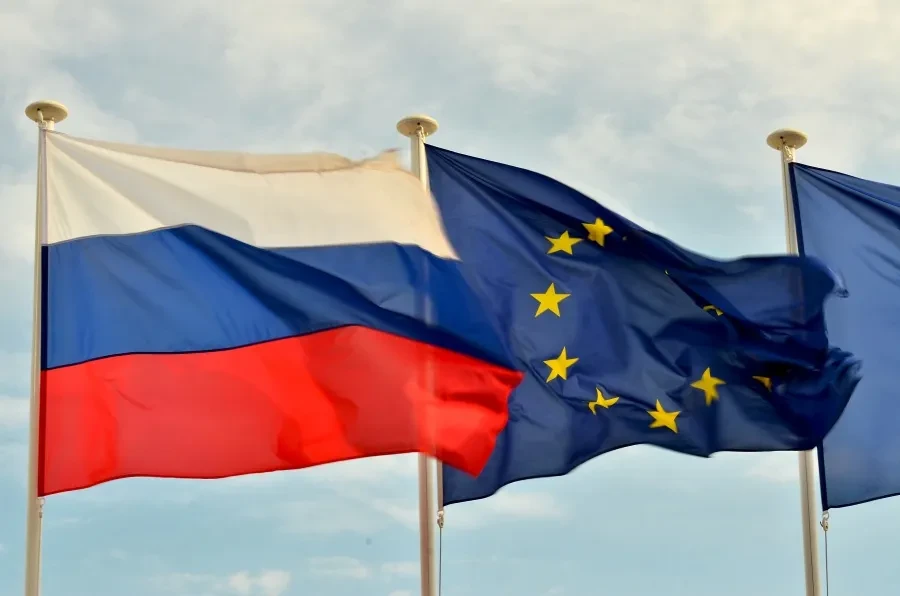
The conflict of Russia with the West serves as a side effect of Russian modernization and at the same time an incentive for its continuation. The final overcoming of the preserved gap with Europe does not depend on geography and not on the past, but on changing the worldview of the Russian political class, as well as on the creation of a modern competitive and legal political system. Such an opportunity, in spite of everything, remains in today's Russia.
Classical comedy
Relations between Russia and Europe, wider than the West, to put it mildly, are far from idyll. However, if you distract from the news tape, just going to the streets of Moscow, you can see the obvious discrepancy between two paintings. The least Russian capital is similar to the besieged fortress, and its inhabitants do not look like people participating in the war, especially with the West. In addition to those that cause more confidence in the data of sociological surveys, there is nothing to give out in the Russian person the desire to "turn back to Europe." On the contrary, such a European city as now, Moscow, perhaps, never looked. Despite the rhetoric, our authorities did not get rid of the old burden of the “only European”. Otherwise, how to explain the widespread planting of bicycle paths, to which most of the townsfolk react with the same bewilderment as there is no time to shave beards to the first Petrovsky Assembly. Not to mention the fact that the deterioration of relations with the West in a strange way coincided with the growth of fashion for teaching in English and the requirement of foreign publications, which Russian scientists should now report almost mandatory.
Russia is almost fighting with the West, but see what samples the Russian army is reformed? Whose “soldiers of good luck” are imitated by our “polite people” whose mistakes are in a hurry to repeat those who went to bomb the Arabs on the Middle East? And who taught our generals to show to reporters Russian bases in Syria, are the experience of Americans in Iraq? Yes, and the notorious Kiselev-TV is not copied from the formats of mass cheap television channels in America and Europe? The current Russian propaganda is only brought to the extreme, an even more vulgar copy of Western analogues.
Thus, the Russian leadership is trying to wage war with the West, relying on borrowed technologies, perceived and witnessed in a specific way.
All this may seem strange only at first glance. If we carefully look at our own past, then we will not find nothing surprising in the observed paradox. Everything is just standard enough. Moreover, it is possible that at least one of the current generations, and perhaps everyone will be able to see not just the next, but the final “return to Europe”, which Russia is trying to fulfill with varying success over the past for almost 500 years.
The existing conflict with the West can be explained as a natural continuation of the non -stopping Europeanization of Russia. Moreover, its result will not be a turn somewhere away from the West, but, most likely, even closer with it, rapprochement. Such is the hypothesis confirmed on the material of history.
The will of Peter the Great
Let's start with the most obvious example, with the reforms of Peter I, to whom our “Westerners” usually pay tribute as the ancestor of the Europeanization of Russia. Actually, about leaving the Middle Ages and the beginning of a mature new time in relation to the history of our country with confidence, one can speak precisely from the Petrine era. And this new era, undoubtedly, is associated with the breakthrough approach of Russia to Europe, which has been manifested in many ways: from the transition to the European calendar and European dresses on officers and soldiers to European science, literature, painting and architecture, the appearance of which is fundamentally distinguished by Petetrovsk and publisher Russia.
Of course, those who object to the Petrovsky reforms Europeanized Russia, although large -scale compared to the previous period, but still partially, will be right. The changes primarily affected the army, the state apparatus, the royal court, the service classes of the nobles and the tops of the wealthy citizens. The truth is that many institutions borrowed from Europe - such as the recruitment army and the centralized bureaucratic structure of the absolute monarchy - were replaced by others quite soon in the most advanced European countries, while Russia remained a stronghold of the “old order” almost until the First World War.
Everything is like this: Europeanization and modernization for Russia still mean almost the same thing. Both that and another still happen, firstly, fragmented, affecting only individual spheres and social groups (every time there are more and more), and secondly, by borrowing, far from always the most advanced samples.
No less important, however, is different. Those who extol the role of Peter, who “cut through the window to Europe,” like those who condemn him for this, and even those who see the limited and incomplete nature of Peter's modernization, usually do not correlate two facts in a single picture. The first example of the accelerated and radical Europeanization of Russia took place against the backdrop of a fierce struggle with one of the strongest European countries at that time. The Northern War with Sweden, which began exactly in 1700, lasted 21 years, most of the time of the independent reign of Tsar Peter. It is no secret to any of the historians that the most important Petrine reforms were carried out under the influence of this war, which became almost the main incentive of all transformations. If earlier European innovations looked more like royal fun, then during the confrontation with one of the most powerful European forces, the borrowing of Swedish experience, like the experience of the whole of Europe, became a necessary condition for the successful conduct of military operations.
Europeanization under Peter I, as we see, was the result of a direct clash of Russia with European civilization.
The European reform of Peter is inseparable from the war of Peter with Europe. These are the links of one process where the ambitions of participation in European politics lead to a clash with European force, and this clash itself serves as a driver of accelerated modernization and, as a result, Europeanization. Overcoming the isolation, Russia is faced with some part of Europe or, as today, with the West as a whole, but this collision itself does not repel, but, on the contrary, brings closer at least at the level of perception of experience. It is not surprising that the result of the Northern War and the entire Peter's era was the more active participation of Russia in international affairs as one of the European powers, led by the ruling dynasty and the elite, whose European affiliation no longer caused any serious doubts and objections.
However, Tsar Peter was not at all the first Russian ruler who knocked on the door of European politics. In a strange way, the “cut window” appeared about two centuries after the first “return” of Russia to Europe took place.
Where did you come from
Can Russia be considered part of Europe? At the primordial level, this belonging is perhaps even better than on constructivist. In the modern sense of the word, no Europe still existed, as Russia did not exist in the form as it is described that our “Westerners”, “Slavophiles”, but the plains, turning one to the other from the east to the west of the European continent, were always. There is no clear geographical border between Europe and Russia and now - neither the ocean, no desert, nor too high mountains. It is not surprising that the tribes of the Indo -Europeans once settled in all this space, and a little later within the same geographical limits - conditionally from the Atlantic, first to the Volga, and later to the Urals - Christianity has been established. So now Europe for the Chinese begins behind the Amur, in fact, in Russia.
Differences are manifested in privacy. If the panelnia, a relatively small plain on the Middle Danube, occupied by the Hungarians around 1000, was considered the “hallway” of Europe, then the East Slavic tribes, the ancestors of Russians, Ukrainians and Belarusians, got a place on the lawn and in the garden. Spacious, but colder and less protected. On the cold, however, as well as the remoteness from the ancient ruins who warm the European soul, the Finns and the Swedes can complain to no less than ours. In a much greater problem, throughout the first centuries of Russian history, there was a neighborhood with the Asian steppes, from where a really mortal danger came. The Mongol invasion of the 13th century, becoming almost the last wave of the great relocation of peoples in Eurasia, did not move much west of the same pannonia, but completely ruined the lands of ancient Rus'. The transformation of the North-Eastern Slavic principalities into the ulus of the Golden Horde by various historians is interpreted as the first real separation of Russia from the cultural and political space of Europe.
Paradoxically, many Russians today are not afraid of Europe as some terrible threat, on the contrary, consider it a weak, sometimes even worthy sympathy. But at the same time, the Europeans, who are called “Germans” from ancient times, are treated, as a rule, with Petit, respecting their technical knowledge and material well -being, or even enviling.
This is not the last role in this is probably played by collective memory, which is rooted in the Middle Ages. The feudal, forever crushing, fighting with each other, the kingdoms and knightly orders could not pose any real danger, did not claim the Russian lands seriously. Separate attempts at expansion, as a textbook landing of a small squad of the Swedes on the Neva or the capture of Pskov by the Teutons in 1240, at the first serious resistance stopped without continuation. The rivalry changed very quickly to cooperation, as happened in the relationship of Livonia and Novgorod.
Another thing is that on the way of Russia a lag syndrome lay to Europe. Having left at the end of the 15th century from the 300-year-old Horde yoke, the Russian state united around Moscow, of course, resembled the centralized monarchies of Western Europe. But from the point of view of institutions, technologies, spiritual and material culture, which was on the verge of the early new time of Muscovy still remained in the European early Middle Ages. Knight and workshop rules, Magdeburg law and city liberties, universities and European humanism - the absence of all this put Russia outside Europe not geographically and not racially, but structurally. Around the same then, the first collective image of the West was designed in the Moscow kingdom as a space of “wrong” Christianity, deviating from the foundations of the Orthodox “third Rome”. From the point of view of this and subsequent messianic doctrines, which from time to time covered Russian minds, the West was doomed to die, but contrary to ideological constructions, it not only continues to exist, but remains an example of development for the whole world, including Russia.
The acquisition of the initially absent, but necessary for the existence and development of institutions is the content of Russian-European relations throughout the history of the new time to the present day, where first European countries, then Europe as a more or less single concept, finally the West, acts as an intellectual and technological donor of catching in Russia. Moreover, the coincidence of structures cannot be achieved by this time.
Circles of an incomplete process
With all the skepticism regarding the cyclicity of history, one cannot but pay attention: about every 100 years, from the end of the 15th century, at the turn of the century, Russia has experienced waves of more and more Europeanization of its own life. The very fact of the formation of a Russian centralized state, the rulers of which in search of legitimacy of the authorities appealed to European and even ancient Roman history, from the experience of neighboring European states, published the legislative statute, dividing subjects into estates and after some time starting to gather their representatives into zemstvo cathedrals-all this, as well as the two-headed eagle "who arrived" from Europe, in a later description, looked like a return to the return to the return of Europe ".
The path, alas, turned out to be long. At the end of the 16th century, Boris Godunov sent the first nobles to study abroad, for almost half a century in Russia a semblance of an elected monarchy was established, as in neighboring Poland. The end of the 17th century, in addition to the eve of the Petrovsky reforms, was marked by the first participation of Russia in the European Union against the Turkish threat. At the end of the XVIII century, there were already Moscow University, noble liberties, and even city councils, so that reaching the scene of the Russian intelligentsia with almost the first question about the place of his country in Europe was quite logical.
In the 90s of the XIX century, remaining at the bottom of a political reaction, Russia nevertheless experienced a powerful wave of industrialization, when Count Witte's economic reforms opened the way to Western investments in the economy. In the recent “dashing 90s,” we could only dream of this, but the experience of the last decades for many in Russia is associated with endless attempt to all new and new practices that are undoubted from the West, from Europe.
This transit of Russia, which occupied the last half -thousand -in -law, was not, of course, linear and non -conflict.
Each wave of Europeanization led to the fact that Russia began to feel new forces in itself and, as a result, showed more ambitions in the international arena.
A similar situation in itself could not but lead to a clash with other forces - primarily in neighboring Europe. Each wave of Europeanization was accompanied by another war, and, regardless of what this war ended for Russia, defeat, like the Livonian and Crimean, or victory - the war with the Europeans forced them to study. We observe this mechanism in action today with known amendments to the situation when an open military confrontation with the West is hardly possible. However, the question is, how long, Russia will “return”, borrowing more and more among the Europeans, but without being a whole with them?
The step that is necessary
The closer Russia becomes to Europe, the sharper and painful the difference is felt. The reflection, which began with Radishchev and Karamzin in the 1790s, half a century later split the Russian intelligentsia into “Westerners” and “Slavophiles”, whose protracted dispute today reached the top of the farce. The last words of the party of the opponents of Europe were to sound exactly as they sound today, in order to remember everyone: there is nothing more empty and meaningless than the apology of the “special path”, and other today, some already post-Oslavofil-fraud.
Meanwhile, behind the noise about the “civilizational differences”, “sunset of the West”, “special cultural code”, “soil”, and not another blood group, simple and obvious truth is hidden. Today, Russia is not Europe, or rather, not quite Europe, not because there are not many bicycle paths built in it, but because all episodic borrowings bypass the main thing that we have long had to adopt from everyday European practice. It is scary to say - about the modern European state, or about democracy, as it is customary to understand it today in the West and throughout the developed world.
The Russian feudal empire, the Russian military-feudal bureaucracy and the Russian feudal-dependent intelligentsia at all stages of its existence ignored the most important and most difficult-the European rationalistic tradition of understanding politics.
Therefore, we are still not able to solve the problems that are elementary for any European schoolboy: find a balance between freedom and law, understand the natural origin of the equality of claims, recognizing the need for legal equality without exception.
Having once perceived democracy exclusively as “the power of the people” and ignoring the principle of the rule of law, we seemed to have lost faith in the possibilities of democratic government as such, seeing in it only a temporary stage of “lack of order” in the transition from one tyranny to another. Not to mention stubborn misunderstanding why the separation of powers, the replacement of rulers, independent courts, freedom of speech, observation of human rights not only do not weaken the state, but, on the contrary, strengthen it as nothing else. The dominant ideal of the “strong” state remains the empire Nicholas I, which lost the first Crimean war.
Trying to catch up with Europe, Russia is constantly stuck in the European past, avoiding answers to long -named questions and corresponding to the future steps. Will Russia be able to comprehend the obvious and necessary things? Do we have enough historical time for this? The chance, in any case, remains. Очень важно не упустить момент, когда откроется очередная возможность для структурных изменений. Войти в Европу в политическом смысле слова сегодня означает стать демократией. Однажды это просто надо будет сделать.
Автор благодарит Елену Немировскую и Московскую школу гражданского просвещения за организацию обсуждения материалов статьи на своей дискуссионной площадке.