
Translated material
Give me a chance!
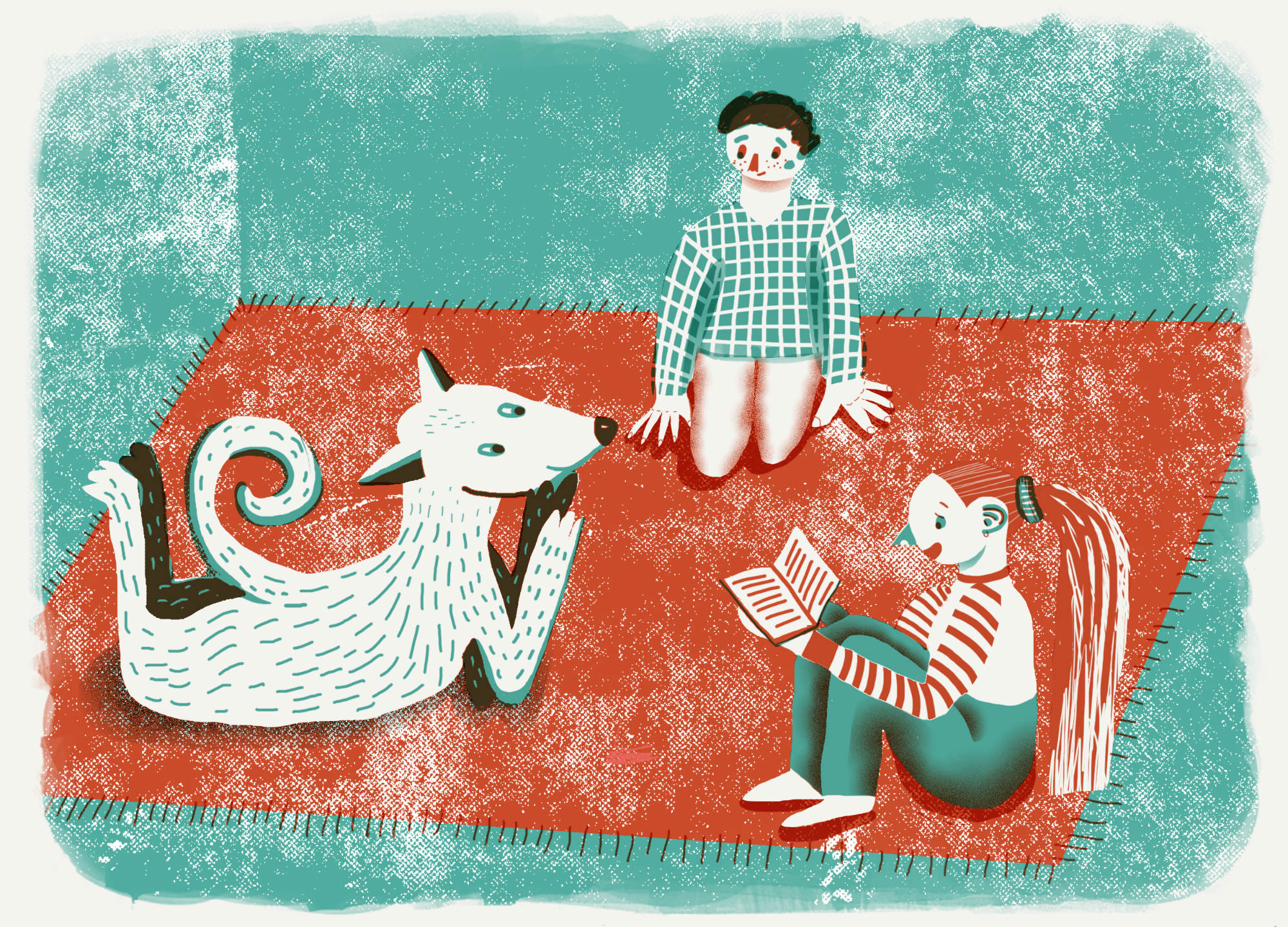
The most ordinary mongrels bring a lot of happiness to lonely old people and seriously ill children
Help not just dogs / Pet help“Let's get a dog!” What feelings do you have this phrase? Tight, enthusiasm, anxiety? Are you one of those who have several pets at home or prefer not to keep anyone and not think about who will feed the animal while you are on vacation? What did your parents answer you with such an offer when you were children? Even if the answer was negative, and you really wanted a dog, consider that you are lucky.
It’s hard to believe, but some are not only inaccessible, but even it is not known what it feels like to play with the dog? For example, children in orphanages and correctional schools. For the first time not in the picture, but live, the children from the house of the child No. 5 in Moscow saw the dog two years ago. The organizers of the “not just dog” charitable foundation, or PET - Paws Expel Trubles, conceived acquaintance with the animal.
In 2013, activists began to organize dog therapy sessions for children in orphanages, older people in nursing homes and hospice patients. The main idea is to give the joy of communicating with dogs to those who, due to circumstances, cannot have their own animals, as well as draw attention to the problem of stray dogs: all therapists-these are finding the owners of the mongrel from shelters or from streets.
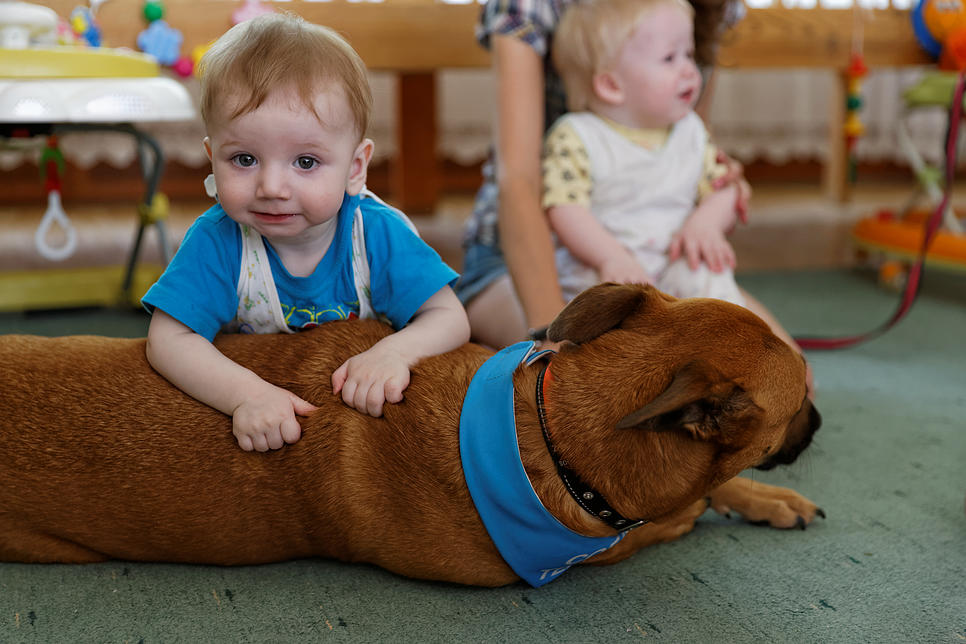 House of the child, Kaluga. Photo: Foundation "Not just dogs"
“I and the Dutch Yentl Hofweik met when they were volunteers in the dog’s shelter“ Call of the Ancestors ”. Yentle was very surprised that in Russia people are so reluctant to take pore dogs, did not understand where so many myths and stereotypes in their heads. And she offered to launch a special project in Moscow in order to give the mongrels the opportunity to prove themselves. We offered people who took dogs from the shelter to undergo testing with their pets, and if the dog withstanding the test, it became a therapist and the owner went to the exits to children, the elderly and seriously ill people, ”recalls Ret Director Natalya Nastrova. According to Natasha, she did not really believe in the implementation of such a “Western” project in the Russian Federation, but Yentle’s European approach to charity gave the fund a good start.
Some for everyone
There are almost no organizations like “not just dogs” in Russia. In addition to the capital, they are engaged in therapy with the participation of dogs in Russia only in St. Petersburg. There they are focused on the development of tests for the selection of zotherapists, analyze the experience of animals in Russia.
To the question: “What is more important - to find a house to dogs from a shelter or to bring joy to children and pensioners who are waiting for communication with zotherapists?”, The organizers of Reta honestly admit that they cannot answer. Now the fund has several different programs that are aimed at both at the same time.
True, every month to develop organizations becomes more and more difficult to develop, since the number of “commands” (the owner+dog-therapist) is growing rapidly, and it is no longer possible to regulate their work by the forces of only volunteer organizers. And it is extremely difficult to collect money to pay for the work of specialists: perhaps the fact is that the participants of the RET project are dogs, children from shelters, abandoned old people and patients of hospice. None of them can tell the world about how mutual contact is important to them. Those who lie in hospices do not describe in social networks that now they have someone to stroke and that they finally felt lonely. And many children in the shelters that a zoototherapist come to, do not know what Facebook or VKontakte is.
Only educators can tell about how children feel with a dog-therapist. And they tell, however, not on the "wall" on social networks, but mainly the same volunteers. Although the latter some things are obvious without words: here Little Masha was able to take a spoon in her hands after regular communication with the animal - two days ago, a girl with a diagnosis of cerebral palsy did not open a right palm. But the dog-therapist Pronya and the girl Lisa: Pronya is very active and never sits still, but Lisa is clearly to her liking-next to him the girl laughed for the first time in her life.
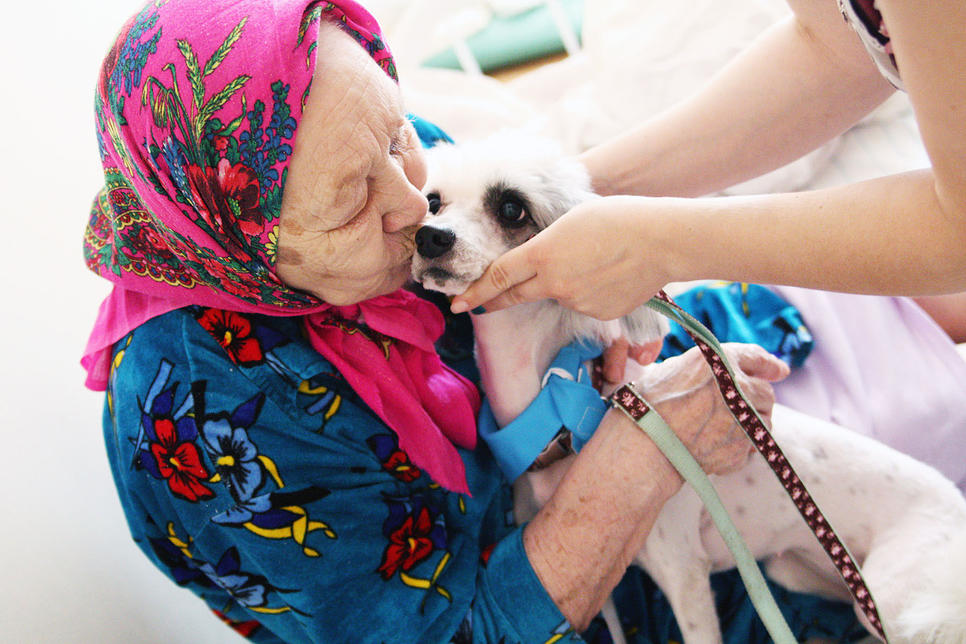 District Hospital
pos. them. Zyurups, Voskresensky district, Moscow region Photo: Foundation "Not just dogs"
As the ward of the children's hospice greeted the Total Dog, says Laura Korobkov, the “House with the Lighthouse” coordinator: “The teams rushing home many times to the wards of the Vera Hospice Children's Exit service, and once we asked the mother of the boy Sasha, who had a brain tumor, whether she wants the child to come to the child and mother agreed. Sasha reacted to her very emotionally. He smiled, although in his state it was already very difficult, only one hand worked for him, and he tried to grab the dog, hold it. And the most pleasant thing is that in addition to the fact that he was good, a mother was happy, who also smiled at him for the first time in a long time, looking at him, because all the previous days were very difficult, and then she saw that her son, he communicates, reacts, he has emotions, and these emotions are positive. ”
How does this work
Today, 40 volunteer “teams” work in the “Not just Dogs” charity fund, whose trips are organized by four volunteers-managers. Over two years, the number of institutions visiting therapist dogs has increased several times. Now the organization supports two hospices, a children's field palliative service, two houses of a child in Moscow, one house of a child in Kaluga, two nursing houses in the Tula region, two in the Mozhaisk district of the Moscow region, two Moscow schools, eight libraries, one class where children with an autism diagnosis study.
Departures to shelters and nursing houses are carried out every week. Arriving, for example, to a boarding house for the elderly, the dog walks around the wards with the permission of the residents, gives itself to iron and caresses to the old people who are deprived of the attention of loved ones. The wolf owner at this time makes sure that the animal does not overwork, and actively communicates with pensioners.
In the orphanage, everything looks somewhat different: the arrivals of the therapist dog turn not only into zoorebilitation, but also become interesting lessons. So, for example, to the house of the child No. 5 of Nika and her dog go to find every month. Children aged one to three years are examined, ironed, and in the final they are solemnly walking to find on a leash. Nick at this time asks tricky questions: “How many ears does the dog have?”, “What paws?” Children are parked with ease, and immediately put Nick in a standstill with a oncoming question: “Where does they sleep, in the group, how are we?”
To say that once a dog, like them, lived in a shelter, and now, finally, I found her house, is not so simple.
Nick and the dog to find together for two years. The girl came to a huge municipal shelter as a volunteer, and to find was the first to be entrusted to her for a walk. “I immediately realized that this is“ my ”dog,” Nick admits. Around the same period, the hostess accidentally learned about the project “Not just Dogs” and decided to try to participate in it with her favorite. Now they and find them regularly traveling to the nursing home in the Tula region, to the child’s house in Dynamo, and also conduct “lessons of good” in secondary schools and “extracurricular readings” in children's libraries of Moscow.
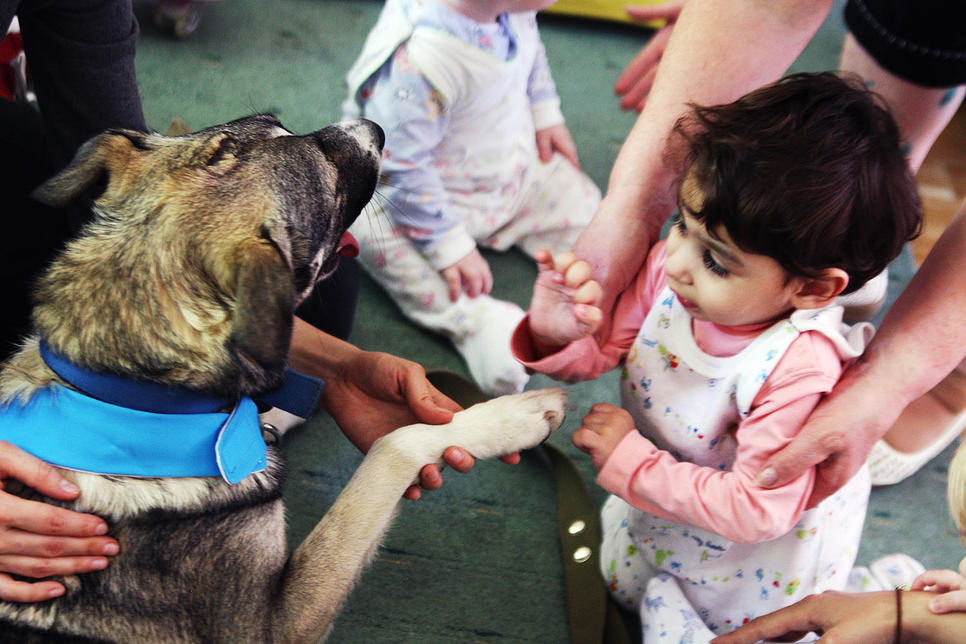 House of the child, Kaluga. Photo: Foundation "Not just dogs"
“The lessons of good” are mini-lectures for children of primary and high school, which are devoted to describing the situation with homeless animals in Russia. They are also discussed about which dogs are in shelters, why the mongrels are no worse than thoroughbred dogs, and what it is: to take responsibility for animal care. The occupation is carried out by the owner of the dog, and the pet at this time lies proudly at the feet. Well, or in any case, it is implied that it lies in the legs: to find, for example, immediately goes to schoolchildren. Relying with affection, she is not ready to wait a minute to get her share of attention.
At “Extracurricular Readings” in libraries, the general practitioners help schoolchildren overcome difficulties in reading skills. In practice, this looks like this: the owner and the zoo doctor come to the reception room of the children's library, and the kids sit one at a time next to the animal and read it out loud to him. The fact that this removes tension and fear of errors during reading, a few years ago, children's psychologists in the West spoke. There, such a practice is very popular.
Interior experience
The cance therapy was invented in the 60s of the last century by the American children's psychologist Boris Levinson. At the psychotherapy sessions with children, he noticed that the kids react positively to the presence of the dog in the classroom, and since then he began to actively promote the idea of dog therapy.
In Britain, rehabilitation of children and pensioners with the help of dogs has been engaged in 30 years: they go to orphanages, in groups to children with Down syndrome, autism, as well as in the nursing homes and hospice. And in the Netherlands they went further: Dutch dogs help not only older people and orphans, but also prisoners. The dogs from the shelters from the shelters for re -education before sending animals to families are brought. The main condition: criminals must train dogs, using exclusively methods of “positive reinforcement”, that is, no shouting and punishment. Experts note that this project had an excellent effect: it turned out that prisoners need dog help no less than the opposite.
In Russia, charitable programs began to develop for only the past few years. Oncobe and children with a diagnosis of cerebral palsy are heard and specified: they write about them, remove plots, help them.
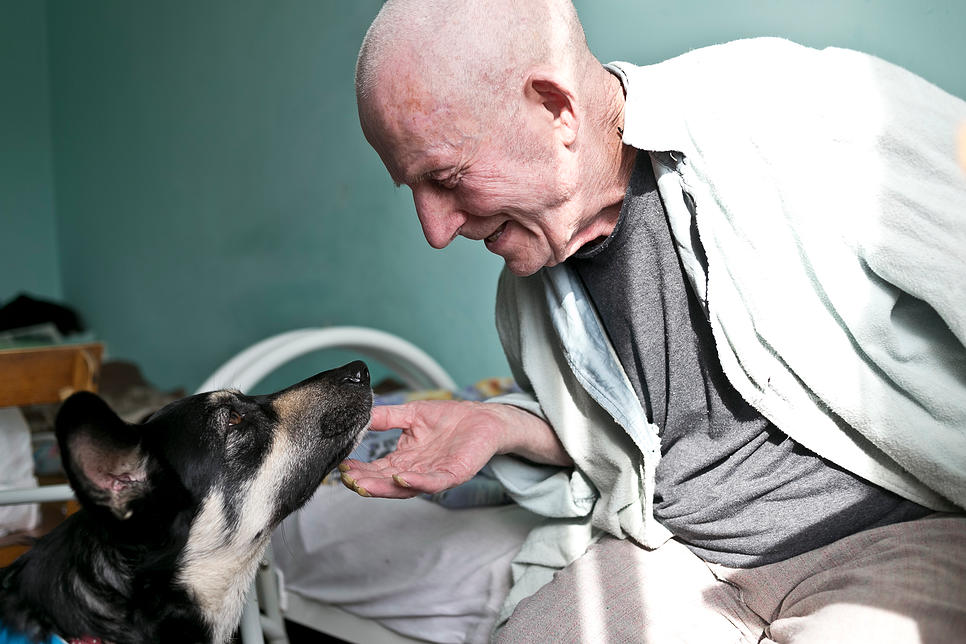 Zavodkovskaya hospital, pos. Kovlovsky, Bogoroditsky district, Tula region Photo: Foundation "Not just dogs"
Monthly donations to the “Not just Dogs” fund are difficult to pay for the work of dog handlers who test future therapists and the treatment of animals, if necessary. In order to develop in 2016 and accept more and more dogs and volunteers in their ranks, pay for zooists and ensure departures to the nursing homes and hospices. The fund needs assistance.
You can sacrifice one -time or arrange a monthly donation with a size of 100 rubles right in the form under this text. Each month, your chosen amount will be automatically written off from your bank card, which will make it possible for our four -legged friends and their owners to bring joy and happiness to sick and single people. If you wish, you can at any time abandon the monthly write -off of funds from your card. Well, of course, the fund will report in detail for all the money collected.
And if you cannot help financially, then become a volunteer of the fund. The PET team always needs musicians for trips to the nursing homes, teachers and psychologists to work with orphans in orphanages, artists, illustrators, photographers, operators and, of course, drivers. Feel free and write - volunteer@petfund.ru