
Translated material
December uprising
50 years ago, a publicity rally took place - the first public political action of protest in the post -war USSR. Only a few dozen people participated in the rally on Pushkinskaya Square, but it was from it that it is customary to count the history of the Soviet human rights movement. Andrey Loshak talked to participants in this story
A few years ago, I agreed with NTV on working on a documentary television series about Soviet dissidents. But while I plunged into the material and wrote the script, the times have changed so much that it was impossible to tell even about Soviet dissidents (what to say about the current ones). Society is interested in completely different stories from that time - Galina Brezhneva’s diamonds, a maniac from Mosgaz and other jaundice. Soviet Donkihots with their eternally ill and annoying conscience are forgotten - both by power and society. They are leaving, they have almost left-every year one of the key figures of movement dies, taking off with them to the grave of invaluable details of the worthy life. The stories from the stillborn scenario weigh me, and if possible, I try to record an interview with these incredible people on camera, just like a specific goal, for the future.
 Left: “Civil Cover” Yesenin-Wolpin
Right: Alexander Yesenin-Wolpin. Photo of the 1960s. Photo: Archive of the International Memorial
In July, I ended up on business in New York. I had a couple of free days, and I decided to devote them to two heroic old people who were already over 90. One of them was the physicist Yuri Orlov, the founder of the Moscow Helsinki group, who spent almost 10 years in Soviet camps. He still works at the Department of Physics at Cornell University, where he is studying dark matter. I will talk about our conversation next year, when the ICG is 40 years old. The second old man is Alexander Yesenin-Volpin, the main character of the current anniversary is the ideological inspirer and one of the organizers of the 1965 publicity rally. The son of the poet Sergei Yesenin, mathematician, logician, philosopher and dissident. I was warned that I was late - in recent years he has been very much surrendered and is now almost non -commercial, but I still went: what would happen. The road from Cornell to Boston took almost the whole day, in Brighton House, which is something between the StatePitail and the Nursing House, I turned out to be late in the evening. The entrance to such institutions in the States is completely free - even no one paid attention to the treacherously protruding tripod. Everything happened as they warned me. Yesenin-Volpin did not want to sit, and lying was like Litvinenko from the famous terrible photo Esenin-Wolpin did not want to sit on this quote , and lying was like Litvinenko from the famous terrible photograph. I didn’t even comb myself. He answered the questions willingly, but confused. It quickly became clear that the interview would not work. Nevertheless, I do not regret at all that I came to his hospital. Below it will become clear why. But first, you need to talk about what happened on Pushkinskaya Square 50 years ago.
Depriving the socialist realism of virginity!
In 1965, the Central Committee finally won the “Party of Conservatives”, and it was decided to turn off the thaw. Most of all the authorities were annoyed by the intelligentsia, swinging the boat. I needed a public flogging - the writers Sinyavsky and Daniel, who printed their satirical prose in the enemy West, approached the best possible way. In the fall they were arrested, the preparation of the demonstration process was held in an atmosphere of secrecy. But then something went wrong. Over the years, the intelligentsia gradually unlearned a thaw, in addition, the first hard generation grew-youth, which in 1965 was 16–20 years old.
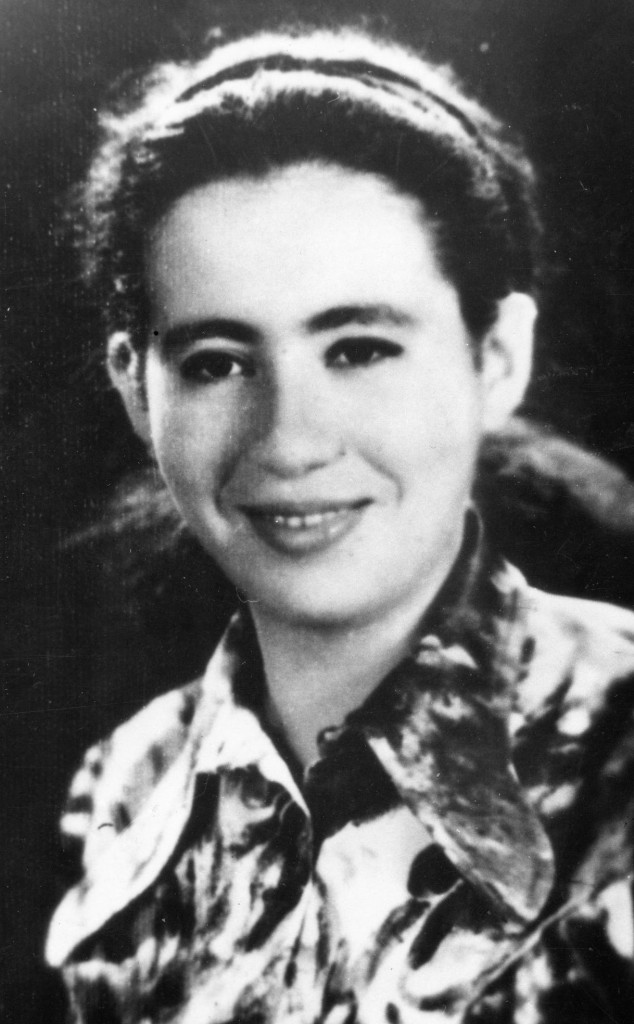 Julia Vishnevskaya (1971) Photo: Archive of the International Memorial
The most desperate and talented united in Smo - the youngest society of geniuses. These were eccentric young men and girls, obsessed with poetry and not alien to actionism in the spirit of the futurists they adore. Gubanov performed with a loop on his neck, Batshev - in a necklace from lighters. 16-year-old schoolgirl Julia Vishnevskaya shocked the audience with such verses:
You press the pedal
Your Ford, as a genius of purulent tracks.
You are not a philosopher. Not a pedant.
Usually - pederast ...
In the spring, even before the arrest of Sinyavsky and Daniel, the young Smogists conducted an unofficial demonstration - in the USSR this has not happened since the rally of Trotskyists in 1927. The action was non -political, but very shocking - the poets passed from the monument to Mayakovsky to the Central House of Sciences with home -made posters: “We will walk barefoot and hot!”, “We will tear off the copper buttons of ideas from the Stalinist uniform!”, “We will be!” And, finally, the most famous: "Depriving the socialist realism of virginity!" Incredibly daring at that time, the trick ended with a fight with combatants (“Komsus”), but had no serious consequences for the participants.
It is not surprising that it was the Smogists who took the most active part in the preparation of a promising rally, where everything was already in the opposite: both demands and risks.
Doctrine of law
In the 65th year, in the USSR, even words did not know such a thing: dissidents. The state was just beginning the next round of the fight against dissent. Nevertheless, there were people who had already managed to undergo repression during the political views during the thaw. Alexander Yesenin-Volpin, whom everyone is still called Alik, then it was 40 years old-of which he spent almost 10 by links and psychiatric students. This eccentric, always disheveled person reminiscent of an ancient cinema-he did not accept anything on faith, he subjected any statement to critical analysis. No wonder he was a specialist in mathematical logic. Yesenin-Wolpin also extended his skepticism to public relations. Having learned about the arrest of writers, Alik was the first to ask a question that for some reason no one asked before: if the state demands to observe the legality from us, then why are we not entitled to demand the same from him? So Alik had a simple, but at that time, an absolutely incredible idea of a political rally of protest, which will sound the only requirement for the state: to respect its own laws. From a legal point of view, the action was impeccable - the Constitution guaranteed the freedom of assembly to Soviet people, just after decades of terror it never occurred to anyone to take advantage of this right. This is how Yesenin-Volpin told about this later himself:
You only need to be afraid of fear. Then I and Bukovsky expressed many times Twisting this quote “legal proceedings is a problem that has always been in last place. It has always been emphasized that Russia is an unlawful state. And I said that there are no non -legal states, the state by definition of a legal institution. They objected to me that the state has rights and very few restrictions, and we only have duties. But this is primarily an unconstitutional point of view! If you put up with this, then the constitution is meaningless. They say to me: "So it is, do you not see?" “I see, but why should I sit in silence with all this vision when these processes occur?” “Yes, you know,” they told me, “what will they do with you?” ”
The main thing was a myth that everyone should adapt to some extent that it is impossible without it. But why not? Who said? If everything is afraid, then maybe it is impossible. But you only need to be afraid of fear. Then I and Bukovsky expressed this thought many times. ”
Vladimir Bukovsky is another person without whom the rally would not take place. He was only 23 years old, but he had already managed to visit the investigation under a political article and sit out for a couple of years in a psychiatric hospital. He met Alik in Mayakovka, where the Smogists gathered. Bukovsky for them was a romantic hero and indisputable authority:
“Alik came to our lighthouse, and then we had such an internal debate: whether it is permissible to apply the methods of the people's volumes to these cattle of the Kremlin. That is, terror. Opinions were divided. And then Alik appeared. He promoted his legal point of view: if we do not follow the laws, then we are not entitled to demand this from the state. Violence is pointless - only legal forms of protest are effective. We argued with him for several weeks, but we have a logician. As a result, he convinced us that it was more correct. Time showed that he was right. ”
Bukovsky helped the inorganized Yesenin-Volpin to realize the idea. Alik wrote the text of the appeal with the call to go to the rally, Bukovsky through Smogistov distributed leaflets with appeal to Moscow State University. Soon, half-Moscow knew this text:
“A few months ago, the KGB bodies arrested two citizens: writers A. Sinyavsky and Yu. Daniel. In this case, there is reason to fear a violation of the law on the publicity of legal proceedings. It is well known that with closed doors, any lawlessness is possible and that a violation of the law on publicity (Article 3 of the Constitution of the USSR and Article 18 of the Code of Criminal Procedure of the RSFSR) is already lawlessness in itself. It is incredible that the work of writers could make a state secret ...
You are invited to a rag of publicity, which will take place on December 5th. G. at 6 o’clock in the evening in the square on Pushkin Square, at the monument to the poet. Invite two more citizens through the text of this appeal "
December 5, 1965
A week before the rally, the most active organizers were arrested. By tradition, Bukovsky was sent to a psychiatric hospital, to the 16-year-old Smogista Yulia Vishnevskaya arrived at school:
“I go out to a big change, and there is dad, mom, school principal, Komsomol, S respect, everything is as it should be. Two flashy are standing, they say that from the city committee of the Komsomol. And before that I lost the Komsomol ticket. And when they said that they were from the city committee of the Komsomol about the ticket, I felt so sad. But when I was brought to the KGB, for some reason I felt relief. They did not have the right to interrogate minors, so they interrogated my mother on the protocol, and talked to me. Of course, I did not tell them anything. Well, I was sent to the children's psychiatric hospital, to Kashchenko. It was very bad that the nursery - it was impossible to smoke there. And they also taught me to swear there, before that I did not swear. They treated me better than real psycho. They made it clear that I am another matter. They were incredibly Soviet doctors. They were very bad about sick children. And a month later they released - as if nothing had happened.
I regret one thing now - that I was not in the demonstration. This was a great event with which the entire human rights movement began. ”
 Lyudmila Alekseeva Photo: Archive of the International Memorial
On December 5, it was no coincidence. On this day, the anniversary of the Stalinist constitution that was then existing then was celebrated. On the eve of Yesenin-Volpin, midnight were discouraged to go to the demonstration of his two friends: Lyudmila Alekseeva and Natalya Sadomskaya. Alik was adamant.
At the appointed time on Pushkinskaya Square, it was not possible to push through. The demonstrators stood near the monument, a small group, several dozen people. The rest came to see, among them-and Alekseeva and his friend: “We were afraid, of course, but when we approached the square, we saw that the situation was the same as if we were going to the conservatory for some epoch-making concert or somewhere for a vernissage. Every minute we said to someone: “Hello ... Hello,” there was so much around familiar faces. And everyone understood where everyone was going. But we were not going to participate in the demonstration, and everyone with whom we greeted were also not going to participate. They, like us, were scared for the demonstrators and did not want to sit at home at such a moment. We were all observers. ”
The fear of Soviet people before public protest was clear. No one understood how the power would react - the event was unprecedented. What if they shoot like Novocherkassk workers? One friend of Alekseeva came with skis and in a tracksuit - supposedly accidentally passed by.
One friend of Alekseeva arrived with skis and in a tracksuit - supposedly accidentally passed by The artist Yuri Titov handed over this quote from the monument by home -made posters, on which two slogans were written: “Respect the Soviet Constitution - the Basic Law of the USSR!” And "demand the publicity of the trial of Sinyavsky and Daniel!" The then famous word “publicity” in a political context was first sounded then. As soon as the demonstrators tried to raise posters above their heads, people in civilian clothes rushed to them from all sides. It became clear that approximately half of the spectators are dressed "Toptuns". Yesenin-Volpin recalled that the word “publicity” was pulled out of the poster and the slogan changed the meaning: “We demand the trial of Sinyavsky and Daniel!” Someone tried to recapture someone, a mess arose, but for a short while-after half an hour there was no one in the square. The authorities dispersed the legitimate rally, thereby confirming that it does not respect the Soviet constitution.
The story is repeated
The demonstrators were kept in the police for several hours and released. Victoria Volpina, Alik's first wife, recalled: “It was 1965, and they still did not know where to turn. Khrushchev’s time ended recently. Therefore, they are still polite. In the 68th, when they dispersed the demonstration on Red Square, the demonstrators were already beaten. ” Students caught at the rally were summoned to Komsomol meetings, they were bombarded, someone was expelled from the Komsomol, someone was expelled from the university. On the site of the Memorial there is a transcript of the meeting of the Bureau of the Komsomol Committee of the Moscow State University - it can be seen from it how a graduate student of the economy faculty and the future coup Ruslan Khasbulatov are especially zealous, insisting on the exclusion of students who were at the demonstration. A few months later, Khasbulatov and another particularly zealous Komsomolets will receive recommendations for joining the CPSU.
Sinyavsky and Daniel did not help: both in February were given real terms in February. Young Julia Vishnevskaya, having learned about the verdict, burst into tears: “I stand, I smoke on the stairs under the door of my apartment and roar: everything was in vain, they showed it in vain, they stood in vain. For some reason, Alika was especially sorry-he risked more than all of us. Mom did not fail to take advantage of the moment: “Well, what is your mouse fuss? You will not do anything anyway. There was a noise, but they were still convicted. ”
The rally discovered the legal helplessness of Soviet power before such shares-in the law there was no article according to which Yesenina-Volpin and the company could be attracted. Already in 1966, the defect was corrected-by decree of the Presidium of the Supreme Council, new articles were made in the Criminal Code of the RSFSR: 190-1 and 190-3, introducing criminal punishment for "organization and active participation in group actions that grossly violating public order." The words “demonstration” and “rally” in the law are absent, nevertheless, any street protest from now on can be easily brought under this article. It is amazing how sometimes the story is literally repeated in Russia. Whiteless protests began on December 5 - a mystical coincidence. They ended in a similar way: six months later, the president signed changes in the law “On meetings, rallies, demonstrations, processions and pickets”, which significantly increased the deadlines and fines for organizing and participating in unauthorized mass shares.
 Demonstration December 5, 1976. Photo: Archive of the International Memorial
Gathering in December at the monument to Pushkin became a good dissident tradition. People came, took off their hats and stood in silence for several minutes, paying tribute to the victims of political repression. Such rallies began to be called "silent demonstrations."
After 50 years
In the ward to Yesenin-Volpin, I was brought by his guardian and his closest friend-a theoretic physicist, professor of Boston University Lev Levitin. They became friends in the USA-Yesenina-Volpin forced to emigrate in the early 70s, Levitin came to Boston already in the 80s. The lion looks upset: “Probably we came too late, Alik at that time was not used to meeting guests. Usually he is not so capricious and answers better. He still has a very bright mind. ”
Leo tells how Alika he found when they met. With his mathematical talent, he could become a professor and comfortably engage in science if he agreed to devote a little more effort and time to teaching. “The Americans immediately gave him the department, but Alik did not like to teach-he could think for 15 minutes about some interesting idea that visited him right in the middle of the lecture, and so on. He did not like to adapt, said: yes, I do not care about these students, even if they themselves adapt, if they need. " It is not surprising that with this approach to teaching he did not work out. As with a scientific career, despite a lot of interesting developments in the field of metamathematics. Science in the States exists under universities and is inextricably linked with teaching, which is a kind of labor service, but Alik did not recognize duties.
 Alexander Yesenin-Wolpin photo: Andrey Loshak
In everyday life, Yesenin-Wolpin was distinguished by amazing impracticality and carelessness. Friends were sometimes even indignant - he could not arrange the necessary papers for a long time in order to receive money from the state, and preferred to live in debt. After removing the lung tumor, Alik could no longer live on his own, and he had to be placed in the Brighton House hospital. The departure there is good, but the food is monotonous, and friends pay for a nurse, which separately prepares Alika food. "So why did you love him?" I ask Leo. Он удивляется: «Андрей, вы же знаете ответ на этот вопрос. Алик — человек громадного калибра и громадных заслуг как в науке, так и в общественном движении. Он совершенно уникальный — таким людям можно и нужно прощать мелкие недостатки».
Интеллигентнейшему Левитину — 80, он на химиотерапии и выходить из дома для него последнее время — настоящая пытка. Но он сделал это, чтобы восстановить поруганную честь друга. «Видите ли, год назад у нас произошла очень неприятная история. Съемочная группа НТВ обманула бывшую жену Алика Иру Кристи, и та привела их к нему в госпиталь. Эти стервятники создали лживую и грязную передачу — «Проклятье рода Есениных» или что-то в этом роде. Ире сказали, что они с канала «Культура» снимают биографический фильм об Алике. Они все выпытывали у него про отца, которого он никогда не видел, про родственников, которые от него открестились. Зачем-то показали, как Алик полуголый идет в туалет — они его ужасно унизили этим фильмом. Я бы очень хотел, чтобы на Дожде или где-то еще появилась о нем правдивая информация».
Этот фильм есть в интернете. Программа «Новые русские сенсации». Все по классике — замогильный голос, нагнетающая музыка, дерганый монтаж, какие-то хлюпающие и хрюкающие звуки. И полное отсутствие какой бы то ни было логики в повествовании:
«На этих без преувеличения уникальных кадрах — живая история России. Специалисты давно о нем забыли, широкая публика и не знала, а он оказался жив. Это тянет если не на мировую, то на русскую сенсацию уж точно — перед нами родной сын великого поэта Сергея Есенина. Эти стервятники создали лживую и грязную передачу — «Проклятье рода Есениных» или что-то в этом роде Твитнуть эту цитату Живого свидетеля и хранителя тайн знаменитого отца долго прятали по психлечебницам, пока окончательно не упекли в дом престарелых».
Почему сенсация? Чего свидетель? Хранитель каких тайн? Все это в высшей степени символично — гений математической логики лежит всеми забытый в доме престарелых в США, а бывшие соотечественники устраивают шизофренические пляски вокруг его немощного тела. Они не знают, что это за человек, в чем его заслуги и есть ли они вообще — кроме того, что он сын знаменитого поэта. В них нет ни капли уважения. Кажется иногда, что Бог лишил их разума.
«Сегодня впервые сын сам ответит за своего отца — кто на самом деле свел великого русского поэта в могилу и чья зловещая тень мрачным проклятьем легла на всех потомков Сергея Есенина без исключения».
Наверное, мы заслужили такое телевидение — вот уж действительно «проклятье рода Есениных». Когда я спросил Буковского, почему сейчас все как будто повторяется заново — «в ЦК победила «партия консерваторов»», «оттепель сворачивается», вот это все — он ответил неоригинально, но знаменитый диссидент заслужил право говорить прописные истины: «Страна не раскаялась. Мы пытались в 91-92 годах пробить суд над коммунистической системой. Не для того, чтоб кого-то там сажать или наказывать, а для того, чтоб вызвать некое переосмысление прошлого в людях. Люди не осознали своего прошлого и той роли, которую в этом прошлом они сами сыграли. Миллионы людей не захотели это осознать. А раз так, то, конечно, о каком раскаянии может идти речь. Все вернулось назад, в эту брежневскую серятину».
На кадрах передачи Ирина Кристи идет к Есенину-Вольпину в госпиталь со свободным режимом посещения. Зловещий голос комментирует: «Красное кирпичное здание похоже на тюрьму из американского боевика. Вокруг никого — кажется, нет даже охраны, но это только кажется. Периметр держат камеры видеонаблюдения — шаг влево, шаг вправо — попытка к бегству, да мало ли что! Стараясь не привлекать к себе внимания, проходим в вестибюль. А вот и он — увядающий потомок проклятого рода»