
Translated material
Colta.ru
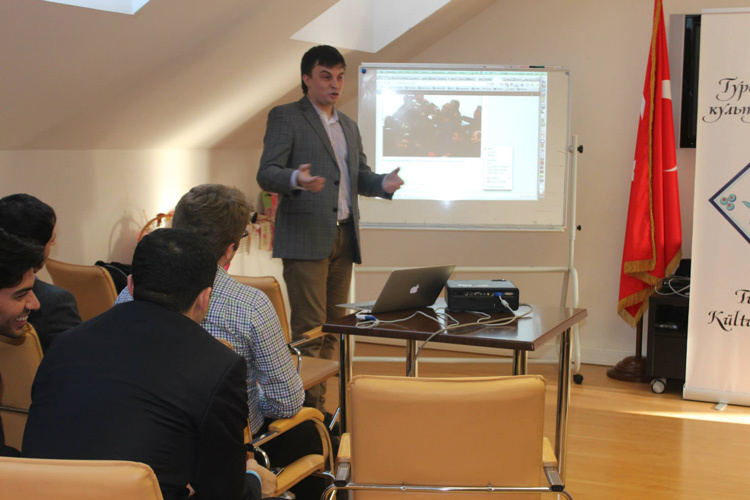
- In Russia in 2008 there was an anti -Georgian campaign, now - anti -Turkish. For example, they expel Turks from universities. Is such a reaction adequate?
- Many actions of the Russian authorities seem meaningless to me. I think they want to punish Erdogan, and not all the Turks. To arrange sanctions against Russian Turks to punish the Turkish government is just stupid. Their overwhelming majority is configured against Erdogan. Let's say, on November 1, in the process of Turkish parliamentary elections, 27% of voters voted for the party of Erdogan, and on June 7 there were another 20%. If you crush indiscriminately, you will get a blow not on Erdogan, but to its opponents.
Many Russian "television experts" extolled Erdogan to heaven as the best partner and friend for Russia. But in the last two or three years, Erdogan behaves irrationally and unpredictably. Since the neo-Chalitian project was launched in Turkey, it de facto began to pose a threat to Russia. After all, if you are building, conditionally, the “third Rome”, a country that claims to be a “Christian” or “Russian” mission, then you will naturally encounter Turkey, which builds the same from the point of view of the “Turkish mission” or Islam. Here, for example, one of the pro -Erdogan authors, Atylgan Bayar in 2012 wrote a book called Muslim Rome: a close future of the Turkish Republic. ”
- Erdogan really builds a new caliphate?
- I do not believe that he has an Islamic project. I think this is a fairly eclectic ideological shell to justify personal power. Erdogan has excellent political technologists. PIPL is hawing, the people find a response of discourse and symbols that they use.
- The Russian embargo on Turkish products and the suspension of the Russian tourist flow to Turkey will be greatly hit by Ankara?
- To begin with, our plane was shot down by Turkey deliberately. Firstly, in order to show NATO countries that Türkiye in their ranks does not conclude strategic partnership with Russia ...
-It would be possible to somehow show in a different way.
- You can - with another guide. The current is quite eccentric and chooses “super -cooal” moves.
The second factor, the most important, internal, is Erdogan’s focus on the electorate. Erdogan de facto has already introduced the presidential form of government, but he has yet to do this. He needs a referendum on which he will receive the majority. At the same time, about 70%were configured in Turkey against the presidential system, and not all supporters of his party of justice and development (PSR) want a single rule. After a shot down aircraft and other actions that, using pro -government media, exhibit Erdogan in a profitable light for Turkish society, for the introduction (presidential system. - Ed. ) Already 53.5% of voters act. The Russian plane is falling - the rating of the Turkish president is growing.
Back in April, I wrote that there are all the prerequisites for the commissioning of Turkish troops into Syria. They needed it for a “small victorious war” and in order to rally the electorate around the leader of the nation. Then they did not do it and lost it. The tactics of intimidation of the people with terror were chosen by the elections on November 1, now about the same logic of the war has been used.
An additional factor is the interests of Turkey in Syria. These unfortunate Turkomans have become a bargaining coin. No one believes that the Turkomanes will stop bombing after a shot down Russian aircraft - rather the opposite. On them, Erdogan, in fact, does not care.
One of the projordogan authors, Atylgan Bayar, wrote the book “Muslim Rome: a close future of the Turkish Republic”.
“But what about the embargo?”
- The plane was shot intentionally, and in any case it is necessary to answer. These are not toys. But mostly what the Russian authorities do, and especially the hysterical background in the media is unreasonable. I still understand with tourists. Although people spend personal money, it turns out that Russia seems to sponsor the enemy. But still, it was worth not forbidding to sell a tour, but to recommend not to go to Turkey.
- Then no one would cancel anything - this is a business.
- Many would still turn it, such as one famous tour operator before the ban. In 2014, there were 4 million 300 thousand Russian tourists in Turkey, in 2015, the stream had already decreased by a third, and now it would have become one or two million less. This would hit the economy strongly: in Turkey, 8-10% in the structure of the budget is tourism, of which, probably, Russia gives 2-3%.
As for tomatoes or apricots, Türkiye will now simply find other markets. Saudi Arabia has already said that she would buy tomatoes and send them to the starving children of Africa. So this measure beats past the target. But the steam locomotive was launched, and there are a huge number of people who want to run in front of him. For example, this should have been affected by culture and education last, however, both our center and the center of Yunus Emre in Kazan and broke out many agreements with universities and research centers.
-Why did your center close?
- I decided not to comment, I will say only one thing: of course, the center, whose work was all evaluated only positively, fell victim to political processes.
But something else is important here: in Russia, there will soon be no normal osmanists. There are a dozen elderly people, in the next generation, forty -year -olds, there are only, probably, five people, then it’s already very bad. In our center, two of the middle generation were involved as teachers, with another we cooperated constantly on scientific projects. One graduate student attending Ottoman courses writes a dissertation about Bulgaria during the Ottoman Empire, another writes about Tatar Sufis in the Ottoman Empire. Where is the neo -osmanism? It's funny.
The situation is exactly the return. The study of historical sources often disperses myths. Moreover, even if Türkiye is now an eternal enemy, then the enemy needs to be studied all the more. MGIMO was created in 1944 to explore international relations when it was clear that there would be a confrontation with the West. And the German language after the war was introduced into schools precisely in order to "know the enemy in person."
- Let's get back to Turkey. An apology is not in the nature of Erdogan? It was also possible to smooth out the consequences, even if they were confused intentionally.
- I think he calculated possible sanctions either at once, or on the first day of their announcement, after which he raised bets. He shows his voters that he is an active promusory president-almost Salah ad-din of our day, who can challenge Putin himself. And, of course, Erdogan never apologizes and does not publicly reverse. To lower on the brakes - maybe, but here Russia does not allow to do this.
By the way, until recently, pro -government Turkish experts and Putin’s newspapers extolled. The adviser to the Turkish President said that there are 2.5 leaders in the world: Erdogan and Putin, and half is Obama. Now the Erdogan media are watering both Putin and Russia with mud.
The country's leadership is a matter of the personal survival of the Erdogan family.
- Was the friendship of Putin and Erdogan fake?
- Psychologically, they understand each other well. Their mentality is similar, the domestic policy to build a strong state, foreign policy ambitions that go beyond their countries, separation of politics from the economy. But their friendship could only be personal, but not strategic.
It was because of this that Putin took a downed plane, including as a personal resentment. It is not for nothing that he called it “with a blow to the back”, and not, say, a military operation aimed against Russia.
- Putin accused Turkey of buying oil from ISIS (prohibited in Russia. - Ed. ), And Erdogan in the response of Putin in the same. Someone even joked that they work as if one manual.
-In something yes. But, of course, they have a different background. Erdogan is a football player who forbade his father to disgrace his family in short panties, so he went to political Islam, then the former on the rise. Putin left the organs, and he is a rather cold -blooded man compared to Erdogan. I think their similarity is in creating populist regimes focused on the mass electorate. What entails many economic problems.
Erdogan goes to the establishment of the sole authoritarian regime, which would not allow the opposition to appear. They used to buy the media, creating multimillion-dollar “pools”, where businessmen who receive the Lords took money away, and then one of them bought the media. So they took away almost half of the newspapers and more than half of the television channels. Now they are simply capturing them. So, before the election, the opposition channels Bugyun and Canalturk captured the local riot police, external managers were appointed there, and the next day the channels began to broadcast in favor of the PSR. Erdogan leads to remain president for life.
- Why does he need this?
-Firstly, he is already sick with power. Secondly, there are objective reasons. If he loses it, the probability that he will fall under the investigation and sits is very high. In December 2013, there was a large corruption scandal - the largest in the history of the republic. There are enough evidence for three consequences at least. So, for example, the Minister of Economics received more than $ 50 million in cash, and this is all recorded. We would have reached the son of Erdogan, and there are many materials on him. Therefore, the leadership of the country is a matter of the personal survival of the Erdogan family.
Any means are suitable for this purpose. After the unsuccessful June elections, terror was unleashed in the country, and more than 700 people died between two elections. As a result, Erdogan managed to intimidate the electorate so that he voted for his party. His speakers said: "To stop blood, vote for power."
- And why could the opposition not be able to form a coalition government after the election victorious for itself?
- Erdogan did everything for this: after all, the parties had a demand to continue the investigation of corruption affairs, well, he would have had to be completely hard with the opposition parliament. The National Action Party (PND) did not want to enter the government coalition, because it would also have the Kurds (or they would support from the outside). The PND, apparently, previously collaborated with the Party of Erdogan PSR, and after a downed plane officially supported Erdogan.
Some PR films hired people with posters “You are our caliph” during Erdogan’s visits to Arab countries.
- In 2013, there were serious protests in Istanbul, they were tightly crushed by the police with tear gas. Did the protest come to naught?
- The potential of protests is now very serious. System parties in Turkey-for example, the People's Republican Party, the Kurdish Democratic Party of Peoples-a real opposition not created by the Erdogan structures. There are many small parties and non -partisan opposition - there were almost no people from parliamentary parties on the same taxim. Erdogan harshly dispersed the protests, because in this way he, among other things, consolidated the electorate.
Since then, the conflict in Turkish society has been going on growing - even families break up there, because the husband is for Erdogan, and his wife is against. Moreover, those who are against Erdogan - they, I would say, aggressively against, who support him - aggressively “for”. Society is very polarized. Taxi drivers, for example, used to be contempt with Erdogan, and now they are just crushed by obscenities. Therefore, if a convenient reason appears, as it was on taxis, then the people will come out. In Turkey, generally the culture of rallies is very developed.
In Russia, for example, no one would burn several tents of ecologists - riot police would just come and would have taken them peacefully, and squeezed out people. In Turkey, the nature of Erdogan’s authorities is more emotional, so the tents of “traitors” are burned. On the other hand, this is done with an eye on the electorate, politicians evaluate public opinion daily.
-Separation in a Turkish society passes along the line of Erdogan or is Islam?
- Along the line of Islam is already less clearly. I generally have the main subject of the study - the Muslim communities of Turkey, the six largest. In theory, these are the most religious people of Turkey. Most of them are opposed to Erdogan. There are many non -religious people in the PSR, this is such a bureaucratic party in power.
- Do religious people want an even more harsh Islamist?
- No, many of these Sufi jamaats never voted for Islamic parties at all, they have “different chemistry”, as the Turks say. They are more aimed at assessing the personal qualities of candidates. Corruption and consumption of Islam are not welcome. Erdogan cleaned the party from the Islamists with whom he began. Abdullah Gul and Bulant Arynch is now without work. They were just supporters of dialogue, an independent court, freedom of the press, entry into the EU. They believed that a democratic system with certain restrictions-for example, without permission for gay marks-is absolutely suitable for Islam. And it worked.
We have many “experts” until the last day said that it was the Erdogan party that is best suited to Russia, not understanding the essence of the regime. They do not seem to know that our friendship with Erdogan began precisely when Türkiye went to the EU and sought to fulfill Copenhagen criteria. And all the problems appeared when Türkiye abandoned the previous course, began aggressive actions and Erdogan began to build the entire system personally. We just need to be friends with democratic forces in Turkey, and not with supporters of the new caliphate who can bring the situation to the Third World War. Now everyone is suddenly "seeing".
“Why did Erdogan turn the other way?”
- This is the type of sole leader, he grew up in the area where the local mafiosi for him was the main authority, which, in particular, promoted him in football. His Islamism is aimed at the Muslim Middle Eastern Union. It is important for him that he is perceived as a leader of the Muslim world. The economic growth of Turkey in the 2000s attracted the attention of the Arab countries, they began to applaud him, give as an example. But this was when in Turkey they worked according to the plan of Kemal Dervish, the former minister, and the recommendations of the IMF.
Erdogan himself decided to become the “leader of all Muslims” or persuaded him - this is a secret behind seven seals. I know that some PR films hired people with posters “You are our caliph” during Erdogan’s visits to Arab countries. Some call Yalchyna Akdogan, his adviser on political issues, the author of the "neohalifat" project. 2010-2011 was a turning point. After the Arab Spring, Türkiye began to implement its plan, supporting the Muslim Brothers in Tunisia, Egypt and other countries. Erdogan had a project that “Muslim brothers” would win everywhere, a Sunni belt will appear, which will focus on Turkey, and local rulers will almost vassals of the new caliph. The fact that in Egypt occurred under Mursi, I think Erdogan is to blame for the “third term”, which advised him to do what he could not do.
In Turkey, Islamists have been in power for 13 years, but prostitution is legalized there, and prostitutes receive a state pension. What is Islamism?
- But is the Islamization of Turkey going?
- It sounds just ridiculous if at least a little to study the issue. Previously, Islam was cleaned from public space, and only in the 80s, say, Sufis began to appear on television. Under the PSR, Islam went into public space, but the people in Turkey are not becoming more pious. On the contrary, religiosity falls. In Turkey, Islamists have been in power for 13 years, but prostitution is legalized there, and prostitutes receive a state pension. What is Islamism? I generally think that political Islam, even in the form of imitation, like the PSR, and God -fearing, are inversely proportional things. Many of my respondents from different jamaats during the research said that politics is a thing very dirty and that they maximum can go vote in the elections, nothing more.
The other side is secular people who are accustomed to the complete lack of Islam in the public sphere. I conducted an interview with people protesters in taxi, and they called Islamization one of the reasons for their discontent, said that Erdogan was climbing in bed.
- Isn't that the case?
-Yes, Erdogan says that boys and girls do not rent apartments together, but there is no law. Yes, the time of sale of alcohol is limited, but then in Finland is generally a complete caliphate. There is no Islamization in Turkey, rather there is “Islamism”, that is, the authorities are trying to create a certain electorate, which is politicized by Islamic slogans, but in reality it turns out to be completely religious. For example, I was for the first time in the 90s in Kong-this is one of the most conservative cities in Turkey-and there all women were in scarves. The last time I was last May, and there was only a third of the women in scarves. But the city always votes for the PSR!
Religious Turks, according to the latest data, are 16-17%, and about 70% are simply traditional, that is, for example, once a week they go to the mosque, but can occasionally and drink. For them, Islam is more a cultural phenomenon. Jenny White, an American professor, calls this phenomenon Muslim nationalism. This is really such a Sunni nationalist project, and not religious. In Russia, a similar situation: Orthodoxy is not only and not so much a faith that needs to be practiced every day, as a national identity.
— Почему в Турции не происходит радикализации? Потому что религиозность — это, скорее, про бедных?
— Да, за Эрдогана много голосов отдают в средних анатолийских городках по 100—500 тысяч населения, то есть это люди, которые получили возможность заработать и хотят, чтобы эта возможность сохранялась.
Вообще я вижу здесь глобальный процесс. XX век был веком агрессивного секуляризма, религия загонялась в подполье, и сейчас мы переживаем развертывание назад этой пружины, которое иногда проявляется в самых диких вещах.
Человечество рвет ИГИЛом, если так можно выразиться. Ведь из-за просвещения исчезла позитивная функция религии, секуляризм начал лечить «заболевание» химиотерапией, лечение кончилось, и сейчас ослабевший организм приходит в себя, баланс восстанавливается. Религия никуда не ушла и будет играть определенную роль. В данный момент идеологии и национальные государства отмирают как способы объединения людей. Радикализм — часть глобального процесса переструктуризации мировой системы, и это не относится только к исламу. Есть много радикальных групп, не только мусульманских, которые устраивают теракты. У ислама есть специфика, конечно. Например, дело в регионе. Если бы ислам был в Западной Европе, то все бы это закончилось созданием аналога христианских партий, которые считают важными традиционные, семейные ценности. Уэльбек в последнем романе «Покорность» как раз создание таких партий и осмысляет.
ПСР в какой-то степени к этому шла. Сейчас я вижу, что в Турции в основном происходит медленная секуляризация людей. Но одновременно мусульманские общины получают все больше приверженцев. При этом большинство из них — не агрессивные, и все единогласно отвергают терроризм, очень активно борются с ним на идеологическом уровне. Например, даже самый антимодернистский джамаат Турции — «Исмаил-ага» — выступает против ваххабизма. Или движение «Хизмет», с лидером которого Фетхуллахом Гюленом воюет Эрдоган. Именно Гюлен первым из мусульманских богословов проклял теракты 11 сентября, сказав, что мусульманин не может быть террористом. Эти общины потихонечку растут, но в целом число религиозных людей в Турции уменьшается.
Человечество рвет ИГИЛом. Радикализм — часть глобального процесса переструктуризации мировой системы.
— В России тоже официальные исламские лидеры выступают против террора, но люди-то уезжают за ИГИЛ воевать.
— В Турции с этим лучше, там мусульманские лидеры действительно имеют большое влияние. Если брать уехавших в ИГИЛ по отношению к общему числу мусульман, то турки — впереди планеты всей по противодействию. Их уехало всего около тысячи, хотя это рядом. Здесь играют роль и общины, и в целом высокий уровень исламского образования, который не позволяет заезжему проповеднику быстро завербовать человека. В России как раз этот уровень низок — после того катка, каким был Советский Союз. У нас много пробелов в образовании, не видно серьезных мусульманских ученых. В Турции же еще в 1948 году был открыт исламский университет, и традиция религиозного образования никогда не прерывалась.
— А что происходит сейчас в Турции в смысле отношений с курдами, которые стали едва ли не главными партнерами Запада в борьбе с ИГИЛом?
— Кемалисты курдов гнобили, объявили, что курдов вообще нет, а есть только турки. Эта жесткая политика привела к тому, что многие стали называть себя турками, но при этом в 70-х годах началось вооруженное курдское противодействие. В 2013 году ПСР заключила перемирие с Рабочей партией Курдистана, и начался мирный процесс. Казалось, что дело идет как минимум к культурной автономии, ведь в народе особого неприятия курдов нет. При ПСР начали наконец деньги вкладываться в юго-восток, Эрдоган на митингах ходил с Кораном, переведенным на курдский язык.
Есть у США проект Большого Ближнего Востока, включающий в себя создание курдского государства, которое бы, на самом деле, отрезало Турцию от других суннитских стран. Неясно, насколько этот план актуален, но раз Запад сейчас делает ставку на курдов, значит, проект не умер. Ранее Эрдоган говорил, что им вменили в обязанность быть надзирающими за этим проектом, но, по всей видимости, турок особенно в расчет больше не берут. Сбитый самолет для Эрдогана — также попытка показать свою значимость в этом плане.
Турки близки к курдам Северного Ирака и настроены против сирийских, которые входят в Партию демократического единства, де-факто филиал Рабочей партии Курдистана. Это добавляет остроту и в конфликт с Асадом, с которым эти курды в союзе.
— Пишут, что турки перестали бомбить ИГИЛ после инцидента с самолетом. Насколько активно вообще Турция воюет с ИГИЛом?
— Они вообще ИГИЛ практически не бомбили. У них своя игра, к борьбе с ИГИЛом они подходят несерьезно, их отношения скорее нейтральные. ИГИЛ не покушается на Турцию, только на словах утверждая, что хочет завоевать Стамбул. Когда ИГИЛ захватило Мосул и заняло консульство Турции, 49 турок отпустили. На каких условиях — мы не знаем. Оружие с территории Турции при попустительстве властей попадает в ИГИЛ. Был случай с грузовиками, остановленными около границы. Власти говорили, что это оружие было для туркоманов, но путь следования грузовиков был совсем не к ним.
На самом деле, если начнется полномасштабная война, турецкой армии хватит недели-двух, чтобы уничтожить ИГИЛ, не моргнув глазом.
— А чего им самим не начать войну тогда?
— Смысла особого для Турции нет: эти регионы для них затем станут огромной головной болью, а террор внутри страны резко увеличится. К тому же война — дело серьезное, а Сирия вообще сейчас — пороховая бочка мира. Турки, ко всему прочему, не очень самостоятельные, зависят от США и НАТО, никто им не даст официально проводить наземную операцию без санкций.
— Так можно дойти и до того, что и самолет им НАТО сказала сбить.
— Это все-таки не наземная операция в чужой стране. Ни один натовский генерал не будет говорить сбить самолет, тем более за 17 секунд. НАТО вообще очень вяло поддержала Турцию в этом инциденте, через «не могу».
— Ссора с Россией — это надолго?
— Думаю, что экономические отношения свое возьмут. Все-таки нам очень выгодно дружить — в Россию едут овощи, станки, приезжают строители, Россия поставляет туркам газ и так далее. Думаю, в течение года ситуация утихнет, но восстановить отношения на личном уровне будет невозможно, и военно-стратегическим партнером России Турция не будет.
Надо сказать, что Турция со своим проектом нового халифата оказалась вообще в изоляции. С Египтом общения нет, с Израилем отношения нормальные, но политически натянуты, с Сирией — война, с Ираном — тоже натянутые, с Грецией — плохие, с Арменией — никакие, и так почти везде. А теперь еще и Россия. Как шутят турецкие эксперты, политика «ноль проблем с соседями» обернулась политикой «ноль соседей без проблем».