
Translated material
The second part of the exhibition about dying languages will be held in St. Petersburg
The second part of the exhibition about dying languages will be held in St. Petersburg
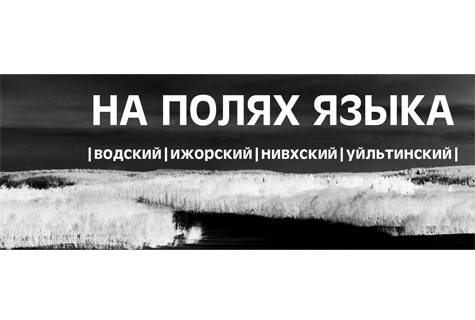 © "House of Voices: on the Pleshpen" / Facebook
On December 13, the second part of the “House of Voices”-an exhibition and research project at the junction of contemporary art, cinema, poetry and critical theory dedicated to dying languages will open in the St. Petersburg cultural center “Land.
The first exhibitionwas held in April this year at the Moscow Museum. It presented a “field” material collected by artists, poets, filmmakers during expeditions on Sakhalin and Ingermanland. The difference between these materials and ethnographers collected by linguists and ethnographers was that they did not aim to be preliminary data for subsequent scientific processing and life in the archive, but represented the result of the primary and direct artistic reflection, the life of the primary form left “in the fields of the language”.
The first stages of the project were devoted not only to small nations, but to those languages and ethnic groups (nivhi, Uylt, leader, Izhorns) who experience the catastrophe - the process of their assimilation is actually completed, the language has from several dozens of native speakers, the awareness of their identity is extremely problematic, and the conversation about them in the cultural field is actually absent.
The artists and curators of the exhibition set themselves the task of not so much representing ready -made approaches and work, give answers to complex philosophical, linguistic and political questions, how to problematize this topic - indicate a zone surrounded by silence, to invite a cultural community to a dialogue.
One of the main problems of the exhibition is the impossibility of direct fixation of the dying of the language and the perception of the "language as such." First of all, due to its refraction in various optics (archivist and researcher, artist and activist). The presentation of such phenomena as exotic and marginal does not seem appropriate today. The question is in the “removal” of the most similar view on the outgoing phenomena of culture, in the new ethical and aesthetic dimension, where the reactive disappearance of languages and cultures poses acute questions before the language of contemporary art, literature and theory.
In the second part of the exhibition, the logic of the "artistic-field" method is partially preserved. But at the same time, in most works there is a moment of problematization of the “archive and evidence”.
Turning to forgotten documentary newsreels, old photographs, documentation of the experiments of creating a “virtual” language archive in the Novosibirsk Akademgorodok, domestic utensils and household items - on the one hand, and to live evidence of native speakers, to today's history of their lives - on the other, as well as the conflict between the materiality and virtuality of the language, writing, speech, artists understand The fate of dying languages, which lies not only and not so much in the field of living speech reality as in the field of politics, history, memory. The small native speakers themselves are already native speakers of memory about the language - the language of their relatives and ancestors.
The native speaker of a dying language always has a borderline identity, the place of the subject in his speech “gaps”, and the subject itself flanifies according to the gaps of memory of the previous language. Can such a memory pull out the tongue out of the abyss of oblivion? What is the policy and ethics of another here? Does the “death of the language” or language actually exist, disappearing, dying, continues his ghostly work in the Ghememon language, which assimilated and absorbed it?
Within the framework of the exhibition, two theoretical (linguistic and philosophical) collloxes with the participation of foreign researchers, as well as discussions with representatives of the Water and Izhora communities, theorists and artists, will be held.
Artists: Kirill Adibekov, Pavel Arsenyev, Vladimir Belyaev, Maria Goddannaya, Polina Zaslavskaya, Galina Rymbu, Evgenia Suslova, Anna Tolkacheva, Ada Cherkanya, Andrey Cherkasov, Konstantin Shavlovsky, Kirill Shirokov.
Curators: Polina Zaslavskaya, Galina Rymbu, Konstantin Shavlovsky
Exhibition "House of Voices: on the fields of the tongue. Part 2 " in " Lightke " will last until December 24.