
Translated material
"Well, what is Stalin, well, Christmas trees"
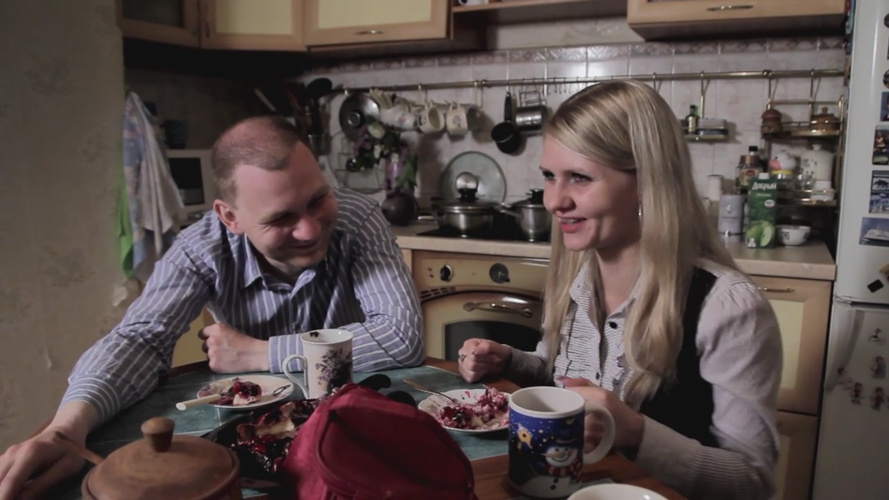
Come to watch and discuss with us the film “Self -Migsee” from the Artdokfest contest of this year and generally civic activism and his fate on December 13 at 15:00 as part of our project “Cinema Belief” . The discussion will be attended by publicist Ilya Budraitskis, the head of the theater.doc, Elena Gremina, a sociologist, professor of the Higher School of Economics Simon Cordon, a journalist and participant in the OTD-INFO project Grigory Okhotin, as well as the director of the film Julia Kiseleva and his heroine Daria Sorokina.
You must sign up for a show here .
Daria Sorokina became a municipal deputy in 2012 - then many independent people got into the district meetings. She advanced from “Fair Russia”, which at the beginning of the film she calls “the smallest evil” of four parliamentary parties. Now Daria is an activist of “SR”, she has her own website where a photo from press conferences and debate is exhibited, and she, by her own admission, hopes that the party will nominate her to the State Duma. The “self -nominated” personnel ends, where Sorokina turns the crowd at a rally on the day of popular unity surrounded by the flags of Novorossia and “young Russia”.
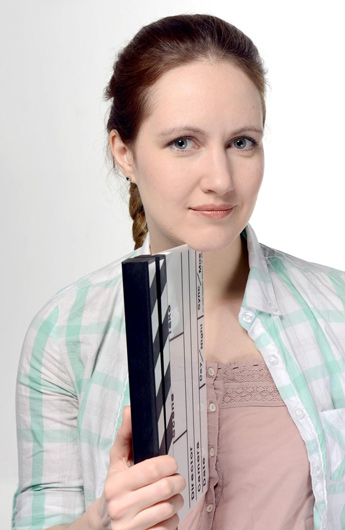 Julia Kiseleva
- Dasha first appears in your 2011 film “Wide Hook” - about the nursing home. Why did you choose her the main heroine of the new film?
- Probably, it all started with Bolotnaya Square. We then met for some reason, she suddenly says: "I will go to municipal deputies." And I saw her before that, I understand which of her deputy. The girl-volunteer in the nursing home, well, what are her chances to become a deputy, despite the fact that she had no connections? But she had zeal: we will turn the world over, Putin will leave, all these protest moods. I began to shoot about this energy. I thought out the plan: the first chapter will be about how Dasha did not go in the election and I asked what she would do next. Well, when she won the elections, there was nothing to do next.
- Why nothing?
- The film needs transformation, dramaturgy.
- Isn't this a transformation? An ordinary person has become a deputy, fights with colleagues in the assembly, saves grandmothers and dogs.
- Well? I do not see drama in this. In fact, this part, which you are talking about, takes 20 minutes in the film. It turned out a short story for 20 minutes, a person came to the polls and won. At that time, after all, everyone rushed to shoot these rallies. In Bolotnaya, we were: we walked, looked, but did not understand what could come of it. I needed a hero, I needed some development.
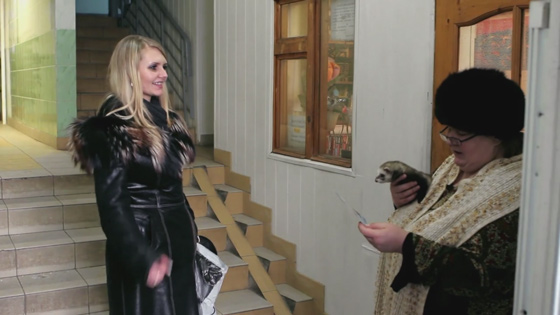 © Kinovideo "Risk" Frame from the film "Self -Mistract"
- And when did you realize that the film will be about what it turned out about?
-I actually wanted to shoot about personal life. About a year after the election, Dasha and I saw each other, sitting in a cafe, and then she says: “She always dreamed of working with men, as it is now, but personal life does not develop at all.” I thought-now, damn it, the conflict! She is this: all the time hairstyles, manicure ... But the lack of personal life was quite difficult to remove, especially since Dasha did not have special suffering about this. And suddenly he says: "I will go to Seliger." I say: "My God, this is not your camp." - "And what, cool." Well, since her political position has changed, it is necessary to build a film on this. The film begins with a rally to Bolotnaya, and ends with a rally on November 4. Here is such a transformation.
We still argue with her about politics. But it’s better not to argue - you will quarrel right away. The worldview of her changed dramatically. This is amazing: I look at this from the side, neither in protest or pro -government movements, I do not participate. And there and there I see propaganda. And at first, one propaganda acted on her, and I said: "Yes, listen to yourself from the side, what nonsense you are." She replied: "No, you will leave Putin." And now I say the same thing: “You carry nonsense, but another nonsense. Well, what is Stalin, well, Christmas trees. ” I would say this is a movie about propaganda.
- Dasha, when she watched the film, understood what he was talking about?
- She still asks me what thought the film has - she thinks that everyone will ask her about it. Dasha, in my opinion, perceives the film as a PR - it is not for nothing that she will bring 20-30 a person to the first show at Artdokfest. She has been writing to me for two weeks for two weeks: “You know who will come to our show is that and that!”
- What reviews do you get for the film?
- I am a master, Igor Grigoryev, called to VGIK to show the film to students. Such freshmen are sitting, leg on the leg: “What did you want to say this film? Did you want us to go to vote for her or so that we laugh at her? "
In 2009, we shot a film about “Young Russia”. They just got into a lot there and took off everything they saw. And at large festivals we were put separately from the program, they were not included in the competition, but on the sidelines they asked: "They paid you?" No one believed that we shot a film about politics for free, because it was not denouncing. And this one is also not denouncing.
- And for you this movie about what?
- For me - about Dasha. If I started shooting and noticed the hero’s transformation, it would still be interesting. If at first she was a volunteer, and then she became, I don’t know, firefighters. But here the transformation is that political views and energy have changed.
- Energy?
- During volunteering, she was such a soft, calm girl. And one of the days of filming, we are going in the car, sitting next to me such a lump of nerves and a commanding voice: “Julia, you are going there, turn it!” Men are just afraid of her.
- Dasha is typical? The transition from the time of protests to the era of Crimea reflected so many?
- Society is people. All processes are reflected in us. The boy was upset, Anton (Dasha’s friend, who helped her get into deputies. - Ed. ). Dasha complained to me: "Here, he stopped communicating with me, I do not know why." We found him and found out why.
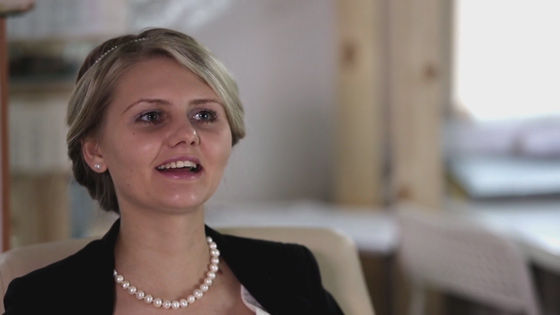 © Kinovideo "Risk" Frame from the film "Self -Mistract"
-I am in the film only from Anton and I hear some kind of assessment of Dasha’s transformation. I was surprised that you did not ask her directly about political views. I generally hear about Stalin for the first time from you - this was not in the film.
- And there it is not necessary. I just inserted Anton, so that it was so incomprehensible to those who were so incomprehensible: Dasha moved to another camp. Not everyone can know Mishchenko, not everyone can understand that Seliger is a pro -government forum. For them, I inserted the words of Anton that Dasha used to be against Putin, and now she was for Putin with ribbons and Crimea.
“But Dasha herself doesn’t say anywhere about Crimea or about Putin ...
- I had an installation option where he says. And we had a topic with Ukraine there: she went to Ukraine to help Donbass, its “right sector” (the organization banned in Russia.- Ed. ) He announced the wanted list. But we decided not to develop this topic. The movie should not speak in words, but with images. When Dasha at the rally rides on the platform, like a statue of freedom with a megaphone, and asks the comrades: "What are we screaming?" - Why explain it? The viewer must be included in the process.
- Do you like Dasha?
- You know, there is an attitude towards a person - to his political views. I have friends whose political views I do not share, so we are not talking about politics. I don’t know how much her policy will spoil, but initially Dasha is a very kind person. Such people in politics are difficult to survive. Greed, for example, did not wake up in it. We saw her last winter, it was a moment when she just did not work anywhere. Municipal deputies are not paid. “And my mother feeds me. I don’t need a lot: for food, for travel, well, to make nails. ”
 © Kinovideo "Risk" Frame from the film "Self -Mistract"
Dasha herself comes - with complex styling, along with two municipal deputies from the "SR" with tricolors on the lapels of the jackets.
“It seems to me that the director wanted to show growth,” Dasha tells me, explaining what the meaning of the film is, and adds: “A lot has changed since I had chosen.” My views also changed. And for what I said earlier, now, from the height of this experience, it’s a little ashamed. On the other hand, I understand that I did not have enough information. There are many points in the film, where I look naive or ridiculous. The most interesting thing is that my views have not changed at all, they just took shape. I had principles - for justice, for honesty, for people, and at that time it seemed to me that it was right to realize them like this. But when you begin to find out more, to engage in politics, it becomes clear that everything is not so unambiguous. ”