
Translated material
Secluded space behind the fence
Three books about the house - in the review of Galina Yuzefovich
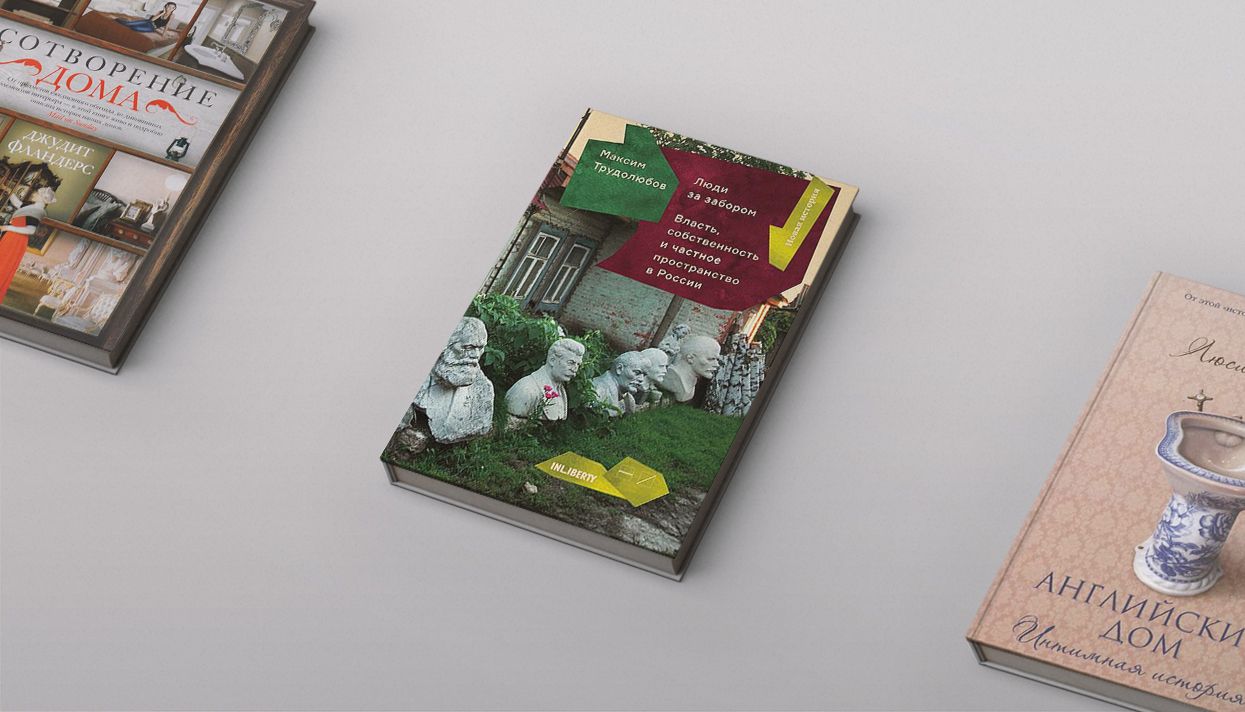
Every week, the literary critic Galina Yuzefovich tells at Medusa about the most interesting books published in Russia. In the new issue - “Creation of the House” by Judith Flanders, “People behind the fence” by Maxim Trustlyubov and “The English House: Intimate History” Lucy Warley.
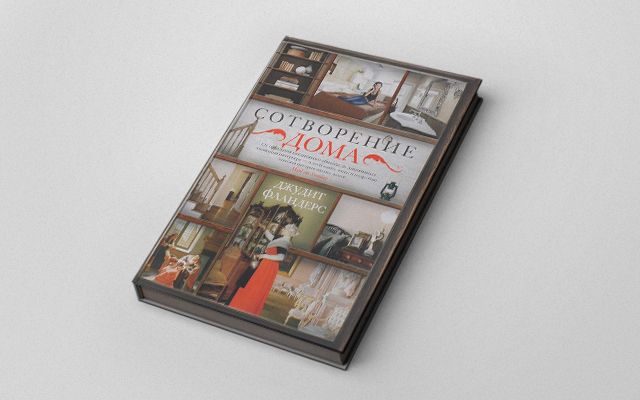
Judith Flanders. Creation at home. M: Central Polygraph, 2016. Translation by G.V. Khramova
Despite the frivolous cover, the book of the British historian Judith Flanders-reading is not at all frivolous, and in a good organic one, it would look in the high-button series of “Culture of everyday life” of the UFO Publishing House. Although there, perhaps, her presence would require some explanations, because the attention of the Flanders is concentrated not on the evolution of the interior or, say, door handles, but on the very idea (in order not to say to Aidos) of the house - a private, secluded space, for which there is not even a separate word in the Russian language. It is the very word - the English “Home” and its analogues in Germanic languages - becomes a kind of demarcation line that allows the author to talk about the actual coexistence of two parallel civilizations in Europe: “homemade” and “under -person”. The “home” countries refers, first of all, England and Holland, as well as other regions in which there were separate words for the house in the meaning of “building” and for the house in the meaning of the “hearth”. Among the "Non -Salmes" are countries where they speak Slavic and Romanesque languages that do not know such a difference.
It is on the "home" countries that Funders concentrates in the first place. In her opinion, they are characterized by an earlier, compared to southern and eastern Europe, the formation of a nuclear (consisting of one married couple and her children), later marriages, a more independent position of a woman and a more human attitude towards children, as well as the idea of prosperity as a sign of piety and divine approval. About how all these trends showed themselves in different eras and - most importantly - how they sprouted in the sphere of living space, Judith Flanders tells in the first, most voluminous, part of his work.
Author's erudition (more than lengthy) is poured onto the reader with a generous, but dumbfounding stream. The author argues about how wonderful the historical realities did not correspond to the realistic Dutch genre canvases of the 17th century (they did not correspond to, if it is interesting, neither in privateism), then trying (however, quite unsuccessfully) to reveal the mystery of the “spitting sheet” (this subject of the interior is repeatedly mentioned by writers of XVII-XVIII centuries, but no one knows why it was needed), then he suddenly sets in the argument about the origin of such an interior element as a corridor (almost unknown to European architects until the beginning of the 17th century). The thought of Flanders flutters from the subject to the subject, and in order to accompany the author in its risky somersaults, the reader requires a fair amount of intellectual flexibility and training.
The second - much more compact and, probably, because of this, a much more ordered part of the "creation of the house" - is devoted to the role that all kinds of technological devices play in the organization of home space. The relationship between hygienic practices, water supply and epidemiological danger, or the outlandish transformation that the fireplace has undergone a fireplace in the middle of the XX, this is an approximate circle of those that Flanders considers in the final part of his book.
“Creation of a house” is not so much conceptual work, which involves unambiguous and easily verbalized conclusions, as a bizarre and rather confused pile of various plots that have one or another attitude to the space of the house. However, one important idea from the book of Flanders still follows quite clearly: the customs and foundations that we are used to counting centuries and unshakable, at best, totals 100-150 years by family. The same orders that can actually be considered primordial ones will hardly even like the most note retrograde, conservator and adherent of “traditional values”.
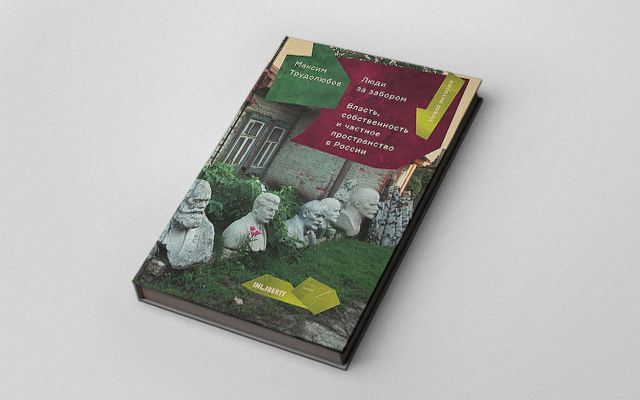
Maxim Trustlyubov. People behind the fence. Power, property and private space in Russia. M.: New Publishing House, 2015
The Columnist of the newspaper Vedomosti and one of the main public intellectuals of the country this time acts as a kind of modern Adam Smith: in his small book, he tries to describe the history, philosophy and, so to speak, the physiology of relations between Russian society and the institution of property. As a universal end -to -end metaphor (and at the same time as the main object of study), he chooses the property of the most understandable, close and popular, that is, immovable. And again, in the focus of the author’s attention, not so much a house as a set of walls, household appliances and inhabitants, as a house as a symbol of secluded and intimate private space, not subject to invasion from the outside.
In Russia, according to Trustlyubov, with private space, the matter was always unimportant: “Russia is an unusual country, since it is both a colony and a colonialist. The paradoxical result of its centuries -old expansion lies in the fact that there are many places in the country, and live closely. Live cramped, because there are a lot of spaces, and there is little inhabitant space. ” This tightness, crowding on tiny heels suitable for life, surrounded by colossal wild expanses, historically formed an idea of “private life” as a luxury accessible only to the elite. Moreover, starting from the time of Ivan the Terrible, the elite of the servant: any good became privilege, and only the loyalty of power ensured the right to a relatively comfortable private life in a separate territory.
In general, the concept of isolation is one of the key for Trudia: it is no coincidence that the eternal symbol of isolation - the fence - was put into the title of the book. The need for at least a ghostly, ephemeral way to fence your own patch inside a huge collectivist space is almost the main need of a Russian person. Hence the endlessly branching infrastructure of fences, checkpoints, forever closed (or at best half -closed) doors, and even with a non -permanent guard on the side. Separation of the physical is accompanied by a visual isolation: the goal of any person who has achieved a little noticeable success is to build a “palace”, which differs as much as possible from the “typical” dwellings of people less successful. But with the isolation of legal Russian real estate, it is not lucky: despite the decades of reforms, ownership of houses and apartments still remains largely conditional and temporary, not protected by law ...
Trustlyubov writes the history of Russian private space, embedding it into the widest worldwide context. In order to interpret the semiotics of communal apartments, he dives into the ancient Sparta and turns to the Platonic dialogues, and the origins of the attractiveness of the “Stalin” - the main symbol of the domestic “rational” well -being - is looking for in the field of medieval beneficial law. With some conclusions of the author, you can argue (for example, he is too gullible to the Dutch painting of the 17th century, which, as we already know, mercilessly exposed Judith Flanders), and sometimes a little rocking the speed of his movements according to the chronological line. However, there is hardly another person in modern Russian journalism, capable of simultaneously such a bully breadth and at the same time strict conceptuality of thought, like Maxim Trudovyubov. Against this background, insignificant negligence in the details and the slight effect of motion sickness - real trifles, which are not only excusable - they can not pay attention to them at all.
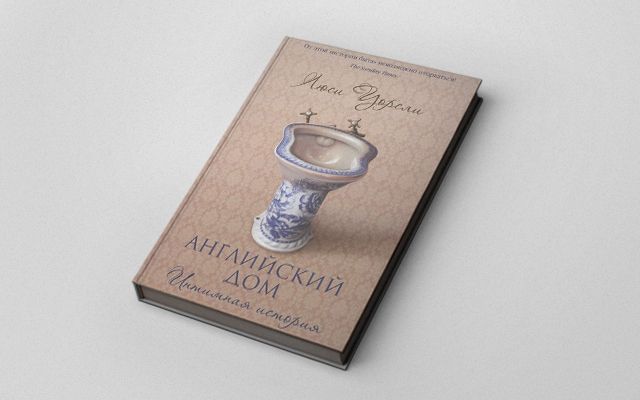
Lucy Warley. English house: intimate history. M.: Sinbad, 2016. Translation of Irina Novoseletskaya
Of all three books of the current review, “English House” Lucy Warley is the most everyday and entertaining. In a sense, it can be used as a picture for the “creation of a house” - it is as simple and illustrative as the book Flanders is conceptually overloaded and confused.
The composition of the “English house” repeats the layout of the home: its four parts are dedicated to the bedroom, living room, bathroom and kitchen, respectively. At the same time, each section is, in fact, not a monolithic whole, but a collection of scattered vignettes, sometimes associated with the declared theme - the room - only by tangent. Thus, the section about the bedroom covers all kinds of aspects of intimate life - from childbearing and breastfeeding (extremely unpopular in the 18th and 19th centuries - it was believed that breastfeeding can be and, moreover, it is necessary to crush a professional nurse) before reading and sex. The leitmotif of the section dedicated to the bathroom is the evolution of human imagine about hygiene. And from the chapter about the kitchen, we learn about the confrontation of the female and male servants, about the methods of storing products before the invention of the refrigerator and about food supply practices. By the way, patriotic citizens will be interested in knowing that the traditional manner of serving food in rich houses, in which each of the assembled at the table receives his portion from a common dish or from a loan standing on a separate serving table, is called “Russian feed” in the English tradition. This way to serve food spread only in the 30s of the XIX century and came to the British in their hearts as more economical-before this dish was served on the principle of the Swedish table.
Charming, frivolous jokes collected on a living thread draw, nevertheless, a completely reliable picture of those outlandish exciting transformations that have occurred with a human dwelling over the past 300 years. And in this sense, the “English house”, perhaps, is most consistent with the expectations of those readers who, like me, love books about everyday life and customs of love of ingenuous and uncomplicated.