
Translated material
Gas choice of Ukraine
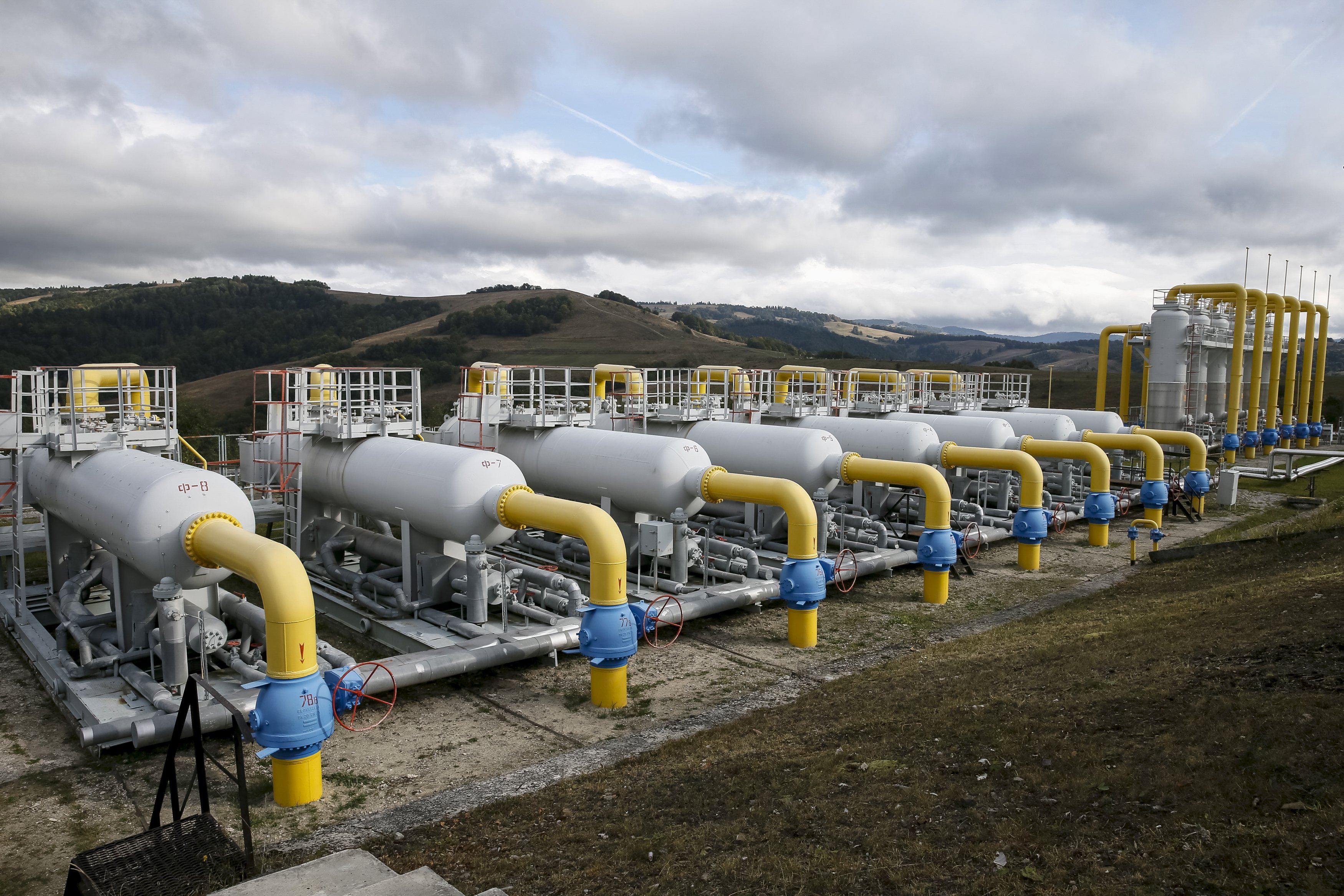
Vitaly Portnikov: The energy independence of Ukraine - how real is this? Or can it remain a dream for many years? Will Ukraine be able to diversify its energy needs? We invited Andrei Kobolev to the studio of the Chairman of the Board of Naftogaz of Ukraine .
It seems to me that the problem of gas supplies to Ukraine is the problem of all its independence. From the moment Ukraine proclaimed independence, I remember, they talked about this constantly, discussed the price of gas. I personally remember the first gas conflict if not in 1994, then in 1993, when I covered the meeting of the Prime Ministers of Ukraine and Russia-Leonid Kuchma and Viktor Chernomyrdin. And then Leonid Danilovich, it seems, first agreed with Viktor Stepanovich that gas would go along Barter. You were then a very young man.
Andrey Kobolev: I did not work in the gas sector then. I remember then there was a barter relationship.
Vitaly Portnikov: I said that this is a trap for Ukraine, that this would not give us the opportunity to reform, forever tie it up, put on a hook. But in Kyiv, most of the analysts, politicians said: what are you so cheap, can you refuse? We lived with this cheapness almost until recently, and how are we leaving now from this situation?
When something was given cheaper than in the market, apparently something was received in return
Andrey Kobolev: I think the cheapness is an illusion. You always need to really evaluate your counterparties. It is unlikely that the Russians are stupid than us. Accordingly, when something was given cheaper than in the market, apparently something was received in return. So there has never been any cheapness, we always gave something for supposedly cheap gas. This deal has always been beneficial to the Russian Federation. For example, Yanukovych has a Kharkov agreement: renting a military base against gas. Commercial things against strategic things, the consequences of which we are now observing. I agree with you that this created the illusion of cheapness, prevented Ukraine from reducing gas consumption. This trend has now been changed.
Vitaly Portnikov: When they talk about intermediary firms that sold Russian gas, you need to know that these were not only the proposals of the Russian side-very often these were Ukrainians. Moreover, when the Ukrainian side acted as a supporter of such firms, she often came across Moscow irritation, nevertheless, she did everything so that these firms were preserved. I do not claim that Russia did not have its profit, but there were times, and I remember them exactly when the Kremlin (it was already during the period of Vladimir Putin) was ready to sell gas directly and very often did not meet understanding, including the leadership of your company.
Andrei Kobolev: I think that in terms of signs of corruption, opaque, inventing the most incredible schemes (galoshes for gas from Turkmenistan, gas through Russia to Ukraine), the gas sphere has no equal. Therefore, there was a huge number of different precedents - this is true.
The problem of gas supplies to Ukraine is the problem of all its independence
Vitaly Portnikov: Will you explain the situation with Turkmen gas? We received Turkmen gas in Ukraine for two decades. It was always believed that this is an optimal scheme. But I could never fully understand why we should receive gas that goes through all of Russia, instead of taking gas from Russia itself, and why we cannot achieve the same contractual relations with Russia that we achieved with Turkmenistan, and, again, could not achieve if the consent of Russia to miss this gas at its price. In such a situation, in fact, everything already depends on the transit, and not on the supplier and the buyer.
Andrey Kobolev: In fact, yes. Moreover, the Turkmen scheme, it seems to me (I was not present when signing it), was the result of a complex balance of compromises, on the one hand, political, on the other - commercial, and from the third (and this is a very important side) - corruption. All the interests came together there, and no matter how strange this scheme may seem, it took into account these interests in one way or another. Therefore, it existed for a rather long time, until in 2006 the import of gas to Ukraine was completely transferred to Rosukrenergo , another odious intermediary, and it, in fact, finally put a cross on the supply scheme for Central Asian gas to Ukraine.
Vitaly Portnikov: By the way, Mr. Firtash once said that he was invented by the supply scheme for Turkmen gas. He had an excellent relationship with the then President of Turkmenistan Mr. Niyazov, and thanks to this excellent relationship, it was possible to establish such a supply.
We always gave something for supposedly cheap gas. This deal has always been beneficial to Russia
Andrei Kobolev: I have been working in the oil and gas sector since 2002 and I know at least four more rather authoritative and respected people who very confidently and reasonably can tell that they were the fathers of this scheme. Therefore, I do not know who the real father is. But the fact that this scheme brought billions of income outside the public sector is yes.
Vitaliy Portnikov: I can open a secret to you. I was well acquainted with President Niyazov, repeatedly talked with him about the gas sphere - both publicly and non -public. In one of these conversations, Mr. Niyazov said that in fact, all this gas supply scheme to Ukraine was associated with his agreements with President Yeltsin and is largely due to the fact that Boris Nikolaevich wanted to support the new Ukrainian leadership, which came to power in 1994 and was going to initially focus on Russia, and not on the European, Western path of development (where the first president Leonid Kravchuka was suspected. ).
Andrei Kobolev: You see, this is confirmed by the thesis that, although there was a cheap gas, there were still some additional conditions, orientation, preferences and other things.
Vitaly Portnikov: We will talk about the current attempts to focus on various sources of gas supplies. We now have Europe, there are reverse deliveries and so on. How much can this compensate for those problems that can arise in the Russian energy market? In principle, such a scheme, when the gas is supplied along different routes from different sides, is really convenient for Ukraine.
The main goal is to create an effective market in which everyone will compete with everyone, and gas, like any other product, will be sold at a market price
Andrey Kobolev: The matter is not only in Ukraine. I think this is the goal of any market that is not self -sufficient and requires import. Moreover, recently, a group of American analysts has released a very interesting article: they describe and justify economically that the replacement of the entire import of energy resources is not even an end in its own end in an exclusively internal production. The main goal is to create an effective market in which everyone will compete with everyone, and gas, like any other product, will be sold at a market price. As a result, you will achieve what everyone is trying to achieve - energy dependence and safety of energy supplies.
Vitaly Portnikov: This is such a dream. I met with the heads of energy companies in Eastern Europe, I read them a report on the political situation in Russia. They told me with chagrin: you know, in the oil market you can somehow act commercially, but in the gas market-you do not understand the political component, and you cannot buy anything.
Andrei Kobolev: Gas, however, has an interesting feature: it is attached to the pipes. But there are more and more pipes, on these pipes you can download gas in any direction, more and more free access. It seems to me that gas will become no less liquid in the near future than oil.
Vitaly Portnikov: But, on the other hand, you see how much Ukraine seeks to maintain its position of an important gas transit for Russia. If there are many pipes, then why is it so important to maintain the same pipe that goes through Ukrainian territory?
Gas has an interesting feature: it is attached to the pipes
Andrei Kobolev: Here the banal answer is commercial interests, the benefit of Ukraine. And it is natural that we, as a company owning a company that owns a pipe, will do our best to save income.
Vitaly Portnikov: For years, I hear Europeans say that it is necessary to demonopoly Gazprom, to create several companies on its base so that they perform different functions that Gazprom concentrate everything in the fragile hands of Mr. Miller . But we, it turns out, is the same monopoly! Now the question arises: is it possible to demonopoly?
Andrei Kobolev: “Naftogaz” demonopoly is possible and necessary - this is what we are working on now. But there is a slight difference: we really liberalized the entrance to the Ukrainian gas market. At the moment, private independent companies import more gas from the European direction than Naftogaz, they have more access to customers. That is, we took the first step. The next step will follow when Ukrtransgaz in one form or another will be completely allocated from the Naftogaz Ukraine group, will become a completely independent company and will conduct independent activities. They are still quite independent, we do not indicate them, do not limit them, we give some operational instructions, but for the complete purity of the experiment, this process will soon be completed. The Ukrainian gas market is a large market, it makes sense to compete for it. We already see the first sprouts, we assume that a large number of companies will come to this market to earn money, and this is good.
Vitaliy Portnikov: Ukrainian citizens are now passing through what almost all residents of the countries of Central and Eastern Europe have passed - this is an increase in the price of utilities, in particular, for gas. “Naftogaz”, as I understand it, is one of the main initiators of such an increase, I always hear from different people related to the energy industry that this is almost any of the main reforms in Ukraine, because the main source of corruption lies at these low gas prices for the population. I'm trying to understand all the time - why? Maybe you explain? Indeed, it is also important for Russia to understand why low prices are corruption.
Demonopoly "Naftogaz" is possible and necessary - this is what we are now working on now
Andrey Kobolev: Imagine a glass of water. I tell you that half of the water in this glass costs $ 50, and the other half - 300 dollars. I give this glass to another person so that he tries to share this water. When he does it, this is the same water-something will remain in it. Is it left for 50 or $ 300? It seems that there is not enough water in a glass, but if this water costs, suppose, 10 billion dollars, then, accordingly, the remaining water, depending on how you classify them, these are at once large incomes.
This is the most banal example of what is happening with the gas. When gas is in the same pipe at $ 50 and $ 300, I think, listeners in Ukraine and Russia agree that in the sense of deception of the system, our citizens are large professionals. It is very difficult to achieve such control, most likely, is inappropriate, given its value in order to always perfectly know where what gas went - this is a banal example of corruption.
The main problem with low, not market prices for gas is the consequences for the budget, for the country
But the main problem with low, not market prices for gas is the consequences for the budget, for the country. Let's compare the numbers. In the budget of last year, the deficit due to financing by the state of Naftogaz was more than $ 8 billion. In the budget of this year, this deficit is one and a half billion dollars. Here is the difference that was achieved in one year. We assume that in the budget of the next year it will be a maximum of hundreds of millions of dollars, and since 2017 this figure will be zero. Naftogaz should become what any oil and gas company that the state owns. In civilized countries, it should not be a recipient of assistance, but a budget donor, should give money to the budget, and not take it from there.
Vitaly Portnikov: There are losses associated with the resources that Russia now has in the Crimea, which Ukraine had previously had and considered them its state property. Will there be attempts to somehow return to these resources-at a legal, possibly judicial level?
The Ukrainian gas market is a large market, it makes sense to compete for it
Andrey Kobolev: They will not just be - they are taking place at the moment. The trials are launched at the level of the Ministry of Justice, now we are launching the process at the corporate level. To launch it, we needed to carry out a long work to evaluate the lost assets, on calculations and construction of judicial practice. At this time, this work is underway, and we hope for its success.
Vitaly Portnikov: Can we say that if Ukraine remained these resources, then they would perfectly affect its political independence? Or were these quantities that could not allow to refuse gas purchases abroad?
Andrei Kobolev: Deny is not, but this is a very significant volume with a high growth prospect.
Vitaliy Portnikov: You say that there are more and more pipes, there are more and more opportunities, but Ukraine tried several times to achieve the supply of liquefied gas, the terminals were built, there was a whole big story with this construction, but this did not end with any tangible for the Ukrainian market. Why?
In civilized countries, the oil and gas company should give money to the budget, and not take it from there
Andrey Kobolev: Unfortunately, everything is quite banal here. In Ukraine, the terminal can only be put in the Black Sea. The entrance to the Black Sea is the Bosphorus. Accordingly, in order to do this, any terminal builder must be sure that he can pass the Bosphorus, but for now no one has such confidence. So far, there will be no such confidence, it is inappropriate to talk about the terminal, which in this situation will become just iron.
For our part, we initiated another project. We intend to include it in the list of priority projects (and there are already justifications), build a pipeline that will connect the terminal in Poland with Ukraine. It will both access liquefied gas and increase the volume of gas supplies from Europe to Ukraine, and, perhaps, the Baltic terminal will be connected. This project is more realistic, from the point of view of the fact that we do not solve the problem of the Bosphorus.
Vitaly Portnikov: Why does Ukraine not solve the problem of the Bosphorus?
Andrei Kobolev: Our negotiations on this subject were very negative. The answer that we heard from Turkish partners is that, unfortunately, they are afraid to let tankers with liquefied gas through Bosphorus. We perfectly understand that this fear is more political than real - for example, in terms of security or ecology.
Vitaly Portnikov: This is a question whether the tanker passes through the Bosphorus or not.
Andrey Kobolev : Firstly, the tanker through the Bosphorus can physically pass. Secondly, through Bosphorus there are tankers with ammonia, who pose a much greater threat to the environment and people living in Istanbul. Accordingly, we see this ban as a purely political action. But, perhaps, in the light of recent events, this trend will change.
Vitaly Portnikov: This is a matter of resumption of negotiations. It is more profitable to have terminals almost on the German border than to think about this terminal in the Black Sea? How are things from a financial point of view?
Andrei Kobolev: Calculations show that, from the point of view of just a costly part, one terminal in Ukraine - it would be much cheaper, faster and, most likely, economically appropriate. On the other hand, it is necessary to compare "oranges with oranges", because the pipeline to Poland would connect us not only with one terminal, but at least two gas sources - for example, we would reduce the path more than Norwegian gas towards Ukraine. So this project is more global and has other advantages.
Vitaly Portnikov: Is there investment in it, or so far is it just what is proposed by the government on paper?
We most likely have to finance the part of the gas pipeline that passes through the territory of Ukraine
Andrei Kobolev: In addition to the fact that Ukraine is interested in this project, Poland is also interested in it, because this connector would allow Ukrainian underground gas storages with the Polish market, and there is just a shortage of gas storage possibilities in this market. It is quite expensive to build storage facilities, so this is mutually beneficial cooperation, so part of this project is ready to finance either the Polish side or the European Union. We, most likely, will have to finance the part of the gas pipeline that passes through the territory of Ukraine is a little more than a hundred kilometers, not such a costly part. Соответственно, этот проект, с нашей точки, зрения имеет интересную перспективу на развитие.
Виталий Портников: Энергозависимость Украины, та ловушка, о которой мы говорили в начале нашей беседы, привела к тому, что огромное количество украинских стратегически важных предприятий никогда не реформировалось и до сих пор потребляет огромное количество газа. Европейские предприятия того же уровня и такого же цикла производства столько не потребляют. Что делается в связи с этим, и что уже удалось сделать? Может быть "Нафтогаз" может как-то повлиять на собственников этих предприятий с целью уменьшения энергозатратности?
Главной проблемой украинской экономики остались химики
Андрей Коболев: На самом деле ситуация чуть лучше, чем кажется. После подписания печально известного контракта в 2009 году в Москве цена на газ в Украине стала довольно-таки высокой – не сразу, но через год-полтора, когда формула заработала в полную силу. Это привело к тому, что большинство крупных потребителей газа (в основном это металлурги) смогли переориентироваться, например, на уголь. Мы видим огромное падение потребления именно этими компаниями. Более того, когда сейчас цена идет вниз, они не возвращаются к газу, они уже переориентировались на так называемую технологию PCI, установили ее, покупают уголь, и они стали более эффективными в части энергозатрат, чем раньше.
Главной проблемой украинской экономики остались химики. Они не вкладывались и вряд ли могут вложиться в кардинальное изменение цикла, так как это потребует удлинения товарной цепочки, которое в данный момент маловероятно – это очень сложные процессы, связанные с развитием новых технологий. У этих компаний до недавнего времени экономика действительно была либо на грани минуса, либо даже негативная. Вот эти компании являются потенциальным объектом для улучшения своих циклов. "Нафтогаз" пока не готов вкладывать в них деньги, мы считаем, что это должны делать частные инвесторы. Мы надеемся на скорую приватизацию ОПЗ, Одесского припортового завода , флагмана химотрасли Украины, после которой будут вложены средства в его модернизацию.
Энергозависимость Украины привела к тому, что огромное количество украинских стратегически важных предприятий никогда не реформировалось и до сих пор потребляет огромное количество газа
Виталий Портников: Напомню, что печально известный контракт 2009 года – это контракт, который одобрили премьер-министры России и Украины Владимир Путин и Юлия Тимошенко. Печально известным его называл даже президент Виктор Янукович. Проходит время, а он все печально известный. Так все-таки чего больше в его печальной известности – политики или экономики?
Андрей Коболев: В причинах – политики, в последствиях – экономики. Политика стала причиной его подписания, как мне кажется, а последствия – то, что Украина долгое время переплачивала за газ.
Виталий Портников: Сейчас эта формула действует – она вас устраивает?
Андрей Коболев: Сейчас эта формула не действует, потому что мы смогли договориться о том, чтобы цена этого газа была уменьшена и приведена к реалиям европейского рынка. Если посмотреть на динамику по газу в прошлом году, то мы смогли сэкономить миллиарды долларов, перейдя на европейский газ и не покупая газ по этому контракту.
Виталий Портников: То есть я правильно понимаю, что в 2009 году Владимир Путин, по вашему мнению, выиграл, когда предложил такую формулу украинской стороне?
Владимир Путин сделал достаточно продуманный, не одноходовый шаг
Андрей Коболев: Владимир Путин сделал достаточно продуманный, не одноходовый шаг. Он показал значительно низкую цену на 2009 год, дав неплохие условия, и сразу же заложил в контракте существенное повышение цены в последующих периодах. Именно этот контракт стал одной из причин существенного истощения украинской экономики.
Виталий Портников: Тем не менее, все всегда говорили о том, что Украина платит по той же формуле, по которой платят другие европейские страны.
Андрей Коболев: Эта информация не имеет подтверждения. Во-первых, все контракты и все формулы секретны, но есть рынок газа Европы, вы можете посмотреть там – цены были существенно ниже, чем в этом контракте. Соответственно, учитывая то, что российский газ там конкурирует с другими газами, насколько нам известно, цены для других стран являются более низкими.
Виталий Портников: То есть я правильно понимаю, что сотрудничество Украины и с Россией, и с другими европейскими странами в любом случае уже будет проходить не в рамках тех договоренностей, которые когда-то достигались на государственном уровне, а это будут совершенно новые предложения, новые контракты и новые идеи?
Сначала надо убрать монопольное положение, а потом поставщик сам придет к вам и будет конкурировать за ваш рынок с другими поставщиками
Андрей Коболев: Я думаю, для европейских стран это уже во многом произошло в прошлом. Формулы, которые были заложены 20-30 лет тому назад, претерпели кардинальные изменения, в этих формулах появились привязки к новым компонентам, о которых "Газпром" в 2008 году даже отказывался говорить (я лично это помню): например, компонент привязки к биржевым ценам, к альтернативным видам топлива, возможность компенсации переплат в будущих периодах, если цена была не рыночная.
В Украине – одна из самых архаичных формул, которая была заложена в 2009 году. Другие страны делали свою домашнюю работу. Надо понимать, что эта домашняя работа является как раз следствием диверсификации. Если у вас есть один поставщик, и этот поставщик знает, что вы от него зависите, покупаете у него газ (воду, ручки, бумагу), то он будет пользоваться своим монопольным положением. Поэтому сначала надо убрать монопольное положение, а потом поставщик сам придет к вам и будет конкурировать за ваш рынок с другими поставщиками.
Виталий Портников: Все президентство Виктора Януковича прошло под знаком поиска сланцевого газа. После Майдана эта тема ушла из сферы внимания экспертов и общественности. Можно сказать, что никакого сланцевого газа нет, что его сейчас просто не ищут?
Андрей Коболев: Сланцевый газ есть. Это вопрос целесообразности вложения денег в разработку месторождений. С падением цен на газ такая целесообразность кардинально уменьшилась, тем не менее, мы считаем, что у этого направления есть перспективы. Сам "Нафтогаз" этим заниматься, с моей точки зрения, не должен – это сложный капиталоемкий процесс, который требует больших навыков и, в первую очередь, опыта (который у "Нафтогаза" есть). Но у "Нафтогаза" есть иные перспективы, которыми мы должны заниматься, – как традиционный газ, так и газ из более твердых и сложных пород.
Виталий Портников: Вы согласны с тем, что сланцевая революция, в которую не верили "большевики" (в том числе, ваш коллега из Москвы господин Миллер не верил в то, что это так серьезно ударит по позициям его компании), уже произошла? Быть в стороне от этой сланцевой революции тоже опасно.
Андрей Коболев: Конечно, она произошла, ее эффект мы все видим сейчас и в Европе, и в Америке. Даже если вы посмотрите на падающие цены на нефть и газ, то сланцевые производители как нефти, так и газа удерживаются на плаву. Они консолидируются, но они не являются той так называемой последней бочкой, которая отпадет в случае падения цены.
Виталий Портников: Я спрошу вас о перспективах украинского энергетического рынка: как он будет выглядеть через несколько лет?
Первым важным компонентом этого рынка через два-три года будет единая рыночная оптовая цена
Андрей Коболев: Если мы говорим о том же газе, то я бы предполагал, что первым важным компонентом этого рынка через два-три года будет единая рыночная оптовая цена. Она будет формироваться рынком, сырье в газовый рынок будет поставляться из двух-трех источников, кроме внутренней добычи, и этот рынок будет высококонкурентным. Конечные потребители, крупные потребители смогут покупать по оптовым ценам, потребители поменьше, скорее всего, будут покупать газ у частных коммерческих компаний, которые будут им перепродавать, в том числе предоставляя услуги энергоэффективности.
Виталий Портников: Посмотрим, удастся ли Украине справиться со всеми теми вызовами, которые существуют в последние годы на энергетическом рынке, и тогда проверим ваш прогноз уже на практике.