
Translated material
Pyongyang creates a hydrogen bomb
How North Korea managed to achieve success in the nuclear program
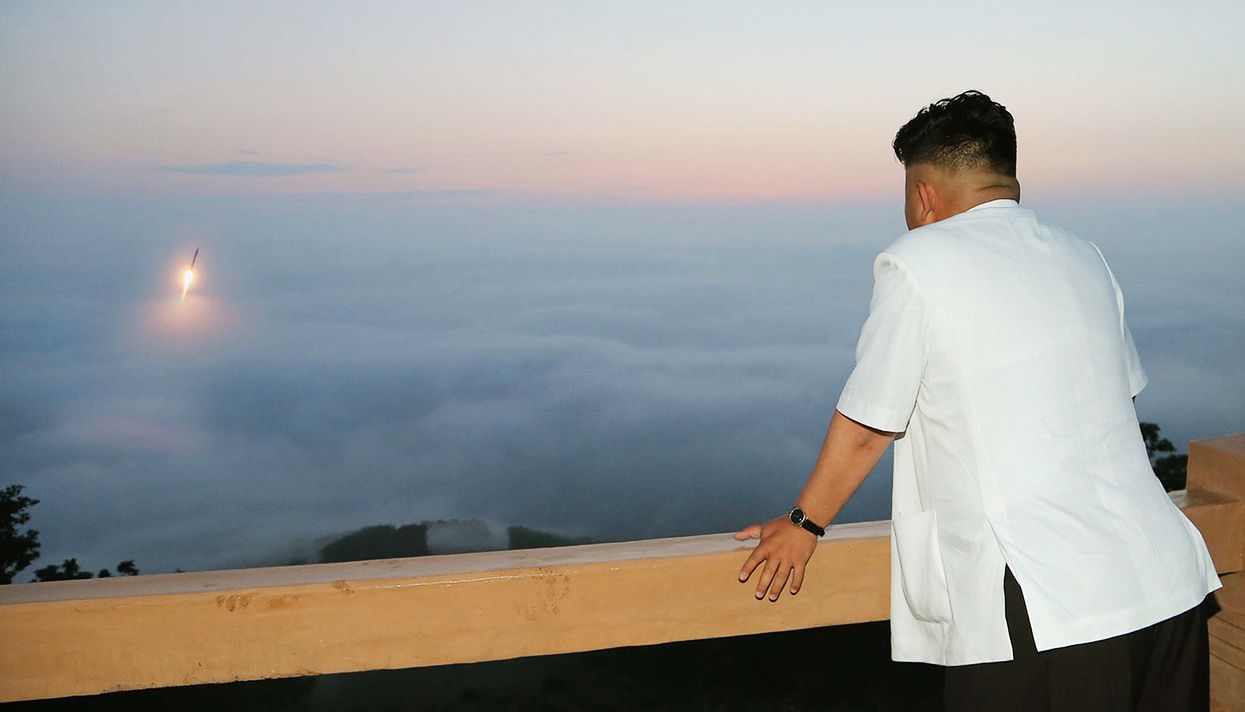
On December 10, 2015, the head of North Korea Kim Jong -un said that the DPRK now has hydrogen weapons. The Korean leader did not specify whether it was about combat charges or the creation of technology; He only noted that "a powerful nuclear power is ready to blow up atomic and hydrogen bombs to reliably protect their independence." For many decades, the DPRK has been developing peaceful and military nuclear technologies; It can be assumed that during this time Korean scientists could achieve significant success in mastering the process of splitting nuclei. The creation of a hydrogen (thermonuclear) bomb indicates a serious technical breakthrough. True, even if Pyongyang really took possession of a thermonuclear weapon, he seems to have no means of delivering combat blocks over long distances. At the request of Medusa, military expert Vasily Sychev tells the history of the North Korean nuclear program.
Nuclear fission
The North Korean nuclear program began in 1956 - largely thanks to the USSR. Then the parties signed an agreement on the preparation of Korean nuclear physicists, engineers, specialists in managing nuclear power plants and installations in the Soviet Union. Shortly before that, the head of the DPRK Kim Il Saint learned that in 1950-1953, during the Korean war, the United States seriously considered the possibility of nuclear bombing of Pyongyan.
In the first half of the 1960s, nuclear infrastructure began to form on the territory of North Korea. The authorities organized the research institution of atomic energy; In Yonben, with the participation of the USSR and China, the construction of the research center began. With China and the Soviet Union in 1959, Pyongyang entered into agreements on mutual cooperation in the field of development of peaceful nuclear energy. Within the framework of this agreement in Yonben in 1965, the Soviet Research Light-Water reactor IRT-2000 with a capacity of two megawatts was mounted.
In the early 1970s, the DPRK began to implement a military nuclear program. The reason for this could, in particular, serve as reconnaissance data that the United States placed several of its nuclear warheads in South Korea. In 1974, North Korea asked for help in creating atomic weapons from China, but did not receive serious support. North Korean specialists were only allowed to visit some Chinese nuclear landfills.
In 1985, Pyongyang signed an agreement on non-proliferation of nuclear weapons. In exchange for this, the USSR next year set North Korea a research reactor of the Mancinox type with a capacity of five megavatts. Such a reactor uses graphite as a chain reaction redeemer, and carbon dioxide as a coolant. The fuel in the reactor is uranium, packed in rods from a alloy of magnesium, aluminum and some other metals. Mancakes type reactors with incomplete fuel burning can be used for the production of weapons plutonium.
In the second half of the 1980s, the USSR and the DPRK planned the construction of four improved light-water reactors. However, due to the collapse of the Soviet Union and inspections of the IAEA nuclear facilities (the organization remained unhappy with their results), international atomic cooperation with North Korea ceased. The work of two reactors in Yonben delivered by the USSR since 1990 has been periodically stopped. In addition, now in Yonben, according to the statements of the DPRK authorities, a reactor with a capacity of 50 megavatts is under construction.
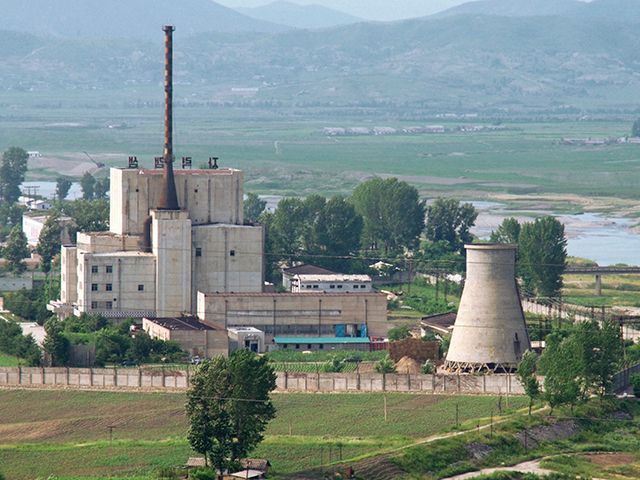
Another 200 megavatt reactor is unfinished in Tachens. Its construction was frozen in 2004. According to American intelligence agencies, this nuclear installation is unlikely to be completed, since the pipeline system is destroyed, and the erected structures fell into decay.
Be that as it may, the nuclear cooperation of the 1950-1980s provided North Korea with the most important-reactors capable of developing weapons plutonium. Presumably, the IRT-2000 reactor, mounted in 1965, can produce a couple of hundred grams of plutonium per year, while the second installation with complete fuel loading (eight thousand fuel rods weighing 11 kilograms each) is capable of generating about 27 kilograms of weapons of weaponal plutonium per year. True, both reactors were not originally calculated on military nuclear production, so in order to obtain plutonium they must often be stopped until uranium rods are burned out.
There are several large uranium deposits on the territory of North Korea. Their total supply is estimated at 3.5-4 million tons. Today, supplies from these deposits are undergoing an enrichment cycle at the plant in Yonben. In mid -September 2015, the DPRK Research Institute of Atomic Energy announced that the Uranus enrichment plant and the Pyatomegavatta graphite reactor were modernized and are now working at full capacity.
Weapon Chuchhe
During the international cooperation with the USSR and China, the DPRK failed to obtain technologies for enriching uranium to the reactor state. According to some reports, in the first half of the 1990s, North Korea managed to bargain with Pakistan: Islamabad secretly handed over to Pyongyang the instructions and engineering data on the enrichment of uranium (including drawings of dividing centrifuges and laboratory tests), and in exchange received technology for ballistic missiles. The Pakistani Uranus enrichment enterprise is located in the city of Kahuta, its construction ended in 1982.
In February 2005, the DPRK said her scientists managed to develop a nuclear bomb. The bomb tests, according to the Korean authorities, took place on October 9, 2006. According to the measuring network, on that day in the territory of North Korea in the Mantapsan area, a 4.2 magnitude impetus was recorded, the waves of which were also registered in South Korea, Japan, the USA, Australia and Russia. At the same time, measuring stations did not find radiation release.
The Russian Ministry of Defense estimated the power of an explosive device of 5-15 kilotons. The United States gave a more modest assessment - about kilotons, and American experts suggested that not a nuclear device was blown up, but simply a large amount of TNT.
On May 25, 2009, the DPRK conducted a second test of nuclear weapons. The Russian Ministry of Defense estimated the capacity of this explosion of 10-20 kilotons. American experts suggested that it was about two or seven kilotons. This explosion also occurred near Mantapsan.
Finally, on February 11, 2013, the DPRK announced the third underground test of nuclear weapons. The US Geological Service reported a push of magnitude 5.1. South Korean military rated the power of a nuclear bomb at six to nine kilotons; The Federal Institute of Geology of Germany announced 40-kiloton capacity. Almost a year before the third test, North Korea introduced amendments to the Constitution, proclaiming the country a nuclear power and giving it to the authorities the right to use nuclear weapons in response to external aggression.
Nuclear weapons are now not considered complicated technology. The cannon scheme, for example, has been known for a long time - in accordance with it, the “Kid” bomb was designed, which the United States was dropped into Japanese Hiroshima on August 6, 1945. The design of the nuclear bomb of the cannon circuit is relatively easy to calculate; Korean nuclear people, familiar with the Soviet nuclear school, can surely design such a device.
In the "baby", to initiate a chain reaction, the collision of two parts made of uranium-235 was used-a cylinder and pipes. As the initiator, a Beryllium-Lonium cylinder was used. When connecting uranium parts, they formed a supercritical mass, and the projectile’s blow and pressure of the powder gases squeezed the initiator. The latter, under pressure, emitted enough neutrons to maintain and heat the chain reaction. Before the accumulation of the critical energy of the explosion, all parts were held by the barrel, and then a powerful explosion took place. The power of the explosion of the “baby”, according to various estimates, amounted to 13 to 18 kilotons. It should be noted that out of 64 kilograms of uranium-235, used in the “baby”, only about 700 grams entered the reaction; The rest of the Uranus was scattered by an explosion.
Probably, a nuclear device tested by the DPRK in 2006 was built according to a cannon or similar scheme with incomplete energy emission and large fuel losses. In subsequent tested bombs, the structure was probably improved.
However, the creation of a thermonuclear bomb, which was announced in December 2015, was announced by Kim Jong -un - a big step in the Korean nuclear program. The hydrogen bomb is a two -phase ammunition. It is still called the design of Taler-Ulam. Simply put, the thermonuclear bomb is two small nuclear: the detonation of the nucleus of the first stage initiates the core of the second stage. The design of the Teller-Ulam allows in practice to create thermonuclear explosive devices with a capacity of hundreds of megatons (theoretical power is limited only by the amount of dividing material).
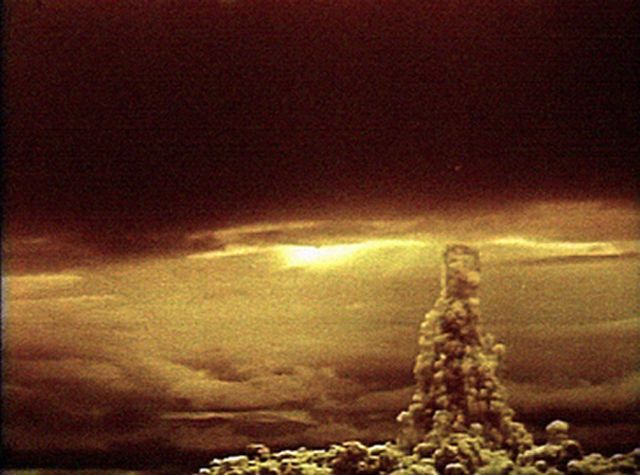
The design of the thermonuclear bomb is complicated both for calculation and for production, and requires the development of several technologies, including the production of lithium-6 deeride (thermonuclear fuel in weapons), stabilizing spheres of lead and depleted uranium-238, as well as a special plastic radiation. The most powerful thermonuclear weapon ever experienced was the Soviet “king-bomb”. It was blown up on October 30, 1961 at the landfill on the New Earth, and the power of ammunition amounted to about 58 megatons. Whether North Korea was testing her thermonuclear bomb is unknown.
Missile couriers
According to the American Institute of Science and International Security, today Pyongyang has almost 30 nuclear blocks, the “filling” of each of which is equivalent to 20 kilograms of enriched uranium. By 2016, the number of such blocks can increase to 40-44. The Federation of American scientists believes that North Korea has about ten nuclear charges. The Stockholm Institute for the Study of the Problems of the World evaluates the DPRK reserves in eight charges.
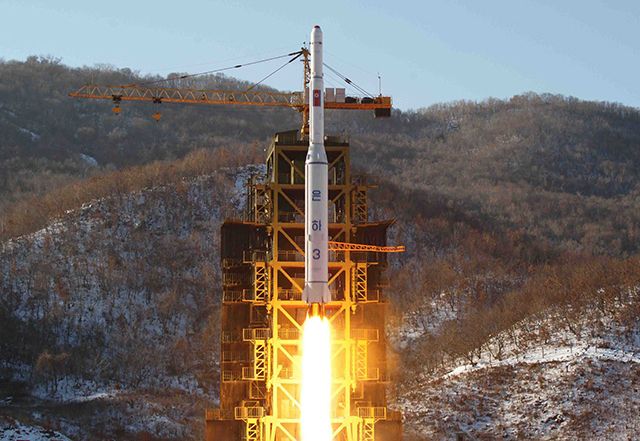
However, by the means of delivery of these charges to any significant distance, North Korea has not yet disposed. The country has been developing launch vehicles, but the developers could not achieve outstanding successes. So, from 1998 to December 2012, the DPRK launched 13 launch vehicles (Tepkhodon-1, Enha-2, Enha-3), not one of which was not successful. Only on December 12, 2012, the country managed to successfully bring the Earth’s orbit of the Kvwanmanon-3 satellite. In March 2014, several more missiles were tested - and again unsuccessful.
During the launch of the Tepkhon-1 rocket in 1998, two of its three steps of three worked as usual. Today, on the basis of this launch vehicle, North Korea creates a Tephon-2 large-range intercontinental ballistic missile. Its range, according to various estimates, will be from six to ten thousand kilometers. The rocket will be able to carry a nuclear fighting unit weighing from one to one and a half tons. The missile tests took place in 2006, 40 seconds after the launch, it fell apart.
Now Pyongyang has the Tox-Taxi, Khusason-5 and Shzason-6 operational-tactical missiles. The last two are modifications of Soviet missiles of the SKAD operational and tactical complexes, they are able to hit targets at a range of 300 to 700 kilometers. According to various sources, from 350 to 600 such missiles, presumably capable of carrying nuclear combat units, are on combat duty in the DPRK. In addition, Pyongyang has several Nodon missiles. They can carry combat units weighing 650 kilograms at a range of up to 1.6 thousand kilometers. It is not known whether it is possible to equip them with nuclear combat blocks. This arsenal will allow North Korea to strike at South Korea, part of the territories of China, Mongolia and Russia. The United States - North Korea cannot reach its main enemy.
In 2011, the Forecast International research agency declared North Korea the largest supplier of low -range ballistic missiles to developing countries. In the period from 1987 to 2009, the DPRK exported 1200 missiles, which is about 40% of the indicated segment of the arms market. For comparison: direct competitors of the DPRK - Russia and China - managed to export only 400 and 270 ballistic missiles, respectively.
The largest buyers of North Korean ballistic missiles were Egypt, Syria, Libya, Yemen, the United Arab Emirates and Pakistan. In 1985, Iran purchased one hundred billion dollars for half a billion $ 5 missiles, and later on the basis of these missiles developed his own Shahab-1. Deliveries of ballistic missiles, parts to them and rocket fuel are carried out by the DPRK today. Thanks to these sales (and some others, North Korea, for example, supplies light patrol ships to developing countries), the annual volume of the country's military exports is about $ 120-130 million.
North Korea National Nuclear and Missile Programs are moving slowly and with great difficulty due to international isolation. Nevertheless, Pyongyang has a fair amount of perseverance: in conditions of serious lack of means and extremely scarce imports, conduct three tests of nuclear weapons and successfully bring a satellite into the space - a tangible achievement. With this in mind, it is not difficult to assume that after a dozen years, Pyongyang can receive intercontinental ballistic missiles and military charges of high power. And then the Americans will come in handy their extensive missile defense system.
Vasily Sychev
Moscow